The Toy That’s Been Sitting in the Corner for Three Months: Why Children Abandon Toys and What It Actually Tells You
You spent weeks researching it.
Maybe you read reviews. Maybe you compared options, checked the age range, asked someone whose child seemed to really love theirs. You bought it. You wrapped it. You watched your child tear off the paper and light up — genuinely, completely lit up — and you thought: yes. That was the right one.
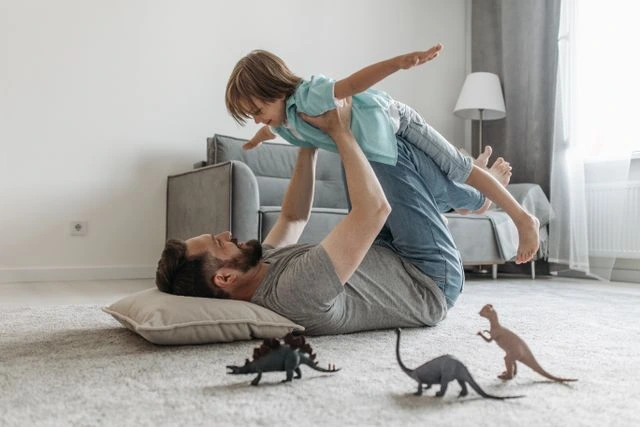
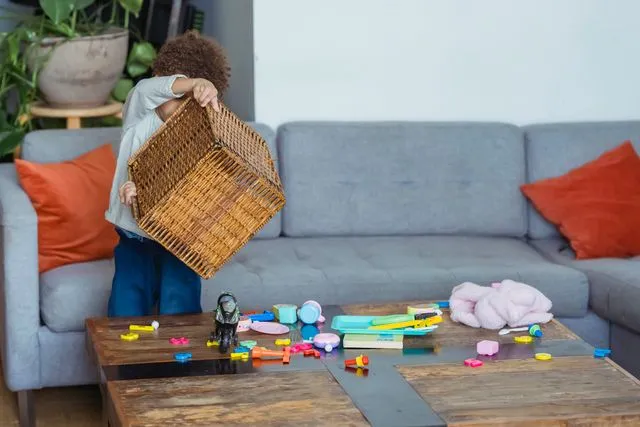
Three months later, it is in the corner. Untouched. Possibly missing a piece. Your child has moved on to playing with the cardboard box it came in, or a stick they found in the garden, or absolutely nothing that you deliberately chose for them.
I have had this conversation with parents more times than I can count. And almost always, it comes with a version of the same guilt: did I waste my money? Did I choose the wrong thing? Is my child not engaging with it because I am doing something wrong?
The honest answer is: probably none of the above. But there is something worth understanding here — because why children abandon toys, and which toys they abandon, tells you more about their development than most parents realise. And once you understand it, you stop feeling like you failed every time a toy ends up in the corner.
Table of Contents
Play Is a Moving Target
Here is the thing that toy marketing almost never acknowledges: children’s play interests are supposed to change. Rapidly. In ways that can feel completely irrational to an adult who is watching from the outside.
A two-year-old who is obsessed with stacking cups will, at some point, simply stop caring about stacking cups. Not because the cups changed. Because the child changed. The neural challenge that made stacking cups compelling — the problem of balance, the cause and effect of the tower falling, the fine motor coordination required — has been met. The skill has been built. The game is no longer interesting because it is no longer hard enough.
This is a fundamental principle of how children learn through play: engagement follows challenge. When a toy stops challenging a child, the child stops playing with it. That is not abandonment. That is developmental progress. The toy did its job. The child moved on.
The problem is that we do not usually see it that way. We see an expensive item sitting untouched and our brain goes to waste, to loss, to failure. But the more accurate interpretation is: that toy served its purpose and the child is ready for something more.
The Four Main Reasons Children Abandon Toys
Not all toy abandonment is the same. Understanding why a particular toy has been abandoned helps you make better decisions about what comes next — and stops you from blaming yourself, or your child, for something that is usually neither person’s fault.
The toy was the wrong level
Toys that are too easy become boring quickly. Toys that are too hard become frustrating quickly. Both lead to abandonment, but they feel different from the outside. An abandoned toy that the child tried intensely and then gave up on was probably too advanced. An abandoned toy that the child played with briefly and cheerfully and then moved on from was probably at or slightly below their current level.
The research on this is consistent. Psychologist Lev Vygotsky‘s concept of the “zone of proximal development” — the range just beyond what a child can do independently, achievable with a little effort — is where sustained engagement happens. A toy that sits precisely in that zone will be played with. A toy that sits well outside it, in either direction, will not.
The challenge for parents is that this zone moves. A toy that was perfectly calibrated three months ago may be too easy today. That is not a problem with the toy. It is evidence of growth.
The toy does too much
This is the one that surprises parents most. We tend to assume that more features, more sounds, more lights, more interactivity equals more engagement. The research fairly consistently shows the opposite.
Toys that do a great deal on their own — that talk, sing, light up, and respond automatically — leave very little for the child to do. And children need to be doing things. The learning in play happens when the child is the one creating, problem-solving, deciding, imagining. A toy that does all of those things for them produces a passive experience that may be stimulating in the short term but becomes boring much faster than a simple, open-ended toy that requires the child’s own input to function.
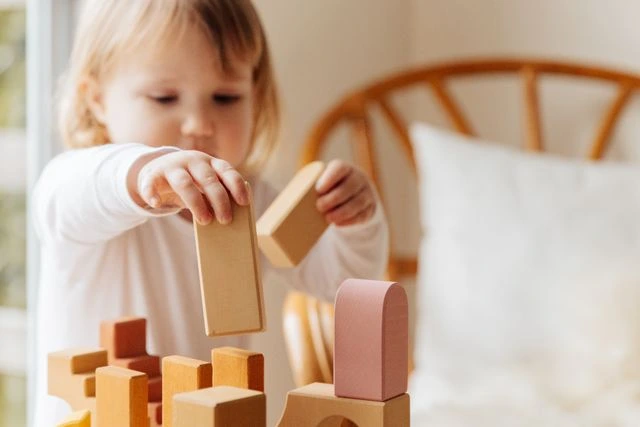
The classic example is blocks. No lights. No sounds. No batteries. A child who has a good set of blocks can play with them for years — because what they can do with blocks changes as the child changes. A three-year-old makes a tower. A five-year-old makes a house. A seven-year-old makes a city with roads and bridges and a storyline. The toy stays the same. The play evolves.
An electronic toy that sings the alphabet does not have that flexibility. Once a child knows the alphabet, the toy has nothing else to offer. It ends up in the corner.
The child has not been shown what it can do
This one is more actionable than the others. Sometimes a toy is sitting untouched not because it is wrong for the child, but because the child has not yet discovered what it can do. They tried one way of playing with it, it did not immediately capture them, and they moved on.
Children — especially younger children — often need a brief demonstration of the possibilities before their own imagination takes over. Not a full lesson. Not sitting down and showing them the correct way to play. Just playing alongside them for a few minutes, doing something with the toy, and then stepping back. Often that is enough to unlock engagement that would never have appeared on its own.
I have seen this with toys that parents described as complete failures. A few minutes of parallel play — a parent building something with the blocks, a parent starting a pretend scenario with the figurines — and suddenly the toy has a second life that lasts months.
The timing was wrong
Children go through periods of intense interest in specific types of play, and those periods are not always predictable. A child who receives a puzzle at three may ignore it completely, then discover it at four and become obsessed. The toy did not become better. The child’s developmental readiness caught up to it.
This is why I always tell parents not to throw away a toy immediately because it has been ignored. Rotate it out, put it in storage for a few months, and reintroduce it later. The response is often completely different the second time — not because anything changed, but because the child did.
What the Research Says About Toy Engagement
| Toy Type | Average Duration of Interest | Key Research Finding |
|---|---|---|
| Electronic / battery-operated with fixed responses | Days to a few weeks | High initial novelty, low sustained engagement; limits creative input (Levin & Rosenquest, 2001) |
| Open-ended construction toys (blocks, LEGO, magnetic tiles) | Months to years | Scales with child’s development; supports spatial reasoning and language (Casey et al., 2008) |
| Pretend play props (figurines, dress-up, kitchen sets) | Months to years | Supports theory of mind, emotional regulation, narrative language (Lillard et al., 2013) |
| Puzzles (age-appropriate) | Weeks to months, then re-engagement at higher level | Strong spatial skill development; benefits increase with parent co-play (Levine et al., 2012) |
| Single-function educational toys | Days to weeks | Useful for specific skill acquisition; engagement drops once skill is mastered |
| Art and craft materials (open-ended) | Sustained across years | Among highest engagement durations; supports creativity, fine motor, and self-expression across all ages |
The pattern in that table is not subtle. Open-ended toys consistently outlast feature-heavy, single-function toys in terms of sustained engagement. The reason is simple: they grow with the child. There is always something new to do with them, because what the child can imagine and create with them expands as the child develops.
This does not mean every toy needs to be wooden and battery-free. It means that when you are choosing toys, longevity of engagement is a better measure of value than the immediate reaction on the day it is unwrapped.
The Toy Rotation Strategy — and Why It Works
One of the most practically useful things I can suggest to parents who feel overwhelmed by toy accumulation and equally overwhelmed by the guilt of toys being ignored is this: rotate.
Put roughly two-thirds of the toys away. Keep out a small selection — enough variety, not so much that choices become paralysing. Every few weeks, swap some out. Bring back something that has been in storage.
The effect on engagement is remarkable and consistently reported by parents who try it. Toys that were ignored become exciting again when they reappear after a few weeks away. The novelty resets. And the child plays more deeply with fewer toys than they played superficially with many.
There is a reason for this. Too many choices is cognitively taxing, even for children. Research on what is sometimes called “choice overload” shows that having too many options reduces engagement with any individual option. A child standing in front of thirty toys is less likely to engage deeply with any of them than a child standing in front of eight.
Fewer toys, rotated regularly, is not deprivation. It is actually better for play quality. And it is infinitely better for the parent’s sanity.
| Age Group | Recommended Number of Available Toys | Rotation Frequency | Keep Out Always |
|---|---|---|---|
| Under 2 years | 4 to 6 | Every 1 to 2 weeks | Soft toys, stacking toy, 1 sensory item |
| 2 to 3 years | 6 to 8 | Every 2 weeks | Blocks, pretend play item, 1 puzzle |
| 3 to 5 years | 8 to 10 | Every 2 to 3 weeks | Building toy, art materials, favourite pretend prop |
| 5 to 8 years | 10 to 12 | Every 3 to 4 weeks | LEGO or construction set, art materials, 1 board game |
| 8 years and above | Child-led selection | As interests shift | Current interest area, creative materials, social game |
When to Accept That a Toy Was Simply Wrong
Sometimes, despite everything, a toy just does not work for a particular child. And that is okay too.
Children have genuine individual differences in what kinds of play they are drawn to. Some children are intense builders. Others are intense storytellers. Some want to move their bodies constantly and have little patience for sitting with small objects. Some are deeply drawn to art and resist anything that feels like a game. These preferences are real, they are stable, and they tell you something important about the child.
A toy that does not fit who your child is will not be played with, regardless of how good it is in theory. The most genuinely educational toy in the world is worthless if your specific child has no interest in it.
Watching what your child actually does when given completely free choice — no suggestions, no guidance, no well-chosen educational materials in front of them — is the most reliable information you can get about what kinds of toys will work for them. If they always end up in the garden collecting things, outdoor and nature-based materials are a good bet. If they always end up narrating elaborate stories with whatever is available, open-ended figurines and props will serve them better than puzzles. If they always end up taking things apart, toys with mechanical complexity will hold them far longer than anything passive.
Follow the child. Not the age range on the box.
The Most Expensive Toys in My Experience
I want to say something that I have noticed over twenty years of working with children in educational settings, and that I think parents deserve to hear plainly.
The toys that have produced the most sustained, richest play that I have observed are almost never the most expensive ones. They are: cardboard boxes. Sand. Water. Plain wooden blocks. Fabric scraps. Empty containers. Sticks. Art materials in large quantities.
These are the materials that require the most from the child. The child has to decide what they are, what they do, what story they tell. There is no correct way to use them. There is no battery to run out. There is no single function that becomes boring once mastered.
I am not saying you should never buy toys. I am saying that the guilt you feel when a fifty-euro educational toy ends up in the corner after three weeks is misplaced — and that a cardboard box from your next delivery, left on the floor with a marker and some tape, might produce more genuine engagement than anything that came in packaging that described its developmental benefits.
Children are not complicated in what they need from play. They need materials that respond to them, that require something from them, and that have enough possibility to sustain their curiosity past the first ten minutes. The expensive toy usually fails this test. The box it came in often passes it.
Frequently Asked Questions
Should I feel guilty when my child stops playing with a toy?
No. In most cases, a toy that has been abandoned has been mastered — the child extracted what they needed from it developmentally and moved on. That is a success, not a failure. The guilt is understandable but not warranted. A more useful question than “why did they abandon this?” is “what are they ready for next?”
How long should a good toy hold a child’s interest?
It depends heavily on the type of toy. A single-function toy that targets a specific skill may hold interest for days to weeks — long enough to build that skill, which was its purpose. An open-ended toy like blocks, art materials, or pretend play props should hold interest across months and potentially years, evolving as the child’s abilities grow. If you want longevity, choose open-ended.
Is it worth reintroducing a toy that was previously ignored?
Yes, frequently. A toy that was wrong for a child at three may be exactly right at four, because the child has developed. Storing toys rather than discarding them immediately is a worthwhile strategy. Many parents report significant surprise at how differently their child engages with a reintroduced toy after a few months in storage.
How many toys should my child have access to at once?
Considerably fewer than most households have available. Research on choice overload suggests that too many available options reduces the depth of engagement with any individual option. Depending on age, somewhere between four and twelve accessible toys at a time is a reasonable range. Regular rotation keeps novelty high without requiring constant new purchases.
Are expensive toys worth the price?
Not necessarily, and often not. The most sustained engagement I observe in children tends to be with simple, open-ended materials — blocks, art supplies, sand, water, pretend play props — that are among the cheapest options available. The price of a toy has essentially no correlation with how much developmental value it provides or how long a child will engage with it. What predicts engagement is the degree to which the toy requires the child’s own imagination and input to function.
My child always wants new toys but loses interest in everything quickly. Is this normal?
It is common, and it is often a product of the environment rather than the child’s character. Children who are used to a high volume of new toys develop an expectation of novelty and lose tolerance for the slower engagement that comes from playing deeply with a smaller selection. Toy rotation — reducing what is available and regularly refreshing it from storage — typically improves this significantly over a few weeks. It is worth trying before concluding that your child simply has a short attention span.
Younes Kehal is an educational director, certified school coach, and certified life coach with over twenty years of experience working with children and families in school settings. He writes at ParentingAssist.com about the practical realities of raising children — not the idealized version, but the real one.