The Supermarket Is a Classroom: How to Teach Children About Food, Farming, and the Planet Without Turning Shopping Into a Lecture
My daughter asked me once, in the vegetable aisle, where carrots come from.
She was four. She had seen me pull them from a bag many times. She had eaten them, indifferently, at dinner. But standing in front of the display — the heap of orange, the dirt still on some of them — she looked at them differently. As though she had just noticed that they were not simply vegetables but something that had been somewhere before this.
I told her they come from the ground. That someone plants a seed, waters it, waits for weeks, then pulls the carrot out of the soil by its green top. She stared at me for a moment as though I had said something improbable. Then she asked if we could grow one.
That conversation cost nothing. It happened in two minutes between the broccoli and the potatoes. And it changed the way she looked at every vegetable for months afterward — not as food that appears in a shop, but as something that had a journey to get there.
This is what I mean when I say the supermarket is a classroom. Not that shopping should become an environmental lecture. Not that every purchase should be accompanied by a sustainability analysis. But that the supermarket is full of genuine, interesting, accessible information about where food comes from and how it is produced — and that children who are invited into that information develop a relationship with food and with the planet that no amount of formal environmental education produces as naturally.
Table of Contents
What Children Do Not Know About Food
Research on children’s food knowledge consistently produces findings that surprise adults. In a widely cited UK study, a significant proportion of primary school children could not identify common vegetables in whole form, did not know that chips come from potatoes, and were uncertain whether cheese comes from animals. Similar studies in other countries have found that many children believe that bread is made in supermarkets, that milk comes directly from cartons rather than cows, and that fruit grows on the ground rather than on trees or plants.
This is not a reflection of intelligence or even of parental effort. It reflects the extraordinary abstraction of the modern food system. The food that arrives at a family’s table has typically undergone processing, packaging, transportation, and retail display that has removed virtually all visible connection to its agricultural origin. A child who eats chicken nuggets has no obvious way of knowing that they contain chicken, let alone where that chicken came from or how it was raised.
The disconnection matters for reasons beyond simple food literacy. Children who do not understand where food comes from cannot understand, in any meaningful way, how food choices connect to the land, to water use, to greenhouse gas emissions, to the livelihoods of farmers, or to the health of ecosystems. Environmental education that tries to build on this missing foundation — that talks about the carbon footprint of food without the child having any concrete sense of how food is produced — is building on air.
The supermarket, used well, can begin to close that gap. Not by turning shopping into a lesson, but by pointing things out, asking questions, and following the child’s curiosity when it appears.
What the Supermarket Actually Contains
Before getting to the practical, it is worth appreciating what a supermarket actually is from a food systems perspective — because when you see it this way, the educational potential becomes obvious.
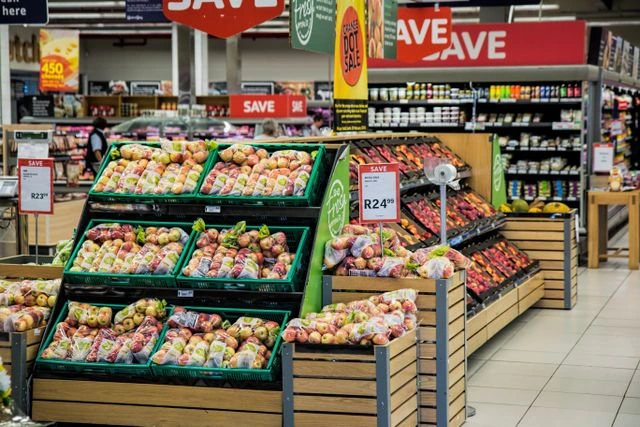
A supermarket is a point where an enormous diversity of food production systems converge. On the same shelf, you might find tomatoes grown locally and tomatoes shipped from Morocco; eggs from free-range hens in the same country and eggs from caged hens in another; apples that were picked last week and apples that were stored for months; fish caught wild in the North Atlantic and fish farmed in Norwegian fjords. All of this information is partially visible on the labels, partially invisible, and entirely interesting once you know to look.
The seasonal produce section — when it corresponds to the actual season — is a natural starting point for conversations about where food comes from and when. Strawberries in June and strawberries in December are not the same product, even if they look identical. The December strawberries have come from further away, have been grown under artificial conditions, and have cost significantly more in energy and carbon to produce and transport than the June ones. This is not a reason never to buy strawberries in December. It is an interesting fact about the world that a curious child can begin to understand.
Country-of-origin labelling — present on most fresh produce in most countries — is one of the simplest and most accessible starting points for geography, trade, and food system literacy. “This is from Spain. How do you think it got here?” costs nothing to ask. The answer involves ships and lorries and cold storage and distribution centres, which are interesting on their own terms, and which make the orange in the child’s hand suddenly part of a story rather than simply a fruit.
The Organic Question
Organic food is in most supermarkets, labelled and often priced higher than conventionally produced equivalents. And children who accompany adults to the supermarket regularly will eventually notice this and ask about it — or, if they do not ask, will absorb a family’s choices without understanding them.
The organic conversation is worth having with children from around age six or seven, not because it is simple — it is not — but because it opens genuinely interesting territory. What does “organic” mean? It means the food was grown without synthetic pesticides and fertilisers, and in the case of animal products, without routine antibiotic use. Why does that matter? Because pesticides can affect soil health and insect populations, including the pollinators that crop production depends on. Does organic always mean more sustainable? Not automatically — organic production typically uses more land for equivalent yields, which has its own environmental implications. Is it worth the higher price? That depends on the product and your priorities.
None of this needs to be delivered as a lecture. It can emerge from a genuine conversation prompted by the child’s question: “Why is this one more expensive?” The parent who says “good question — it’s because of how it was grown, which I find interesting” and then shares a simplified version of the answer is doing something quite different from the parent who delivers a prepared speech about pesticides. One is conversation. The other is instruction. Children engage very differently with each.
What to Actually Do: By Age
The most useful eco education in a supermarket is calibrated to the child’s developmental stage. A conversation that works beautifully for an eight-year-old will be incomprehensible to a three-year-old, and vice versa. Here is a practical framework for different ages.
Ages 2 to 4
At this age, the supermarket education is almost entirely sensory and naming. The goal is building a vocabulary of real food — what things look like before they are processed, what they are called, that they grow somewhere. Holding vegetables. Smelling them. Naming them. Asking “what colour is this?” and “what shape?” and “have you tasted one of these?” The child who at four can name a dozen vegetables in whole form, and who knows that they grow in soil and come from farms, has been given something that will underpin every later conversation about food and the environment.
Ages 4 to 7
At this age, simple origin stories become interesting. Where did this come from? How long did it take to grow? Who might have picked it? What does the farm look like? Children at this age are hungry for narrative, and food origin stories are genuinely interesting narratives. A banana from Ecuador that took two weeks on a ship to get here. Apples that were picked last autumn and stored in cold rooms until spring. The farmer who woke up before dawn to harvest the lettuces in the picture on the bag. These stories are real, they are vivid, and they connect the child’s immediate experience to a much larger world.
Ages 7 to 10
At this age, children can begin to engage with systems thinking — the idea that food choices have consequences that extend beyond the immediate transaction. Seasonal eating: some foods are available all year but taste better and cost less environmental impact when eaten in their season. Food miles: the journey food takes to arrive on the shelf has an environmental cost. Packaging: some packaging is recyclable and some is not, and reducing packaging is one of the smallest and most accessible environmental contributions a family can make. These conversations can happen briefly and naturally in the flow of shopping, prompted by what you see on the shelf. They do not require preparation. They require willingness to engage with what is actually there.
Ages 10 and above
Older children can engage with significantly more complexity. The environmental footprint of different foods — and here the most important single fact is that beef production has dramatically higher greenhouse gas emissions than almost any other food, while legumes and most vegetables are among the lowest — is a genuine and interesting subject that older children often find compelling rather than overwhelming. The ethical dimensions of food production — animal welfare, fair trade, the economics of agricultural labour — are also accessible and worth discussing when they arise naturally. Involving older children in meal planning decisions, in the choice between different products on the shelf, gives them genuine agency in the family’s food choices rather than the passive experience of watching adults choose.
| Age | Key Focus | What to Do or Say | Connection to Environment |
|---|---|---|---|
| 2–4 years | Naming and sensing real food | Hold vegetables; name them; ask about colour and shape; talk about farms simply | Food comes from somewhere — the beginning of all later understanding |
| 4–7 years | Origin stories | “This came from Spain — on a big ship.” “Someone picked these apples last October.” | Food has a journey; people and places are involved |
| 7–10 years | Seasons, packaging, food miles | Compare local vs. imported; point out seasonal availability; choose less-packaged options together | Food choices have environmental consequences that vary |
| 10+ years | Food systems, footprint, ethics | Discuss meat vs. plant protein footprints; fair trade; animal welfare labels; involve in meal planning | Personal choices connect to global systems; agency is possible |
The Meat Conversation
This is the one that most eco-conscious parents find most difficult, and I want to address it directly.
The environmental case for reducing meat consumption — particularly beef and lamb — is among the most thoroughly documented in the food sustainability literature. The greenhouse gas emissions, land use, and water consumption associated with beef production are dramatically higher than those associated with almost any plant-based food, and significantly higher than chicken or pork. A family that reduces beef consumption is making one of the most environmentally significant individual dietary changes available to them.
How to discuss this with children, without either avoiding it or making every meal about climate guilt, is a genuine parenting challenge. The approach that I have found most useful is one that leads with flavour and variety rather than restriction. “We are trying some different things for dinner this week” is different from “we are not having beef because of the environment.” Both might be true. One opens the door to genuine curiosity. The other frames dinner as a sacrifice.
When the environmental question arises — and older children will ask — it deserves an honest answer. Beef production uses a lot of land and produces a lot of greenhouse gases. This is true and it is something children can understand. What the family does with that information is a family decision. But the information itself is worth having, and children who grow up in families where these questions are discussed honestly — without drama, without guilt, without making every meal a sustainability analysis — develop their own informed relationship with food choices that tends to be more durable than one imposed through restriction.
Labels: What Is Worth Reading and What Is Marketing
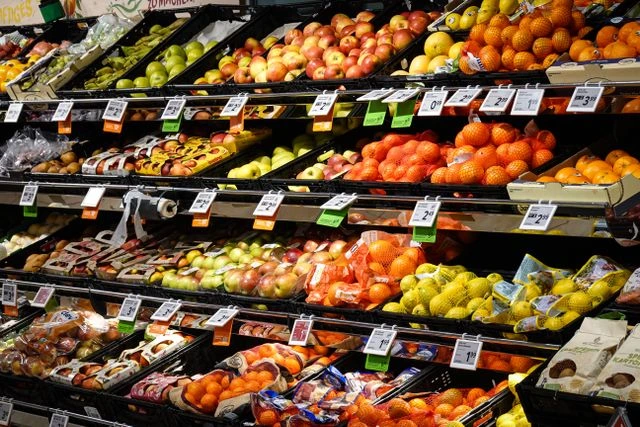
The supermarket is full of environmental claims. “Sustainable.” “Responsibly sourced.” “Eco-friendly.” “Carbon neutral.” Some of these claims are meaningful, backed by genuine certification and independent verification. Some are not. Teaching children to distinguish between the two is a genuine form of critical literacy that serves them well beyond food choices.
The labels that are backed by credible, independent certification include: the Fairtrade mark (which certifies trading conditions and farmer prices), the Marine Stewardship Council (MSC) blue fish label (which certifies sustainable fishery practices), the RSPCA Assured label and equivalent animal welfare certifications, and organic certifications from recognised bodies. These are not perfect systems, but they represent genuine third-party verification of specific claims.
The labels that are primarily marketing — the ones that say things like “natural,” “eco-friendly,” “green,” or “sustainable” without any specific certification or verifiable standard — are worth being sceptical about. A child who learns to ask “who says?” about environmental claims on food packaging is developing a critical thinking skill that applies far beyond the supermarket.
For older children, this can become a genuinely interesting game: spot the certified label, spot the unverified claim, discuss the difference. It is one of the few forms of media literacy that can be practiced in an aisle between the fish counter and the dairy section.
| Label | What It Claims | Is It Verified? | Worth Looking For? |
|---|---|---|---|
| Fairtrade | Fair prices and trading conditions for producers | Yes — independent certification body | Yes — particularly for coffee, tea, cocoa, bananas |
| MSC (blue fish) | Sustainable wild-caught fishery | Yes — Marine Stewardship Council | Yes — for wild-caught fish |
| Organic (certified) | Grown without synthetic pesticides/fertilisers | Yes — national organic certification bodies | Depends on priorities and budget |
| RSPCA Assured / equivalent welfare labels | Animal welfare standards met | Yes — independent auditing | Yes — for meat, eggs, and dairy |
| “Natural” / “Eco-friendly” / “Green” | Various vague environmental or health claims | No — no standard definition or verification | Treat with scepticism — ask what specifically is claimed |
| “Sustainable” without certification | Broad environmental claim | Usually no — unless accompanied by a specific certification | Seek the underlying certification rather than the word itself |
What Makes This Work: The Tone
I want to spend some time on this because it is the most important practical element, and the one that is most often missed.
Environmental conversations in the supermarket work when they are genuinely curious rather than didactic. The parent who says “I wonder where these are from — let’s look” is doing something different from the parent who says “look, these are from Kenya — that means they had to fly a very long way and that uses a lot of fuel.” Both might be accurate. One invites the child’s curiosity. The other delivers a prepared environmental point.
Children are exquisitely sensitive to the difference between being genuinely informed of something interesting and being lectured. The lecture produces eye-rolling and disengagement. The genuine curiosity — the parent who finds these things actually interesting and shows it — produces something different. It produces a child who finds these things interesting too, because they are taking their cues from someone who seems genuinely engaged.
This is, in the end, the most reliable mechanism of environmental value transmission. Not instruction. Not rule-setting. Not guilt. Modelled genuine interest in the world, expressed consistently, in ordinary moments like vegetable aisles, produces children who are themselves genuinely interested in the world. That is the foundation on which environmental values are built.
For the broader framework of how consistent family habits — in the supermarket, at home, in transport choices — transmit environmental values more effectively than any formal environmental education, the article on building eco-friendly habits one change at a time covers the underlying principles in practical depth. And for the specific connection between food growing and environmental understanding — what happens when a child grows something and then sees it in a shop — the article on why the garden is the best classroom your child will ever have speaks directly to what supermarket education connects back to when a child has grown their own food.
Frequently Asked Questions
At what age can children understand where food comes from?
Earlier than most parents assume. Two and three year olds can understand that carrots grow in soil, that apples grow on trees, that milk comes from cows. The concepts are concrete enough to be grasped at this age even without full comprehension of the agricultural system behind them. Building this foundation early means that the more complex conversations about food systems and environmental impact have something real to build on when the child is ready for them, typically from age six or seven onward.
Should I only buy sustainable food?
Sustainability considerations are worth bringing to food choices, but an all-or-nothing approach is neither realistic for most families nor necessary for meaningful impact. The most significant dietary change available to most families in terms of environmental footprint is reducing beef consumption — this has a larger impact than any combination of packaging decisions, food miles considerations, or organic choices. Within that, making seasonal, local, and certified choices when the cost difference is manageable is worthwhile. Perfection is not the goal; direction of travel is.
How do I talk about meat with my children without creating anxiety or guilt?
By leading with interest and variety rather than restriction and guilt. “We’re trying some new things this week” rather than “we shouldn’t eat this because of climate change.” When children ask directly about the environmental impact of meat — and older children often will — honest answers are appropriate and important. The information itself is not harmful. What matters is the tone: factual, non-dramatic, presented as interesting information that the family takes into account among other considerations, not as a source of guilt or a rigid restriction.
How do I read food labels without spending an hour in every aisle?
By focusing on a small number of certifications that matter to you and looking for those specifically. If you care most about fair trade, look for the Fairtrade mark on coffee, tea, and chocolate. If you care about fish sustainability, look for the MSC label. If you care about animal welfare, look for your country’s leading welfare assurance mark. Trying to assess every environmental claim on every product is exhausting and largely unproductive. Picking two or three areas that matter to your family and applying consistent standards in those areas is more sustainable as a practice.
My child is not interested in the supermarket at all. How do I make it engaging?
By giving them genuine agency rather than a commentary to listen to. A child who is given a small mission — find the most unusual vegetable, find the item that has travelled furthest, choose which apples we buy today — is a very different participant from one who is accompanying an adult’s shopping while receiving information. Agency transforms the experience from passive to active. The environmental content can come naturally from the choices they make and the questions those choices prompt, rather than being delivered as education into a disengaged audience.
Is buying organic always better for the environment?
Not always — the relationship is more complex than the marketing suggests. Organic farming avoids synthetic pesticides and fertilisers, which benefits soil health and reduces certain forms of water pollution, and it is generally associated with higher biodiversity on and around farms. However, organic yields are typically lower than conventional yields, which means more land is required to produce equivalent quantities of food. In a world where agricultural land use is a significant driver of biodiversity loss, this trade-off matters. The most honest answer is that organic is better on some environmental metrics and neutral or worse on others, and that the relative importance of different metrics depends on what you are most concerned about.
Younes Kehal is an educational director, certified school coach, and certified life coach with 20 years of experience working with children, families, teachers, and schools. His guidance combines practical educational experience with carefully reviewed research.