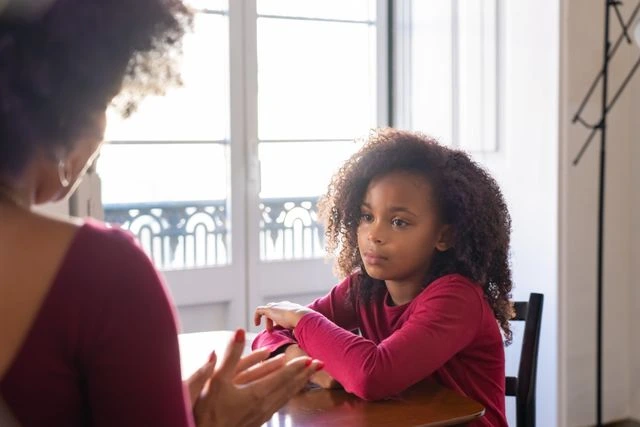
The Question Behind the Question: How to Really Listen When Young Children Talk to You
A four-year-old asked me once: “Do worms have feelings?”
We were in the garden. She had found a worm, and was holding it carefully, and looking at it with the particular expression young children have when something has made them genuinely think. I gave her an honest answer — we do not know for certain, but worms can sense things, so probably they have some version of feeling even if it is different from ours.
She looked at the worm for another moment. Then she said: “Because I did not want it to be scared.”
There it was. The question behind the question. She was not asking about worm neurology. She was working out whether she had done something that caused distress to another living thing. She was practising empathy on a creature small enough that the stakes felt manageable.
If I had said “worms don’t have feelings, put it down” — the answer that most adults would give, the quick answer, the answer designed to close the topic — I would have missed all of that. I would have answered the surface question and ignored the real one. And she would have learned something she did not need to learn: that asking adults about things you are genuinely thinking about does not usually produce anything interesting.
This article is about that gap — between what young children say and what they mean, between the surface question and the real one, between the adult response that closes and the one that opens. And about what it takes to actually listen to a young child in a way that meets them where they are.
Table of Contents
Why Young Children Are Hard to Listen To
This sounds like an odd thing to say. Young children talk constantly. The difficulty is not in getting them to say things. The difficulty is in registering what they say as genuinely worth attending to — as something that deserves real engagement rather than management.
Part of the problem is pace. Adults live at a pace that is incompatible with the pace at which young children communicate. A child’s story about what happened at nursery this morning takes four times longer than it would if an adult told the same story. It has detours and repetitions and moments when the child loses the thread and then finds it again. The adult who is trying to make dinner, or get out of the house on time, or manage three things simultaneously, is working at a speed that makes this kind of attention difficult.
Part of the problem is content. Young children talk about things that adults have long since stopped finding interesting. The worm question is unusual in its depth. Most of what young children say is about things that happened, things they noticed, things they want, things they feel. The adult who has been through this developmental period themselves — who processed all of these things twenty or thirty years ago — has lost the freshness that makes them interesting. The child’s experience of the worm is immediate and vivid. The adult’s experience of worms is categorical and managed.
Part of the problem is status. Children’s speech is routinely interrupted, redirected, or summarised by adults in ways that would be considered rude in any other context. The child who is mid-sentence and is cut off with “okay, let’s go” or “yes, yes, I know” has learned something about how much their words count.
And part of the problem is that genuinely listening to a young child — really attending to what they are saying, rather than managing the interaction — is tiring. It requires the same quality of attention that we give to a complex conversation with an adult we find interesting, but with the additional challenge that the structure and vocabulary are less predictable, the topic may seem trivial, and the communication may be interrupted by the child’s own attention shifting.
None of this is a criticism. It is just a realistic description of why genuine listening to young children is harder than it sounds and rarer than it should be.
What Real Listening Actually Does
The developmental research on parent-child communication is consistent and striking in one finding above all others: the quality of conversational interaction between a parent and a young child predicts language development, cognitive development, and emotional development more strongly than almost any other measurable factor in the home environment.
Not the quantity of words spoken. Not the educational content of what is said. The quality of the interaction — specifically, whether the adult responds to what the child says in a way that extends and develops the child’s communication, rather than redirecting or terminating it.
This is what researchers call “conversational turns” — the back-and-forth exchanges in which one person says something, the other responds in a way that is contingent on what was said, and the conversation continues. The number of conversational turns a young child has with attentive adults is one of the strongest predictors of their language development. Not passive exposure to adult speech. Active, contingent, reciprocal conversation.
What this means practically is that the parent who stops what they are doing for two minutes to genuinely engage with what a child is telling them — to respond in a way that shows they heard it, that extends it, that takes it seriously — is doing something more developmentally significant than any educational programme or structured learning activity. They are providing the exact kind of interaction that builds language, thinking, and the child’s understanding of themselves as someone whose words and thoughts have value.
The child who grows up in an environment where their communication is genuinely attended to — where adults respond to what they say rather than managing or redirecting it — develops not just stronger language but a different relationship with communication itself. They are more likely to use language to express complex thoughts, more likely to ask genuine questions, more likely to seek conversation with adults when something is troubling them. These are not trivial outcomes. They are the foundations of the parent-child relationship that will carry them through adolescence and beyond.
The Question Behind the Question
Young children rarely ask what they appear to be asking. Not because they are concealing something, but because they have not yet developed the linguistic and self-reflective capacity to identify and articulate what they actually want to know. They ask the question they can form, not always the question that is actually driving the inquiry.
“Why do people die?” is rarely a request for a biology lesson. It is usually a question about whether the people the child loves will die, and whether the child will lose them, and what happens when they do. The answer that explains cellular senescence and organ failure answers the surface question and misses the real one entirely.
“Are there monsters under the bed?” is not a question about the existence of monsters. It is a question about whether the dark is safe, whether the child’s fear is legitimate, whether someone will come if something frightening happens. The answer “no, there are no monsters” answers the literal question and dismisses the emotional reality that prompted it.
“Did you love me when I was a baby?” is not usually a request for a historical account. It is almost always a question about whether the love is reliable — whether it was always there, whether it will continue, whether it is the kind of thing that can be counted on. The answer “of course we did” is accurate but thin. The answer that tells a specific story — “I remember the first time you laughed, you were three months old, and it was the most extraordinary thing I had ever heard” — answers the real question by making the love specific and concrete and therefore real.
Learning to hear the question behind the question is the most important listening skill available to a parent of young children. It requires slowing down long enough to wonder: what is actually going on here? What might be driving this? What is my child trying to work out?
It does not require perfect insight. It requires the habit of wondering before answering.
What Happens When Adults Give Wrong Answers
I want to be careful here, because I do not mean “wrong” in the sense of factually incorrect. I mean “wrong” in the sense of answering a question that was not asked — giving the surface answer when the real question was something else.
The child who asks “why do people die?” and receives a factual explanation of biological processes has had their real question missed. They now have information they did not particularly want and their real question — about loss, about safety, about the reliability of the people they love — has gone unanswered. In future, they may be less likely to bring those real questions forward, because the experience has told them that bringing them forward produces information rather than connection.
Over many interactions, this pattern shapes the child’s understanding of what conversations with adults are for. If conversations with adults consistently answer surface questions rather than real ones, the child learns that adults are useful for facts and instructions but not for the harder things — for working out what they feel, for making sense of frightening experiences, for the kind of thinking-together that is the most valuable function of conversation.
The teenager who does not bring the difficult things to their parents did not develop that habit at fifteen. It was shaped over years of interactions in which bringing things to adults produced the wrong kind of response — factual, managing, redirecting — rather than the right kind. The habit of not bringing things started in early childhood, in the small moments when a question was answered rather than heard.
Practical Techniques That Actually Work
I want to be specific here, because knowing that real listening matters is different from knowing how to do it when you are tired and dinner is burning and the child is telling you something that requires more attention than you feel you have available.
Stop what you are doing
This is the most important and most difficult one. Not always possible. But when it is possible — when the thing you are doing can wait two minutes — the act of stopping and turning toward the child communicates, before a word is spoken, that what they are saying is worth attending to. Children read this physical signal accurately. The parent who continues chopping vegetables while half-listening is communicating something different from the parent who puts down the knife and turns around.
Two minutes of full attention is worth ten minutes of partial attention. The child who has been fully attended to for two minutes is satisfied in a way that the child who has had ten minutes of partial attention is not. Full attention is not about duration. It is about quality.
Ask the question behind the question
Before answering what was asked, wonder — briefly, internally — what might actually be driving the question. With young children, a useful prompt is: “What made you think about that?” This is not deflection. It is genuine curiosity about the child’s inner world that often reveals the real question more clearly than any amount of analysis would. And it communicates something important: I am interested in what you are thinking, not just in answering your question efficiently.
Reflect before explaining
The reflex with children’s questions is to answer. A more useful reflex is to reflect — to acknowledge the feeling or the thought that the question seems to be coming from, before providing any information or explanation. “That sounds like something you’ve been thinking about. What made you start wondering about that?” costs nothing in terms of time and often produces a conversation that is significantly richer than any explanation would generate.
Use what they said, not what you think they meant
One of the most common errors in responding to children’s communication is paraphrasing in a way that moves the child’s actual words toward what the adult thinks they should mean. “So you’re feeling sad about that?” when the child said “I feel weird about that” is a small but real distortion. “Weird” and “sad” are not the same thing. The child said weird. Responding to weird — “tell me more about the weird feeling” — keeps you in their territory rather than moving them into yours.
Tolerate not knowing
Adults are uncomfortable saying “I don’t know” to children, perhaps because they feel it undermines authority or fails to provide what the child needs. But “I don’t know” is sometimes the most honest and most useful answer available. “I don’t know — what do you think?” is even better. It communicates that the child’s thinking is worth having, that the adult is not the only source of valid answers, and that wondering together is a legitimate and enjoyable activity.
| What the Child Says | The Likely Real Question | The Response That Misses It | The Response That Meets It |
|---|---|---|---|
| “Why do people die?” | Will I lose the people I love? Will they be okay? Will I be okay? | Factual explanation of biology and mortality | “That’s a big thought. What made you think about that?” Then address the emotional reality alongside any factual response |
| “Are there monsters?” | Is the dark safe? Will something bad happen? Will someone come? | “No, monsters aren’t real.” | “Sometimes the dark feels scary, doesn’t it. I’ll always come if you’re frightened.” |
| “Did you love me when I was a baby?” | Is the love reliable? Has it always been there? Can I count on it? | “Of course we did.” | A specific story that makes the love concrete: “I remember when you first smiled at me — I had been awake for three days and it felt like the best thing that had ever happened.” |
| “Why can’t I come?” | Am I excluded? Am I less important? Will I be missed? | “Because children can’t come to this.” | “You’ll be at home with [person], and I’ll miss you, and I’ll tell you about it when I get back.” |
| “Do you like [sibling] more than me?” | Am I loved equally? Is my place in this family secure? | “Of course not, I love you both the same.” | “I love you in a way that is completely yours — there is no one else I love the way I love you.” Then something specific about what makes this child particular to you. |
The Gift of Being Boring
I want to say something about what young children tell us that is not interesting.
Most of what young children tell us is not about death or monsters or the existence of feeling in worms. Most of it is about what happened at lunch, what their friend did that was funny, what they found in the garden, what they are thinking about making, what they want for dinner. The vast bulk of childhood communication is, by adult standards, not interesting at all.
And this is where the real work of listening happens. Not in the philosophically rich moments — those are easy to engage with, because they are genuinely interesting. In the ordinary moments, the repeated moments, the moments when the child is telling you something for the fourth time about something you have understood since the first time.
The child who can trust that a parent will listen to the boring things is a child who will bring the non-boring things when they arrive. The access that parents want in the difficult moments of adolescence is earned in the ordinary moments of early childhood — in the willingness to hear about the caterpillar, again, with the same attention you gave it the first time.
This is the investment that most parenting advice does not mention clearly enough. The listening that matters is not the listening in the crisis moments. It is the listening in the Tuesday morning moments when nothing much is happening and the child is telling you something unremarkable. That is where the relationship is built. That is where the child learns whether you are someone it is worth bringing things to.
When Listening Means Not Fixing
Young children often bring us things they want us to be with them in, rather than things they want us to solve. A child who comes home upset about something that happened at nursery does not always want the problem fixed. Sometimes they want someone to know that the thing happened and that it was hard. The distinction matters enormously, and adults — particularly adults who are naturally solution-focused — frequently miss it.
“That sounds really upsetting” is a different response from “let me call the nursery and sort this out.” Both acknowledge that something happened. Only one actually receives what the child was offering, which was not a problem but a feeling.
The question “do you want me to help, or do you just want me to listen?” is sometimes appropriate for older children, though young children may not have the metacognitive capacity to answer it well. For very young children, the default that tends to work best is acknowledgment first, solution later if needed. Most of the time, once the feeling has been acknowledged, the child moves on naturally. The “problem” resolves not because it was fixed but because it was received.
This is one of the most important things that genuine listening teaches children: that feelings can be expressed and received and then released, rather than suppressed or acted on. A child who learns this early has one of the most valuable emotional tools available — the ability to process difficult experiences through communication rather than through behaviour.
The Conversational Turn in Practice
The research concept of conversational turns — the back-and-forth exchanges that predict language development — sounds abstract when it is described academically. In practice, it is the simplest possible thing: responding to what the child said, in a way that invites them to say more.
“I found a worm.” → “Oh — where did you find it?” → “In the mud by the roses.” → “Is it a big worm or a small one?” → “Medium. Do worms have feelings?”
Four exchanges before the interesting question arrived. If the first response had been “that’s nice, put it down,” the question would never have come. The worm was the entry point. The feeling question was the destination. The conversational turns were what got there.
The Harvard Center on the Developing Child’s work on serve and return — the concept of responsive interaction in early childhood — describes exactly this mechanism as one of the most powerful drivers of early brain development. The return to a child’s serve does not need to be elaborate. It needs to be genuine and contingent — actually responding to what the child said, rather than redirecting to something the adult wants to say. That is all. But that is everything.
| What the Child Says | Managing Response | Listening Response |
|---|---|---|
| “My friend didn’t want to play with me today.” | “I’m sure it will be fine tomorrow. Come and have your snack.” | “That sounds lonely. What happened?” |
| “I made a picture of our family.” | “That’s lovely, put it on the table.” | “Tell me about it — who is everyone?” |
| “I don’t want to go to bed.” | “It’s bedtime. Come on.” | “What makes bedtime feel hard tonight?” |
| “I had a bad dream.” | “It was just a dream. Go back to sleep.” | “That sounds scary. Do you want to tell me about it?” |
| “Look what I can do!” | “Great. Come for dinner.” | Stop. Look. “Show me.” Then actually watch. |
When You Cannot Listen Right Now
I want to end with something practical, because the picture I am painting of genuine listening could produce guilt in any parent who recognises how often they cannot do it — which is most of the time, in most households, because life is demanding and children are persistent.
Real listening does not need to happen every time. It needs to happen enough — reliably enough, with enough genuine presence, that the child develops the expectation that bringing things to this parent is worthwhile. That expectation is not built or destroyed by individual interactions. It is built over hundreds of ordinary moments, and it is resilient to the moments when you are genuinely not available.
What matters more than being available every time is being honest about when you are not. “I really want to hear about this and I can’t give it the attention it deserves right now — can you tell me after dinner?” is a fundamentally different communication from the distracted half-listening that communicates attention while providing none. The first is respectful. The second is, in a quiet way, dismissive — and children feel the difference.
The promise to return to something, and the following through on that promise, is itself a form of listening. It tells the child that what they said was registered, was valued, was retained. That the parent is a person who keeps their word about things that matter to the child. That is not a small thing.
For the broader context of how responsive caregiving in early childhood — including the kind of genuine attentiveness described in this article — shapes the developing brain and the parent-child relationship across the early years, the articles on why the first three years are not primarily about teaching and what toddler behaviour is actually communicating together provide the developmental framework that makes the listening described here not just a communication skill but a form of developmental support.
Frequently Asked Questions
How do I find time to really listen when life is so busy?
By recognising that quality beats quantity decisively. Two minutes of full, present attention produces more than twenty minutes of distracted half-attention. The goal is not to be available all the time — that is neither realistic nor necessary. The goal is to be genuinely present when you are present, and honest when you are not. Building one or two regular moments into the daily routine where genuine attention is available — the drive to school, the few minutes before bed — creates predictable connection points that the child learns to rely on.
My child never tells me anything. How do I get them to open up?
By making the low-stakes moments consistently good. Children who do not bring the big things to their parents almost always have a history of small things not being received well — questions answered without being heard, communications managed rather than engaged with, moments when they brought something and it was redirected or dismissed. Rebuilding this requires patience and consistency in the ordinary moments: genuine curiosity about small things, follow-through on “tell me later,” the willingness to be bored by the interesting things. The big conversations follow the small ones.
How do I know if I am hearing the question behind the question?
You often won’t, with certainty. The most useful habit is to pause before answering and ask yourself: what might be driving this? Is there something happening in this child’s world that makes this question particularly live right now? Did something happen recently that might be connected? Even when you are wrong about the real question, the pause itself produces a different quality of response — slower, more considered, more genuinely attentive. And “what made you think about that?” costs nothing and often reveals the real question directly.
Is it okay to tell a child “I don’t know”?
Not only okay but often the most honest and most useful answer. “I don’t know” combined with “what do you think?” produces more developmental value than an inaccurate answer given with false confidence. Children who learn that adults acknowledge uncertainty develop a more accurate understanding of how knowledge works — that not everything is known, that wondering is legitimate, that asking questions is valuable even when the answers are not available. This is a more useful epistemological model than one in which adults always have answers.
My child keeps asking the same question over and over. Why?
Usually because the answer they received has not fully satisfied the real question. The child who keeps asking “why do people die?” despite having received multiple factual explanations is not being obtuse. They are returning to the question because the real question — which is emotional, not factual — has not been addressed. Finding the real question and addressing that, even briefly and simply, usually ends the repetition in a way that further factual information does not.
How do I respond when my child tells me something I find distressing — like they are unhappy at school or have been unkind to another child?
By separating your emotional response from the immediate conversation. The child who tells you something difficult needs your attention, not your reaction. Taking a breath before responding — giving yourself the space to choose how you react rather than just reacting — keeps the conversation open. A child who tells a parent about a social difficulty and receives immediate alarm or disappointment learns not to tell the parent next time. A child who receives calm acknowledgment — “I’m glad you told me. Tell me more about what happened” — is more likely to continue bringing things. Your emotional response to the content can be processed separately, after the child’s need for a listener has been met.
Younes Kehal is an educational director, certified school coach, and certified life coach with 20 years of experience working with children, families, teachers, and schools. His guidance combines practical educational experience with carefully reviewed research.