Best Educational Toys for 6–10 Year Olds: A Parent’s Guide to Skills, Play, and Value
The best educational toys for 6–10 year olds are not necessarily the ones with the biggest boxes, loudest sounds, or boldest learning claims. They are the toys children actually use to build, imagine, question, experiment, and solve problems. Parents often face hundreds of products promising smarter children. This guide cuts through the marketing and shows how to choose toys that fit a child’s interests, abilities, and family life.
Rather than ranking untested products, we compare ten practical toy categories, explain the skills they may invite children to practice, and offer activities you can try at home. This is an independent educational guide, not a claim that any toy guarantees academic improvement.
Table of contents
- What makes a toy genuinely educational?
- Start with the child, not the bestseller list
- 1. Building blocks and construction sets
- 2. Jigsaw puzzles and spatial challenges
- 3. Board games that build thinking and cooperation
- 4. Storytelling cards, puppets, and language games
- 5. Science experiment kits and nature tools
- 6. Art, craft, and maker supplies
- 7. Math games and number manipulatives
- 8. Coding, robotics, and screen-based learning toys
- 9. Pretend-play kits and real-world role-play
- 10. Outdoor exploration and movement games
- A quick buying checklist for parents
- How to turn a toy into a learning opportunity without ruining the fun
- What about expensive STEM toys and subscriptions?
- A seven-day play plan using toys you may already own
- Frequently asked questions
- Sources and further reading
- About the author
What makes a toy genuinely educational?
The label “educational” is not a guarantee of learning. A toy becomes useful when a child can do something meaningful with it: compare, predict, explain, build, pretend, count, test an idea, or collaborate. A colorful package promising genius-level results is much less informative than watching how a child actually plays.
Think in terms of opportunities rather than miracles. Blocks offer opportunities to reason about balance and space. A board game offers opportunities to follow rules, wait, and plan. A storytelling kit can invite language, sequencing, and imagination. None of these automatically produces a measurable improvement in school grades. What matters includes the child’s interest, developmental readiness, repetition, and the quality of interaction around the toy.
The strongest choice is often flexible. A set of construction pieces can become a bridge, a shop, a maze, or a model of a neighborhood. This flexibility means a child can return to it with a more demanding idea as their skills grow. Single-purpose electronic toys may be enjoyable, but ask whether the child is making decisions or merely pressing a button to trigger a sound.
Before buying, try a simple test: What can my child create, investigate, or discuss with this? Can they succeed in several ways? Is the challenge adjustable? Would it still be interesting after the first demonstration? These questions are more useful than the words “STEM,” “brain training,” or “award-winning” printed on a box.
Start with the child, not the bestseller list
Children aged six to ten vary enormously in interests and abilities. A six-year-old who loves maps may enjoy a geography puzzle that bores an older sibling. A ten-year-old who struggles with reading may prefer a word game played cooperatively rather than competitively. The age printed on a package is a starting point for safety and complexity, not a verdict on intelligence.
Observe what your child already does voluntarily. Do they build elaborate worlds with ordinary objects? Tell long stories? Sort collections? Enjoy experiments? Ask endless questions about machines? Choose a toy that extends an existing curiosity, then add one small challenge. A child who builds towers might enjoy designing a bridge. A child who draws comics might enjoy story cards or a simple animation kit.
Consider the setting. Is there a quiet table for a jigsaw? Does the family have time for a game with many rules? Will a construction set scatter hundreds of pieces across a shared room? Can the toy travel? A theoretically excellent product that does not fit family life is not an excellent purchase.
Include your child in the choice without giving them an unlimited shopping menu. Show two or three age-appropriate options and ask what they imagine doing with each. Their answers can reveal more than a product description.
1. Building blocks and construction sets
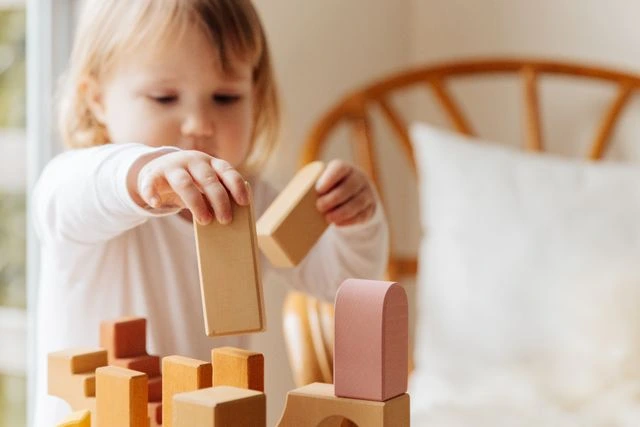
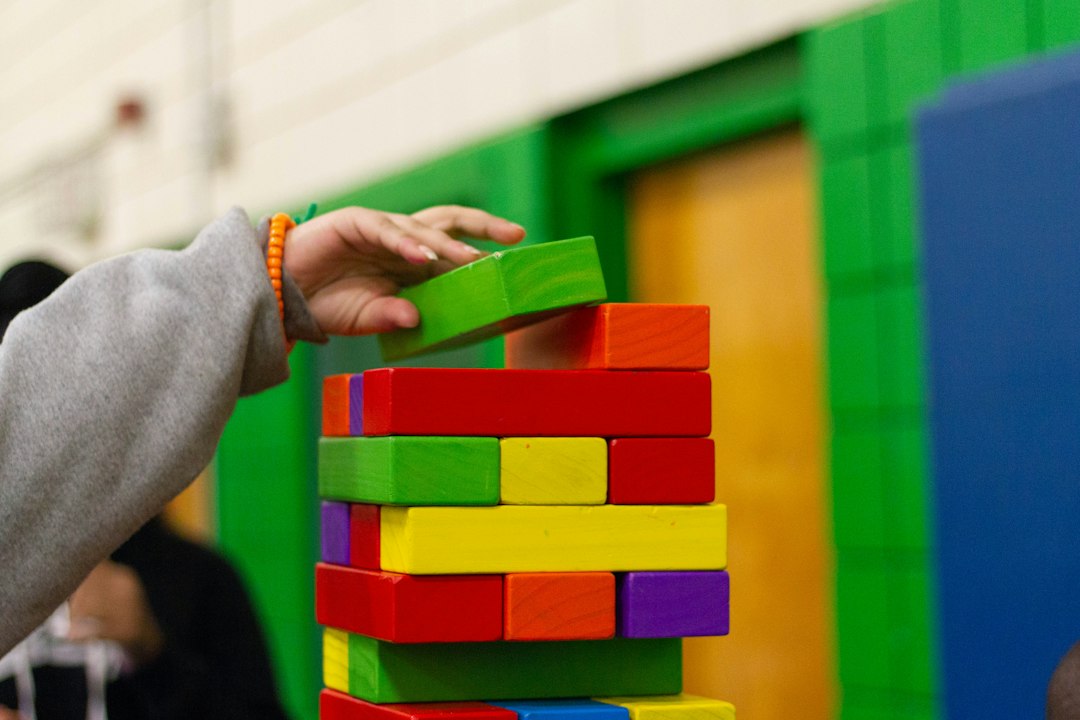
Construction toys are among the most adaptable options for primary-school children. They invite planning, spatial reasoning, experimentation, and persistence. A child may first copy a model, then invent a design, then discover that it collapses. That collapse is useful feedback: the child can change the base, redistribute weight, or try a different connection.
For younger children in this range, choose pieces that are comfortable to handle and compatible with their skill level. For older children, look for more complex connectors, gears, architectural challenges, or open-ended engineering prompts. Do not assume the most expensive or elaborate kit is the best. A simple set with enough pieces for several ideas can offer longer-lasting play than a model that is assembled once and never touched again.
Try the “three bridges” challenge: build one bridge that spans a book, one that holds a small toy, and one using fewer pieces. Ask, “What changed?” rather than immediately explaining the answer. Encourage drawings of designs before building, and photographs of experiments afterward.
Safety matters. Check age labels, small parts, magnets, sharp edges, and the presence of younger siblings. Loose high-powered magnets are especially hazardous if swallowed; avoid sets with accessible magnets and follow relevant product safety guidance.
2. Jigsaw puzzles and spatial challenges
Jigsaw puzzles can support careful observation, visual matching, and sustained problem solving. The most useful difficulty is not the largest piece count. It is the level at which a child can make progress while still needing to think. A child who finishes a puzzle in thirty seconds may need more challenge; a child who cannot find a single starting point may need a simpler image or a partner.
Look beyond ordinary picture puzzles. Tangrams, pattern blocks, shape-fitting puzzles, mazes, and three-dimensional puzzles invite different kinds of spatial thinking. A child may enjoy reconstructing a shape from a silhouette, rotating pieces mentally, or identifying a pattern in a design.
Model a strategy without taking over: sort edges, group colors, compare shapes, or work on one corner. Then let the child choose what to try. If frustration rises, reduce the task rather than completing it for them. “Let’s find three pieces that share this color” preserves agency.
For a child who dislikes competitive games, puzzles can be a calmer way to experience challenge. For a child who thrives on teamwork, a family puzzle creates natural opportunities to communicate and share discoveries.
3. Board games that build thinking and cooperation
Board games can offer repeated practice in turn-taking, flexible thinking, planning, counting, and handling disappointment. But the specific game matters. A game based entirely on random dice rolls offers different opportunities from one requiring memory, negotiation, or strategic choices. Neither is automatically superior: a simpler game can be the right introduction for a child learning to tolerate waiting.
For ages six to eight, look for rules that can be explained quickly and rounds short enough to finish before attention fades. Cooperative games, where players work toward a shared goal, may help children who find losing overwhelming. For ages nine to ten, strategy games with several possible moves can encourage comparison of options and discussion of consequences.
The adult’s role matters. Resist narrating every mistake. Instead ask, “What are your choices?” or “What might happen next?” Let the child make a reasonable move even if you see a better one. The learning opportunity is in making decisions and seeing results.
Keep the emotional stakes low. A child who loses is not failing a lesson in resilience. You can acknowledge disappointment, model gracious play, and offer a rematch later. See our related guide to helping children who fear mistakes.
4. Storytelling cards, puppets, and language games
Language-rich toys can encourage children to organize ideas, explain relationships, and invent narratives. Picture cards, story dice, puppets, character figures, and simple theater kits provide prompts without requiring a child to stare at a worksheet. A child might invent a story with a beginning, a problem, several attempts, and an ending.
Choose tools that allow multiple answers. Cards that only ask children to name an object may be useful for some purposes, but they offer less room for imagination than prompts such as “Who lives here?” “What went wrong?” or “What could happen next?” Encourage the child to change the ending or tell the story from another character’s perspective.
For emerging readers, pair spoken storytelling with a short written caption, a homemade comic, or a mini-book. For confident readers, introduce mysteries, clues, and plot twists. For bilingual families, invite the child to tell the same story in different languages without making every sentence a correction exercise.
Do not turn play into an oral examination. Follow the child’s idea and add a question occasionally. If reading has become a struggle at home, our guide on helping a child who hates reading offers a broader perspective on motivation.
5. Science experiment kits and nature tools
A science toy is valuable when it helps a child notice, question, predict, and observe. Magnifiers, simple measuring tools, plant-growing supplies, and age-appropriate experiment materials can make everyday phenomena more interesting. A kit with dramatic chemical reactions may look exciting, but the quality of instructions, safety precautions, and opportunities for reflection matter more than spectacle.
Try a seed-growing investigation. Plant similar seeds under different light conditions while keeping other variables as consistent as possible. Ask the child to predict what might happen, record observations, and consider whether the results support the prediction. A disappointing result can lead to a better question.
For older children, simple circuits or mechanical models may be engaging when they are age-appropriate and supervised. Avoid kits involving hazardous chemicals, exposed electricity, intense heat, or sharp tools beyond the child’s ability and the adult’s capacity to supervise. Follow the manufacturer’s instructions rather than improvising unsafe demonstrations.
Keep a small notebook of questions, drawings, and results. The point is not to manufacture a future scientist in a weekend. It is to make curiosity feel worthwhile.
6. Art, craft, and maker supplies
Creative materials are sometimes overlooked because they do not announce a specific academic outcome. Yet designing, drawing, sewing with age-appropriate tools, folding paper, and building models can involve planning, sequencing, fine-motor control, and problem solving. A child choosing how to represent an idea is making decisions rather than simply consuming a finished product.
Choose supplies that can be used in several ways: paper, washable markers, safe scissors, glue, modeling material, and recycled cardboard. Specialized craft kits can be enjoyable, but a kit with every step prescribed may leave less room for experimentation than a small collection of versatile materials.
Offer a challenge with a purpose: design a paper bridge, create a miniature town, build a puppet stage, or make a board game for the family. Invite the child to explain what they changed between versions. Celebrate the process rather than judging the result by adult standards.
Pay attention to safety, mess, and sensory preferences. Some children dislike sticky materials or strong smells; alternatives such as collage, drawing, or dry construction can provide similar creative opportunities.
7. Math games and number manipulatives
Number tiles, counters, dice, pattern blocks, measuring tapes, and simple money games can make mathematical relationships visible. A child can group objects into equal sets, estimate a length, compare fractions with pieces, or discover combinations that make a target number. This is different from assuming a toy will automatically raise test scores.
For younger children, focus on number sense and playful calculation: make ten in three different ways, build equal groups, or compare which tower uses more blocks. For older children, try budgeting games, probability experiments with dice, or puzzles requiring several operations. Adjust difficulty so the child experiences meaningful decisions.
Avoid turning every game into timed arithmetic. Speed is not the same as understanding, and some children become anxious when rushed. Ask, “How did you figure that out?” and accept different strategies. If a child gives a surprising answer, invite them to show their reasoning before correcting it.
A family shop game can combine counting, language, and social negotiation. Price imaginary items, create a small budget, and discuss trade-offs. The materials may cost almost nothing.
8. Coding, robotics, and screen-based learning toys
Coding and robotics products can be worthwhile, but their educational value depends on what children actually do. A programmable robot that invites children to plan a route, test commands, identify an error, and revise the sequence offers a different experience from a toy that simply performs a preset dance.
Look for a clear progression: simple commands first, then loops, conditions, sensors, or more complex challenges when appropriate. Check whether the product requires a paid subscription, specific device, constant internet access, or expensive replacement parts. A low purchase price can hide ongoing costs.
Screen-based learning is not automatically bad, and physical toys are not automatically good. Consider the balance of active creation versus passive tapping, the quality of feedback, advertising, data collection, and opportunities to pause. A child building a story or solving a meaningful puzzle is engaged differently from one repeatedly chasing rewards.
Protect privacy. Review accounts, chat features, permissions, and data practices before allowing a child to use a connected toy. For younger children, prioritize products that can be used offline or with minimal personal information.
9. Pretend-play kits and real-world role-play
Pretend play does not end when children start primary school. Shops, kitchens, veterinary clinics, construction sites, and miniature worlds can provide opportunities to negotiate roles, tell stories, use vocabulary, and think through everyday situations. Older children may prefer more complex simulations, such as running a pretend café or planning a community event.
Rather than buying a large themed set, combine a few props with ordinary materials. Paper menus, recycled containers, toy money, and notebooks can create a convincing shop. Invite the child to invent a problem: the delivery is late, a customer has a question, or the budget is too small. Let them propose solutions.
Role-play can also help children explore social situations gently, but do not use it to force disclosure of a difficult experience. If a child introduces a worrying theme, listen and respond appropriately rather than treating the play as a diagnosis.
These activities are especially useful when siblings or friends can collaborate, though adults may need to support fair role-sharing and boundaries.
10. Outdoor exploration and movement games
Not every educational toy belongs on a table. Balls, skipping ropes, simple obstacle-course equipment, kites, nature observation kits, and age-appropriate balance games can combine movement with planning, coordination, and social interaction. Children learn through their bodies as well as through words.
An outdoor scavenger hunt can invite categorization, counting, observation, and descriptive language. A homemade obstacle course requires children to plan a sequence, estimate distances, and revise rules. A map-based treasure hunt can encourage orientation and following instructions.
Choose equipment suited to the child’s abilities and environment. Check for traffic, weather, water hazards, falls, and appropriate protective gear. For children with mobility or sensory differences, adapt activities so participation is meaningful rather than insisting on one version of play.
A toy that encourages active outdoor play may be a better fit for a child who has spent the day sitting in class than another highly structured tabletop task.
A quick buying checklist for parents
Before purchasing, ask seven questions. First, is the toy safe for this child’s age and for younger children who may access it? Second, does the challenge match their current ability while leaving room to grow? Third, can the child use it in several ways? Fourth, does it fit the family’s space, time, and budget? Fifth, are batteries, subscriptions, replacement pieces, or a device required? Sixth, can the child play independently sometimes and with others at other times? Seventh, is the toy likely to be used repeatedly rather than once?
Look for clear manufacturer information, realistic photographs, accessible instructions, and credible safety labeling. Check recent product recalls through your country’s consumer safety authority. Be cautious about vague claims such as “boosts IQ,” “guarantees focus,” or “makes your child smarter.” Strong marketing language is not strong evidence.
If buying second-hand, inspect for missing parts, loose magnets, damaged batteries, frayed cords, and signs of a recall. Clean items according to the manufacturer’s guidance. For a family on a tight budget, libraries, toy exchanges, borrowed games, and homemade materials can offer meaningful play without buying new products.
How to turn a toy into a learning opportunity without ruining the fun
A toy’s value is not determined only by its design. Adult interaction can make play richer, but constant teaching can make it less enjoyable. Start by observing. What is the child trying to do? What do they already understand? What are they wondering about?
Join briefly with curiosity: “Tell me about your bridge.” “What do you think will happen if the base is wider?” “How could we change the rules so everyone can play?” Then step back. Children need room to test their own ideas and experience manageable frustration.
Avoid praising intelligence as a fixed trait. Instead notice specific processes: “You tried two designs and compared them,” or “You explained your strategy clearly.” Keep corrections proportional. A child who is happily inventing a story does not need every sentence interrupted for grammar feedback.
Make play accessible. Some children benefit from visual instructions, larger pieces, fewer distractions, shorter rounds, or cooperative rules. Adapt the environment and expectations before assuming the toy is unsuitable.
What about expensive STEM toys and subscriptions?
Higher price does not automatically mean higher educational value. A complex robotics kit may be excellent for a child who loves programming and has the support to use it. For another child, a box of blocks and a notebook may offer more sustained engagement. Compare total ownership cost, not just the sale price.
Before paying for a subscription, check whether the core activities remain available if you cancel. Review renewal terms, content quality, advertising, privacy settings, and whether the app encourages endless engagement. If a device is required, confirm compatibility with equipment your family already owns.
Consider a trial period when possible. Borrow a similar toy, watch a demonstration, or try a free sample without entering payment details. Ask your child to explain what they would create or solve with it. A strong answer is not proof of future use, but it is more informative than excitement about packaging.
For ParentingAssist readers, product recommendations should explain limitations and who a toy may not suit—not just celebrate features. Any future affiliate links should be clearly disclosed and should not change the educational criteria used to assess a product.
A seven-day play plan using toys you may already own
Monday: build a structure from blocks that can hold a book. Let your child test and redesign it. Tuesday: use a puzzle or tangram and talk about one strategy that helped. Wednesday: play a short board game and invite each player to explain one decision.
Thursday: invent a story using three household objects. Add a beginning, a problem, and an ending. Friday: measure five objects, estimate before measuring, and compare the results. Saturday: create a nature scavenger hunt or an indoor observation challenge. Sunday: let your child choose a favorite activity and teach someone else how it works.
The plan is a menu, not homework. Ten enjoyable minutes can be more valuable than a long forced session. If a child resists, reduce the structure or follow their interest. Keep notes about what they return to voluntarily; those observations can guide future purchases.
Notice progress in everyday terms: more detailed explanations, willingness to try again, imaginative variations, or better cooperation. Avoid claiming a specific toy caused a broad academic improvement based on a few sessions.
Frequently asked questions
**What are the best educational toys for a six-year-old?** Start with safe construction sets, simple strategy or cooperative games, age-appropriate puzzles, storytelling materials, and art supplies. Match the individual child’s interests and abilities rather than buying solely by age.
**Are educational toys worth the money?** Some are, but expensive products are not necessary for meaningful learning. Open-ended, durable materials often offer good long-term value.
**Do STEM toys improve grades?** A toy can provide opportunities to practice relevant skills, but claims about improved grades require evidence about a particular product and context. Do not assume a direct effect.
**How many toys does a child need?** There is no ideal number. A smaller, varied collection that a child uses deeply may be more useful than many rarely used items.
**Should parents always play alongside children?** No. Shared play can enrich conversation and model strategies, while independent play supports initiative. Both have a place.
**Are electronic learning toys harmful?** Not inherently. Assess the activity, age suitability, content quality, privacy, and balance with other experiences.
**What if my child abandons every toy quickly?** Observe whether the toy is too easy, too difficult, overly prescriptive, or simply not aligned with their interests. Try rotating a few toys and offering open-ended challenges before buying more.
**Can educational toys replace teaching?** No. Toys can complement learning, relationships, reading, outdoor experiences, and instruction; they do not replace them.
Sources and further reading
These references offer general evidence-informed guidance about play, development, and toy safety. They are not endorsements of particular products.
- American Academy of Pediatrics: The Power of Play — clinical report on play and healthy development.
- HealthyChildren.org: How to Buy Safe Toys — age appropriateness and common hazards.
- U.S. Consumer Product Safety Commission: Recalls — product recall checks.
- Harvard Center on the Developing Child — background on development and supportive experiences.
- UNICEF Parenting — practical family guidance on learning and development.
Explore related ParentingAssist articles on building children’s independence and encouraging careful work without perfectionism.
About the author
Younes Kehal is an educator, pedagogical director, school coach, and life coach with more than 20 years of experience working with children, families, teachers, and schools. Through ParentingAssist, he shares practical, research-informed guidance designed to help parents understand everyday challenges and respond with greater clarity and confidence.