Why your child ignores expensive toys — and what actually works
You choose a toy carefully, pay more than you planned, and imagine your child playing with it for weeks. A few days later it sits untouched while the packaging becomes a garage for toy cars.
Why do children ignore expensive toys? Price does not tell you whether a toy matches their interests, abilities, or preferred way of playing. Too many choices, a difficult setup, an uncomfortable sound, or simply wanting company can also be worth checking. Ignoring one gift does not show that a child is ungrateful.
Before buying a replacement, watch what happens when your child approaches the toy. This guide offers a way to work out what might be getting in the way, try small changes, and decide whether to keep, store, or pass it on.
Table of Contents
Price Is a Poor Guide to Play Value
An expensive toy may be well made, accessible, or especially appealing to your child. A cheap toy may be frustrating or unsafe. Cost alone settles neither question. Start with what the child will actually do with it.
Packaging can promise creativity, learning, or hours of entertainment without explaining the activity. Ask a more useful question: will my child be making choices, moving pieces, inventing a story, practising a specific skill, or enjoying a familiar action?
For example, a child who likes arranging objects may prefer a set of large figures to a complicated electronic pet. Another child may enjoy the predictability of pressing a button and hearing the same song. Neither preference needs to become a judgement about intelligence.
Use your budget as a boundary. A gift does not need to deliver a measurable developmental advantage to be worthwhile, and your family does not need a new purchase every time interest fades.
The American Academy of Pediatrics advises choosing toys that fit a child’s abilities and encourage interaction and play. Its guide to choosing toys also explains why simple materials can be useful. This is guidance about suitable play opportunities, not a ranking of every toy on sale.
What a Cardboard Box Can Offer
A safe, sturdy box can become a shop counter, a puppet stage, or a parking space. Its appeal may be that the child gets to decide what it is. That flexibility is one reason to offer ordinary materials alongside manufactured toys.
An adult might begin with one invitation: “Where should these animals sleep?” Then wait. If the child changes your idea or uses the box differently, there is no need to turn the activity into a lesson.
This does not make a box better than every puzzle, model, or electronic toy. Some children want a clear goal; others enjoy inventing their own. A useful selection can include both kinds of play.
Check the materials before offering them: remove staples, sharp edges, and loose pieces, and keep plastic packaging out of reach. A household object becomes a play material only when it is suitable for that child.
What This Does—and Does Not—Tell Us About the Brain
A child’s toy choices do not let us measure dopamine, diagnose a short attention span, or tell how much their brain is developing. Claims that one toy delivers “easy dopamine” while another delivers “earned dopamine” oversimplify what is happening.
Look at observable behaviour instead. Does your child return to the activity? Can they start it themselves? Do they seem comfortable? Are they trying something new, repeating an enjoyable action, or asking someone to join?
Repetition is not automatically a problem, and a difficult toy is not automatically a better one. Enjoyment, rest, companionship, and a manageable challenge can all have a place in play.
The aim here is to find a better fit, not to turn your living room into a brain-training programme.
Three Features to Consider When Choosing Toys
These are practical questions to help you observe your own child. They are not a scoring system that predicts intelligence or guarantees longer play.
1. Choice: Is There More Than One Way to Play?
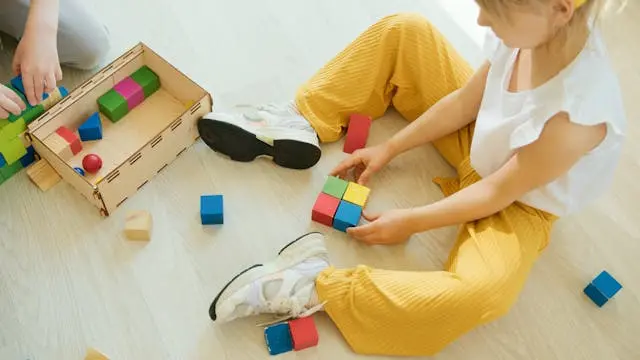
Open-ended materials allow different outcomes: blocks can become a road, a tower, or a home for figures. A puzzle has a more defined goal. Both can be satisfying when they fit the child.
If a toy is soon abandoned, try offering a different use before replacing it. Put the toy animals beside a sheet of paper and invite your child to draw their surroundings, or add a few large blocks to a vehicle game.
Keep the invitation small and optional. For more ideas with construction materials, see our guide to simple building toys. Here, the question is whether changing the setup helps this particular toy interest your child again.
2. Access: Can Your Child Use It Comfortably?
Watch for practical barriers: pieces that are hard to grip, instructions the child cannot yet read, sounds they dislike, or a box they cannot open. Helping with one of these barriers may be more useful than encouraging them to “try harder.”
A demonstration, a stable playing surface, larger pieces, or a quieter setting may make an activity easier to enter. Choose adjustments that fit the child; expensive equipment is not automatically necessary.
3. Challenge: Is the Next Step Manageable?
If your child asks for help, offer one small step and see whether they want to continue. For a puzzle, you might find an edge piece together. For construction, you might hold the base while they attach a piece.
If they are comfortable, ask whether they would like a new challenge. If they are upset or tired, making the task easier or stopping is a reasonable choice. Play need not become a test of persistence.
Do not assume that little interest means the toy is too easy. It may be too difficult, too noisy, unrelated to their interests, or simply not what they want to do that day.
Match the Activity to Your Child’s Current Abilities
| What you notice | An option to try | What to check |
|---|---|---|
| Your child explores by grasping and mouthing | A toy designed and labelled for their age and use | No loose small parts, damaged pieces, or accessible batteries. |
| Your child enjoys filling, emptying, or moving objects | Large stacking cups or suitable blocks | Pieces are safe for the youngest child who can reach them. |
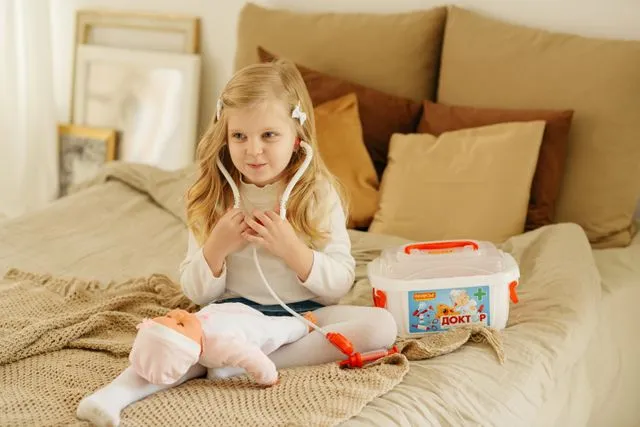
| Your child invents stories | Figures, pretend-play props, or an inspected cardboard box | The child can choose the story; props do not need to be bought as a set. |
| Your child wants a clear goal | A suitable puzzle or simple construction task | They can understand the task, with help if wanted. |
| Your child has a sustained interest | Materials connected to that interest or an agreed longer project | Cost, storage, instructions, and any age or supervision requirements. |
Follow age and safety warnings even when a child seems advanced. The AAP’s toy safety guidance highlights choking risks, loose high-powered magnets, and button batteries. Keep older children’s small components away from younger siblings.
Observe Before You Buy: Four Questions
Try these questions during an ordinary play session. They are prompts for noticing obstacles, not a validated assessment or a test your child can fail.
Can they begin? Notice whether they approach the toy, hesitate over the instructions, or need help opening or assembling it. Make the first action easier if that is the barrier.
What do they choose? Watch which parts they return to. You may discover that they enjoy arranging the pieces more than following the intended activity.
What makes them stop? Look for a broken part, repeated frustration, discomfort, interruption, or a request for company. Ask a child who can explain: “What would make this more fun for you?”
What changes when you join? Offer a few minutes of shared play, then leave room for their ideas. If they want company, say when you can play again instead of promising to be available all the time.
You might keep a brief note: “Would not start; needed help with the lid; then played with the figures.” That observation gives you a specific next step. “Does not appreciate anything” does not.
Three Situations That Can Look Like Boredom
These examples are possibilities to explore, not diagnoses. More than one may apply, and sometimes the simplest explanation is that the child prefers another activity.
1. The Newness Has Worn Off
A toy can be exciting on the first day without becoming a lasting favourite. You can acknowledge the change without immediately promising another purchase: “You liked trying it. We can put it away and decide later whether you want it again.”
2. The Setup or Difficulty Gets in the Way
Imagine a child abandoning a construction set after the model repeatedly falls apart. Try a smaller build together, check that the pieces work, or choose a simpler activity. If a toy has become too easy, offer a different use if your child wants one; do not insist on keeping an outgrown activity in daily rotation.
3. The Child Wants a Different Kind of Play
A child may be looking for movement, company, or a familiar game instead of another object. Offer a choice that fits the moment. A short family game is one option when the wish is to do something together.
Join In Without Taking Over
You do not have to entertain your child throughout every play session. Start by noticing what they are doing and ask whether they want you to join. Follow their lead when the activity is safe.
Instead of a stream of questions, try one comment: “You made a long road.” If they invite help, offer it. If they are absorbed, let the activity continue without turning it into a lesson about colours, counting, or being clever.
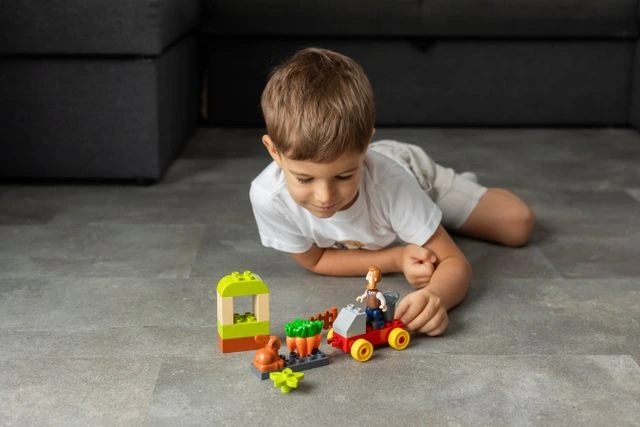
For a new toy, show one possible action, then hand control back. With a pretend kitchen, you could serve a cup and wait for their response; with blocks, you could add one piece and see what they choose next.
If play together is difficult to fit into the day, name a realistic time you can offer. A few available minutes are a practical starting point, not a scientifically established minimum or a promise of a particular result.
Before Buying Another Toy: My Advice to Parents
When a child quickly loses interest in toys, my advice is to pause before buying more. If new toys arrive frequently, the child may start looking forward to the next one instead of exploring what they already have. This is one possible pattern; a toy’s suitability for the child’s abilities and interests also matters.
I also encourage parents to help children discover how to enjoy a toy. Sit alongside your child, demonstrate one way to play, and then let them try their own ideas. Sometimes a little help getting started opens up possibilities they had not noticed.
One practical option is to offer a manageable selection of toys and keep some others for another day. Before the next purchase, spend time exploring a familiar toy together: build something different, invent a story, or let your child show you a new use for it.
What research adds: In a study of 36 toddlers aged 18 to 30 months, children played with four toys in one session and 16 in another. With fewer toys available, they played longer with individual toys and used them in more varied ways. These findings concern immediate play behavior in toddlers, rather than the long-term effects of buying new toys.
A Practical Checklist: Before You Buy the Next Toy
- Does this match an interest my child has shown, rather than one I wish they had?
- Can they use it safely, with the help and supervision it requires?
- Do we already own something that offers a similar activity?
- Can we borrow it, try it first, or use what we have?
- Have I checked age warnings, condition, storage, and the full cost?
- Am I comfortable with the possibility that it will not become a favourite?
No checklist can guarantee that a child will keep using a toy. Set a budget and, when possible, involve them in the choice without making them responsible for justifying an adult’s purchase.
A One-Week Trial Before Buying More
Use this as a flexible household experiment, not a research-tested programme. Choose one change at a time so that you can see what seems to help.
- First, observe. Leave a familiar, safe toy available and notice how play starts and stops. Avoid coaching for the whole session.
- Next, simplify. Put some unused toys out of sight, with your child’s involvement when appropriate. Keep favourites and any items they rely on for comfort accessible.
- Then, offer company. Demonstrate one action or join the child’s idea. Try a small change in setup if they want it.
- At the end of the week, review. Ask what they enjoyed. Keep useful toys accessible, store others for a later try, and consider passing on safe, complete items that are no longer wanted.
The four-versus-sixteen-toy study described above is not a rule that every child should own four toys. If a smaller selection helps your family, keep it. If your child enjoys a larger collection and can use and tidy it comfortably, there is no need to impose an arbitrary number.
A neglected toy alone does not establish a developmental or attention problem. If your concern is broader—such as a persistent loss of interest across activities or changes in skills—describe what you have noticed to your child’s healthcare professional.
Summary: What To Remember
- Start with fit. Price and marketing claims do not tell you whether a toy will interest your child.
- Watch for barriers. Difficulty, setup, discomfort, and wanting company are worth checking.
- Offer variety without constant buying. Open-ended play and activities with a clear goal can both have a place.
- Join briefly and follow their lead. Help them enter the activity without directing every move.
- Use research within its limits. A small toddler study about immediate play does not prove lasting effects of buying fewer toys.
- Keep safety and your budget in view. A toy does not have to become a favourite to have been a reasonable choice.
Younes Kehal is an educational director, certified school coach, and certified life coach with 20 years of experience working with children, families, teachers, and schools. His guidance combines practical educational experience with carefully reviewed research.