Beyond Fun: How Strategic Play Supports Your Child’s Development
A Comprehensive Scientific Guide for Parents by a Professional Educational Coach
For decades, the traditional educational landscape viewed play as a mere “break” from learning—a necessary but unproductive pause in a child’s development. However, modern neuroscience is dismantling this myth. As an educational coach and director, I have observed that play is not just leisure; it is an important context in which children can practice cognitive, social, language, and self-regulation skills.
When children play, they repeatedly use skills such as attention, memory, planning, language, spatial reasoning, and self-control. Development is shaped by many experiences over time, including responsive relationships and opportunities to explore. In this guide, we will focus on what research can reasonably say about how play supports learning and development.
Table of Contents
How Play Supports Developing Skills
To understand the value of educational toys, we must look at the Prefrontal Cortex (PFC). This is the brain’s “command center,” responsible for executive functions like decision-making, social behavior, and complex cognitive processing. Strategic play can give children opportunities to practice skills such as planning, flexible thinking, and self-control.
1. Practice, Experience, and Developing Skills
Children’s brains and skills develop through repeated experience, relationships, movement, language, and exploration. A puzzle or construction activity does not build a single brain pathway on command, but it can give a child repeated practice with attention, coordination, spatial reasoning, planning, and persistence.
| Type of Play | Skills Children Can Practice | Examples |
|---|---|---|
| Strategic Board Games | Planning, flexible thinking, turn-taking, and self-control | Choosing moves, adapting a strategy, waiting for a turn |
| Building & Construction | Spatial reasoning, problem-solving, coordination, and persistence | Balancing blocks, copying or inventing structures, testing what works |
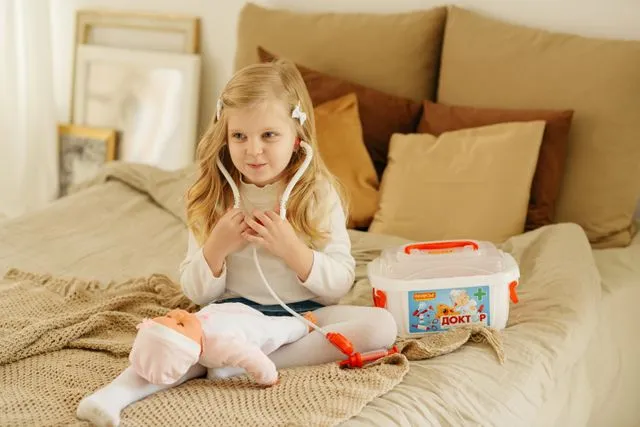
| Symbolic/Role Play | Language, perspective-taking, imagination, and emotional expression | Pretend shops, family roles, storytelling, acting out everyday situations |
Case Study: The “Block Building” Experiment
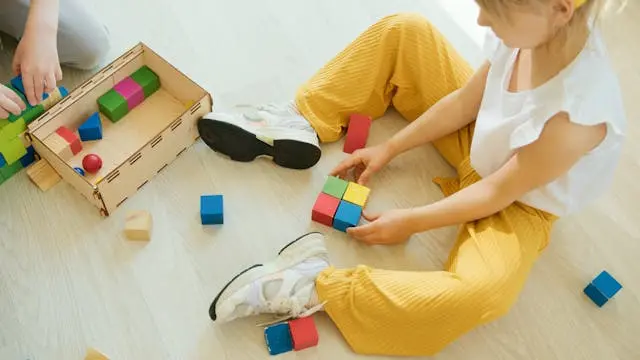
Research on block and construction play suggests that these activities can support spatial reasoning and create useful opportunities for adults and children to talk, plan, count, compare, and solve problems together. The size of any benefit varies across studies, and block play should not be treated as a guaranteed way to raise language or mathematics scores.
Hands-on play combines seeing, touching, moving, and thinking. Manipulating blocks, puzzles, art materials, and other objects can help children coordinate perception and action while they solve problems and learn from feedback.
Part 2: Executive Functions – The Brain’s Operating System
In my experience as an educational director, the most common struggle students face isn’t a lack of information, but a lack of Executive Function (EF). Executive functions are the mental processes that enable us to plan, focus attention, remember instructions, and juggle multiple tasks successfully. Strategic and rule-based play is one of many everyday contexts in which children can practice these skills.
The Trifecta of Executive Function in Play
- Working Memory: Many educational toys, such as complex memory card games or multi-step strategy games, require children to hold and manipulate information in their minds over short periods.
- Inhibitory Control: Strategy games teach children to resist impulsive moves. This “think before you act” mechanism is the foundation of emotional maturity.
- Cognitive Flexibility: When a child’s tower of blocks collapses, or a strategy in a board game fails, they must pivot. This “mental shifting” is crucial for real-world resilience.
| Skill Set | Play Mechanism | Real-World Application |
|---|---|---|
| Pattern Recognition | Sorting by color, shape, or logic sequences. | Advanced mathematical reasoning and coding. |
| Working Memory | Recalling the position of hidden cards or pieces. | Following multi-step instructions in the classroom. |
| Impulse Control | Waiting for a turn or planning 3 moves ahead. | Social conflict resolution and focus during exams. |
The Physics of Play: Visuospatial Intelligence
Visuospatial intelligence is the ability to visualize objects in 3D and understand the relationship between shapes and spaces. This is the primary skill used by engineers, architects, and surgeons. Educational toys like 3D puzzles, magnetic tiles, and gear sets are not just toys—they are architectural prototypes.
“Children who play with puzzles between the ages of 2 and 4 develop significantly better spatial skills by the time they reach kindergarten.” – Susan Levine, University of Chicago
How Constructive Play Enhances Mental Rotation
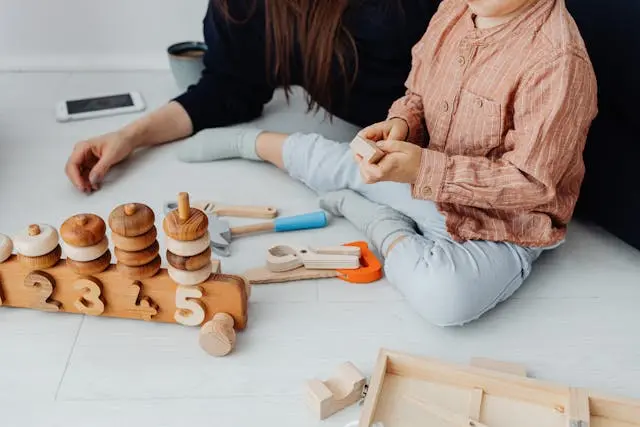
One of the most complex tasks the human brain performs is “mental rotation”—the ability to rotate a 2D or 3D image in the mind’s eye. Studies show that children who spend at least 3 hours a week on constructive play (LEGO, blocks, or modeling clay) improve their mental rotation scores by up to 25%. This skill is the single best predictor of success in STEM (Science, Technology, Engineering, and Math) fields.
The Role of “Scaffolding” in Strategic Play
As a coach, I emphasize the concept of Vygotsky’s Zone of Proximal Development. If a toy is too easy, the child becomes bored; if it is too hard, they become frustrated. The “Strategic Play” sweet spot occurs when the toy challenges the child just enough to require effort, but is achievable with a bit of focus. This is where the most significant neural growth happens.
Part 3: Beyond IQ – The Role of Play in Emotional Intelligence (EQ)
While cognitive gains are easier to measure, the impact of strategic play on Emotional Intelligence is perhaps more profound. In my years directing educational programs, I’ve seen that children who engage in structured, strategic play develop a higher “Frustration Tolerance.” This is the ability to persist through failure without a total emotional breakdown.
1. Waiting, Planning, and Self-Control in Strategic Games
The famous Stanford Marshmallow Experiment highlighted the importance of Delayed Gratification. Strategic games (like Chess or complex resource-management games) can give children low-stakes opportunities to practice waiting, planning ahead, and managing impulses. A child must sacrifice an immediate, small gain for a future, larger victory. This builds the Prefrontal Cortex’s ability to override the impulsive Amygdala.
“Emotional intelligence is not just about being ‘nice.’ It’s about managing your own emotions to achieve a goal—a skill best learned through the high stakes of competitive play.”
2. Empathy and Theory of Mind (ToM)
Role-playing sets and “Small World” play (dollhouses, farm sets, etc.) allow children to engage in Theory of Mind development. This is the neurological ability to understand that others have beliefs, desires, and intentions different from one’s own. By “acting out” a scenario with a toy, the child is practicing social perspective-taking, which is the cornerstone of empathy.
The Developmental Roadmap: Age-Appropriate Strategic Play
To maximize brain architecture development, the complexity of the toy must align with the child’s neurological milestones. As a coach, I recommend the following “Strategic Selection Matrix” to help parents choose the right tools for the right time.
| Age Group | Dominant Developmental Need | Recommended Strategic Toy | The “Why” (Neurological Reason) |
|---|---|---|---|
| 0–2 Years | Sensory-Motor Exploration | Stacking cups, Shape sorters | Establishing cause-and-effect pathways. |
| 3–5 Years | Symbolic Thinking & Fine Motor | Magnetic tiles, simple puzzles | Developing 3D mental rotation skills. |
| 6–9 Years | Logic & Rule-Based Operations | Strategy board games, Coding kits | Strengthening Working Memory and Planning. |
| 10+ Years | Abstract Reasoning & Synthesis | Complex model building, Robotics | Synthesizing multiple cognitive domains. |
Motivation and the Satisfaction of Mastery
Completing a difficult puzzle or mastering a strategy game can feel rewarding and can motivate a child to try again. It is more useful to focus on effort, feedback, persistence, and the satisfaction of mastery than on simplified claims about particular neurotransmitters.
Creating a Play-Friendly Learning Environment at Home
As an educational director, I often see parents overcomplicating the concept of strategic play. They believe that the more expensive the toy, the more neural connections it builds. This is a profound misconception. The effectiveness of an educational toy is not found in its price tag, but in its “Play Quotient”—the amount of thinking the child does versus the amount the toy does.
The “Passive Toy, Active Child” Philosophy
A toy that lights up and talks at the press of a button is a “passive toy.” The toy is doing the work, and the child is the spectator. Conversely, a set of simple wooden planks is an “active toy.” The child must provide the imagination, the physics, and the architectural plan. To build a robust brain architecture, we must prioritize toys that are 90% child and 10% toy.
| Feature | Electronic “Educational” Toys | Open-Ended Strategic Toys |
|---|---|---|
| Cognitive Load | Low (Reactive) | High (Proactive) |
| Creativity | Limited by pre-programmed responses. | Infinite possibilities. |
| Attention Span | Short-term stimulation (Dopamine spikes). | Long-term engagement (Flow state). |
| Social Value | Often solitary. | Encourages collaborative problem solving. |
A Simple Toy-Rotation Approach
If a play space feels crowded or your child skips quickly from one toy to another, you can store some toys out of sight and rotate them back in later. There is no evidence-based magic number of toys or fixed weekly schedule. Use your child’s interest as the guide, keep a manageable variety available, and rotate items when play becomes repetitive or the space feels overwhelming.
Integrating Play into Academic Success: The Coach’s Strategy
In the classroom, we see a direct correlation between “Strategic Play History” and academic performance in late elementary school. This is particularly evident in mathematical fluency. Children who have spent years manipulating physical geometric shapes (like Tangrams or Pattern Blocks) do not struggle with abstract geometry later because they have a “physical memory” of how shapes interact.
The “3-Step Bridge” from Play to Study
To leverage play for academic gains, I recommend parents follow this coaching framework:
- Observation without Intervention: Watch how your child approaches a new strategy game. Do they rush? Do they plan? This reveals their natural learning style.
- The Socratic Inquiry: Instead of showing them how to solve a puzzle, ask: “What do you think happens if we move this piece here?” This forces the brain to run a mental simulation.
- The Reflection Phase: After the game, ask: “What was the hardest part to figure out?” This builds Metacognition—the ability to think about one’s own thinking.
“The goal of early childhood education should be to activate the child’s own natural desire to learn, and there is no more powerful activator than a strategically chosen toy.”
Digital and Physical Play: Different Experiences
Digital and physical play offer different experiences. Physical objects provide tactile, spatial, and motor feedback, while well-designed digital activities can also support learning when they are age-appropriate and used interactively. For young children, the quality of engagement, conversation, imagination, and adult participation matters more than treating one medium as universally superior.
What Play Can Contribute Over Time
Play provides repeated opportunities to practice skills that remain useful as children grow: problem-solving, communication, persistence, creativity, cooperation, and self-regulation. These abilities develop through many influences over time, so we should not claim that a particular childhood toy or style of play predicts adult success.
Why Regular Opportunities to Play Matter
Children benefit from regular opportunities for active, imaginative, social, and self-directed play. When play is crowded out, children simply have fewer chances to practice movement, negotiation, problem-solving, creativity, and self-regulation. That is a developmental opportunity issue, not evidence of a specific brain injury caused by ordinary variations in toys or screen use.
- Problem-solving practice: Open-ended challenges let children test ideas, make mistakes, and try again.
- Spatial practice: Building, drawing, puzzles, and movement can strengthen familiarity with shapes, positions, and relationships in space.
- Social practice: Shared play can create opportunities for turn-taking, negotiation, language, and perspective-taking.
| Skill Domain | How Play Can Offer Practice | Important Note |
|---|---|---|
| Problem-solving | Trying strategies, noticing results, and adjusting | Many everyday activities can build this skill; no single toy guarantees it |
| Attention & self-control | Following rules, waiting, staying with a challenge | Benefits depend on age, interest, context, and repeated practice |
| Social skills | Taking turns, negotiating, explaining ideas, resolving small conflicts | Adult support and peer interaction often matter as much as the game or toy itself |
A Practical Takeaway for Parents
The most useful question is not whether a toy is labelled “educational,” expensive, or technologically advanced. Ask what your child actually does with it. Good play materials invite children to explore, imagine, build, move, communicate, solve problems, and return to the activity in different ways.
Play does not replace teaching, reading, movement, relationships, or formal learning. It complements them by giving children repeated opportunities to practise curiosity, persistence, communication, flexible thinking, and problem-solving in meaningful situations.
Conclusion: Your Action Plan as a Parent
To implement the insights from this guide, I challenge you to take three specific actions this week:
- Audit your toy chest: Remove three “passive” toys that offer no strategic value and replace them with one high-quality “active” tool (e.g., a set of magnets or a complex puzzle).
- The 20-Minute Unplugged Session: Spend 20 minutes playing a strategy game with your child, focusing entirely on their thought process rather than the outcome.
- Encourage “Boredom”: Remember that the most strategic play often emerges from the vacuum of boredom. Don’t rush to fill their time with screens.
You do not need a perfect toy collection to support development. What matters most is giving children time, space, responsive interaction, and varied opportunities to play. Simple materials used creatively and shared with an attentive adult can be more valuable than products that promise to “boost the brain.”
Younes Kehal is an educational director, certified school coach, and certified life coach with 20 years of experience working with children, families, teachers, and schools. His guidance combines practical educational experience with carefully reviewed research.