Why Bees Matter and Butterflies Are Disappearing — How to Raise a Child Who Cares About Wildlife
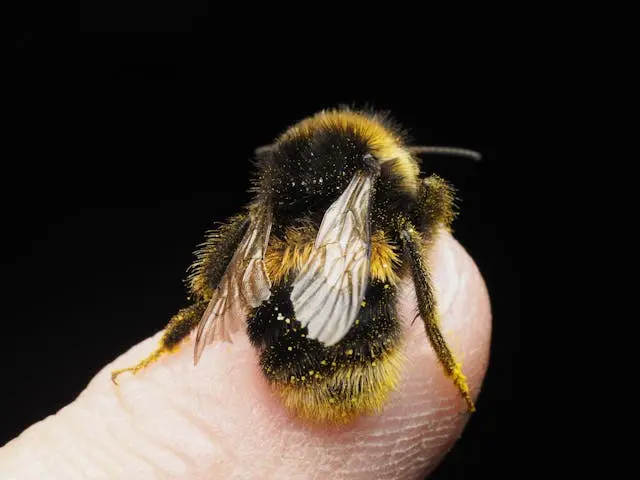
My son was eight years old when he found a bee on the kitchen windowsill. It was not moving, but it was alive — he could see the small pulse of it. He watched it for a long time, then went to the garden and came back with a small piece of flower. He held it close to the bee and waited. And after several minutes, the bee’s legs began to move, and it found the flower, and eventually it flew away. He came to tell me about it with the kind of satisfaction on his face that adults spend years trying to locate again.
I did not tell him that day how many bees there used to be. I did not tell him what the research says about what is happening to insect populations globally. He was eight. What I did was something simpler and, I believe, more important: I paid attention alongside him. I let the bee matter.
That moment, repeated in different forms across years of outdoor time and shared attention to small living things, is how a child develops what researchers and conservationists increasingly call “biophilia” — the deep, innate human connection to other living species that evolution has built into us, and that modern life has systematically eroded. And that connection — not information about extinction rates, not lectures about biodiversity loss, but genuine, felt relationship with the living world — is the foundation of every adult who chooses, throughout their life, to protect it.
This guide is about how to build that foundation in your child. Practically, joyfully, and without any of the anxiety that environmental education so easily slides toward.
Table of Contents
What Is Actually Happening to Wildlife — and Why It Matters
Before we discuss how to raise children who care about wildlife, it is worth being honest about why it matters so urgently.
We are living through what scientists are calling the sixth mass extinction — the largest extinction event since the asteroid that ended the dinosaurs, and the first one caused entirely by a single species. The WWF’s Living Planet Report documents that global wildlife populations have declined by an average of 69% since 1970. Not individual species — the average across all monitored vertebrate populations on Earth.
Insect populations — which underpin almost every terrestrial food chain and ecosystem — are declining even more dramatically. A landmark 2019 study found that 40% of insect species are threatened with extinction and that total insect biomass is declining at approximately 2.5% per year. The bees and butterflies that most children can still name and recognize are among the most vulnerable. Three quarters of the world’s flowering plants, and about 35% of the world’s food crops, depend on animal pollinators — most of them insects. The collapse of insect populations is not an environmental abstraction. It is a direct threat to the food systems that sustain human life.
None of this should be delivered to a young child as a weight they must carry. As we explored in our article on talking to children about environmental issues without causing anxiety, fear produces paralysis, not engagement — and children who are made to feel responsible for problems they cannot influence become hopeless rather than active. The goal is not to transmit alarm. It is to build the connection and the agency that make genuine care possible — because children who love the living world will protect it, in the small daily ways available to them now and in the larger ways available to them as adults.
Why Children Are the Most Important Audience for This
Research from the National Wildlife Federation identified something that every conservation organization has since treated as foundational: the most direct route to caring for the environment as an adult is participating in wild nature activities before the age of eleven. Not learning about nature. Not being told about nature. Experiencing it directly — touching it, observing it, spending unstructured time in it.
The child who has watched a caterpillar become a butterfly, who has identified a bird by its call, who has held a frog at the edge of a pond and felt the cold surprising weight of it, who has planted something and watched what came to visit the flower — that child has built an emotional relationship with the living world that information alone cannot create. And emotional relationship is what produces protective behavior, across a lifetime, in ways that rational argument never quite manages.
Wildlife conservation education doesn’t have to be complicated — it can start with simple concepts like “why bees matter” or “how litter hurts animals.” These early lessons don’t just inform — they shape values. And values shaped in childhood are the ones that persist.
The window is not small, but it is real. The habits of attention — of noticing what is alive around you, of being curious about other species, of feeling that the fate of a bee or a butterfly is something that concerns you — are most naturally and most durably formed in the first decade of life. After that, they can still be built, but with more effort and against more ingrained habits of inattention.
Why Bees and Butterflies Are the Perfect Starting Point
Of all the wildlife that children might be taught to care about, bees and butterflies have a particular pedagogical value — and it is not accidental that they are the ones most children already recognize.
They are accessible. They are in gardens, in parks, in window boxes, in any patch of flowers anywhere. They are beautiful in ways that children respond to intuitively. They are safe to observe closely. And their ecological role — pollination — is one of the most concrete and comprehensible ecological relationships available to explain to a young child: without bees, flowers cannot make seeds, and without seeds, many of the plants that animals and people eat would disappear.
Bees are the world’s most important pollinators. Of the 100 crop species that provide 90% of the world’s food, over 70 are pollinated by bees. This is not an abstract statistic for a child who has watched a bee work a flower — it is the moment that statistic becomes a story, a relationship, a reason to care.
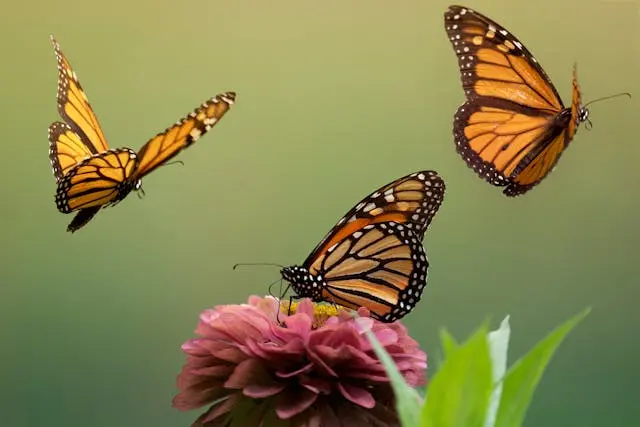
Butterflies are equally powerful as gateway species — not only for their beauty but for what their presence or absence tells us about the health of an ecosystem. A garden that has butterflies is a garden that has the right plants, the right habitats, and the right absence of pesticides. Teaching a child to look for butterflies is teaching them to read the health of the living world around them — an environmental literacy that costs nothing and produces genuine, lasting awareness.
Building Wildlife Connection at Home: A Practical Room-by-Room Guide
The most effective wildlife education happens not in classrooms or formal programs — it happens at home, in the ordinary flow of daily life, in the small habits of attention that parents model and children absorb. Here is how to build it, starting with wherever you are.
In the Garden — Even a Small One
If you have any outdoor space at all — a garden, a balcony, a window box, a single pot — you have the foundation for wildlife habitat education. Planting native flowers to attract pollinators, setting up a bird feeder, or building a bee hotel or bug house are excellent hands-on projects that teach children about the needs of different species and give them a sense of pride in contributing to animal habitats right in their own backyards.
The key principle is native plants. Native plants are those that evolved alongside local wildlife — and local pollinators, birds, and insects have co-evolved specifically with these plants. A garden full of exotic ornamental plants may look beautiful but provides relatively little for local wildlife. A garden with even a small patch of native wildflowers, a lavender plant, a buddleia, or a native flowering tree is a food source and a habitat that local species will find and use.
Involve your child in choosing what to plant with wildlife in mind. “Which flowers do you think the bees will like best?” “What could we plant that butterflies need?” These questions transform gardening from a chore into a purposeful act of wildlife stewardship — and the child who watches the first bumblebee arrive at the plant they chose and helped put in the ground has an experience of genuine environmental impact that is entirely disproportionate to the effort involved.
Building a bee hotel — a simple structure of hollow tubes and natural materials that provides nesting habitat for solitary bees — is one of the most engaging and most valuable wildlife projects available to families with any outdoor space. It is cheap, it takes an afternoon, it teaches children about the nesting needs of bees, and it produces the sustained satisfaction of watching the hotel gradually be occupied over the following weeks. If you can do one outdoor wildlife project with your child this year, make it this one.
In the Kitchen Window and on the Balcony
No garden is required. A window box of lavender, thyme, and marigolds is a pollinator food source that will attract bees and butterflies to even the most urban apartment. A bird feeder attached to a balcony railing brings birds close enough for detailed observation. A small water dish — kept clean and filled — provides drinking water for birds and insects in the summer months when water is scarce.
These small interventions connect even city-dwelling children to local wildlife in direct, observable ways. The child who watches a bee work the lavender on their balcony, who sees a blue tit at the feeder they helped fill, who discovers that a butterfly has laid eggs on the nettle in the corner of the pot — that child is not environmentally disconnected. They have a living relationship with the natural world that exists two feet from their bedroom window.
On Walks and in Outdoor Spaces
Every walk is a wildlife observation opportunity — if the adult makes it one. The habit of noticing is not automatic. It is modeled. A parent who crouches to look at an insect, who stops to identify a bird call, who says “look at this” rather than walking past — that parent is teaching their child that the living world around them is worth attending to.
Simple tools amplify this enormously. A child with a magnifying glass encounters the garden as an entirely different world — the intricate detail of a bee’s body, the structure of a spider’s web, the life that is happening at a scale that the naked eye routinely ignores. A basic field guide to local birds or butterflies — used casually, as a reference when something is spotted rather than as a formal study text — builds identification skills that feed genuine curiosity and produce the satisfying click of recognition that is one of the deepest pleasures of natural history.
As we explored in our article on building eco-friendly family habits, the most durable environmental values are built through consistent daily practice rather than occasional big gestures. A family that notices wildlife on every walk — that has built the habit of paying attention — is doing more for the next generation of conservation than any formal environmental education program.
The Citizen Science Opportunity — and Why It Matters for Children
One of the most powerful developments in wildlife education in recent years is the growth of citizen science — programs that invite ordinary people to contribute to real scientific research by recording what they observe. For children, citizen science programs represent something extraordinary: the opportunity to do real science, to contribute real data to real research, and to experience themselves as people whose observations matter.
Programs like birdwatching counts, butterfly surveys, frog call surveys, or nature journaling contribute directly to conservation research. The annual Big Garden Birdwatch, the Big Butterfly Count, and similar programs around the world are not symbolic exercises — they generate the population data that researchers use to understand how wildlife populations are changing, where they are thriving, and where they need help.
A child who participates in a butterfly count — who carefully records which species they see, how many, and where — is doing something real. They are a scientist. They are contributing to the body of knowledge that shapes conservation policy. That experience of genuine agency and genuine contribution is one of the most powerful antidotes to the helplessness that environmental awareness can produce.
Involving your child in a citizen science project appropriate to their age and interests requires nothing more than a phone app or a simple recording sheet and a willingness to spend an hour observing. The entry cost is trivial. The developmental and environmental return is significant.
Making It Age-Appropriate: What Works When
| Age | What Children Can Understand and Do | Activities That Build Connection |
|---|---|---|
| 2–4 | Animals are living things with needs. We are gentle with small creatures. Some animals help flowers grow. | Watching bees and butterflies in the garden, watering plants, feeding birds with help, magnifying glass exploration of garden life |
| 4–7 | Bees and butterflies pollinate flowers. Without pollinators, we would not have many of the foods we eat. Habitats are homes for animals — we should not destroy them. | Building a bee hotel, planting pollinator-friendly flowers, growing a butterfly-friendly plant, watching a caterpillar become a butterfly, filling a bird feeder independently |
| 7–10 | Biodiversity means different species depend on each other. Habitat loss, pesticides, and climate change are causing species decline. Individual and family choices affect wildlife. | Participating in butterfly or bird counts, keeping a nature journal, identifying local species with a field guide, creating a wildlife-friendly corner of the garden independently |
| 10–13 | Ecosystems are interconnected. Biodiversity loss has cascading consequences. Conservation is a science and a practice — people work on it professionally. Individual action contributes to collective change. | Contributing to citizen science programs, researching local conservation issues, advocating for wildlife-friendly practices at school, visiting nature reserves and conservation projects |
| 13+ | Conservation policy, the economics of biodiversity, the political dimensions of wildlife protection, the role of individual consumer choices in habitat and species loss | Independent research, environmental advocacy, citizen science leadership, career exploration in conservation biology and related fields |
Practical Things Your Family Can Do This Week
One of the barriers to wildlife education at home is the assumption that it requires significant effort, expense, or expertise. The most effective things families can do are none of these. Here is a starting list of actions that require almost nothing except attention and the willingness to begin.
Stop Using Pesticides in the Garden
This is the single highest-impact change most families with outdoor space can make for local wildlife — and it costs nothing because it involves stopping something rather than starting something. Pesticides and insecticides kill not only the target pests but the beneficial insects — bees, butterflies, hoverflies, ground beetles — that gardens need. An organic garden that tolerates some aphids is a garden that still has ladybirds to control them, and bees to pollinate the flowers, and birds to eat the caterpillars. The removal of pesticides is the removal of the primary direct cause of local insect decline that is within a family’s control.
If slugs or specific pests are a genuine problem, physical barriers and companion planting are both effective alternatives that require some research but no chemistry. The time invested in learning to garden without pesticides is one of the most environmentally meaningful investments a family can make.
Let a Corner of Your Garden Go Wild
A patch of lawn that is allowed to grow longer, a corner that is left unmowed, a pile of logs or stones that is left undisturbed — these “untidy” spaces are among the most valuable wildlife habitats in an urban garden. Long grass provides shelter and food for insects. Log piles are habitat for beetles, woodlice, slow worms, and hundreds of invertebrate species. A stone pile is a potential home for lizards, frogs, and the ground beetles that are among the most important garden predators.
Involving children in designating and tending a “wild corner” gives them ownership of a habitat — and the gradual colonization of that corner by wildlife is one of the most rewarding long-term nature observations available in a domestic setting.
Reduce or Eliminate Outdoor Lighting at Night
Light pollution is one of the least-known and most significant threats to nocturnal insects, including moths — which are as important as bees for pollination but are far less visible and far less celebrated. Artificial light at night disrupts moth navigation, interferes with their reproduction, and draws them to death at light sources rather than to flowers. Turning off unnecessary outdoor lighting, particularly during the summer months when moths are most active, is a simple and cost-free contribution to the protection of nocturnal insect populations.
For children, moths offer one of the most magical wildlife encounters available: a moth trap — a simple light placed over a collection box, checked in the morning — reveals a spectacular diversity of nocturnal insects that most children have never seen. The discovery that dozens of beautiful moth species live in the same garden they walk through every day is genuinely transformative for a child’s sense of the richness of the living world around them.
Create a Water Source for Wildlife
A shallow dish of water — a ceramic plant saucer, a repurposed tray — filled with clean water and a few pebbles for insects to land on, placed in a quiet corner of the garden, provides drinking and bathing water for birds and insects throughout the year. In hot summers, when natural water sources dry up, this simple addition can be the difference between survival and death for local wildlife.
A larger pond — even a small container pond made from a half-barrel — provides habitat for pond insects, frogs, newts, and a host of species that transform a garden’s biodiversity overnight. A child who discovers frogspawn in the container pond they helped create in spring, who watches tadpoles develop through the weeks, who sees the first froglet emerge in summer — that child has witnessed a complete biological cycle in their own garden. It is one of the most powerful nature experiences available, and it requires only a container, some water, and a little patience.
The Language You Use Matters
Beyond the practical activities, the language parents use about wildlife in the ordinary flow of daily life is one of the most powerful tools for building conservation values — and one of the most consistently overlooked.
Children absorb the attitudes of the adults they trust most. A parent who reacts to a spider with disgust teaches their child that spiders are something to fear and remove. A parent who says “look at this spider — see the detail of its web” is teaching something entirely different about what spiders are and what our relationship to them should be.
This applies to the language we use about less charismatic species — the earthworms, the slugs, the beetles that most children are taught to find unpleasant. Every one of these species plays a role in the ecosystems around us. Earthworms aerate the soil and break down organic matter — without them, garden soil loses its fertility rapidly. Slugs decompose dead plant matter and are a primary food source for hedgehogs, thrushes, and slow worms. The “ugly” species are often the most ecologically essential.
Building a habit of curiosity rather than disgust — “I wonder what that does?” rather than “eww, get rid of it” — shapes the relationship your child has with the full diversity of the living world, not just the photogenic parts. And it is the full diversity — the insects, the invertebrates, the fungi, the mosses — that the ecosystems we all depend on are built from.
The Stories That Build Conservation Values
For young children especially, wildlife education works through story before it works through fact. Stories place wildlife in relationship — they make animals into characters with lives, needs, and fates that matter. And children who have encountered animals as characters in stories they loved have an emotional relationship with those animals that statistics about population decline can connect to in ways they cannot create alone.
The richness of children’s literature about the natural world is extraordinary — from picture books for toddlers that build wonder and warmth toward small creatures, to natural history writing for older children that conveys the genuine complexity and beauty of ecological systems. Reading these books together, talking about what you have read, connecting what you read to what you observe outside — this is wildlife education at its most effective and most enjoyable.
Stories about bees and butterflies specifically are numerous and wonderful — and the child who has heard the story of a bee’s life, who understands the colony, the queen, the dances that communicate the direction of flowers, is encountering a world of complexity and wonder that transforms the bee from a creature to be avoided into one to be genuinely admired.
The Bigger Picture: What You Are Building
Every bee hotel built, every native plant chosen, every afternoon spent watching butterflies in the garden, every walk where you stopped to look at something alive — all of it is doing something that goes beyond the individual moments.
It is building a person who notices the living world. Who considers, when making choices, the effect those choices have on the species that share the planet with us. Who feels, when they hear about wildlife decline, not the paralysis of helplessness but the activated care of someone who has a relationship with what is being lost.
As the research consistently shows: we protect what we love, and we love what we know. The child who grows up knowing bees and butterflies — not as abstract symbols of nature but as living creatures with specific habits and needs that they have personally observed — grows into an adult who is more likely to choose the pesticide-free option, to plant the native flower, to support the conservation policy, to teach their own children to stop and look.
That is the long arc of what we are building in the garden. Not a botanist or an entomologist, though those things are entirely possible. A person who belongs to the living world — who feels it, who values it, who considers it as a genuine part of their moral landscape.
Start where you are. A bee hotel. A native flower. A walk where you stop to look. The living world is astonishingly good at showing up when you make space for it. And your child is astonishingly good at caring about it, when they are given the chance to know it.
Summary: What To Remember
- Global wildlife populations have declined by an average of 69% since 1970 — and 40% of insect species are threatened with extinction. Raising children who care about wildlife has never been more urgent.
- The most powerful conservation education is experiential, not informational — children who have a direct, felt relationship with wildlife protect it. Children who have only been told about it often do not.
- Bees and butterflies are the ideal gateway species — accessible, visible, beautiful, and ecologically central in ways that young children can genuinely understand.
- The garden is the most important classroom — native plants, bee hotels, water sources, and a wild corner create a living wildlife habitat that teaches through daily observation.
- Stop using pesticides — it is the highest-impact single change most families with outdoor space can make for local insect populations.
- Citizen science programs give children genuine agency — their observations contribute to real research and build the experience of being someone whose actions matter.
- The language you use matters — curiosity rather than disgust, story rather than statistics, relationship rather than obligation.
- The window before age 11 is particularly valuable — habits of attention to the living world are most naturally formed in early childhood and persist throughout life.
- The goal is not to produce a conservationist — it is to produce a person who belongs to the living world, who notices it, and who makes choices that reflect genuine care for it.
Younes Kehal is an educational director, certified school coach, and certified life coach with 20 years of experience working with children, families, teachers, and schools. His guidance combines practical educational experience with carefully reviewed research.