How to Raise Zero-Waste Kids — Without Turning Your Home Into a Guilt Trip
The bin was overflowing again. Plastic wrappers, juice cartons, a broken toy in non-recyclable packaging, the cardboard from three different deliveries. My youngest was watching me stuff it all in, and she asked — with the kind of directness only a seven-year-old can manage — “Mum, where does the rubbish actually go?”
I did not have a good answer. And standing there at the bin, I realized that was exactly the problem.
Raising children who have a genuine, embodied understanding of where things come from and where they go when we are done with them is one of the most important things a parent can do in this particular moment in history. Not because children are responsible for fixing the world’s waste problem — they are not, and placing that weight on them is neither fair nor effective. But because the habits, the instincts, and the values that children develop in their earliest years are the ones they carry into the choices they will make as adults, as consumers, as citizens, and eventually as parents themselves.
The good news — and there is genuine good news here — is that raising children who think and live more sustainably does not require perfection, does not require sacrifice, and does not require turning your home into a source of environmental anxiety. It requires something much simpler: making sustainable habits the normal, unremarkable texture of daily family life.
That is what this guide is about.
Table of Contents
The Problem With How Most Families Approach This
Most attempts to raise environmentally conscious children fall into one of two traps.
The first is the all-or-nothing trap: the family commits to a dramatic lifestyle overhaul, attempts to eliminate all waste immediately, finds it overwhelming and unsustainable, and quietly abandons it — leaving the children with the impression that sustainability is an aspiration that does not survive contact with real life.
The second is the guilt trap: environmental awareness is transmitted primarily through fear and obligation. Children learn that plastic is bad, that waste is wrong, that their family’s habits are harming the planet. This produces not engaged, empowered young environmentalists — it produces eco-anxiety, as we explored in our article on talking to children about climate change without scaring them. Children who feel guilty about the state of the world do not take more action. They feel helpless and shut down.
The approach that actually works is neither of these. It is gradual, it is positive, it is framed around values rather than fear, and it treats sustainability not as a dramatic departure from normal life but as simply how your family does things.
What “Zero Waste” Actually Means for a Family With Children
Let me be honest about this from the start: a genuinely zero-waste family with children is extraordinarily rare, and the pursuit of literal zero waste in a household with children is likely to produce more stress than sustainability.
What “zero waste” means in a practical family context is something more achievable and more useful: a consistent orientation toward reducing what you throw away, reusing what you can, refusing what you do not need, and making choices that reflect genuine care for the world rather than unconsidered convenience.
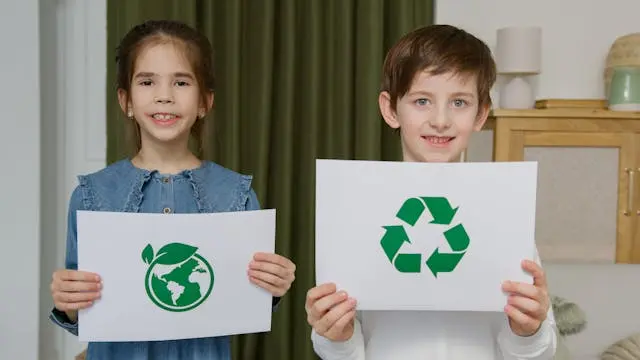
The zero waste movement uses what it calls the 5 Rs as its guiding framework: Refuse, Reduce, Reuse, Recycle, and Rot (compost). In that order of priority — because refusing something you do not need produces no waste at all, while recycling is the last resort before landfill, not the first response to a waste problem.
For a family with children, translating this framework into daily life looks less like dramatic sacrifice and more like a series of small, habitual choices that gradually become unremarkable. The family that automatically reaches for reusable bags, that composts food scraps without thinking about it, that chooses secondhand before new, that refuses plastic straws without needing to make a point of it — that family is living a lower-waste life, and their children are absorbing those habits as simply normal.
The Science Behind Habit Formation in Children
Understanding how habits actually form in children is essential to building sustainable ones — because the instinct most parents have, which is to teach through instruction, is significantly less effective than the research suggests.
Habits are not formed through understanding. They are formed through repetition in consistent contexts. A child who is repeatedly told that plastic is harmful to the ocean does not automatically develop the habit of refusing plastic straws. A child who simply never uses plastic straws — because reusable ones are what the family has — gradually internalizes the reusable straw as the normal, unremarkable default. No instruction required.
This is why the most effective approach to raising zero-waste children is environmental design rather than environmental education: arranging the home environment so that the sustainable choice is the easy choice, the default choice, the choice that requires no willpower or deliberate decision-making.
Reusable water bottles by the door. Cloth bags hanging where the plastic ones used to live. A compost bin within easy reach of the kitchen. A secondhand mindset when something new is needed. These environmental changes do more to shape children’s habits than any number of conversations about sustainability — because they make sustainable behavior effortless and automatic rather than effortful and deliberate.
Where to Start: The Changes That Make the Biggest Difference
Not all waste-reduction efforts are equally effective, and not all of them are equally achievable for families with children. Here is where the research and practical experience suggest starting — in order of impact and manageability.
1. Tackle Food Waste First — It Is the Biggest Win
Food waste is one of the largest contributors to household waste and one of the most significant sources of greenhouse gas emissions from the waste sector. When food goes to landfill rather than compost, it decomposes anaerobically and produces methane — a greenhouse gas significantly more potent than carbon dioxide in the short term.
For families with children, food waste is also one of the most visible and most addressable categories of waste — and addressing it has the added benefit of reinforcing the food values we explored in our article on raising children who love real food.
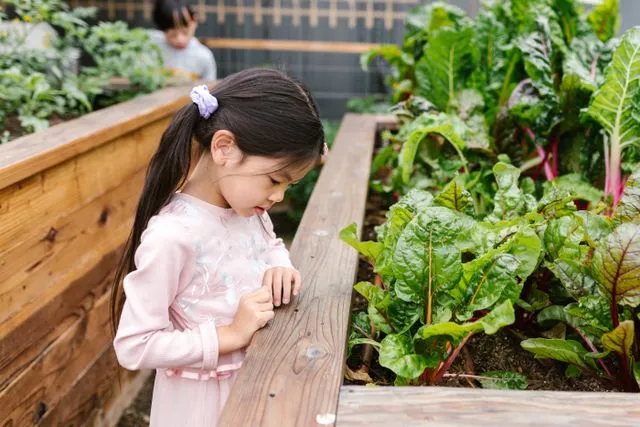
Starting a compost bin — even a small one in the kitchen, emptied into an outdoor bin or a community composting point — is one of the single most impactful sustainable habits a family can adopt. Children who participate in composting from an early age understand, viscerally, that food scraps are not waste — they are future soil. This understanding is foundational to a sustainable relationship with food and with the natural world.
Beyond composting, simple meal planning and using leftovers creatively reduces the amount of food purchased and thrown away — which saves money as well as reducing waste. In 2026, many cities offer community composting programs, making this practice more accessible than ever for families without outdoor space.
2. Replace Single-Use Plastics With Durable Alternatives
Single-use plastics remain one of the largest contributors to environmental pollution. For families, the most impactful replacements are also the simplest:
- Reusable water bottles — one per family member, kept accessible. This single change eliminates thousands of plastic bottles per family per year.
- Cloth shopping bags — kept by the door or in bags so they are always available. Involving children in choosing their own bags gives them ownership of the habit.
- Reusable lunch containers — replacing cling film, sandwich bags, and single-use packaging in school lunches.
- Beeswax wraps or silicone covers — replacing cling film in the kitchen.
- Bamboo or metal straws — replacing plastic ones when straws are used at all.
None of these changes requires significant effort or expense after the initial transition. And once they become the household default, they require no ongoing decision-making — which is exactly the point.
3. Embrace Secondhand — Especially for Children’s Items
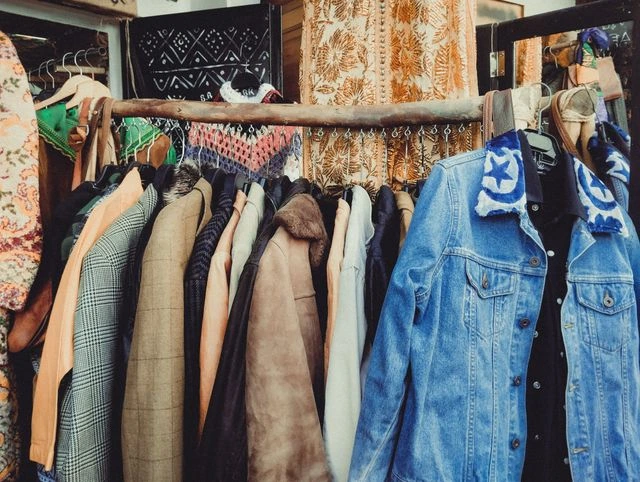
Children outgrow things rapidly. Clothing, shoes, toys, books, sports equipment — the lifecycle of most children’s items is measured in months, not years. Buying secondhand wherever possible reduces the demand for new production, keeps usable items out of landfill, and saves substantial amounts of money.
The secondhand habit is one of the most naturally transmissible to children when it is framed correctly. A child who grows up understanding that “new to us” is as valuable as “new” — who enjoys the treasure hunt of a charity shop or a secondhand market — develops a relationship with objects and consumption that is fundamentally healthier and more sustainable than one built on the assumption that everything must be new.
Donating outgrown items closes the loop and teaches children that what they no longer need has value for someone else — a lesson in generosity and in the circular economy simultaneously.
4. Rethink Toys and Gifts
The toy industry produces an extraordinary volume of plastic, much of it cheaply made, quickly broken, and destined for landfill within months of purchase. As we explored in our article on why children ignore expensive toys, the most developmentally valuable toys are also often the most durable and the least environmentally impactful — wooden toys, open-ended materials, quality items that last years rather than weeks.
Before birthdays and holidays, have an honest conversation with family members about what your child actually needs and what kinds of gifts align with your family’s values. Most grandparents and relatives are genuinely willing to give experiences rather than things, books rather than plastic toys, or contributions to a savings account rather than items that will be ignored within a week — when they understand that this is what you prefer.
5. Make Energy and Water Habits Automatic
Turning off lights when leaving a room, turning off taps while brushing teeth, taking shorter showers, not leaving devices on standby — these are habits so simple that children can adopt them from a very young age. And they are habits that, once formed, persist for life.
The key is making them automatic rather than deliberate. A child who is reminded to turn the light off every time will eventually tune out the reminders. A child who simply does it — because that is what everyone in the family does, because it has never been otherwise — has internalized the habit as simply normal.
Frame these habits not as sacrifices but as expressions of care: “We turn the lights off because we only use what we need.” “We don’t waste water because water is precious.” The language of care rather than deprivation shapes the values beneath the habit.
Involving Children at Every Age: A Practical Guide
| Age | What They Can Do | How to Frame It |
|---|---|---|
| 2–4 | Put food scraps in the compost bin, carry their own cloth bag, turn off lights with help | “We take care of the things we love.” Simple, warm, action-focused. |
| 4–7 | Sort recycling, help plan meals to reduce waste, choose secondhand toys, participate in litter picks | “Our family makes choices that help the world.” Connect actions to visible outcomes. |
| 7–10 | Manage their own compost contributions, pack their own zero-waste lunch, donate outgrown items | “What we do at home matters. Let’s see the difference it makes.” Begin connecting to wider impact. |
| 10–13 | Research family purchases for sustainability, lead a waste audit, start a school environmental initiative | “Your choices matter beyond our home.” Expand the circle of impact and agency. |
| 13+ | Make independent sustainable purchasing decisions, advocate in their community, research systemic solutions | “You are part of the generation that will shape what comes next.” Trust their emerging agency. |
How to Make It Fun Rather Than Preachy
This is the element that makes the difference between sustainability as a family value and sustainability as a family burden. Children who experience eco-friendly habits as interesting, playful, and empowering will carry them forward. Children who experience them as lectures, restrictions, and obligations will abandon them the moment they have the freedom to do so.
Turn It Into a Game
How many pieces of rubbish can we pick up on our walk today? Can we pack a school lunch with zero packaging this week? What is the most creative thing we can make from this cardboard box before it goes for recycling? Children are naturally competitive and creative — channel both into sustainability and the habits form without effort.
Celebrate Progress, Not Perfection
A waste audit — tracking what your family throws away for a week — can be a genuinely interesting family project rather than an exercise in guilt. Look at the results together with curiosity: what surprises us? What could we change one thing about? Celebrate the changes you make without dwelling on what remains imperfect. Progress over perfection is not just good psychology — it is the only approach that sustains engagement over the long term.
Connect It to Things They Already Care About
Children who love the ocean are motivated by learning about plastic pollution in ways that abstract environmental statistics cannot achieve. Children who love animals respond to the connection between habitat loss and consumption choices. Children who love being outdoors are motivated by air quality and green space preservation. Find the environmental issue that connects to what your child already loves — and let that connection do the teaching.
Visit Places That Make It Real
A trip to a recycling center, a visit to a local farm, a community clean-up day — these experiences make abstract environmental concepts concrete in ways that no amount of conversation can match. A child who has seen where waste goes, who has helped restore a piece of natural environment, who has met people working to make things better, has a relationship with sustainability that is grounded in reality rather than abstraction.
The Financial Argument: Sustainability Often Saves Money
One of the most underappreciated aspects of sustainable family habits is that many of them are also financially beneficial. This is not a minor point — for many families, the perceived cost of sustainable living is a genuine barrier. The reality is more complicated and more encouraging.
Fredrika Syren, founder of The Zero Waste Family, documented that her family saved approximately $18,000 per year by adopting zero-waste habits — through buying less, buying secondhand, reducing food waste, cooking from scratch, and refusing unnecessary purchases. The connection between consuming less and spending less is direct and significant.
Reusable alternatives to single-use items cost more upfront but dramatically less over time. Secondhand is almost always cheaper than new. Meal planning and using leftovers reduces food spending substantially. Maintaining and repairing things rather than replacing them extends their useful life and delays the cost of replacement.
Framing sustainable choices to children in terms of what the savings allow — a family trip, something the child has been saving for, a donation to a cause they care about — makes the financial dimension of sustainability visible and motivating rather than invisible.
What Not to Do: The Approaches That Backfire
| ❌ What Doesn’t Work | Why It Backfires |
|---|---|
| Shaming children for non-sustainable choices | Guilt produces anxiety and avoidance, not engagement. Children disengage from topics that make them feel bad about themselves. |
| Attempting a total household overhaul overnight | Unsustainable change produces burnout and abandonment. Gradual habit formation is far more durable. |
| Preaching rather than modeling | Children absorb what they see adults do, not what they hear adults say. Visible daily habits are the curriculum. |
| Framing sustainability as deprivation | Children who associate sustainability with going without will abandon it the moment they have freedom to choose otherwise. |
| Pursuing perfection rather than progress | Perfectionism produces paralysis. Every family will have waste. The goal is less, not none. |
The Bigger Picture: What You Are Actually Building
Every sustainable habit you build into the texture of your family’s daily life is doing two things simultaneously. It is reducing your household’s environmental impact in a small but real way. And it is shaping the values, instincts, and assumptions that your child will carry into their adult life — into their own households, their own purchasing decisions, their own parenting.
The child who grows up composting does not need to be convinced as an adult that food waste matters. The child who grows up reaching for a reusable bag does not need to make a conscious decision about it at twenty-five. The child who grows up understanding that things have a lifecycle — that they come from somewhere and go somewhere — has a relationship with the material world that is fundamentally different from one built on unconsidered consumption.
You are not just managing your household’s waste. You are shaping a human being’s relationship with the world they will live in for the next eighty years, and the world their children will inherit after that. That is not a small thing. It is, in fact, one of the most significant forms of environmental action available to any individual — and it happens in the ordinary, unremarkable daily life of a family that has simply decided to pay attention to what it consumes and what it discards.
Start where you are. Start with one thing. And trust that small, consistent, joyful changes, repeated over years, add up to something genuinely significant.
Summary: What To Remember
- Zero waste for families means progress, not perfection — the goal is a consistent orientation toward less waste, not the elimination of all of it.
- Habit formation beats instruction — design your home environment so sustainable choices are the easy, automatic default.
- Start with food waste — composting is one of the highest-impact, most accessible changes a family can make.
- Replace single-use plastics with durable alternatives — reusable bottles, bags, and containers eliminate thousands of items of waste per year.
- Embrace secondhand, especially for children’s items — they outgrow things quickly, and secondhand is both sustainable and economical.
- Make it fun, not preachy — games, challenges, and connecting sustainability to what children already love builds engagement rather than resistance.
- Model the habits you want to build — your visible daily choices are the most powerful curriculum available.
- Sustainable habits often save money — buying less, buying secondhand, and reducing food waste have direct financial benefits.
- Frame sustainability as care, not sacrifice — “we take care of the things we love” is a more durable foundation than guilt or obligation.
Younes Kehal is an educational director, certified school coach, and certified life coach with 20 years of experience working with children, families, teachers, and schools. His guidance combines practical educational experience with carefully reviewed research.