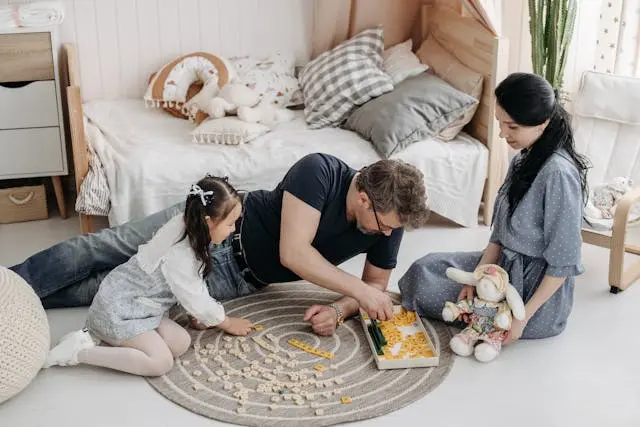
Family Game Night: A Practical Guide to Playing Together
Family game night sounds simple until one child refuses the rules, another keeps winning, and the youngest loses interest before their second turn. You do not need a bigger collection of games to make the evening work. You need an activity people can join and a plan that can bend.
Start with one short game, explain a turn by playing it, and agree that anyone can ask for a break. Count an enjoyable twenty minutes as a worthwhile evening. There is no requirement to finish a long game or to turn every round into a lesson.
Board and card games offer occasions to practise taking turns, planning a move, and dealing with an unexpected result. Whether those experiences lead to wider learning depends on the game and the child; an ordinary game night is not a guarantee of better grades or behaviour.
This guide focuses on choosing an accessible activity, handling the difficult moments, and creating a routine your family wants to repeat. It also includes my approach to supporting a child who is upset after losing.
Table of Contents
What the Research Actually Shows
Research on board games is promising, but the findings depend on the game, the skill being measured, and the children taking part.
During a game, make turn-taking visible: point to whose turn comes next, demonstrate how to ask for help, and explain what happens when players disagree. If taking turns with shared materials is already difficult, our guide to sharing and young children provides related discussion. Clear support is more useful than expecting the game itself to teach every social skill.
A 2019 systematic review by Noda and colleagues examined 27 studies of board-game interventions across different populations. It reported promising findings for learning and some cognitive outcomes, but highlighted small samples and study designs that often lacked active comparison groups. These findings do not establish that an ordinary family game night reliably improves grades or every aspect of development.
For a more specific example, Siegler and Ramani’s 2008 study found that a simple linear number board game improved numerical estimation among preschoolers from low-income families; a comparable color-based game did not produce the same result. The finding concerns a particular game and skill, rather than a benefit shared by every board game.
For your family, begin with a simpler question than “Will this improve the brain?” Ask whether everyone can participate, whether the activity fits the time available, and whether they would like to play again.
What Board Games Can Help Children Practice
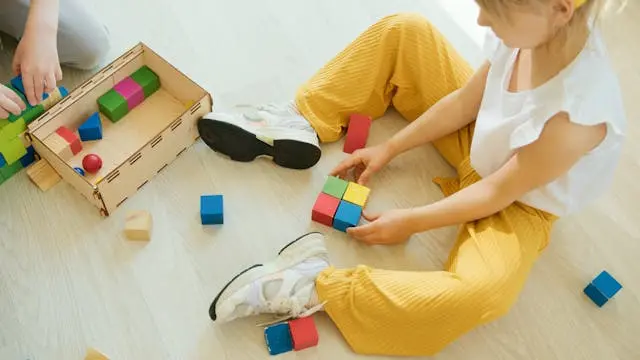
Board games combine several useful experiences in one activity: rule-following, turn-taking, planning, conversation, and handling uncertainty. That combination makes them a practical option for family play alongside reading, outdoor activity, sport, and other shared experiences.
1. Handling Winning, Losing, and Disappointment
A competitive game provides a setting in which a child may feel disappointed and an adult can offer support. It does not automatically make children resilient. Teasing a loser or insisting they hide their feelings can make the experience harder.
Before starting, explain whether the result depends mostly on chance, choices, or both. A bad dice roll is not evidence that someone needs to work harder. In a game involving skill, a later conversation about one move may be useful—if the child wants it.
Agree on a boundary everyone follows: frustration is allowed; hitting, insults, and throwing pieces are not. Pause the activity if it becomes unsafe. Talk about another round after everyone has had time to settle.
When Your Child Gets Upset About Losing: My Approach
When a child becomes angry after losing, my first step is to help them calm down. I give them time to express their disappointment before offering a lesson.
Once they are ready to listen, I explain that winning and losing are both part of competitive games. If we always knew we would win, some of the excitement would disappear. Everyone experiences disappointment, including the person who won today.
I also encourage children to see a loss as an opportunity to learn. In games involving skill, practising or trying a different strategy may help. In games involving chance, the outcome may simply depend on the cards or dice. The goal is to notice their own progress rather than judge themselves by a single result.
Finally, when they feel ready, I encourage them to congratulate the winner. A simple “Well played” is a small way to practise respect while learning to handle disappointment.
For me, the order matters: help the child settle, talk about what happened, and encourage a respectful next step.
2. Remembering Rules and Planning a Move
Some games ask players to hold a rule in mind, wait for a turn, or change a plan when the board changes. These are things children can practise within the game. Getting better at the game does not by itself show that attention or planning has improved in every other setting.
Make the demands manageable. Keep a simple rules card nearby, play with cards face up while learning, or demonstrate one turn without scoring. Ask “Would you like a hint?” instead of directing every move.
If waiting becomes difficult, choose shorter turns or a game with fewer players. If a child enjoys thinking slowly, avoid adding a timer just to make the activity look more educational.
3. Talking and Making Decisions Together
At the table, children may need to ask a question, explain a choice, or say they disagree. An adult can model useful words: “I understood that rule differently. Let’s check it together.”
Leave room for different ways of joining in. A child may prefer to point, use a communication aid, watch a practice round, or speak less. Eye contact and constant conversation are not requirements for belonging.
When one player gives instructions to everyone else, invite the person whose turn it is to choose. If advice is wanted, offer two possible moves rather than taking over the turn.
4. Using Numbers or Words in a Specific Activity
A numbered track can invite counting; a word game can invite spelling or explaining a clue. Match the activity to what the child can access and wants to try. The number-game study above supports a specific learning finding, not a promise that any board game improves mathematics.
For example, count spaces together if your child asks for help. If reading a card is the barrier, offer to read it aloud. Avoid adding a quiz to every turn unless that is part of an activity everyone has agreed to.
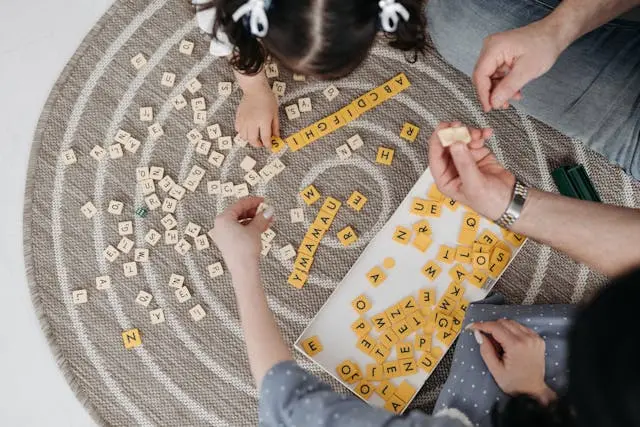
A shared puzzle can be another option when the family wants a clear task without a winner. Keep the emphasis on taking part rather than comparing children’s abilities.
5. Making Time for a Shared Activity
Game night gives the family a specific thing to do together. It can fit alongside cooking, reading, walking, or watching something together. It does not need to replace every other kind of family time.
Invite teenagers to help choose the activity and the length of the session. If conversation happens, listen; if it does not, do not turn the game into an interview about school or friendships. Shared time can be worthwhile without a serious discussion.
Choose by Readiness and Interest, Not Age Alone
Check the manufacturer’s safety and age guidance, then consider reading demands, waiting time, movement, and your child’s preferences. The following options are starting points, not a list of games every child of a certain age should enjoy.
| What a player needs | An activity to consider | An adjustment to try |
|---|---|---|
| A simple first experience of rules | Picture matching or a short turn-taking game | Demonstrate one round and use fewer rules initially. |
| Little or no reading | A visual pattern game or a suitable shared puzzle | Read any necessary instructions aloud without testing the child. |
| Time to think | An untimed strategy game they understand | Avoid rushing or commenting on every move. |
| Frequent opportunities to participate | A game with short turns | Use fewer players or play a brief round. |
| A shared goal | A cooperative game | Agree that each person still controls their own choices. |
| More independence or a teenage interest | A game suggested by the teenager | Agree on the length and give them a real say in the choice. |
Use pieces that are safe for everyone who can reach the table, especially younger siblings. Read the AAP’s advice on toy age labels and small parts when choosing games for young children.
Cooperative or Competitive: Choose the Experience You Want
Neither format is the best choice for every family. A competitive game has individual winners or opposing teams; a cooperative game gives players a shared objective. Both still need clear rules and considerate participation.
Try competition when everyone understands the rules and is comfortable with the possibility of losing. Avoid repeated mismatches in which one experienced player wins easily while another has little chance to take part meaningfully.
During a practice round, agree in advance whether experienced players will give hints or use a handicap. Do not secretly change rules or outcomes and then present the game as fair. You can also choose a shorter game with more chance if everyone likes that format.
Cooperative games — where players work together against the game — give family members a shared goal and opportunities to discuss their next move. Try them if direct competition causes tension, and make sure each child has a real say rather than letting one player make every decision.
A cooperative game can still become tense if one person dictates every move. Invite suggestions, let the current player decide, and stop if collaboration has turned into pressure. Change the format next time if it does not suit the group.
How to Make Family Game Night Actually Happen
Begin with a small arrangement you can actually keep: a game you already own or can borrow, a clear table, and an agreed stopping point. The routine should serve the people taking part.
Choose a Predictable but Flexible Time
Offer a regular slot if that helps your household, with permission to shorten or move it when someone is tired or plans change. Ten or twenty minutes can be an initial trial; these are practical suggestions, not a proven dose of family play.
Let Children Choose the Game — Regularly
Let family members take turns choosing from two or three suitable options. The choice includes the right to suggest another shared activity. A child who dislikes board games does not need to be persuaded that they are missing a compulsory part of development.
Make Participation Possible for Different Abilities
With mixed ages, consider teams that share decisions, a visual game with limited reading, or separate short rounds. If a younger child is simply watching most of the time, choose a different role or activity rather than assuming they are included.
An optional helper role—such as choosing between two large cards—can work when the child wants it. Keep small dice, counters, and other choking hazards out of young children’s reach. Supervision does not make an unsuitable small component appropriate.
Model Good Sportsmanship — Visibly and Consistently
Show the behaviour you would like everyone to practise. Congratulate a good move, admit your own mistake, and ask for a pause when you need one. Adults can enjoy competing without ridiculing other players.
You might say, “I hoped to win and I’m disappointed. I enjoyed that round with you.” Avoid expecting a child to sound equally composed immediately. Your example is an invitation to learn, not a reason to shame them for having stronger feelings.
Reduce Interruptions by Agreement
Agree on which notifications or devices can wait until the game ends, including adults’ devices. Keep communication aids, medical devices, and necessary contact available. If an interruption is unavoidable, explain it and say whether you can return.
Games as a Tool for Children With Learning Differences
Family games can be adapted to a child’s interests, communication preferences, and access needs. A 2019 systematic review noted that evidence for treating clinical symptoms with board games was limited. Use game night as a shared activity, alongside any educational or clinical support your child needs.
For children with ADHD — as we discussed in our article on where to start with ADHD — try a short game with clear rules and little waiting between turns. Offer a movement break and adjust the pace if your child loses interest or feels frustrated. Choose the level of stimulation that suits your child; more noise or speed is not automatically better.
For an autistic child who enjoys board games, try clear visual rules, a demonstration round, and a predictable stopping point. Offer a choice of cooperative or competitive play and respect sensory and communication preferences. Adapt the activity to the individual child, with space to pause or stop if it becomes uncomfortable.
For a child with dyslexia or another reading difficulty, offer a game with little reading, read cards aloud with their agreement, or use a team format they enjoy. Do not make game night a public test of a skill they find hard. Ask which adjustment helps them participate.
A Simple Plan for Your First Twenty Minutes
Here is one way to try the routine. Adapt the timing or stop earlier; the schedule is an example, not a research-tested intervention.
- Choose and settle in. Agree on one game, who wants to play, and when to stop. Put away any unsafe pieces that are not needed.
- Demonstrate a turn. Let everyone try an unscored move and ask questions. Explain how to request help or a break.
- Play a short round. Offer hints when requested and notice whether anyone is excluded or overwhelmed.
- Finish without a verdict on the family. Ask, “Would you choose this again? What should we change?” Put the game away together where practical.
A regular shared activity can give your family time to enjoy one another without needing an expensive outing. Pay attention to how everyone experiences it: a shorter, relaxed game is a better fit for your family than a longer session that leaves someone distressed or excluded.
If the main difficulty is a cupboard full of games nobody wants to use, start with our guide to why children lose interest in expensive toys. Try understanding the obstacle before buying another game.
The aim is a shared experience your family enjoys and wants to return to.
Summary: What To Remember
- Choose a shared activity people want to repeat. A shorter, enjoyable round is enough.
- Match the game to the players. Consider reading, waiting, sensory preferences, and safety.
- Support disappointment before teaching a lesson. Respect feelings and pause unsafe behaviour.
- Distinguish skill from chance. Losing is not always a signal to try harder.
- Use research precisely. Benefits shown for a specific game and outcome do not apply automatically to every family.
- Adapt or change the activity. Game night is optional shared time, not a treatment or an assessment.
Younes Kehal is an educational director, certified school coach, and certified life coach with 20 years of experience working with children, families, teachers, and schools. His guidance combines practical educational experience with carefully reviewed research.