
Sibling Rivalry: How to Stop Constant Fighting Without Taking Sides
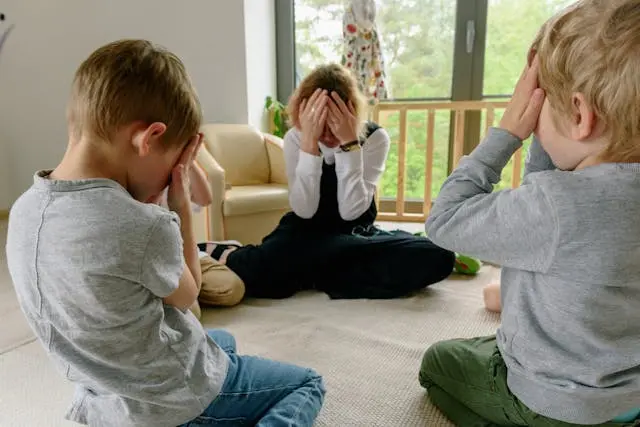
Two children are arguing over a cushion. You ask them to stop. Five minutes later, one accuses the other of cheating at a game. By dinner, the complaint has become familiar: “You always believe them!” You have spent half the afternoon investigating disputes you did not witness, deciding who started what, and trying to make everyone feel treated fairly.
When siblings fight constantly, parents often feel they have only two choices: become a full-time referee or leave the children to sort everything out themselves. Neither approach works in every situation. Young children may lack the skills to settle a dispute without help. Older children may need room to negotiate. And any child who is being hurt, threatened, intimidated, or repeatedly targeted needs adult protection, not another lesson in compromise.
A better goal is not a home where siblings never disagree. It is a home where everyone is safe, each child feels seen, and conflict becomes more manageable over time. That requires clear boundaries, individual attention, opportunities to practise problem-solving, and a response that changes according to the seriousness of the situation.
This guide explains why sibling rivalry develops, when parents should intervene, what to say in the middle of a fight, and how to build a realistic two-week family plan. The strategies are practical rather than magical: no single phrase can make two children like each other every minute of the day.
Table of Contents
- Why siblings fight so much
- Normal disagreement or harmful behavior?
- Ten ways to reduce sibling rivalry
- What to say when a fight starts
- What works at different ages
- Four situations that keep triggering fights
- A realistic 14-day family reset
- When to seek extra help
- Frequently asked questions
- Research and further reading
Why Siblings Fight So Much
They are learning to live with someone they did not choose
A sibling can be a companion, competitor, ally, and source of irritation—all before breakfast. Children share space, routines, adults, possessions, and family decisions. Unlike friends, they cannot simply end a playdate when they are annoyed. This closeness creates many chances for affection, but also many chances for disagreement.
Sibling relationships are not defined only by conflict. A 2024 evidence-and-gap review of 277 empirical studies examined dimensions including warmth, positive engagement, power, hostility, and conflict management. The research is varied, and many studies involve relatively narrow family samples. It does not support a simple rule that a certain number of arguments is healthy or unhealthy. It does show why we should look at the overall relationship, not count arguments alone.
The visible argument may not be the real issue
“You took my pencil” may mean exactly that. But it may also be the last straw after a difficult school day, a change in routine, a missed snack, or a feeling that the other child gets more attention. Parents can become so focused on the object of a dispute that they miss the conditions that make disputes more likely.
Look for patterns without turning every conflict into a psychological investigation. Does the fighting happen mostly after school? When one child is tired? When everyone is waiting for dinner? When a younger sibling enters an older child’s room? The useful question is not always “Who started it?” Sometimes it is “What could we change before this happens again?”
Children influence each other during a fight
A 2022 study of 205 sibling pairs examined how brothers and sisters responded to one another during conflict. Both older and younger siblings influenced the interaction. This matters because a fight is often a moving exchange, not a fixed story with one permanent instigator and one permanent victim. It does not mean that responsibility is always equal, or that parents should treat aggression as mutual. Power differences and safety still matter.
Self-control is still developing
Waiting, shifting perspective, planning a response, and controlling impulses draw on developing self-regulation skills. Harvard’s executive-function activities guide describes age-appropriate ways to practise these skills. A four-year-old who shouts “Mine!” is not working with the same emotional and language resources as a twelve-year-old. Expectations should grow with the child, and skills should be practised when everyone is calm—not demanded for the first time during an explosion.
Normal Disagreement or Harmful Behavior?
Before deciding whether to step back, distinguish conflict from harm.
An ordinary disagreement might involve arguing about whose turn it is, protesting a rule, or wanting different activities. Both children can speak, leave, and recover. A parent may coach briefly or let older children try a solution.
A harmful pattern looks different. Watch for hitting, choking, threats, coercion, humiliation, destruction of belongings, repeated deliberate exclusion, sexual boundary violations, or one child becoming afraid of the other. An older or stronger child may have power that makes “both sides” language misleading. A child who retaliates after repeated intimidation should not automatically be treated as equally responsible.
Safety comes first: separate the children, attend to injuries, protect the child at risk, and establish supervision. Do not insist they hug, apologize immediately, share a room, or negotiate face-to-face while one feels unsafe. If there is serious violence, a credible threat, or sexual harm, seek appropriate urgent protection and professional assessment. Repeated fear, coercion, or aggression warrants help even when injuries are not visible.
For routine disagreements, the American Academy of Pediatrics’ guidance on sibling relationships, updated in April 2026, recommends clear ground rules, calm intervention when needed, and more independence as children mature. That balanced approach is the basis of the strategies below.
Ten Ways to Reduce Sibling Rivalry
1. Stop trying to deliver identical treatment
Fairness is not the same as giving everyone exactly the same thing. A seven-year-old and a thirteen-year-old may need different bedtimes, responsibilities, privacy, or support. If you try to make every decision identical, you may create new arguments and ignore real developmental differences.
Explain decisions in terms of needs and responsibilities rather than ranking children. Try: “You both matter. Your sister needs help with this reading task today. Afterward, I will spend time with you.” Or: “Your brother can stay out later because we agreed on that responsibility for his age. We will review your own privileges as you grow.”
Avoid the tempting defense “I love you exactly the same,” especially when a child is describing a specific unfair experience. Start with curiosity: “Tell me which part felt unfair.” Then explain the decision or correct it if you made a mistake. Parents are allowed to be wrong. A sincere correction teaches more than a long defense.
2. Protect individual attention before children compete for it
A child who feels noticed only when there is a fight may seek attention through conflict, even without consciously planning to do so. Individual connection reduces the pressure on siblings to compete for every moment of adult attention.
This does not require elaborate outings. One child might help you prepare breakfast while you talk. Another might have a quiet ten-minute conversation at bedtime. Rotate naturally; do not turn affection into a reward chart. Ask each child what makes time together enjoyable, and give them room to decline an activity that feels forced.
The AAP recommends one-on-one time alongside shared family activities. For ideas about attentive play, see Play With Your Child: Why Twenty Minutes a Day Changes Everything. The important point is responsive attention, not a scientifically guaranteed number of minutes.
3. Make the household’s safety rules short and visible
Children do better with rules they can remember and adults will enforce. Choose three or four clear rules, such as: “No hitting or threatening,” “Ask before entering another person’s room,” “Stop when someone says stop,” and “Ask for help if a problem feels unsafe.”
Discuss the rules at a calm time. Demonstrate what “stop” means during play. For a younger child, practise saying “I am using this” or “Please move back.” For an older child, practise leaving an argument before it becomes insulting. Everyone, including adults, follows the rules about respectful language.
The CDC’s guidance on giving directions emphasizes specific, age-appropriate instructions. “Put the controller on the table and step back” is more actionable than “Stop being impossible.” Apply a predictable, proportionate response to harmful behavior. Do not invent harsh penalties in anger.
4. Give children privacy and ownership where possible
Not every possession should be shared. A child may reasonably have a treasured notebook, collection, or comfort item that siblings must ask to use. A shared family toy has different rules. Clarify which is which before the argument begins.
Where space allows, create a shelf, box, or drawer for each child. If bedrooms are shared, agree on boundaries around beds, bags, and personal belongings. Ask permission before borrowing. If an object is jointly owned, decide on a turn-taking method together when everyone is calm.
For preschool children, the distinction between ownership and taking turns can be particularly difficult. Our article on why young children struggle to share explores how to practise these skills without forcing every treasured item into communal use.
5. Retire the family labels
“The responsible one,” “the dramatic one,” “the clever one,” and “the difficult one” may sound like harmless shorthand. Over time, they can trap children in roles. The “responsible” child may be expected to surrender every disagreement. The “difficult” child may stop believing adults will listen fairly.
Describe a specific behavior instead of a fixed identity. Say “You helped your brother find his shoes” rather than “You are always the good one.” Say “You shouted when you were frustrated” rather than “You are the aggressive one.” Avoid comparing school results, athletic ability, appearance, or personality to motivate improvement.
6. Do not appoint the older child as the automatic peacekeeper
Older siblings can help younger ones, but they should not be permanently responsible for keeping everyone happy. “You are older, so let your brother win” may stop today’s argument while building tomorrow’s resentment. Maturity does not cancel a child’s right to boundaries.
Ask older children whether they want to help. Give them permission to say no to play or caregiving when it is reasonable. Do not expect them to supervise a younger sibling in situations that require adult attention. When a family includes a child with additional support needs, the same principle matters: one child’s needs deserve care without making the other child invisible. Our article The Sibling Nobody Asks About explores that specific family dynamic.
7. Teach a conflict script before the next fight
Most children need more than the instruction “Work it out.” Practise a short sequence during a peaceful moment:
- Pause: Move back, breathe, or ask for a break.
- Name the problem: “We both want the blue marker.”
- Listen: Each child gets a brief uninterrupted turn.
- Offer choices: Take turns, choose another item, play separately, or ask an adult to help.
- Agree and check: “You use it until the timer ends; then I get a turn.”
For a preschooler, the script may be only two steps: “Stop hands. Ask for a turn.” For a ten-year-old, it can include negotiating and checking whether both children accept the plan. Role-play with dolls or a low-stakes pretend disagreement. Avoid turning every family conversation into a lecture on empathy.
A useful parent phrase is: “I will help you solve this, but I will not choose a winner just because someone is louder.” That works only if both children are safe and genuinely able to participate. It is not appropriate when one child is intimidating the other.
8. Intervene less in safe, manageable disagreements—and more in unsafe ones
When children disagree respectfully, wait a moment. You might ask, “Do you want two minutes to try a solution, or would you like help now?” Then stay available. This gives them a chance to practise without feeling abandoned.
When voices rise but there is no threat, coach briefly: “One person speaks at a time.” If the argument continues, separate the activity for a while. Do not insist that every dispute ends in a shared game. Sometimes a reasonable solution is to do different things.
When there is hitting, threats, fear, or a major power imbalance, step in immediately. Neutrality about feelings does not mean neutrality about harmful actions. You can care about both children while clearly stopping one child’s aggression.
9. Build cooperation without forcing closeness
Children do not have to become best friends to treat each other respectfully. Give them low-pressure chances to succeed together: preparing a snack, building a blanket fort, planning a family outing, or creating a short scavenger hunt. Keep tasks short enough that they can end on a good note.
For families who enjoy games, cooperative activities can reduce the pressure of winning against a sibling. The AAP suggests teamwork-based games as one option. Our Family Game Night guide offers practical ways to make play accessible for different ages and abilities.
Do not announce, “Now you must bond.” Invite rather than compel. Some siblings prefer parallel play or separate hobbies, and that can be perfectly compatible with a warm long-term relationship.

10. Notice repair, not only the argument
Parents often remember the shouting but overlook the small moments when children recover. Notice when a child returns an item, checks whether a sibling is okay, or offers to start again. Describe the action: “You stopped when she said it hurt. That helped her feel safe.”
After a conflict, repair may include returning a belonging, helping fix damage, giving space, or offering a sincere apology. Do not force an instant “sorry” to make the adults comfortable. A child who is still furious may repeat the word without understanding the impact of the behavior. First restore safety and calm; then help the child take responsibility in an age-appropriate way. For more guidance, see how to teach meaningful apologies and repair without forcing “sorry”.
Repair is not the same as reconciliation. The hurt child does not owe a hug, immediate forgiveness, or renewed play. Respecting that boundary is part of teaching responsibility.
What to Say When a Fight Starts
Imagine that an eight-year-old grabs a controller from a younger sibling, who pushes back. Both shout that the other started it. Here is a four-step response you can adapt.
Step 1: Stop the unsafe action
Move close enough to supervise and use a calm, firm voice: “Stop. Put the controller down. Hands to yourselves.” If someone is hurt or frightened, separate them and address that first. Avoid trying to establish the full history while emotions are high.
Step 2: Describe what you know, not what you assume
“I saw grabbing and pushing. I did not see what happened before that.” This is both honest and useful. It avoids pretending you know the entire story and shows that each child can be heard. If one child reports a repeated pattern of intimidation, take that seriously rather than treating it as a routine disagreement.
Step 3: Regulate before negotiating
“Take a break in separate spaces. We will talk when everyone can speak safely.” Some children need movement, water, quiet, or time with an adult. A break is not a punishment for having feelings; it is a way to prevent more harm and make problem-solving possible.
Step 4: Help them choose a workable next step
Once calm, ask each child to describe the problem briefly. Then offer age-appropriate choices: “The controller can be used in turns with a timer, or the game can stop for now.” If someone broke a rule, address that behavior directly. Do not make the child who was hurt responsible for negotiating away a safety boundary.
A useful distinction: “I understand why you were angry” validates an emotion. “It was okay to push” excuses an action. You can say the first without saying the second.
What Works at Different Ages
Toddlers and preschoolers: prevent more, explain less
Very young children may have trouble waiting, controlling physical impulses, or understanding another person’s viewpoint in the middle of frustration. Keep shared activities short. Offer duplicates of commonly fought-over materials when possible. Use concrete language: “Gentle hands,” “Ask first,” and “Your turn after the song.”
Stay close during play, especially when a baby is involved. Never assume that a toddler understands how fragile an infant is. Give the older child warm attention without making the baby responsible for every change in family life. The AAP’s guide to preparing for a new sibling includes age-specific suggestions for this transition.
Ages 6–9: teach routines and visible fairness
Children in early primary school can often describe competing wants, but may still struggle to wait when upset. Use visual schedules for shared equipment, short problem-solving prompts, and predictable boundaries. Teach the difference between “It is not my turn yet” and “Nobody ever lets me have a turn.” Help them check facts without dismissing their frustration.
This age is a good time to practise asking permission, declining politely, and accepting “not now.” A child can learn that a sibling’s room, notebook, or body is not automatically available for shared use.
Ages 10–12: include privacy, respect, and independent solutions
Older children often care intensely about fairness and personal space. Invite them to help design household rules. Do not read private messages or search belongings casually in the name of resolving every sibling argument; respond proportionately to genuine safety concerns. Ask whether they want coaching, mediation, or a chance to handle a minor disagreement themselves.
Teenagers: avoid forced intimacy and public judgments
Teens may have different schedules, friendships, interests, and expectations of privacy. A younger sibling’s constant access to an older child’s space can become a serious source of tension. Make boundaries explicit. Encourage older teens to communicate respectfully without expecting them to be available as companions or babysitters whenever asked.
If conflicts become repetitive, borrow the same listening approach you would use in other parent-teen disagreements. Our article The Argument You Keep Having With Your Teenager examines why repeated arguments can become stuck.

Four Situations That Keep Triggering Fights
“You always take their side!”
Do not reply with a courtroom defense of your fairness. Ask for a specific example: “Which decision felt unfair?” If the child is right, acknowledge it. If a different rule was justified, explain the reason without comparing personalities. You can also say, “I want both of you to feel safe and heard. I may not always get the decision right, and I will listen when you tell me.”
The younger child keeps destroying the older child’s work
A three-year-old may be fascinated by a ten-year-old’s model, but fascination does not give permission to break it. Protect the older child’s project with a shelf, door rule, or supervised area. Offer the younger child an appropriate alternative. If damage occurs, help repair or replace what is possible. Do not tell the older child, “They are little, so you must understand,” as though age cancels the harm.
One child wants to play; the other wants to be alone
Teach that an invitation is not an obligation. “You can ask your sister to play. She can say no. Let’s find something else for you.” The sibling who declines should still speak respectfully, but does not have to justify every refusal. Children can be close without spending all their free time together.
A child with additional needs receives more adult attention
A family may need to give one child extra care, appointments, adaptations, or supervision. That is not favoritism by itself. Still, siblings may experience disappointment or resentment. Explain differences honestly, invite questions, protect each child’s own activities, and make room for emotions that are not convenient. Never require a sibling to hide their needs because another child’s needs seem greater.
A Realistic 14-Day Family Reset
This is a practice plan, not a clinically tested treatment or a promise that conflict will disappear in two weeks. Its purpose is to help parents change a few predictable patterns and notice what happens.
Days 1–3: observe and establish safety
Write down when conflicts happen, what preceded them, and whether anyone felt unsafe. Notice hunger, fatigue, shared spaces, and transitions. Hold a short family conversation about three non-negotiable safety rules. Explain that asking for help is allowed, and that adults will intervene when someone is hurt or frightened.
Do not announce a competition for “the child who fights least.” You are observing the environment, not ranking the children.
Days 4–6: protect space and attention
Clarify which items are personal and which are shared. Create a simple turn-taking agreement for one high-conflict item. Offer each child a short period of individual attention on a schedule that is realistic for your household. If one parent is unavailable, another trusted caregiver may help, but do not make a child responsible for meeting a sibling’s emotional needs.
Days 7–10: rehearse one conflict skill
Choose just one skill—asking before borrowing, pausing before touching, or saying “I need space.” Practise it outside conflict with a pretend scenario. During real disagreements, use the same short language. Praise the behavior specifically when it appears. Do not expect perfect self-control after one rehearsal.
Days 11–14: build a cooperative moment and review
Invite the children to choose one low-pressure shared activity. They may prefer to work side by side rather than as a team. At the end of the two weeks, ask: Are there fewer unsafe incidents? Are arguments shorter? Does each child feel listened to? Is one child still frightened or regularly blamed? Use the answers to adjust the environment and seek help if needed.
A simple family check-in: “What worked better this week? What still feels hard? What is one change we can try next?” Keep it brief, and allow children to speak separately if they do not feel comfortable in a group conversation.
When to Seek Extra Help
Ordinary sibling friction can be exhausting, but persistent fear or aggression needs more than household tips. Consult a pediatrician, qualified child mental-health professional, or appropriate local service when there are injuries, repeated threats, severe intimidation, significant anxiety, school or sleep disruption, or a child who no longer feels safe at home. If there is immediate danger, seek urgent local assistance.
Professional support can also help when caregivers cannot keep the children safely separated, when one child is being coerced or sexually harmed, or when neurodevelopmental or mental-health needs make standard strategies ineffective. Describe specific incidents and their frequency rather than simply saying “They fight all the time.” The aim is to understand and protect the children, not to assign a permanent label to either one.
Frequently Asked Questions
Is sibling rivalry normal?
Disagreements are common in sibling relationships, but “common” does not mean every behavior is acceptable. Arguing about turns is different from repeated humiliation, intimidation, or physical aggression. Look at safety, frequency, power differences, and how the children relate between arguments.
Should I let my children fight it out?
Give children room to solve safe, manageable disagreements when they have the skills to do so. Stay nearby and available. Step in immediately if anyone is at risk, afraid, or unable to participate fairly. The goal is supported independence, not leaving children alone with a dangerous situation.
Should I punish both children if I do not know who started it?
Avoid automatic group punishment. You can pause a shared activity while you gather information without declaring both children guilty. Address any behavior you actually observed, listen separately if necessary, and keep safety separate from blame. A child who was targeted should not be punished for reporting it.
What if one child is clearly more aggressive?
Respond to the aggression specifically and consistently, protect the other child, and look for triggers and support needs. Avoid describing the child as inherently “bad,” but do not minimize the behavior or require the other child to accommodate it. Repeated or severe aggression warrants professional assessment.
How can I prevent jealousy when a new baby arrives?
Prepare older children for changes in attention and routine, maintain familiar rituals where possible, and provide individual connection. Invite age-appropriate involvement without forcing enthusiasm or making the older child responsible for infant care. Feelings about a new sibling can be mixed, and that is not a failure.
Should I force siblings to apologize and hug?
No. Encourage accountability and meaningful repair after everyone is calm, but do not require physical affection or immediate forgiveness. A repaired object, a changed behavior, or a respectful apology offered voluntarily may be more useful than a scripted “sorry” said under pressure.
Can siblings be close if they have very different personalities?
Yes. Closeness need not look like constant shared play. One child may prefer quiet projects while another enjoys energetic activities. Respect for differences, privacy, and small positive interactions can support a relationship without forcing the children to have identical interests.
The Takeaway: Be a Guide, Not a Permanent Referee
Sibling rivalry becomes easier to manage when parents stop trying to settle every dispute as a contest and start shaping the conditions around it. Protect safety. Listen without labeling. Make space for each child’s needs. Teach one practical skill at a time. Allow manageable disagreements to become opportunities for practice, while refusing to treat intimidation or harm as normal family life.
The measure of progress is not complete silence. It is whether your children increasingly know how to ask, disagree, take space, repair harm, and trust that the adults around them will act when safety matters. Those are skills worth building long after today’s argument over a cushion is forgotten.
Research and Further Reading
The sources below inform the article’s developmental context and practical guidance. Individual studies do not prove that every suggested household strategy works for every family.
- American Academy of Pediatrics / HealthyChildren.org. Sibling Relationships: How to Help Your Kids Build Healthy Bonds. Updated April 6, 2026. Guidance on boundaries, conflict intervention, shared activities, and individual attention.
- American Academy of Pediatrics / HealthyChildren.org. Preparing Your Older Child for a New Baby. Updated February 10, 2026. Age-based support for transitions and jealousy.
- Holmes and colleagues (2024). Illuminating the landscape of sibling relationship quality: An evidence and gap map. Child Development. Review mapping 277 studies and limitations of the evidence base.
- Borairi and colleagues (2023, online 2022). Do siblings influence one another? Unpacking processes that occur during sibling conflict. Child Development. Observational study of 205 sibling dyads.
- Center on the Developing Child at Harvard University (2014). Activities Guide: Enhancing and Practicing Executive Function Skills. Developmentally appropriate self-regulation practice.
- Centers for Disease Control and Prevention (2024). Steps for Giving Good Directions. Specific, age-appropriate instructions and clear expectations.
About the Author
Younes Kehal is an educator, pedagogical director, school coach, and life coach with more than 20 years of experience working with children, families, teachers, and schools. Through ParentingAssist, he shares practical, research-informed guidance designed to help parents understand everyday challenges and respond with greater clarity and confidence.