My Child Keeps Losing School Things: A Practical Organization Plan That Actually Teaches Independence
Child keeps losing school things? This practical guide helps parents of children ages 6–14 build simple routines for backpacks, homework, and school supplies without constant reminders.
For parents of children ages 6–14 | ParentingAssist
The missing water bottle is frustrating. The lost homework folder is worse. And when the third pencil case disappears in a month, it can feel as though your child simply does not care. You remind them before school, remind them after school, buy replacements, and then find yourself asking the same question again: “Where did you put it?”
But imagine how the day looks from your child’s side. They move between a noisy classroom, a crowded hallway, lunch, the playground, perhaps a bus or after-school activity. They must remember instructions, friendships, deadlines, and their belongings while their attention is pulled in many directions. “Be more responsible” tells them what you want, but not how to do it.
Children do need to learn responsibility. They also need a system that makes responsibility possible. The most effective starting point is rarely a lecture or an expensive organizer. It is a small set of predictable places, short routines, and opportunities to practice with gradually less adult help.
This guide explains how to identify where things go missing, build a school-to-home system, teach checking without nagging, and decide when repeated losing may signal a broader difficulty. The goal is not a perfectly tidy child. It is a child who can increasingly manage ordinary belongings with confidence.
Table of contents
- Why children lose school things
- Find the actual point where things disappear
- The five-part organization system
- Ten practical strategies
- What to say instead of nagging
- Adapt the plan by age
- A two-week reset
- When to ask for extra support
- Frequently asked questions
- Research and further reading
Why a child keeps losing school things
Organization is a collection of skills, not a personality trait
Putting a folder into a bag seems simple to an adult. In practice, a child must remember that the folder exists, recognize when it is needed, interrupt whatever else they are doing, find the correct compartment, and repeat that sequence on a busy day. Those actions involve planning, working memory, attention, and self-monitoring—often described together as executive function skills.
Harvard University’s Center on the Developing Child explains that executive-function abilities develop through experience and practice, continuing into adolescence and beyond. That does not mean every forgotten pencil is a developmental problem. It means that expecting a child to manage several invisible steps without teaching those steps can be unrealistic. A useful response is to make the steps visible. Read Harvard’s overview of executive function.
Some children are especially distractible during transitions. Others are meticulous about their favorite hobby but forget their lunchbox. This is not necessarily hypocrisy. A familiar, interesting activity provides cues and motivation that a crowded school corridor may not.
Different causes call for different solutions
A child who leaves belongings on the playground needs an exit check. A child who brings home the wrong books needs a timetable-based packing check. A child whose papers vanish inside the bag needs fewer compartments and a clearly labeled folder. A child who feels overwhelmed by an elaborate color-coded system may need something simpler, not stricter.
Before changing anything, ask yourself: Is the problem remembering, finding, packing, transporting, or returning the item? A single label such as “disorganized” hides these important differences.
Stress, fatigue, and changing schedules matter
Organization often becomes harder when a child is tired, rushed, anxious, adjusting to a new classroom, or coping with an unpredictable schedule. Avoid turning every incident into a moral judgment. Notice whether losses happen mainly on sports days, after extracurricular activities, or when the child has to move quickly. These clues help you design a more useful system.
Find the actual point where things disappear
Before buying supplies, run a calm five-day observation. You do not need a complicated chart. Record the missing item, the last known location, the transition that happened next, and whether it was eventually found.
| Item | Last remembered place | Likely transition | Possible support |
|---|---|---|---|
| Homework sheet | Classroom desk | Packing at dismissal | One take-home folder |
| Water bottle | Playground bench | Return to class | Playground exit check |
| Sports shoes | Changing room | End of PE | Shoe-bag checklist |
| Library book | Bedroom | Morning departure | Fixed launch spot |
Ask your child for help reconstructing the sequence: “When do you remember holding it last?” or “What happened just after lunch?” Treat the conversation as detective work, not an interrogation. If you cannot establish where something disappeared, do not claim to know. Sometimes another child picks up an identical item or school storage is confusing.
A helpful distinction: lost means the child does not know where an item is; forgotten means the child knows where it is but did not bring it; misfiled means the item is present but inaccessible. Each needs a different habit.
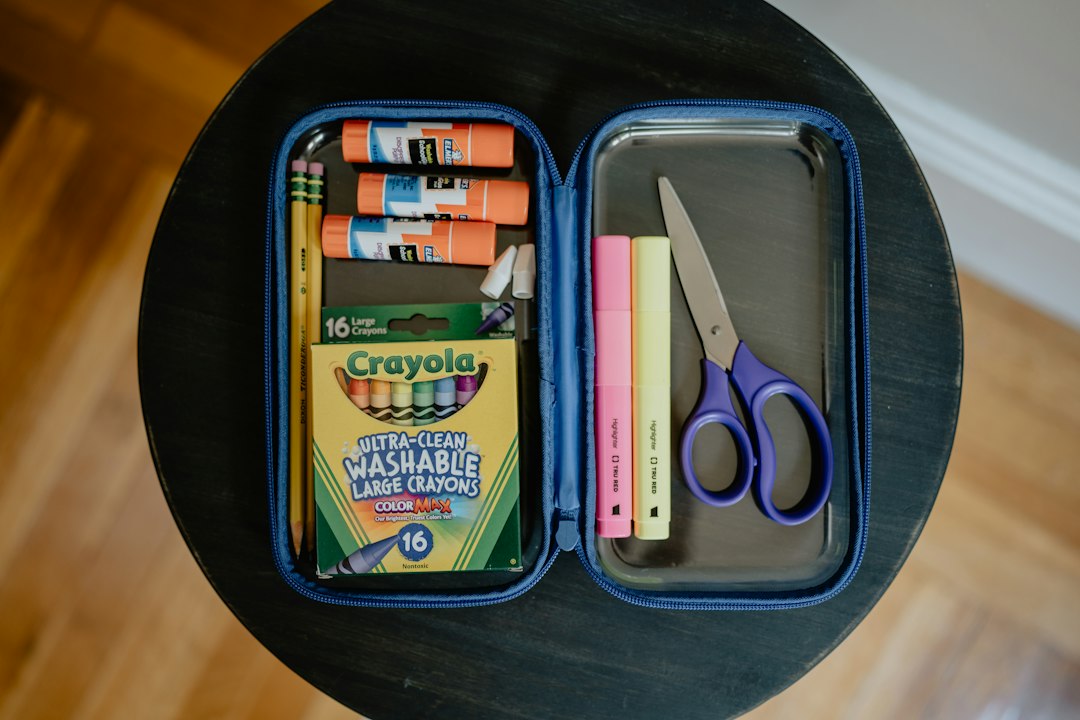
A five-part system when your child keeps losing school things
1. One home for each essential item
Give daily essentials stable locations. The backpack lives on one hook. The homework folder goes in one designated sleeve. Shoes go on one shelf. The water bottle goes in one outer pocket, if that pocket is secure. Consistency reduces the number of decisions a child must make.
Choose locations with your child, and test them. A high hook or difficult zipper may be perfectly logical to an adult and frustrating to a younger child. If the system is hard to use, the system needs adjustment.
2. A simple backpack map
Empty the backpack together and decide what belongs in each section. Draw a quick map showing the main compartment, folder sleeve, lunch area, and small-item pocket. Keep the number of categories low. Understood recommends sorting supplies into groups and using a backpack map to reinforce where items belong. See its backpack organization guide.
3. One school-to-home folder
Use one sturdy folder for papers traveling between school and home. If necessary, label its two sides “To Home” and “Back to School.” A single transfer point is easier to manage than loose worksheets in several notebooks. At home, empty the folder with your child, deal with forms, and return what must go back. The adult may supervise initially, but the child should handle the folder whenever possible.
4. A launch spot near the exit
A small basket, shelf, or hook near the door can hold tomorrow’s essentials. The point is not to create a beautifully styled entryway. It is to make the next morning less dependent on memory. If your home has limited space, a single corner of a table can work. Keep school items separate from toys and unrelated clutter.
5. Two brief daily checks
Build a departure check before leaving home and a return check before leaving school. Each should be short enough to remember: “Folder, bottle, lunchbox.” Add one changing item only when needed, such as sports shoes on PE days. Long lists are easy to ignore. Practice the same sequence until it becomes familiar, then reduce reminders.
Ten practical strategies
Strategy 1: Begin with just three essentials
Trying to solve every missing item at once creates frustration. Choose the three items that matter most: perhaps the backpack, homework folder, and water bottle. Track these for a week. When the system works, add other belongings. If it fails, simplify before adding more rules.
Strategy 2: Practice at a calm time, not during a crisis
A rushed morning is a poor moment to teach a new routine. Practice on a weekend afternoon. Ask your child to unpack and repack the bag using the same steps they will use at school. Make the first attempt collaborative: “I’ll show you once, then we’ll do it together, then you can try.” This is instruction, not punishment.
Strategy 3: Make the checklist visible where the action happens
A checklist in a notebook may be useless if the child never opens that notebook at dismissal. Put a small checklist on the backpack zipper, inside the locker, or beside the home launch spot where permitted. For children who do not read fluently, use simple pictures. Ask the teacher before placing signs in shared school spaces.
Strategy 4: Attach the check to an existing event
Habits are easier to remember when they follow a reliable cue. “Before I leave the classroom, I look at my desk and under my chair.” “After homework, I put the folder straight into the bag.” “Before bed, I check tomorrow’s timetable.” Avoid a vague command such as “Remember everything.” Name the precise moment and action.
Strategy 5: Use a short verbal rehearsal
Invite your child to say their sequence: “Desk, chair, hook, bag.” Rehearsal is not a guarantee against forgetting, but it makes an invisible plan easier to recall. Younger children may enjoy a quiet rhythm or mnemonic. Older children may prefer a phone reminder if school rules and family agreements allow it.
Strategy 6: Label items without exposing private information
A name label on a bottle, jacket, or pencil case can help lost-property staff return it. Follow school guidance about labels. Avoid placing a child’s full address, personal phone number, or other sensitive details visibly on belongings. Where appropriate, a first name and class designation may be enough.
Strategy 7: Create a weekly five-minute reset
Once a week, empty the bag together. Remove old notices, food wrappers, broken pencils, and unnecessary papers. Check that the same items still have the same homes. This maintenance step matters because a system that works on Monday may become buried by Friday. Let the child decide what to keep within reasonable school requirements.
Strategy 8: Solve the school end of the problem
A perfect home organization system cannot compensate for a chaotic dismissal routine. If the same item repeatedly disappears at school, ask the teacher for a specific, low-burden support: a quick visual check at packing time, a designated folder location, or a reminder before PE. Do not expect the teacher to search for every pencil. The aim is a sustainable routine that the child can increasingly use alone.
Strategy 9: Respond to a loss with repair, not shame
When an item disappears, start with a calm search plan: retrace the last two locations, ask the appropriate adult, check lost property, and plan how to manage without the item temporarily. A child who feels humiliated may hide future mistakes. Responsibility includes honest reporting and reasonable repair, not fear.
Strategy 10: Fade adult help gradually
The long-term goal is independence. Start with a shared check, move to a single prompt—“What’s your leaving routine?”—then let the child initiate it. Praise the action they controlled: “You checked your desk before leaving.” Do not promise that a new system will eliminate all losses. Notice trends across weeks rather than judging one difficult day.
What to say instead of nagging
The words adults use can either make organization feel teachable or make it sound like a fixed character flaw.
Instead of: “You always lose everything.”
Try: “Let’s find the step where this keeps happening.”
Instead of: “How many times do I have to remind you?”
Try: “What reminder could work when I’m not there?”
Instead of: “You’re old enough to know better.”
Try: “Show me how you pack your bag. We’ll make one step easier.”
Instead of: “I’m never buying another one.”
Try: “We’ll decide how to replace what is necessary and how to protect the next one.”
If you feel yourself becoming angry, postpone the conversation until both of you can think clearly. Losing an item may create a real expense, but a lecture delivered at peak frustration rarely teaches the missing skill.
What about consequences?
Natural, proportionate consequences can help children connect actions with outcomes, but they should not deny essential learning materials, food, warmth, or dignity. A child might help clean and organize the backpack, participate in finding an affordable replacement, or practice a new routine. Avoid forcing payment beyond a child’s means or using loss as proof of bad character.
If belongings are repeatedly stolen, hidden by peers, or damaged by others, treat that as a safety or school climate issue rather than automatically blaming your child.
Adapt the plan by age
Ages 6–8: Make it concrete and visual
Use two or three pictures, a consistent pocket, and a parent-child packing rehearsal. Keep expectations realistic: young children often need direct prompts at transitions. Make checking playful without turning it into a contest. For example, ask, “Can you spot the three things that belong in your bag?”
Ages 9–11: Build shared ownership
Invite your child to design the backpack map and choose the wording of the checklist. Ask them to identify which school day creates the most problems. Encourage a quick Sunday reset. Rather than doing the entire routine for them, supervise and then step back.
Ages 12–14: Support planning without micromanaging
Older students often juggle different teachers, changing rooms, sports equipment, and digital assignments. Use a timetable, a small planner, or a reminder system they agree to. Let them decide whether a paper or digital tool fits better. Review outcomes once a week rather than interrogating them every afternoon. Understood offers additional organization tools for teens.

A two-week reset for lost school supplies
A system becomes useful through repetition. This two-week plan is a practical experiment, not a scientifically validated treatment or a promise of results.
Days 1–2: Observe. Identify the two or three most frequently missing items and where they tend to disappear. Ask your child what feels hardest.
Day 3: Simplify. Empty the backpack, remove unnecessary items, assign stable places, and choose a single transfer folder.
Day 4: Build cues. Create a three-item checklist at the home exit and another for the end of school. Practice both calmly.
Days 5–7: Rehearse. Use one brief reminder per transition. Record whether your child used the routine, not just whether anything was lost.
Days 8–10: Reduce prompting. Ask your child to lead the check. If one step is consistently forgotten, change the cue rather than repeating louder instructions.
Days 11–13: Test a difficult day. Apply the routine on a PE day, library day, or extracurricular day. Add only the extra item needed for that day.
Day 14: Review together. Ask: Which step worked? Which item still causes trouble? What should we keep, change, or remove? Celebrate honest effort and practical improvements, even if the system remains imperfect.
A small tracking sheet
| Day | Used departure check? | Used return check? | One thing to adjust |
|---|---|---|---|
| Monday | Yes / Not yet | Yes / Not yet | |
| Tuesday | Yes / Not yet | Yes / Not yet | |
| Wednesday | Yes / Not yet | Yes / Not yet | |
| Thursday | Yes / Not yet | Yes / Not yet | |
| Friday | Yes / Not yet | Yes / Not yet |
Keep tracking brief and private. It should help the child understand their progress, not become a public scorecard or another source of pressure.
When to ask for extra support
Occasional forgetting is common. Consider speaking with the teacher, pediatrician, or a qualified professional if organization problems are persistent, significantly interfere with learning or daily life, occur across several settings, or appear alongside substantial difficulties with attention, planning, reading, anxiety, or completing tasks.
Executive-function challenges can have many contributing factors. They are not, by themselves, a diagnosis of ADHD or another condition. Understood’s guide to executive-function challenges describes how these difficulties may appear differently across school years. A professional can help evaluate the whole picture, including sleep, stress, school demands, and possible learning differences.
Ask the school for concrete observations: Does the child know which materials are needed? Can they follow the packing routine with a visual cue? Do problems occur only during hurried transitions? Such information is more useful than calling the child “careless.”
If you suspect bullying, theft, or deliberate interference with belongings, report the concern to school staff promptly. An organization checklist is not an appropriate substitute for addressing mistreatment.
Frequently asked questions
Is losing things a sign of ADHD?
Not necessarily. Many children misplace belongings, especially when routines change or they are distracted. Frequent losing can be one of several difficulties seen in ADHD, but diagnosis requires a broader assessment of symptoms, duration, impact, and context. Avoid diagnosing your child from a single habit.
Should I stop replacing lost items?
Essential items should not be withheld to punish a child. It is reasonable to discuss costs and choose practical, affordable replacements. Pair replacement with a plan that makes the next loss less likely. If an item is repeatedly taken by someone else, address that separately.
Should I pack my child’s bag myself?
You may need to help at first, particularly with younger children or during stressful periods. But doing every step indefinitely can prevent practice. Model the routine, do it together, and gradually transfer responsibility. Adjust the level of help to your child’s actual needs.
Are rewards useful?
A small acknowledgement of using a routine can be motivating, but avoid paying for perfect memory or shaming a child after an accidental loss. Praise controllable behaviors: checking the desk, putting the folder in its pocket, and asking for help promptly. The routine should eventually work without constant prizes.
What if my child refuses a checklist?
Ask why. The checklist may be too long, embarrassing, hard to read, or placed in the wrong location. Offer a discreet symbol, a shorter routine, or a self-chosen reminder. Collaboration often works better than insisting on your preferred format.
What if the teacher cannot provide individual reminders?
Keep the request modest. A backpack tag, folder color, or standard end-of-class cue may be possible without creating extra work. If the child has documented support needs, discuss appropriate school accommodations through the relevant process.
What if nothing improves after two weeks?
Review the design rather than assuming your child is unwilling. Is the cue visible? Is the bag too complicated? Are there too many steps? Is the difficult moment at school rather than home? If problems are substantial and persistent, ask for professional or school-based guidance.
Related ParentingAssist articles
- Child Won’t Follow Instructions? 12 Ways to Help Without Yelling — for making multi-step directions easier to understand.
- Teen Homework Procrastination: How to Break the Cycle Without Constant Nagging — for older children who struggle to begin and manage school tasks.
- My Child Is Afraid of Making Mistakes: How to Build Confidence Without Lowering Standards — for responding constructively when a lost item leads to fear or shame.
- Teen Morning Routine: A Practical Plan for Calmer School Days — for reducing rushed departures that contribute to forgotten belongings.
Research and further reading
These resources explain the underlying developmental skills and offer practical organizational tools. They support the general approach of teaching and scaffolding skills; they do not establish that this particular two-week plan has been clinically tested.
- Center on the Developing Child at Harvard University — InBrief: Executive Function. Overview of working memory, mental flexibility, and self-control.
- Center on the Developing Child at Harvard University — Activities Guide: Enhancing and Practicing Executive Function Skills. Age-appropriate opportunities for practicing these skills.
- Understood — 8 Tips for Organizing Your Child’s Backpack. Practical backpack maps, folders, and checklists.
- Understood — Understanding Executive Function Challenges in Your Child. How difficulties can present at different ages.
- Understood — Tools and Tips to Help Your Teen Get Organized. Age-appropriate organization aids for adolescents.
Final thought: build independence, not blame
A missing folder is inconvenient, but it is also a chance to teach a skill that matters far beyond school. Children become more independent not because adults repeatedly demand responsibility, but because adults make the steps clear, give them practice, and gradually step aside. Start small, keep the routine kind and realistic, and let progress matter more than perfection.
About the author
Younes Kahhal is an educator, pedagogical director, school coach, and life coach with more than 20 years of experience working with children, families, teachers, and schools. Through ParentingAssist, he shares practical, research-informed guidance designed to help parents understand everyday challenges and respond with greater clarity and confidence.