The Best Educational Toys for Toddlers: A Parent’s Guide to Play That Builds Real Skills
The Best Educational Toys for Toddlers: A Parent’s Guide to Play That Builds Real Skills
Best Educational Toys for Toddlers isn’t just a shopping list—it’s a roadmap for how you can turn everyday play into powerful learning. At this age, your toddler’s brain is exploding with connections; every block stacked, every puzzle solved, and every pretend picnic teaches cause and effect, language, problem solving, and emotional regulation. You don’t need a closet full of gadgets. You need a small, thoughtful set of toys you can rotate, explore, and connect with.
Thank you for reading this post, don't forget to subscribe!Table of Contents
What you’ll get here: a parent-first guide to choosing toys that actually teach—organized by skill (language, STEM, fine and gross motor, social-emotional, creativity, sensory), with safety checks, age ranges, open-ended play prompts, and comparison tables you can use before you click “buy.”
What Makes a Toy “Educational” for Toddlers?
You’ll know a toy supports learning when it does at least one of the following:
- Invites problem-solving (puzzles, stacking, cause-and-effect)
- Expands language (books with props, picture cards, role-play sets)
- Builds motor skills (lacing beads, shape sorters, balance bikes)
- Encourages imagination (play kitchen, dolls, animal figurines)
- Engages the senses safely (textured balls, water play, kinetic sand trays)
- Grows with your child (open-ended blocks, magnetic tiles)
Rule of thumb: the more ways your toddler can use a toy (stack, line up, build, pretend), the more learning you squeeze out of it.
Age Guide: Matching Toys to Toddler Development
Use this as a flexible guide—your child may move faster in one area and slower in another. Follow their lead and keep it joyful.
| Age | Emerging Skills | Toy Examples | How You Can Play Together |
|---|---|---|---|
| 12–18 months | Grasping, banging, cause-and-effect, first words | Soft blocks, shape sorter, pop-up boxes, stacking rings, textured balls | Label actions (“drop, boom!”), model in/out, celebrate attempts |
| 18–24 months | Pointing, naming, simple pretend, two-step actions | Chunky puzzles, animal figurines, nesting cups, push/pull toys | Offer choices, narrate play (“cow eats grass”), hide-and-find games |
| 24–36 months | Symbolic play, problem-solving, multi-word phrases | Magnetic tiles, play kitchen, doll sets, lacing beads, balance bike | Story starters, “build a home,” role-play (chef, vet, parent) |
The Best Educational Toys for Toddlers by Learning Goal
1) Language & Communication
You’re your toddler’s best language teacher. Toys that pair words with actions make vocabulary stick.
- Play kitchen + pretend food: practice categories (fruits, utensils), verbs (cut, pour), and social phrases (“your turn”).
- Animal & people figurines: build stories, practice pronouns and feelings (“she is tired”).
- Picture books with props: match toy animals to book pages; ask “where is the duck?”
- Chunky sound puzzles (noisy optional): pair sounds/words with images.
- Story cubes/cards: for older toddlers—sequence simple events (“first… then…”).
Play prompts
- “Can you pour soup into my cup?”
- “Find something that is red and put it on the plate.”
- “The bear is sad—what could help?”
2) Early STEM (Science, Technology, Engineering, Math)
STEM for toddlers looks like building, sorting, filling/emptying, and experimenting.
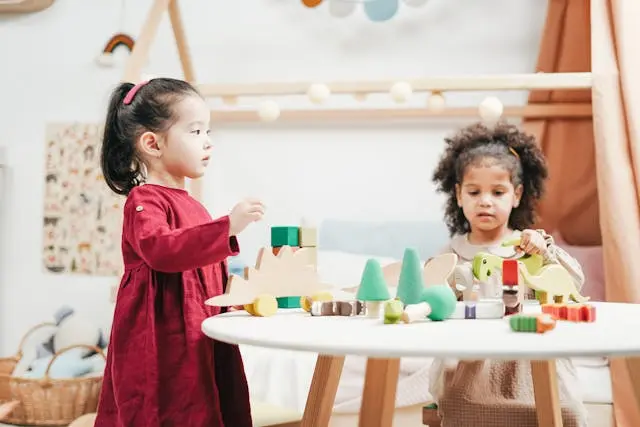
- Wooden blocks & unit blocks: symmetry, balance, spatial reasoning.
- Magnetic tiles: 2D/3D shapes, color matching, creative structures.
- Nesting/stacking cups: size order, volume, sink/float during bath play.
- Gears & cause-and-effect boards: turn one gear, watch others move.
- Simple ramps & balls: experiment with slope/height and speed.
Quick STEM challenges
- “Build a bridge for the animals.”
- “Sort blocks by shape then by color—what changed?”
- “How many cups of water fill the big bowl?”
3) Fine Motor & Early Self-Care
Small hand muscles matter for dressing, eating, and future writing.
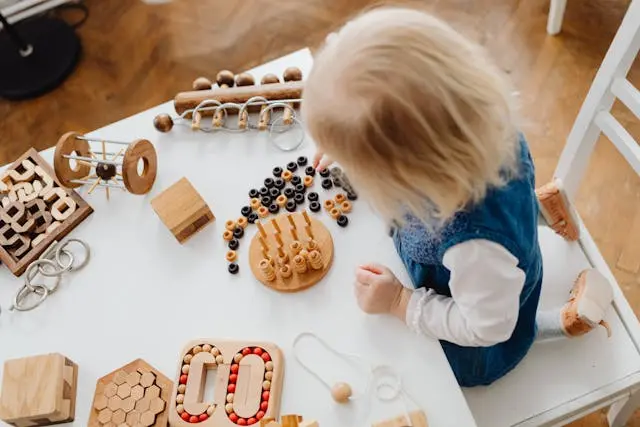
- Shape sorters & posting boxes (drop coins/discs into slots).
- Lacing beads & jumbo tweezers (use supervision).
- Busy boards: zippers, buckles, switches—real-world practice.
- Large-knob puzzles for hand-eye coordination.
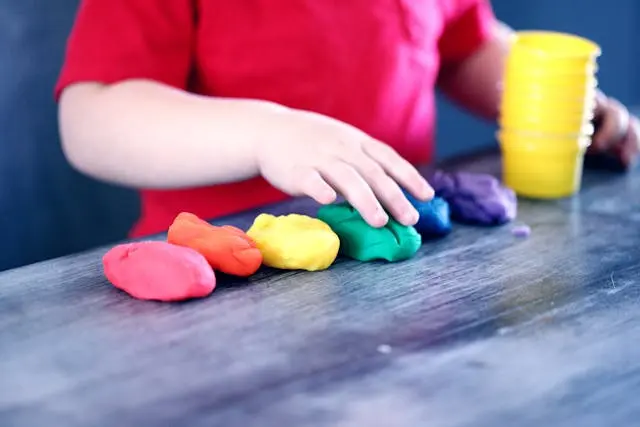
- Play-dough tools: rollers, stamps, safe cutters.
Fine-motor mini-games
- “Feed the monster” (slot in pom-poms or cardboard coins).
- “Clothespin rescue” (pin animals to a box edge and unclip).
- “Peel & stick” dot stickers to trace lines and shapes.
4) Gross Motor & Body Awareness
Movement regulates energy and supports attention.
- Balance bike or ride-on: core strength, bilateral coordination.
- Soft climbing wedges/steps: supervised indoor obstacle courses.
- Toddler-safe ball set: throw, kick, catch—hand-eye practice.
- Tunnel & pop-up tent: proprioceptive input and imaginative play.
Movement circuits
- Crawl through tunnel → jump on spots → toss balls into a basket.
- “Red light, green light” with music pausing for self-control.
5) Social-Emotional Learning (SEL)
SEL toys help your toddler name feelings, wait their turn, and practice empathy.
- Dolls & caregivers kits: feeding, diapering, bedtime routines.
- Emotion puzzles/cards: match faces to feelings, mirror expressions.
- Cooperative games (no winners): work together to complete a goal.
SEL scripts to model
- “I see you’re frustrated. Let’s squeeze the ball, then try again.”
- “Your turn—my turn—your turn.”
- “The doll is sad. Let’s give her a blanket.”
6) Creativity & Imagination
Creative play turns raw ideas into stories, shapes, and sounds.
- Art easel with washable paints/markers: color exploration and grip.
- Open-ended blocks & magnetic tiles: build worlds, not just towers.
- Dress-up box: simple hats, scarves, capes, fabric squares.
- Child-safe instruments: shakers, xylophone, drum.
Creativity starters
- “Can you draw our family picnic?”
- “Build a home for the giraffe—what does it need?”
- “Make a quiet song and a loud song.”
7) Sensory Play (Calm, Focus, and Exploration)
Sensory toys help your toddler explore textures, temperatures, resistance, and sound safely.
- Textured balls & sensory tubes (glitter, beads sealed inside).
- Kinetic sand/trays (use mats; supervise).
- Water table with cups, funnels, and toy boats.
- Weighted lap pad (use under guidance) for seated calm.
Safety note: Always supervise small parts and messy materials. If your child mouths non-food items, skip beads/buttons and choose larger, single-piece options.
Montessori-Inspired & Open-Ended Toys That Grow With Your Child
Montessori philosophy favors real materials, self-directed tasks, and one clear purpose at a time. Open-ended toys can be used in infinite ways, so they stay relevant for years.
Montessori Staples
- Wooden shape sorters & object permanence boxes
- Practical life sets (pitchers, tongs, mini brooms)
- Ring stackers & coin boxes
- Knobbed cylinders (for advanced fine motor)
Open-Ended MVPs
- Unit blocks & magnetic tiles (build anything)
- Loose parts (large rings, scarves, cardboard tubes)
- Play silks/fabrics for capes, landscapes, tents
- Figurines & vehicles for story worlds
Quick Comparison: Best Educational Toys for Toddlers by Goal
| Goal | Top Toy Types | Why It Works | Play Ideas |
|---|---|---|---|
| Language | Play kitchen, figurines, sound puzzles, books + props | Links words to actions; encourages turn-taking | “Chef café,” animal vet, matching props to pages |
| STEM | Blocks, magnetic tiles, ramps, nesting cups, gears | Spatial reasoning, cause-and-effect, early math | Build bridges, sort by shape/color, slope experiments |
| Fine Motor | Lacing beads, posting boxes, busy boards, play-dough tools | Strengthens grasp, coordination, tool use | “Feed the monster,” sticker tracing, zipper races |
| Gross Motor | Balance bike, soft climbers, tunnel, ball set | Core strength, balance, body awareness | Obstacle courses, target toss, red light/green light |
| Social-Emotional | Dolls, emotion cards, cooperative games | Perspective-taking, empathy, self-regulation | Care routines, feeling charades, team clean-up |
| Creativity | Easel & paints, dress-up, music set | Self-expression, planning, symbolism | Draw stories, costume parades, loud/quiet songs |
| Sensory | Textured balls, sand/water play, sensory tubes | Exploration, calming input, attention support | Scoop & pour stations, texture hunts |
How to Choose the Best Educational Toys for Your Toddler
1) Start With Your Child’s Interests
Follow their spark. If your toddler loves animals, pick blocks + animal figurines and build habitats. Interest fuels repetition—and repetition builds mastery.
2) Prioritize Open-Ended Over One-Trick
A flashing toy that plays one song gets old fast. A set of blocks evolves from stacking to bridges to castles to garage ramps.
3) Check Safety First
- Choose non-toxic materials and finishes; look for clear labeling and safety certifications relevant to your region.
- Size matters: anything that fits through a small-parts tester (about toilet paper tube size) is a choking risk for under-3s.
- Inspect seams, magnets, cords, and batteries (avoid loose magnets and ensure screwed battery compartments).
4) Pick the Right Challenge Level
The sweet spot is “just hard enough.” If frustration rises, simplify the task; if boredom shows up, add one new rule or piece.
5) Think Storage & Rotation
Keep 6–8 toys accessible and store the rest. Rotating every week makes old toys feel new and reduces clutter.
Sample Starter Set: 12 Items That Cover Every Skill
- Unit blocks or chunky wooden blocks
- Magnetic tiles (starter pack)
- Play kitchen + pretend food
- Animal figurines (mixed set)
- Chunky wooden puzzle (shapes/animals)
- Shape sorter or posting box
- Lacing beads (oversized) + jumbo tweezers
- Water table or bin + cups/funnels
- Tunnel or pop-up tent
- Art easel + washable paints/markers
- Music set (shaker, drum, xylophone)
- Ball set (soft soccer, foam basketball)
You can build this over birthdays and holidays. Ask relatives to choose from your list to avoid duplicates and overwhelm.
How to Play So Learning Sticks (In 10 Minutes a Day)
- Join, don’t direct: sit beside, copy their action, add one tiny twist.
- Narrate simply: “You stack. Tall tower!” Short phrases beat lectures.
- Offer choices: “Blue block or red block?” Choices invite language and cooperation.
- Pause on purpose: hold a toy and wait—the silence invites words or gestures.
- Celebrate effort: praise processes (“You tried again!”) more than results.
Special Considerations (Sensory, Speech, and Accessibility)
If Your Toddler Is Sensory-Seeking/Avoidant
- Offer predictable sensory play times (water table before meals).
- Adjust intensity: softer textures, dimmer lights, slower music if needed.
- Use deep-pressure tools (pillows, wall pushes) for regulation.
If Your Toddler Uses Fewer Words
- Pair toys with simple scripts (“Push car,” “More water,” “All done”).
- Use gestures/signs or picture cards alongside speech.
- Celebrate any communication—pointing, sounds, signs, eye gaze.
You know your child best. If you have concerns about development, connect with your pediatrician and local early intervention services. Early support helps you choose toys and strategies that fit.
Smart Budgeting: Get Quality Without Overspending
- Buy fewer, better: choose durable sets that combine well (blocks + figurines + tiles).
- Secondhand & swaps: toddlers outgrow quickly—community swaps are gold.
- DIY add-ons: cardboard ramps, scarf play, homemade picture cards.
- Library & toy lending: many communities lend toys just like books.
Caring for Educational Toys (So They Last for Baby #2… and #3)
- Follow manufacturer cleaning guidance; avoid soaking wood.
- Rotate and store in clear bins with picture labels your toddler can “read.”
- Do a quick safety check monthly: loose parts, cracks, frayed fabric.
One-Week Play Plan Using Only 6 Toys
| Day | Toys | Focus Skill | Prompt |
|---|---|---|---|
| Mon | Blocks + Animal Figurines | Language, STEM | “Build a winter home for the penguin—what does it need?” |
| Tue | Shape Sorter + Picture Cards | Fine motor, categorizing | “Find round things in the room. Now the sorter!” |
| Wed | Play Kitchen | Language, SEL | “Restaurant time—what’s on the menu?” |
| Thu | Magnetic Tiles | Spatial, problem-solving | “Make a ramp; which car rolls farther?” |
| Fri | Music Set | Rhythm, self-regulation | “Fast song, slow song, stop!” |
| Sat | Water Bin + Cups | Sensory, math | “Two small cups = one big cup?” |
| Sun | Family Choice | Review & connect | “Show me your favorite game from this week.” |
Helpful Resources & What to Read Next
- Internal: Pair this with your post on How to Choose Age-Appropriate Toys and Sensory Play Ideas.
- External: For child development milestones, see reputable pediatric resources and early education organizations in your region.
FAQ: Best Educational Toys for Toddlers
What are the absolute best educational toys for toddlers if I can only buy three?
Choose blocks (or magnetic tiles) for open-ended building, a play kitchen (or pretend set) for language and social play, and a shape sorter for fine-motor and early problem-solving. Those three cover most learning goals.
How do I know if a toy is truly educational and not just noisy?
Ask: Can my toddler use it in several ways? Does it invite problem-solving and language? If the toy does all the entertaining, it usually teaches less. If your child “does the work,” learning sticks.
Are electronic toys bad for toddler learning?
Electronics aren’t automatically harmful, but they often limit creativity. If you include them, use them as a small slice of playtime. Prioritize open-ended, hands-on toys first.
How many toys should my toddler have out at once?
Keep it to 6–8 accessible choices. Rotate weekly. Too many options can overwhelm and reduce deep play.
What’s the safest way to handle small parts?
For under-3s, avoid small pieces that could enter the mouth. Check for secure magnets and battery compartments. Inspect toys frequently and supervise sensory materials.
Conclusion: Choose Play That Teaches—Then Join the Fun
When you choose the best educational toys for toddlers, you’re really choosing moments: the “I did it!” after a wobbly tower stands, the first pretend phone call, the quiet concentration of threading a bead. The right toys don’t replace you—they amplify what you already do best. Sit down, follow your child’s lead, and add just enough challenge to stretch their skills. With a simple rotation, a few open-ended sets, and your warm attention, your living room becomes a mini-lab where curiosity grows every single day.
Want a printable checklist of the 12-item starter set and a week of play prompts? Tell us in the comments and we’ll send it to your inbox!