Signs Your Child Is Ready for Preschool
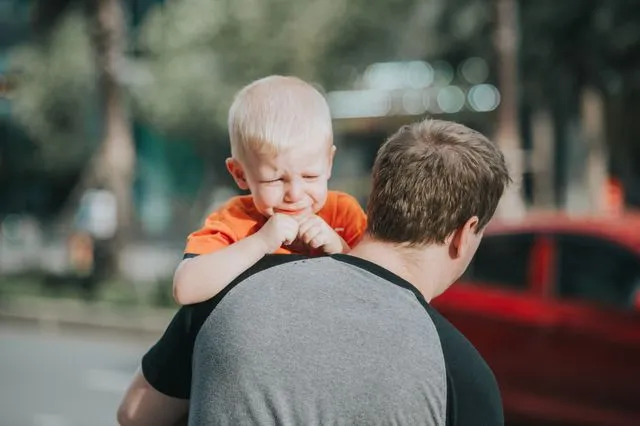
Every September, I watch the same scene play out in school corridors across the country. A small child grips their parent’s hand at the classroom door — eyes wide, lip trembling — while the parent stands there wondering the same thing they have been wondering for months: Did I make the right call? Is my child really ready for this?
In over twenty years of working in educational settings, I have sat across from hundreds of parents wrestling with exactly this question. And what I have learned — what the research confirms and experience validates — is this: the answer almost never comes down to age alone.
Children begin preschool at different ages depending on the country, program, family circumstances, and the child’s development. Readiness is not captured by age alone. A younger child may adapt well when they can communicate basic needs, tolerate brief separations with support, engage with other children, and participate in simple routines; an older child may still need extra support in one or more of those areas. The goal is not to label a child as ready or unready, but to understand what support will help them enter the setting successfully.
This guide will help you read the real signals. Not the checklist version that tells you your child needs to know their colors and count to ten, but the emotional, social, communication, and routine-based signs that can make the transition easier. If you are thinking beyond preschool entry to the transition into formal schooling, see our guide to what school readiness really means. For the broader developmental picture between ages three and five, see what children really need during the preschool years.
Table of Contents
Why Readiness Matters More Than Age
There is a persistent assumption among parents that preschool readiness is primarily about academic skills — knowing letters, numbers, colors, shapes. This assumption is understandable but significantly misplaced.
The American Academy of Pediatrics is unambiguous on this point: a child’s social, emotional, and behavioral skills are equally critical to school success as any academic skill. In fact, research consistently shows that children who struggle most in early school environments are not those who lack academic knowledge — they are those who lack the emotional regulation, social confidence, and self-care skills to navigate a structured group setting.
A child who knows the entire alphabet but dissolves into inconsolable distress when separated from their parent, or who cannot yet manage basic bathroom routines independently, will find preschool genuinely overwhelming. Conversely, a child who cannot yet recognize letters but who is curious, socially interested, emotionally settled, and comfortable with brief independence will almost certainly thrive.
The question is not “what does my child know?” It is “who is my child right now — and is that child ready for this environment?”
The 7 Real Signs Your Toddler Is Ready for Preschool
1. They Can Separate From You Without Extended Distress
This is the single most important readiness indicator, and it is the one parents most frequently underestimate.
Some degree of separation anxiety is entirely normal and actually healthy — it reflects a secure attachment to you, which is a good thing. The question is not whether your child cries when you leave. The question is whether they can recover. A child who is preschool-ready may cry at drop-off — and then, within a few minutes, allow themselves to be comforted by a teacher and redirected into an activity. That is readiness. A child who cannot recover at all, who remains inconsolable for the majority of the session, is telling you something important about where they are developmentally.
Dr. Diard of the Cleveland Clinic puts it simply: if your child can separate with minimal distress, or can be redirected when upset, that is a good sign they are ready. The ability to say goodbye — even an imperfect, tearful goodbye — without it becoming an overwhelming emotional crisis is what you are looking for.
If your child is not yet there, this is not a failure. It is information. Work on shorter separations first — with a trusted babysitter, a grandparent, a playdate. Build the muscle gradually before the full preschool transition.
2. They Are Interested in Other Children
Preschool is, at its core, a social environment. A child who has no interest in other children — who consistently prefers solitary play and shows no curiosity about what other children are doing — may find the social intensity of a preschool classroom more exhausting than enriching, at least at this stage.
What you are looking for is not advanced social skill. Three-year-olds are not expected to have sophisticated social abilities. At this age, what developmental researchers call “parallel play” — playing side by side with another child without much direct interaction — is entirely normal and developmentally appropriate. What matters is that your child is interested. That they look at what other children are doing. That they sometimes try to join in. That the presence of other children registers as something positive rather than something overwhelming.
If your child lights up around other kids, tries to make contact, and shows curiosity about what others are playing — that is a strong readiness signal, regardless of how sophisticated the interaction actually is.
3. They Can Manage Basic Self-Care Independently
Preschool teachers are warm, attentive, and supportive. But they are also managing a room full of young children, which means a child who requires extensive one-on-one support for basic self-care will quickly feel the gap between what they need and what is available.
The self-care skills that matter most for preschool readiness are:
- Bathroom use — either fully toilet-trained, or at minimum showing strong and consistent readiness. Many preschools require full toilet training as an enrollment condition.
- Hand washing — able to wash and dry their own hands with minimal assistance.
- Eating independently — able to feed themselves a snack or lunch without needing to be fed.
- Managing basic clothing — able to take off and put on a jacket, manage shoes with some independence.
None of these need to be perfect. A 3-year-old who occasionally needs help with a jacket button is entirely normal. But a child who cannot yet manage any of these without direct adult support will find the self-sufficiency demands of even a gentle preschool environment genuinely challenging.
4. They Can Follow Simple Two-Step Instructions
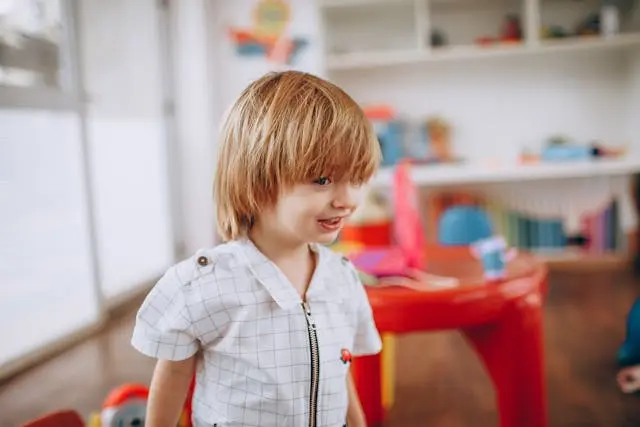
Preschool involves a constant stream of group instructions: “Put your bag on your hook, then come sit on the carpet.” “Finish your snack, then wash your hands.” “Listen to the story, then we will go outside.”
A child who can follow a simple two-step instruction — not perfectly, not every time, but generally — has the basic receptive language and attention skills needed to navigate a structured classroom environment. This does not mean they need to be perfectly compliant. It means they can hear and process a direction, hold it in their mind briefly, and act on it.
If your child struggles significantly with this at home, working on it deliberately — giving clear, simple two-step instructions in daily routines — is one of the most practical ways to build preschool readiness in the months before enrollment.
5. They Show Curiosity About the World
The child who asks “why” constantly, who crouches to examine a beetle on the pavement, who wants to know how everything works, who loves picture books and new experiences — that child is showing you exactly the disposition that makes preschool genuinely valuable for them.
Curiosity is the engine of early learning. A preschool environment is specifically designed to feed it — new materials, new activities, new ideas, new questions every day. A child who arrives curious will leave that environment richer. A child who is not yet particularly interested in the world around them may find preschool overstimulating rather than enriching.
As Dr. Diard observes: curiosity is a great sign. If your child asks questions, wants to try new things, and enjoys picture books, preschool can help nurture that naturally.
6. They Can Sustain Attention for Short Periods
A 3-year-old is not expected to sit perfectly still for extended periods. That is not developmentally realistic and no good preschool would expect it. But a child who cannot sustain focus on any single activity for more than a minute or two — who moves compulsively from thing to thing without any sustained engagement — may find the transitions and structured moments of a preschool day genuinely difficult.
What you are looking for is whether your child can sit and stack blocks for a few minutes, listen to a short story, color a picture, or complete a simple puzzle without constant redirection. The ability to complete a self-chosen activity — even a brief one — without direct supervision or support is a meaningful readiness indicator.
If this is an area of challenge, building it at home is straightforward: gradually extend the duration of focused activities. Start with two minutes, then three, then five. Read slightly longer picture books. Do puzzles together and work toward your child completing them with decreasing support.
7. They Have a Basic Ability to Communicate Their Needs
Your child does not need to be a sophisticated communicator to be ready for preschool. Three-year-olds typically speak in sentences of three to five words, and that is completely normal. What matters is that they can communicate their basic needs — hunger, pain, needing the bathroom, wanting help — in a way that an unfamiliar adult can understand.
This communication does not need to be verbal. Children who use sign language, gestures, or communication devices are equally capable of thriving in a preschool environment when that environment is set up appropriately. The key question is: if your child needs something, can they signal that need in a way that a caring teacher — who does not know them yet — would be able to understand?
If the answer is yes, even imperfectly, that is sufficient communication readiness for most preschool settings.
Signs Your Child May Benefit From More Time
Just as important as knowing the signs of readiness is knowing the signs that a child is not yet there — and being honest with yourself about what you are seeing. Delaying preschool does not put your child behind. Research from the American Academy of Pediatrics actually suggests that starting when a child is truly ready leads to better emotional and academic outcomes than starting before they are prepared.
| ✅ Signs of Readiness | ⏳ Signs More Time May Help |
|---|---|
| Recovers from separation within a few minutes | Remains inconsolable for most of the session |
| Shows interest in other children | Consistently overwhelmed or distressed by peers |
| Can manage basic bathroom routines | Not yet toilet trained or showing readiness |
| Can follow a simple two-step instruction | Consistently unable to process or act on basic directions |
| Shows curiosity and interest in new things | Easily overwhelmed by new environments or activities |
| Can sustain focus briefly on a chosen activity | Cannot engage with any activity for more than a minute |
| Can communicate basic needs to unfamiliar adults | Cannot yet signal needs in any recognizable way |
If most of the right column describes your child right now, that is not cause for alarm — it is simply information. Use it to guide your preparation rather than rushing a transition that will be harder than necessary for everyone involved.
How to Prepare Your Child for Preschool in the Months Before
Whatever your child’s current readiness level, there are specific, practical things you can do in the months before preschool begins that make the transition genuinely smoother.
Practice Separation Gradually
If separation anxiety is your primary concern, the most effective thing you can do is build the separation muscle in low-stakes environments before preschool begins. Leave your child with a trusted babysitter or grandparent for progressively longer periods — starting with thirty minutes and building toward two or three hours. Keep your goodbyes warm but brief. A long, drawn-out goodbye amplifies anxiety rather than soothing it. A calm, confident farewell — “I love you. I’ll be back at lunchtime. Have fun” — communicates to your child’s nervous system that this is safe.
Read Books About Starting School
Picture books are one of the most underrated tools in a parent’s repertoire for preparing children for new experiences. There are excellent books specifically about starting preschool that allow children to process the experience vicariously — seeing a character feel nervous, then settle in, then find a friend — before it happens to them. The emotional preview that books provide is genuinely protective against anxiety.
Talk About Preschool Positively and Specifically
Children absorb parental emotion with remarkable sensitivity. If you talk about preschool with anxiety or uncertainty in your voice, your child will feel that. Talk about it specifically and positively: “At preschool there will be a room full of toys and paints and books. There will be a teacher who helps everyone. You will have a hook for your bag with your name on it.” Specificity reduces the unknown, and it is the unknown that most fuels anxiety in young children.
Visit the School Before the First Day
If your chosen preschool allows it, visit the classroom before enrollment begins. Let your child walk the space, touch things, meet the teacher, see where the bathroom is and where they will hang their bag. A space that has been physically experienced is far less threatening than one that exists only in imagination.
Build Routines That Mirror Preschool Structure
Preschools run on predictable routines — arrival, circle time, free play, snack, outdoor time, story. If your home life is currently quite unstructured, introducing some rhythm in the weeks before preschool starts helps your child’s nervous system adjust to the idea of a scheduled day. Regular mealtimes, consistent nap or rest times, and a predictable bedtime routine all reduce the adjustment gap when the preschool schedule begins.
A Note for Parents Who Feel the Pressure to Start Early
There is enormous social pressure on parents to enroll children in preschool as early as possible — a sense that earlier is better, that waiting puts a child at a disadvantage, that the child who starts at 2.5 will somehow be ahead of the child who starts at 4.
The research does not support this. What the research supports is that children who enter preschool when they are developmentally ready have better outcomes than children who enter before they are ready. A child who spends a year in a preschool environment feeling overwhelmed, anxious, and unable to cope is not building a foundation for school success — they are building negative associations with the school environment that can be genuinely difficult to undo.
There is no prize for the earliest start. There is real value in the right start — whenever that is for your specific, individual child.
Trust what you see. You know your child better than any enrollment timeline does.
When Your Child Starts But Struggles to Adjust
Even children who show all the signs of readiness sometimes find the preschool transition harder than expected. This is normal. Most children need several weeks — sometimes up to six weeks — to fully settle into a new environment. The adjustment is not linear; there will be good days and harder days, and the harder days do not mean the decision was wrong.
Watch for whether the overall trajectory is positive — whether the hard mornings are gradually becoming less frequent, whether your child comes home with stories or drawings, whether they occasionally mention a friend or a favourite activity. These are signs that adjustment is happening, even if imperfectly.
If after six to eight weeks your child is still consistently distressed — still not recovering at drop-off, still showing significant regression at home — it is worth having an honest conversation with the teacher and, if needed, with your pediatrician. A part-time program, a different setting, or simply more time at home may be the right answer. That is not failure. That is responsive parenting.
The Bigger Picture: What Preschool Actually Builds
When a child enters preschool at the right time and in the right environment, the developmental benefits go far beyond anything academic. They learn to navigate a social world beyond their family. They develop the emotional regulation skills that come from managing small frustrations without a parent immediately available. They discover that they are capable — that they can do things, make things, figure things out — independent of you.
These are not small things. They are foundational. And they are built not by starting early, but by starting right.
If you are also thinking about how to support your child’s emotional development during this transition, our article on supporting your toddler’s emotional development offers practical guidance on building the emotional foundation that makes new environments feel safe rather than threatening.
And if you find that your child’s behavior at home becomes more intense around the time of starting preschool — more tantrums, more emotional reactions — this is very common and worth understanding. Our piece on why toddlers sometimes express frustration physically explains the neurological reasons behind this and what you can do to help.
Summary: What To Remember
- Readiness matters more than age. Most children start between 3 and 5, but developmental readiness — not the calendar — should drive the decision.
- The seven key readiness signs are: ability to separate without extended distress, interest in other children, basic self-care independence, ability to follow simple instructions, curiosity, capacity for brief sustained attention, and basic communication of needs.
- Delaying does not put a child behind. Starting when truly ready leads to better emotional and academic outcomes than starting too early.
- Prepare practically — practice separation, visit the school, talk positively and specifically, build routines that mirror preschool structure.
- Adjustment takes time. Most children need up to six weeks to fully settle. Watch the overall trajectory, not individual difficult days.
- Trust what you see. You know your child better than any enrollment timeline or social pressure does.
Younes Kehal is an educational director, certified school coach, and certified life coach with 20 years of experience working with children, families, teachers, and schools. His guidance combines practical educational experience with carefully reviewed research.