
My child won’t eat anything — the truth about picky eaters every parent needs to hear
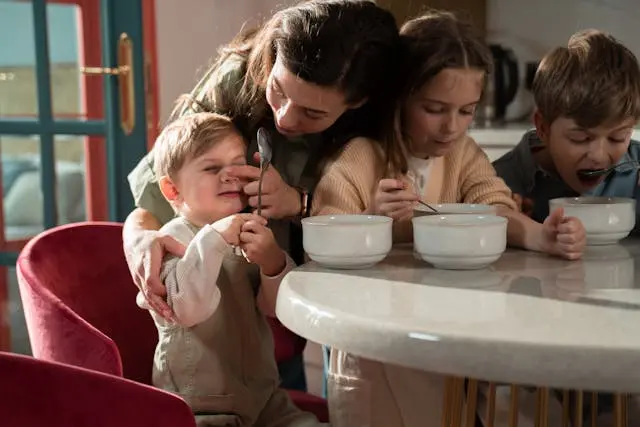
The pasta has to be a specific shape. The sauce cannot touch the pasta. The bread must not have crusts. The apple slices must be peeled but not cut too thin, and under no circumstances should anything green appear anywhere on the plate.
If this sounds familiar, you are living with a picky eater — and you are far from alone.
In over twenty years of working with children and families, I have sat across from parents who were genuinely worried that their child was surviving on air, crackers, and sheer stubbornness. Some had tried everything. Bribery. Hiding vegetables in sauces. Making meals into games. Giving up entirely and just serving the three foods they would eat without a fight. Nothing worked, or nothing worked for long, and the dinner table had become the most stressful room in the house.
What most of these parents needed was not another trick or strategy. What they needed was a fundamentally different understanding of what picky eating actually is — where it comes from, why it is so resistant to pressure, and what actually helps over time.
That is what this guide is about.
Table of Contents
First: How Common Is This, Really?
More common than most parents realize. Research indicates that picky eating affects somewhere between 13% and 50% of children, with the highest rates occurring between ages two and six. That is an enormous range, and it reflects the fact that “picky eating” covers a wide spectrum — from a child who simply has strong preferences but eats a reasonable variety, to a child whose diet is so restricted that it genuinely affects their nutrition and daily functioning.
What is consistent across the research is this: picky eating is most common in the toddler and preschool years, and for the vast majority of children, it resolves naturally as they grow. The child who survives on pasta and cheese at age 3 is not necessarily destined to be a restricted eater at age 13.
This does not mean you should ignore it or wait passively. It means you should approach it with perspective — and with strategies that work with your child’s developmental stage rather than against it.
Why Picky Eating Happens: The Real Reasons
Understanding why your child is a picky eater is the essential first step. Because the intervention that works for sensory sensitivity is very different from the one that works for a learned power struggle — and confusing the two makes everything harder.
1. It Is Partly Developmental — and Partly Protective
Here is something that surprises most parents: from an evolutionary standpoint, food wariness in toddlers is not a flaw. It is a feature.
Around the age of 18 months to 2 years, children begin to move independently and explore their environment without constant adult supervision. From an evolutionary perspective, this is precisely the moment when they need to be most cautious about putting unknown things in their mouths. Developmental researchers believe that the spike in food refusal during toddlerhood is at least partly a biological protection mechanism — the same instinct that helped our ancestors avoid poisonous plants.
This does not make it less frustrating. But it does explain why arguing with it, forcing it, or trying to override it with logic tends to backfire. You are arguing with a deeply wired biological response, not simply a personality quirk.
2. Sensory Sensitivity Plays a Real Role
For many children — particularly those with sensory processing differences — food refusal is not stubbornness. It is a genuine sensory experience that is overwhelming in ways adults find difficult to fully appreciate.
Young taste buds are significantly more sensitive than adult ones. A flavor that registers as mildly bitter to you may taste intensely, almost unbearably bitter to your child. A texture that seems entirely unremarkable to you — the slight mushiness of a cooked vegetable, the unexpected crunch of a nut in a smooth sauce — may produce a genuine gag response in a child with tactile sensitivity.
When a child says “I don’t like it” about a food they have never tried, they are often responding to sensory information they are picking up — smell, color, texture, temperature — before the food even reaches their mouth. This is real, not performed. And treating it as if it were performed — insisting they eat it anyway, dismissing their reaction — does not help them overcome the sensitivity. It teaches them that mealtimes are unsafe.
3. There Is a Genuine Genetic Component
Recent research has confirmed something many parents of picky eaters have long suspected: eating preferences have a heritable component. Studies of twins have found that food fussiness shows significant genetic influence, independent of parenting style or food environment. If you or your partner were extremely picky eaters as children, your child’s pickiness may be genuinely inherited — not a product of what you did or did not do.
This matters because it removes the blame. Picky eating is not, in most cases, the result of bad parenting. It is a complex intersection of developmental stage, sensory sensitivity, temperament, and yes, sometimes genetics.
4. Pressure and Conflict Make It Worse
This is perhaps the most important thing for parents to understand — and the one that is hardest to implement in the moment of a dinner table standoff.
Research consistently shows that the more pressure a child feels around eating, the more food-averse they become. Force-feeding, bribery, pleading, making a big deal of refusals, keeping a child at the table until they eat — all of these strategies increase anxiety around food without increasing the range of foods eaten. In fact, they typically narrow it, because the child now associates the refused food not just with sensory discomfort but with emotional distress and conflict.
The dinner table becomes a battleground, and the child — who has very little control over most things in their life — discovers that food is one area where they have complete power. And they use it.
The Exposure Principle: What the Research Actually Shows Works
If pressure does not work, what does?
The most robustly supported intervention in the picky eating research is also the most counterintuitive for many parents: repeated, low-pressure exposure.
Children often need many low-pressure encounters with a new food before they are willing to try or accept it. Current CDC guidance notes that some young children may need around 8 to 10 exposures or more. Exposure does not have to mean eating: seeing, touching, smelling, helping prepare, or tasting a tiny amount can all build familiarity over time.
Each of these encounters, however minimal, reduces the novelty and therefore the threat of the food. Over time, familiarity breeds not contempt but acceptance. The food that produced a dramatic gag response at age 3 may be eaten without comment at age 5 — not because you did anything dramatic, but because you kept offering it calmly, without pressure, without reaction, for two years.
The key word is calmly. A parent who watches anxiously as their child encounters broccoli, waiting for the reaction, ready to swoop in with an alternative — that anxiety is visible and it primes the child for refusal. A parent who puts the broccoli on the plate, says nothing, and eats their own meal without comment is practicing the kind of low-pressure exposure that actually works over time.
8 Strategies That Actually Help — And the Science Behind Each One
1. Separate Your Job From Your Child’s Job
Dietitian Ellyn Satter’s Division of Responsibility model — one of the most evidence-based frameworks in pediatric nutrition — makes a simple but profound distinction: your job is to decide what food is offered, when, and where. Your child’s job is to decide whether to eat it and how much.
When parents take on both jobs — deciding what is offered and then trying to control whether and how much the child eats — the result is almost always conflict, anxiety, and worsening picky eating. When parents respect the division, children gradually develop a healthier relationship with food and a more varied diet over time.
This means putting a variety of foods on the table — including at least one thing you know your child will eat — and then letting go of the outcome. No watching. No commenting. No celebrating when they try something new in a way that makes trying new things feel like a performance. Just a calm, normal family meal.
2. Keep Offering — Without Comment or Pressure
Based on the exposure principle, keep putting small amounts of refused foods on your child’s plate at regular intervals — not every meal, but consistently over weeks and months. Do not draw attention to it. Do not say “just try one bite.” Do not remove it dramatically when refused. Simply include it, say nothing, and move on.
This feels pointless at first. It feels like the food is going straight from the plate to the bin, week after week. And then, one day, your child picks it up, smells it, puts it back. A few weeks later, they touch it to their lip. Months later, they eat one piece. The timeline is frustratingly long. The strategy is the right one.
3. Involve Your Child in Food Preparation
Research and clinical experience consistently show that children are significantly more likely to try foods they have had a hand in preparing. The American Academy of Pediatrics specifically recommends involving children in age-appropriate cooking tasks as a strategy for expanding food acceptance.
For toddlers, this might mean washing vegetables, stirring a bowl, or tearing lettuce. For preschoolers, measuring ingredients, arranging food on a plate, or choosing between two vegetables at the market. For school-age children, more substantial involvement in actual cooking.
The mechanism is partly about ownership — they made this, so it is theirs in a way that changes their relationship to it. And partly about exposure — they have seen, touched, smelled, and handled the food in a completely non-pressured context, which reduces its novelty long before it appears on the plate.
4. Use Food Bridges
Nutritionists use the concept of “food bridges” to describe a practical technique for expanding a child’s diet gradually. The idea is simple: once a food is accepted, use it as a bridge to introduce foods with similar colors, flavors, or textures.
If your child accepts sweet potatoes, try mashed carrots — same color, similar sweetness, slightly different texture. If they like cheese, try adding a small amount of cheese to a new vegetable. If they eat plain pasta, try pasta with a very mild sauce. If they eat apple slices, try pear slices.
Each bridge moves the child one small step away from the familiar toward the unfamiliar — small enough that the step does not trigger resistance, but meaningful enough that the diet gradually expands over time.
5. Make Mealtimes Predictable and Pleasant
Children eat better in calm, predictable, low-stress environments. A regular meal schedule — eating at roughly the same times each day, at the table, as a family when possible — reduces the anxiety that feeds picky eating. When mealtimes feel safe and predictable, the food itself becomes less threatening.
This also means eliminating the background negotiations that many families fall into: “If you eat three bites of broccoli you can have dessert.” Research is consistent that using preferred foods as rewards for eating non-preferred foods actually decreases children’s liking of the non-preferred food over time. The message the child receives is: the broccoli must be so bad that I need to be bribed to eat it. Which makes the broccoli worse, not better.
6. Serve New Foods Alongside Accepted Ones
Never introduce a new food as the only option at a meal. Always serve it alongside at least one food you know your child will eat. This eliminates the all-or-nothing dynamic — the child does not need to eat the new food to have a meal. The pressure is off, which paradoxically makes them more likely to eventually try it.
The CDC recommends exactly this approach: serve new foods alongside familiar favorites to reduce the novelty threat and give the child a safe option while they gradually become comfortable with what is new.
7. Eat the Same Food Yourself — Visibly and Enjoyably
Children learn what is safe to eat primarily by watching the adults around them eat it. This is not a theory — it is deeply wired social learning that goes back to our earliest evolutionary history. A child who repeatedly sees their parent eating something with obvious enjoyment, without drama, without it causing any distress — that child’s brain files away: this is safe. This is food.
The inverse is also true. A parent who refuses certain foods, makes faces, or comments negatively on foods they dislike is modeling food avoidance as powerfully as they are modeling anything else. Children notice. They file it away.
Eat the vegetables. Eat them visibly. Eat them with genuine pleasure when you can manage it. Say nothing about whether your child eats them. This is one of the longest-acting interventions available to you.
8. Never Label Your Child a “Picky Eater” — Especially In Front of Them
Labels are powerful, particularly with children who are still forming their sense of self. A child who is consistently identified as a picky eater — by their parents, their grandparents, their teachers — will begin to incorporate that identity into their self-concept. Being picky becomes who they are, not just something they do right now. And once it is part of their identity, changing the behavior requires changing the identity — which is a much harder task.
Speak about your child’s eating in specific, behavior-focused terms rather than character-focused ones. Not “she’s such a picky eater” but “she’s still working on trying new vegetables.” Not “he won’t eat anything” but “he tends to prefer familiar foods right now.” The language is different. The trajectory it creates is very different.
When to Be Concerned: Picky Eating vs. ARFID
Most picky eating is developmentally common and improves over time. But Avoidant/Restrictive Food Intake Disorder (ARFID) goes beyond ordinary food fussiness and requires professional assessment. Concern is higher when food restriction affects growth or nutrition, creates dependence on supplements, causes marked anxiety or avoidance, or significantly interferes with school, family meals, or social life. ARFID can occur even when a child is not underweight.
| ✅ More Typical Selective Eating | ⚠️ Consider Professional Assessment |
|---|---|
| Strong preferences but the child continues to grow and function well | Weight loss, faltering growth, or signs of nutritional deficiency |
| Refuses unfamiliar foods but can eat familiar foods without marked distress | Extreme anxiety, gagging, choking fear, or strong avoidance around many foods |
| Food range is stable or gradually widening | Food range is progressively narrowing or whole food groups are being lost |
| Family meals are frustrating but manageable | Eating difficulties substantially disrupt family life, school, travel, or social activities |
| No need for nutritional supplements to maintain adequate intake | Reliance on supplements, special formulas, or other nutritional support to meet needs |
If several items in the right column describe your child, speak with your pediatrician. A referral to a feeding specialist, occupational therapist, or registered dietitian who works with children can make an enormous difference — and the earlier the intervention, the better the outcomes.
A Practical Week of Low-Pressure Mealtimes
Theory is useful. What many parents need is a practical picture of what this actually looks like day to day. Here is a sample approach for a week of low-pressure meals with a picky eater:
- Monday dinner: Pasta (accepted) + small portion of broccoli on the side (no comment) + sliced bread. Child eats the pasta and bread. Broccoli goes untouched. No reaction from parent.
- Tuesday lunch: Cheese sandwich (accepted) + three cherry tomatoes on the plate + apple slices. Child eats sandwich and apple. Tomatoes untouched. No reaction.
- Wednesday dinner: Involve child in washing the salad leaves. Child touches the leaves, makes a face, puts them down. Parent eats salad without comment. Child eats the rest of the meal.
- Thursday: At the supermarket, let child choose between two vegetables for dinner. They choose corn. Corn is served. No negotiation required.
- Friday dinner: Family meal. Same broccoli from Monday, same casual placement on the plate. Child picks up a piece, sniffs it, puts it back. No reaction. A small step, filed away by the brain as safe.
Nothing dramatic happened this week. No battles were won. But no battles were lost either — and battles lost at the dinner table are the ones that make picky eating worse. Over weeks and months of this consistent, low-pressure approach, the cumulative effect is real and measurable.
A Word for Exhausted Parents
If you have been fighting this battle for months or years, I want to say something directly: the exhaustion you feel is real and completely understandable. Watching a child you love refuse food, worrying about whether they are getting what they need, navigating the opinions of grandparents and family members who think you are doing it wrong — this is genuinely hard.
What I want to offer you is not another thing to do perfectly. It is permission to take a breath and simplify. Stop the battles. Serve what you know they will eat alongside small amounts of what you want them to eventually accept. Eat your own meals with visible enjoyment. Say less about food, not more.
The research on children’s health outcomes from picky eating is actually reassuring: most picky eaters are not underweight, and unless your pediatrician has identified a specific nutritional concern, the risk of your child’s picky eating causing lasting nutritional harm is lower than most parents fear. Focus on the long game — the gradual, consistent, low-pressure expansion of what is familiar — rather than the outcome of any individual meal.
The dinner table does not need to be a battleground. It can be a place where your family simply eats together — and over time, that normalcy is one of the most powerful nutritional interventions available.
For context on how your child’s overall health connects to their eating patterns, our article on why children get sick frequently touches on the role of nutrition in immune development — and why a varied diet, even an imperfect one, supports your child’s resilience. And if mealtime battles are contributing to emotional intensity at home, our piece on understanding toddler emotional regulation may offer useful context on why young children express frustration the way they do.
Summary: What To Remember
- Picky eating is extremely common — affecting up to 50% of children, most intensely between ages 2 and 6, and resolving naturally for most children over time.
- It has real causes: developmental food wariness, sensory sensitivity, temperament, and a genuine genetic component — not bad parenting.
- Pressure makes it worse. Force-feeding, bribery, and dinner table battles narrow the diet rather than expanding it.
- Repeated low-pressure exposure works — but takes 10 to 15+ exposures and months of patience before visible results appear.
- Separate your job from your child’s job: you decide what is offered; they decide whether and how much to eat.
- Use food bridges, involve your child in preparation, model eating with enjoyment, and serve new foods alongside accepted ones.
- Never label your child a picky eater — especially in front of them. Labels become identities.
- Seek professional support if the diet is extremely restricted, narrowing over time, causing nutritional deficiencies, or producing significant anxiety around food.
Younes Kehal is an educational director, certified school coach, and certified life coach with 20 years of experience working with children, families, teachers, and schools. His guidance combines practical educational experience with carefully reviewed research.