Water Is Running Out — How to Raise Children Who Understand Its Value
My daughter was seven years old the first time she asked me why we turn off the tap while brushing our teeth. I had been asking her to do it for years without ever really explaining why — just “because we save water,” which means almost nothing to a seven-year-old who has never once turned on a tap and found nothing there.
So I took a glass of water and put it on the kitchen table. I told her that if all the water on Earth fit into that glass, only this much — and I dipped the tip of a teaspoon into the water and lifted a single drop — was fresh water that people could actually drink and use. Everything else was ocean water or locked in ice at the poles.
She stared at that drop for a long time. Then she went upstairs and turned off the tap while brushing her teeth. She has done it every day since.
That moment taught me something I have carried into my work with families ever since: children do not conserve water because we tell them to. They conserve it because they understand it — because someone has made the invisible visible, the abstract concrete, and the global personal. And once they understand it, truly understand it, they become some of the most committed water conservers in the household.
This guide is about how to build that understanding — and the daily habits that flow from it.
Table of Contents
The Reality That Most Children Have No Idea About
We live in a world where, for most children in developed countries, water appears limitlessly and instantly from a tap. It is always there. It is always clean. It costs almost nothing. The idea that it might not always be there — that it is, in fact, one of the most precious and increasingly scarce resources on the planet — is so abstract as to be essentially meaningless without deliberate teaching.
But the reality behind the tap is stark. Of all the water on Earth, only about 3% is fresh water — and of that 3%, roughly two thirds is locked in glaciers and ice caps, unavailable for human use. Less than 1% of all the water on Earth is accessible fresh water that humans can actually use. According to the United Nations, more than 3 billion people live in areas that experience water scarcity for at least one month per year. By 2025, the UN projected that two thirds of the world’s population could face water shortages.
Climate change is making this worse. Changing precipitation patterns, more frequent droughts, melting glaciers that feed major rivers, and rising temperatures that increase evaporation are all reducing the availability of fresh water in regions around the world — including regions that have not historically experienced scarcity.
The children in your household today will be adults in a world where water is not the background assumption it has been for their parents’ generation. Building their understanding of water’s value — and their habits around its use — is not a peripheral environmental concern. It is one of the most practically significant things an eco-conscious parent can do.
Why Children Are the Most Important Audience for This Message
Adults who grew up without water consciousness are notoriously difficult to change. Habits formed over decades — the long shower, the tap running while washing dishes, the sprinkler running in the middle of a sunny afternoon — are deeply embedded and highly resistant to modification by information alone.
Children are different. The habits and values formed in childhood around natural resources are the ones that persist. The child who grows up understanding that water is precious and behaving accordingly will carry that understanding into adulthood — into their own homes, their own gardens, their own children’s upbringing — in ways that adult environmental education campaigns can rarely achieve.
This is precisely why the family home is the most important site of water conservation education available. Not schools, not public campaigns, not government initiatives — the daily habits modeled and taught at home by parents who have made water conservation a normal, unremarkable part of how the family lives.
As we have seen consistently in our exploration of eco parenting — whether we are raising zero-waste kids or building eco-friendly family habits — the most durable environmental values are not taught through lectures or guilt. They are built through understanding, through habit, and through the modeling of adults who live what they teach.
Making the Invisible Visible: How to Build Real Understanding
The single biggest barrier to water conservation in children is the invisibility of the problem. The water always comes out of the tap. The evidence of waste is immediate — it flows down the drain — but the consequence is entirely abstract. Somewhere, somehow, this matters. But where? And how? Children cannot conserve something whose value they cannot see.
The job of the eco-conscious parent is to make the invisible visible. Here are the approaches that work best.
The Drop Experiment
Fill a large transparent container with water — a mixing bowl, a large jar, a fish tank if you have one. Explain that this represents all the water on Earth. Then pour out 97% of it slowly, explaining that this is salt water — ocean water that we cannot drink or use for crops or washing. What remains — 3% — is fresh water. Then pour away most of that remaining amount, explaining that this is water locked in ice and glaciers. What is left — a tiny amount in the bottom of the container — is the accessible fresh water that all of humanity, all agriculture, all industry on Earth depends on.
Then ask your child: does this look like something we should waste?
This experiment, done once, with a child who is old enough to follow the explanation — typically from age 6 or 7 — produces a shift in understanding that abstract information never achieves. The child has seen it. They understand it in a way that is embodied rather than merely intellectual.
The Dripping Tap Calculation
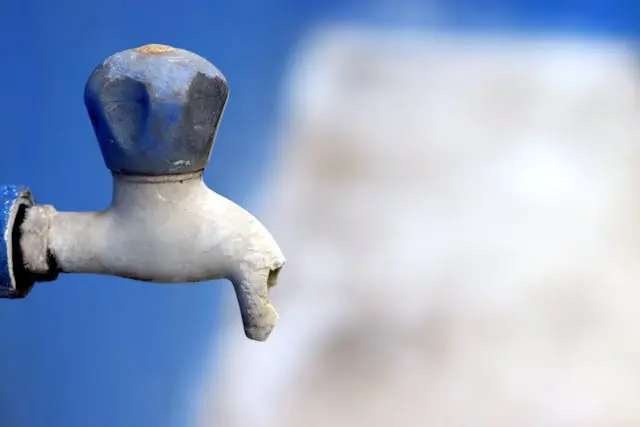
Find a tap in your house that drips slightly — or simulate one. Put a container underneath it and leave it for an hour. Measure what has collected. Then do the simple arithmetic together: this much water per hour, times 24 hours, times 365 days. A dripping tap that drips once per second wastes approximately 3,000 liters of water per year.
Children who have done this calculation themselves — who have watched the water collect and done the multiplication — have a completely different relationship to dripping taps for the rest of their lives. They become tap-checkers. It is a responsibility they will carry into every home they ever live in.
The Water Footprint Conversation
For older children — from about age 9 or 10 — the concept of the water footprint is genuinely fascinating and often shocking. Every product we use contains “hidden water” — the water required to produce it. It takes approximately 15,000 liters of water to produce one kilogram of beef. About 2,700 liters to produce a single cotton t-shirt. Around 140 liters to produce one cup of coffee.
Exploring these numbers together — using online water footprint calculators — connects children’s consumer choices to water use in a way that transforms abstract conservation messaging into personal relevance. The child who knows that their hamburger required 2,500 liters of water to produce makes that choice differently — not necessarily to refuse it, but with an awareness that was not there before.
The Daily Habits That Actually Matter
Understanding is the foundation. Habit is the structure that sits on it. Here are the water conservation habits that research and practical experience consistently identify as highest-impact in family households — and how to make them stick.
1. Turn Off the Tap While Brushing Teeth
This is the most frequently cited water conservation habit for a reason: the impact is immediate, measurable, and significant. Turning off the tap while brushing teeth saves approximately 6 to 8 liters of water per minute — which means a family of four, brushing twice daily, saves approximately 12,000 liters of water per year from this single habit.
For children, make this concrete: “Every time you brush your teeth with the tap off, you save enough water for someone to drink for a week.” Connect the action to the impact. Make the invisible visible again.
The habit forms most reliably when it is established as simply what we do — not as a rule that requires remembering, but as an automatic part of the brushing routine. For young children, a small sign on the bathroom mirror, or a sticker on the tap handle, provides a visual prompt during the period of habit formation. Once the habit is automatic — typically after several weeks of consistent practice — the prompt can be removed.
2. Shorter Showers — With a Timer
A standard showerhead uses approximately 8 to 10 liters of water per minute. A ten-minute shower uses 80 to 100 liters. A five-minute shower uses half that. For a family of four, reducing average shower time by five minutes per person per day saves approximately 58,000 liters per year — enough to fill a small swimming pool.
For children, the timer approach works well — and it can be made genuinely engaging rather than restrictive. A sand timer in the bathroom, or a waterproof shower speaker that plays a specific song they love (and the rule is to be done before the song ends), transforms a conservation limit into a game rather than a deprivation.
Create a family leaderboard if your children are competitive — tracking weekly shower times and celebrating consistency rather than just speed. The social dimension of conservation — the sense of contributing to a family effort — significantly increases children’s engagement with what might otherwise feel like a personal sacrifice.
3. Only Run Full Loads
Washing machines and dishwashers use the same amount of water whether they are full or half-empty. Running full loads rather than partial ones is one of the simplest and most impactful water-saving habits available to any household — and it is one that children can actively participate in from a young age.
Involving children in checking whether the dishwasher is full before running it, or helping sort laundry into full loads, builds the habit of load awareness that will follow them into their own households. It is also a practical lesson in resource efficiency — the idea that we use resources thoughtfully rather than casually — that extends well beyond water conservation.
4. Collect and Reuse Water
Rainwater collection is one of the most effective and most engaging water conservation practices available to families — particularly those with gardens or outdoor spaces. A simple rain barrel connected to a downpipe can collect significant quantities of rainwater that can be used for garden watering, cleaning outdoor areas, or washing the car.
Involving children in setting up and using a rain barrel connects them to the water cycle in a direct and tangible way. They can measure how much rain falls in a week. They can calculate how much of their garden watering needs are met by collected rainwater. They develop an understanding of water as something that flows through natural cycles — not something that appears from a pipe and disappears down a drain.
Even without a garden, keeping a container in the kitchen to collect water that would otherwise run unused — the cold water that runs while waiting for hot water, the water used to rinse vegetables — and using it to water houseplants or pot plants builds the habit of seeing water as something to be used rather than wasted.
5. Water Plants Wisely
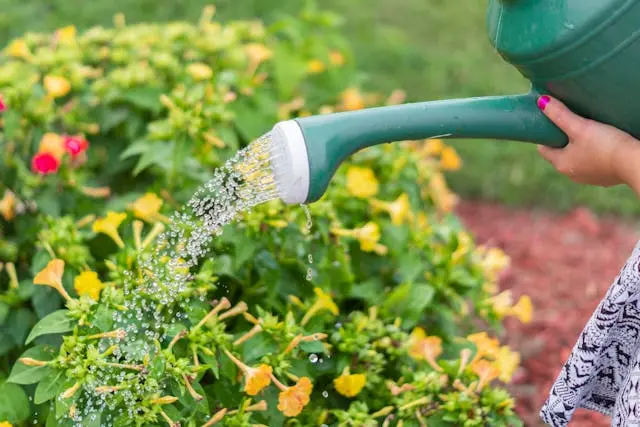
Garden watering is one of the largest sources of domestic water use — and one of the most amenable to significant reduction through simple changes. Watering in the early morning or evening rather than the middle of the day reduces evaporation dramatically. Watering at the root rather than overhead reduces waste. Using mulch around plants retains moisture in the soil and reduces the frequency of watering needed.
Children who are involved in garden watering — who are taught these principles and given responsibility for applying them — develop a relationship with water use in growing things that carries forward. The garden becomes a living laboratory for water conservation, where the consequences of watering choices are visible in the health and growth of the plants they are tending.
This connects directly to the gardening practices we explored in our article on raising children who love real food — the child who grows their own food understands not just where food comes from, but the resources — including water — that it takes to produce it.
6. Fix Leaks — and Make Children Part of the Fix
A dripping tap. A running toilet. A leaking outdoor hose fitting. These are the silent water wasters that most households have and most adults ignore — because the drip seems small, the cost seems trivial, and fixing it requires a level of effort that the perceived saving does not seem to justify.
The calculation changes when you make the numbers visible. A toilet that runs continuously can waste up to 200 liters per day — 73,000 liters per year from a single faulty mechanism that costs a few dollars and twenty minutes to fix. A dripping tap wastes 3,000 liters per year. These numbers, shared with children who have done the drop experiment and understand water’s scarcity, produce a very different response to a dripping tap than the one most adults have.
Make leak-finding a family project. Walk through the house together checking taps, pipes, and the toilet cistern. Give children the responsibility of monitoring and reporting. Fix what you find, together, and calculate the water saved. Conservation education does not require a classroom — it requires a household that pays attention.
Age-by-Age Water Conservation Education
| Age | What They Can Understand | What They Can Do |
|---|---|---|
| 3–5 | Water is precious and comes from nature. We do not waste precious things. | Turn off the tap while brushing teeth with help. Water plants with a small watering can. Report a dripping tap to a parent. |
| 5–8 | Not enough water is drinkable. Many people don’t have enough. Our daily habits affect how much water is available. | Do the drop experiment. Time their own showers. Check that taps are fully off. Help collect rainwater. |
| 8–12 | The water cycle, climate change’s impact on water supply, the concept of water footprint, global water inequality. | Calculate the family’s water use. Research the water footprint of favourite foods. Lead a household leak audit. Set water-saving goals and track them. |
| 12+ | Water politics, international water scarcity, the water footprint of different diets, the systemic drivers of water inequality. | Research local water issues. Advocate at school for water conservation. Make independent food choices that reflect water awareness. Share knowledge with peers. |
Making Water Conservation Engaging Rather Than Preachy
The fastest way to lose a child’s engagement with any environmental topic is to make it feel like a lecture. Water conservation education that works is interactive, curious, and grounded in discovery rather than instruction.
Experiments That Make It Real
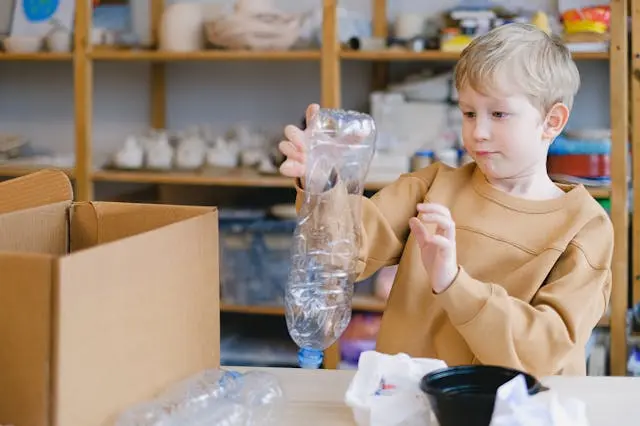
Beyond the drop experiment, there are several simple, engaging activities that build water understanding through direct experience. Build a simple water filtration system from a plastic bottle, sand, gravel, and charcoal — and observe how water pollution works and why clean water requires so much effort to produce. Simulate an oil spill in a bowl of water and experiment with different methods of cleaning it up. Measure how much water different daily activities use by collecting and measuring it rather than simply calculating.
These activities do what no amount of information can: they make abstract concepts tangible, and they make children active investigators rather than passive recipients of adult concern.
Connect Water to What They Already Love
A child who loves animals connects to water conservation through the impact of water scarcity on wildlife and ecosystems. A child who loves sport connects through the water required to maintain sports facilities and the water needs of athletes. A child who loves food connects through the water footprint of what they eat. Finding the door that is already open and walking through it is always more effective than trying to create new interest from scratch.
Celebrate the Numbers
Children respond to concrete evidence that their actions make a difference. Track your family’s water conservation progress together — through your water bill, through a household water meter, or simply through a family log of the habits you have built. Celebrate reductions. Calculate what has been saved. Make the impact visible in the same way the drop experiment made the scarcity visible.
A family that has saved 10,000 liters of water through consistent habit change has done something real and measurable. That concreteness — the knowledge that what we do in our bathroom and kitchen actually matters — is one of the most powerful things you can give a child in an era when environmental problems often feel impossibly large.
The Conversation About Global Water Inequality
For older children — from about age 9 or 10 — the conversation about water can appropriately extend beyond household habits to the global reality of water inequality. According to the United Nations, more than 3 billion people on the planet need water that crosses national borders — but just two dozen countries have agreed to share their supply. Hundreds of millions of people spend hours each day collecting water that is not clean. Children in some parts of the world walk several kilometers to reach a water source that their counterpart in a developed country would not consider drinking.
This conversation, handled with age-appropriate care — as we explored in our article on talking to children about environmental issues without causing anxiety — is not about generating guilt or despair. It is about building perspective. The child who understands that their easy access to clean water is not universal develops a relationship with water that is rooted in genuine appreciation rather than casual assumption. And appreciation is a far more durable foundation for conservation behavior than guilt or obligation.
What You Are Building Beyond the Habit
Every water conservation habit you build into your family’s daily life is doing something beyond reducing your household’s water use. It is building in your children a set of values about resources — about the fact that the things we use come from somewhere real, that they are finite, that they are not equally distributed, and that what we do in our home genuinely matters.
These values transfer. The child who has learned to think carefully about water will think more carefully about energy, about food, about material consumption — because the underlying principle is the same: resources are not infinite, their use has consequences, and the choices we make in ordinary daily life are not without significance.
That is, ultimately, the core of what eco parenting is trying to build: not a child who follows a set of environmental rules, but a person who has genuinely internalized the understanding that they are part of a world with limits — and who makes choices accordingly, for the rest of their life.
Start with a glass of water. A teaspoon. A drop. Make the invisible visible. Everything else follows from there.
Summary: What To Remember
- Less than 1% of all the water on Earth is accessible fresh water — and climate change is making this increasingly scarce. Children who understand this conserve water; children who do not, do not.
- Children are the most important audience for water conservation education — habits formed in childhood around natural resources persist into adulthood and across generations.
- Make the invisible visible — the drop experiment, the dripping tap calculation, the water footprint conversation — transform abstract conservation messaging into embodied understanding.
- The highest-impact daily habits are: turning off the tap while brushing teeth, shorter showers with a timer, running only full loads, collecting and reusing water, watering plants wisely, and fixing leaks promptly.
- Match the depth of education to the child’s age — simple and action-focused for young children, progressively more complex and systemic for older ones.
- Make it engaging, not preachy — experiments, games, calculations, and connecting water to what children already love builds genuine understanding and lasting habit.
- Celebrate concrete progress — track water use, calculate savings, and make the impact of conservation habits visible and real.
- For older children, include the global picture — water inequality, water footprint, the political dimensions of water scarcity — to build perspective and genuine appreciation.
- The values transfer — a child who thinks carefully about water will think more carefully about all resources. That is the real long-term gift.
Younes Kehal is a Professional Educational Director and School Coach with over 20 years of experience working directly with children, families, and educational institutions. The guidance published on Parenting Assist is rooted in real field experience and evidence-based developmental science.