Starting School Is Not a Milestone. It’s a Transition — And Your Child Needs You to Know the Difference.
Every September, I watch the same scene play out in school corridors across the country.
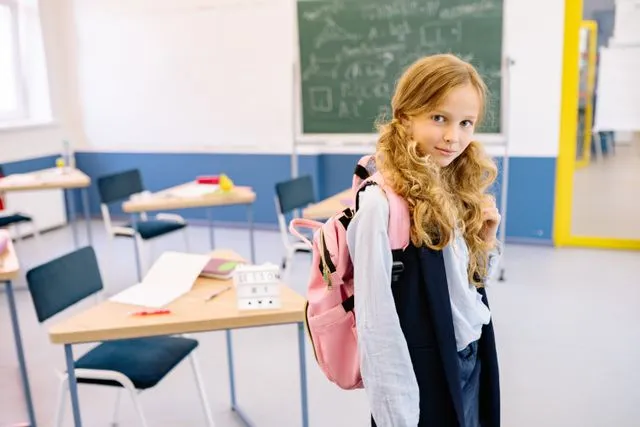
A small child, four or five years old, in new shoes that are slightly too big. A parent holding their hand a little too tightly. The classroom door ahead. And somewhere in the space between the child and the door, something enormous and invisible happening that nobody has quite prepared either of them for.
Some children walk through that door without looking back. Some cling. Some cry quietly. Some cry loudly. Some appear entirely fine and then fall apart three weeks later, when the novelty has worn off and the weight of the new reality has settled in. All of these responses are normal. None of them are the point.
The point — the thing I want to spend this article on — is what starting school actually is, and what it is not. Because the way we talk about it, and therefore the way we prepare for it and respond to it, is shaped by a framework that gets something important wrong.
We talk about starting school as a milestone. As an achievement to be ready for, a box to be ticked, a moment of arrival. We ask: Is she ready? Can he sit still? Does she know her letters? Can he follow instructions? We prepare for it as an academic event.
But starting school is not primarily an academic event. It is a transition. And transitions — real ones, the kind that change the fundamental structure of a child’s daily life — work differently from milestones. They require different preparation. They produce different challenges. And they take significantly longer to complete than the first day of school suggests.
If you are still deciding whether your child is ready for formal school, start with our guide to what school readiness really means. If the transition begins earlier at preschool, see the signs of preschool readiness.
Table of Contents
What Makes Something a Transition Rather Than a Milestone
A milestone is a point of arrival. Your child walks for the first time. They say their first word. These are moments of developmental achievement — real and significant, but essentially discrete. They happen, and then the child has arrived somewhere new.
A transition is a process. It involves moving from one stable state to another, through a period of instability in between. The instability is not a problem to be eliminated. It is the transition itself — the necessary turbulence of change. And the process is complete not when the child walks through the school door for the first time, but when the new situation has become genuinely familiar. When the child has built the relationships, the routines, the understanding of the environment, the sense of self in this new context, that make it feel like a place they belong.
For most children, this process takes months, not days. For some, it takes the better part of the first year. The research on school transition is fairly consistent on this point: the adjustment period extends well beyond the first few weeks, and many of the most significant challenges appear not at the beginning but in the middle — when the initial excitement has faded and the hard work of genuinely settling has to happen without the support of novelty.
Understanding this changes what parents watch for, what they worry about, and when they worry about it.
What a Child Is Actually Being Asked to Do
When we strip away the academic preparation and look at what starting school actually requires of a four or five year old, the list is considerable.
They are being asked to separate from the primary attachment figure — the person whose presence has been the anchor of their felt safety — for the longest period they have ever done so. Not an hour at the supermarket. A full day, in a place that is entirely unfamiliar, with adults they do not know and children they have never met.
They are being asked to regulate their own emotional responses without the external scaffolding of a familiar caregiver. Every difficult feeling they encounter during the school day — frustration, confusion, loneliness, conflict with another child — they must navigate with significantly less support than they have ever previously had to manage without.
They are being asked to function within a social group of approximately twenty to thirty children, many of whom are strangers, navigating the complex social landscape of childhood peer relationships — who to sit with, how to join a game, what to do when someone is unkind, how to manage conflict — in a context where the rules are new and the social dynamics are entirely unknown.
They are being asked to follow the instructions of new adults, adapt to new routines, manage their own physical needs — getting their coat, opening their lunchbox, finding the bathroom — in an unfamiliar building.
And they are doing all of this simultaneously, for six or seven hours a day.
The academic content — letters, numbers, the beginning of structured learning — is, in the first year, the smallest part of what is being required. The larger work is social and emotional. And the children who navigate the school transition most successfully are almost never the ones who arrived knowing the most letters. They are the ones who had the emotional resources to manage the experience.
What “School Readiness” Actually Means
The concept of school readiness has been captured almost entirely by academic indicators — letter recognition, number knowledge, ability to hold a pencil. These things matter, and some of them genuinely affect how a child experiences the first months of school. But they are not the primary predictors of how well a child will transition.
The research on what actually predicts successful school adjustment is fairly clear, and it points consistently to a cluster of skills that are social and emotional rather than academic.
| Factor | Why It Matters | Evidence Strength |
|---|---|---|
| Secure attachment to primary caregiver | Children with secure attachment use the caregiver as a secure base from which to explore new environments; separation is easier when the return is trusted | Very strong — among the most replicated findings in developmental psychology |
| Emotional regulation capacity | Ability to manage frustration, disappointment, and uncertainty without adult scaffolding determines how the child copes with the inevitable difficulties of the school day | Very strong |
| Language ability | The capacity to communicate needs, express feelings, and understand instructions significantly affects both academic engagement and social integration | Strong |
| Basic self-care independence | Managing coat, bag, lunchbox, and bathroom independently reduces daily stress and dependence on teacher attention | Strong — practical impact on daily experience |
| Experience with peer interaction | Children with prior group experience — playgroups, nursery — have already developed some of the social navigation skills the classroom requires | Moderate to strong |
| Familiarity with books and stories | Not letter knowledge, but a positive relationship with books and narrative — associated with early literacy engagement | Moderate |
| Letter and number knowledge | Provides some early academic advantage; associated with confidence in formal learning activities | Moderate — less predictive than emotional factors |
The child who struggles most with school transition is not usually the one who does not know their letters. It is the child who has not had sufficient experience being away from their primary caregiver, who has not developed the basic emotional regulation tools to manage difficulty without adult help, or who has had limited experience with peer-group social dynamics. These are the gaps that actually make school hard.
And they are not gaps that flashcard practice closes.
The Separation: What Is Actually Happening and Why It Is Hard
The morning drop-off is the most emotionally concentrated moment of the school transition for many families. And it is one of the most misunderstood.
A child who cries at drop-off is not failing to transition. They are doing exactly what a securely attached child does when separated from their primary attachment figure in an unfamiliar environment: they protest. This protest is not manipulation. It is the attachment system working as designed — signalling distress at separation in the hope that the attachment figure will return.
The children who do not protest at all — who walk away easily from the first day — are sometimes more worrying to a developmental psychologist than the ones who cry. Easy separation in a very young child can occasionally indicate an insecure attachment pattern rather than exceptional confidence. Not always. But the crying child is not the concerning one.
What matters more than whether a child cries is what the parent does in response to the crying. And here is where many parents, with the best intentions, make the transition harder.
The instinct when a child cries at drop-off is to stay longer. To linger, to comfort, to reassure, to negotiate. The problem is that prolonging the goodbye does not help the child — it signals to them that their distress has called the parent back, which makes future separation harder rather than easier. The child’s nervous system learns: if I escalate the distress, the parent stays. Which means the next morning, the distress is likely to be more intense.
What the research consistently supports is a warm, confident, brief goodbye. A clear statement of return: “I will pick you up after lunch.” A physical expression of warmth: a hug, a specific ritual. And then a definitive departure, with confidence. Not coldness. Not dismissiveness. But confidence — because a parent who lingers and hesitates is communicating, at the level of behaviour, that they are not sure the child will be okay. And children read that signal.
Teachers often know this. The children who are still crying ten minutes after drop-off are frequently the ones whose parents lingered longest at the door.
The Weeks and Months That Nobody Prepares Parents For
The first day of school gets a lot of attention. The first week, somewhat less. What nobody really prepares parents for is what happens in weeks three through twelve — the period after the initial novelty has faded and before genuine belonging has been established.
This is often the hardest period of the school transition, and it catches parents off guard because the child seemed to be settling, and now they seem to be struggling again. Behaviour at home deteriorates. There are meltdowns that have not been seen since toddlerhood. The child who appeared happy at school comes home exhausted and dysregulated. Sleep may be affected. Appetite may change. There may be stomachaches on school mornings that have no medical explanation.
All of this is normal. It is the deferred cost of the emotional regulation the child has been doing all day — holding themselves together in a demanding environment, managing without the scaffolding of familiar caregivers, performing social and emotional work that is genuinely taxing. By the time they get to the car or the front door, the regulation capacity is empty. Whatever was being held comes out.
The most useful response to this is the one that is hardest in the moment: presence without interrogation. The child who collapses at pick-up does not need a debrief about their day. They need to be held, metaphorically or literally, while the regulated nervous system of the parent helps settle the dysregulated nervous system of the child. The questions can come later, once the immediate decompression has happened.
And the meltdowns at home are not evidence that school is going badly. They are usually evidence that the child is working very hard at school and coming home to the only place they feel safe enough to fall apart. That is, actually, evidence that things are going reasonably well.
| Period | What Children Often Experience | What Parents Often See | What Helps |
|---|---|---|---|
| Week 1–2 | High novelty; excitement; some anxiety; manageable because everything is new | May seem fine; some crying at drop-off; curious and talkative at home | Consistent routine; warm, brief goodbyes; connection at pick-up |
| Week 3–6 | Novelty fades; reality of daily demand settles in; emotional exhaustion increases | Meltdowns at home; regression in behaviour; complaints about school; sleep disruption | Lower demands at home; early bedtime; low-key pick-up; not pushing for information |
| Month 2–3 | Beginning to form friendships; familiar with routine; still tiring but more manageable | More settled overall; some difficult days; beginning to talk about school more naturally | Celebrating small social wins; maintaining routine; staying attuned to changes in mood |
| Month 4–6 | Genuine belonging beginning to develop; school feels familiar; confidence growing | Child initiating talk about school; looking forward to specific things; more stable at home | Continuing connection; supporting friendships; engaging with what the child shares |
| After 6 months | School is part of normal life; transition largely complete for most children | Child settled and engaged; home equilibrium restored | Ongoing interest and connection; watching for signs if adjustment has not happened |
When the Transition Is Genuinely Difficult
Most children, given time and adequate support, move through the school transition successfully. But some children find it genuinely and persistently difficult, in ways that go beyond the ordinary turbulence of adjustment.
The signs that a child’s school transition has moved from challenging to requiring closer attention include: persistent refusal to attend school — not occasional reluctance but sustained, daily distress that does not diminish over time; physical symptoms that are consistently worse on school mornings and resolve at weekends; significant regression in skills or behaviours — bedwetting in a child who was previously dry, loss of language that was previously present, or a return to much younger behaviours; social isolation — a child who has not made any connections after several months, who consistently describes themselves as having no friends, or who is visibly distressed about peer relationships; and a teacher who raises consistent concerns about the child’s functioning in the classroom.
Any of these patterns, sustained over more than a few weeks, warrants a conversation — first with the class teacher, then with the school’s SENCO or pastoral care lead if the initial conversation does not produce a useful picture. A child who is genuinely struggling with school transition may need additional support that the classroom teacher cannot provide alone — whether that is a differentiated approach to settling, referral for assessment of an underlying difficulty, or access to school-based emotional support.
The earlier this is identified, the better. A child who is struggling significantly at five and receives appropriate support at five is in a very different position from one who struggles for three years without anyone quite naming it.
What Parents Can Do Before School Starts
The most useful preparation for school is not academic. It is relational and practical, and it is often the preparation that gets the least attention.
Practice separation in advance, in ways that are genuinely calibrated to the child’s current tolerance. A child who has never been left with anyone except the primary caregiver is going to find the school separation harder than one who has had regular, comfortable experience being with other trusted adults. Regular time at a childminder, a playgroup, or with a family member provides this experience. It does not need to be long. It needs to be consistent and positive.
Visit the school environment before the first day. Most schools offer transition visits precisely because familiarity reduces anxiety. Walk the route to school. Find the classroom. Use the bathroom. Meet the teacher. The physical environment becomes less threatening when it is not entirely unknown.
Build the practical skills that will be needed daily. Opening a lunchbox. Fastening and unfastening a coat. Putting on and taking off shoes. These seem trivial. They are not. A child who cannot manage these things independently spends significant cognitive and emotional energy on them during the school day, at the expense of engagement with everything else. Practicing them at home, without time pressure, is useful preparation.
Talk about school in realistic, honest terms. Not “you’ll love it” — which sets up a promise that may not immediately be true. Not “you’ll be fine” — which can feel dismissive of legitimate anxiety. Something more honest: “It will be new, and new things can feel a bit strange at first. That’s normal. And you’ll get to know it more every day.”
Establish the pick-up ritual before school starts. The child needs to know, concretely, who will collect them, from where, and when. The clarity of this matters more than parents typically realise. A child who is uncertain about the pick-up arrangement carries that uncertainty throughout the school day in a way that consumes attentional resources that should be going elsewhere.
For the foundational emotional preparation that makes all of this more effective — the secure attachment and emotional regulation skills that are built long before school starts — the article on building strong attachment with your baby covers these foundations in depth, and the piece on what toddler emotional behaviour is actually communicating explains the regulatory development that school will build on.
A Word to Parents Who Are Also Finding It Hard
The school transition is not only a transition for the child. It is a transition for the parent too — often more significant than parents expect or feel entitled to acknowledge.
Handing your child to a stranger for the first time, for the longest period they have ever been away from you, in a building you do not fully know yet — this is an experience that activates the parental attachment system in powerful ways. The grief some parents feel at school drop-off, particularly on the first few days, is not sentimental. It is the attachment system responding to separation, in the same fundamental way that the child’s distress is a response to separation. Parents and children are doing the same thing, from different sides of the door.
This is worth acknowledging because the pressure on parents to appear confident and cheerful at drop-off — for the child’s sake, and it genuinely does matter for the child — can obscure the fact that the parent may also need somewhere to put what they are feeling. A phone call to a partner or friend after drop-off. A brief acknowledgment of the strange weight of it. Permission to find it hard without concluding that finding it hard means something is wrong.
The Zero to Three Foundation — one of the most respected organisations in early childhood development — has produced resources specifically on supporting both children and parents through school transition, including guidance on managing parental anxiety in ways that do not transfer to the child. It is worth reading before September, not in the middle of the first week.
Frequently Asked Questions
How long does it take for a child to fully settle into school?
For most children, genuine settlement — where school feels familiar and the child has established relationships and routines — takes three to six months. Some children settle faster. Some take longer. The visible signs of transition, including home behaviour deterioration and morning reluctance, typically peak around weeks three to six and then gradually reduce. If significant difficulty is still present after three months, it is worth a conversation with the school.
My child cries every morning at drop-off. How long is this normal?
Some crying at drop-off is normal for the first few weeks. If the crying is brief — settling within a few minutes of the parent leaving, according to the teacher — this is developmentally within range and typically resolves with consistency. If the child is genuinely distressed throughout the morning, not settling for extended periods, or the pattern has not changed after four to six weeks, a conversation with the teacher is warranted to understand what is happening once you leave and whether additional support is needed.
Should I stay and watch through the window to make sure my child is okay?
In general, no. Children who observe their parent watching often maintain the distress longer than they would if the parent left entirely. The parent’s visible presence reactivates the separation response. If you need reassurance that your child has settled, a brief call to the school office after thirty minutes is more useful than watching from outside — and most teachers are very happy to provide a quick update to anxious parents in the early weeks.
My child seems fine at school but is falling apart at home. Should I be worried?
This is extremely common and is not a sign that something is wrong. Children who hold themselves together in a demanding environment and release at home are demonstrating that home is their safe place — which is exactly as it should be. The home meltdowns are the decompression of a regulatory system that has been working very hard all day. They typically reduce as the child becomes more settled at school and the daily demand becomes less novel and taxing.
My child is four and does not seem ready for school. What should I do?
Readiness varies enormously between children of the same age, and the cutoff date for school entry in many countries means that some children start school significantly younger than others in their cohort. If you have genuine concerns about your child’s readiness — particularly around emotional regulation and separation — a conversation with your health visitor, paediatrician, or the school’s early years lead before entry is worthwhile. In some jurisdictions, delaying school entry by a year is possible and may be appropriate for some children. In others, it is not an available option. Understanding what is possible in your context is the first step.
How can I support my child’s friendships in the early months of school?
At this age, friendship support is primarily about opportunity rather than instruction. Arranging playdates with specific children your child has mentioned, even briefly and informally, provides the low-pressure social time that school does not always allow. Talking naturally about what happened at school — who they played with, what the game was — without pushing for information signals interest. And avoiding the instinct to solve social difficulties immediately gives children the space to develop their own social navigation, with support available when needed.
Younes Kehal is an educational director, certified school coach, and certified life coach with 20 years of experience working with children, families, teachers, and schools. His guidance combines practical educational experience with carefully reviewed research.