What School Readiness Really Means Before Starting School
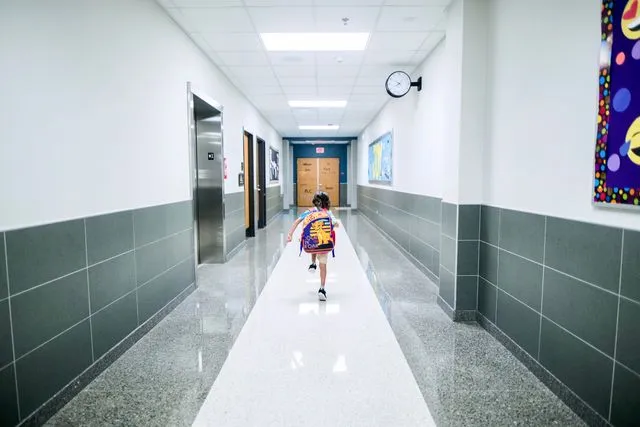
Every September, I watch the same scene play out in school corridors across the country.
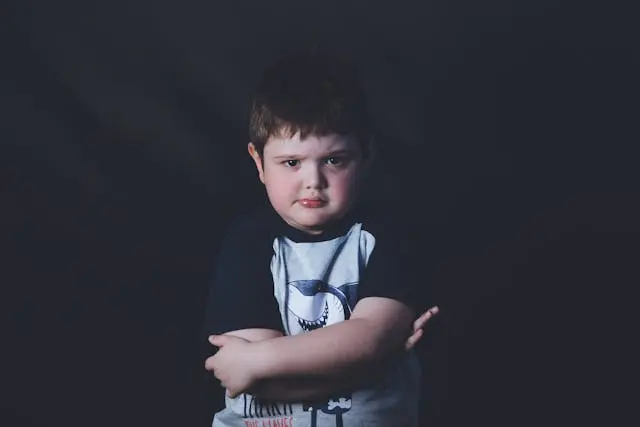
A small child, four or five years old, standing at the classroom door in new shoes. Sometimes they walk in confidently. Sometimes they cling. Sometimes they go in and then turn back once, twice, three times to check that the parent is still there. And the parent stands at the door with a particular kind of face — one that is trying very hard to project calm while doing none of the things calm actually requires.
In the weeks before September, many of these parents have been quietly — and sometimes not so quietly — anxious. Does she know her letters? Can he count to twenty? Should she know how to write her name by now? We did the worksheets. We got the reading readiness books. We visited the school three times. Is he ready?
The anxiety is real and it is understandable. School is a significant transition. The stakes feel high. And there is a substantial industry — workbooks, apps, readiness assessments, preschool programmes of varying intensity — that is built on the premise that school readiness is primarily about academic preparation, and that preparation is primarily the parent’s responsibility to engineer.
I want to offer a different picture. Not because the anxiety is wrong, but because it is often pointed in the wrong direction. School readiness includes language, self-regulation, social and emotional skills, physical development, and early learning—not simply a checklist of academic facts. If your child is preparing to enter preschool specifically, see our guide to preschool readiness. For the broader developmental priorities from ages three to five, see preschool development ages 3–5.
Table of Contents
What School Readiness Is Not
Let me start here, because I think it is the more useful place to begin.
School readiness is not reducible to knowing the alphabet. Early literacy knowledge can be useful, but it sits alongside language, self-regulation, social skills, physical development, curiosity, and the ability to participate in classroom routines. A child who does not yet know every letter is not automatically behind, just as knowing letters does not by itself mean a child is ready for the social and emotional demands of school.
School readiness is not the ability to write their name. It is not knowing numbers to twenty, or colours, or shapes, or any specific item of academic content. These things are outcomes of early education, not prerequisites for it. The research on academic pre-teaching in the years before formal school is not kind to it: children who have been drilled on academic content prior to school entry show some initial advantages that disappear within the first year or two, as their peers catch up. What they have gained in knowledge they have sometimes lost in curiosity — which matters more over the long arc of education than any specific fact or skill taught before school age.
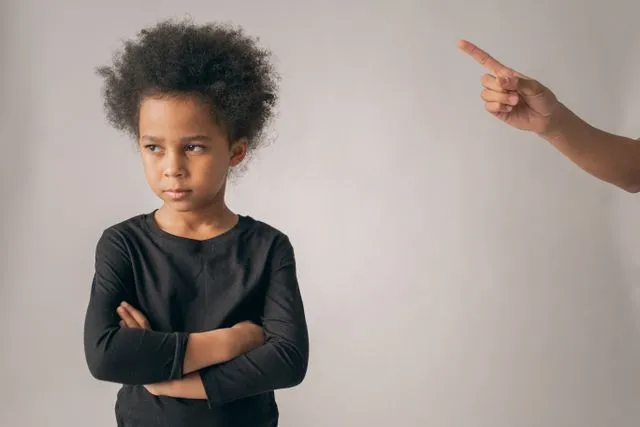
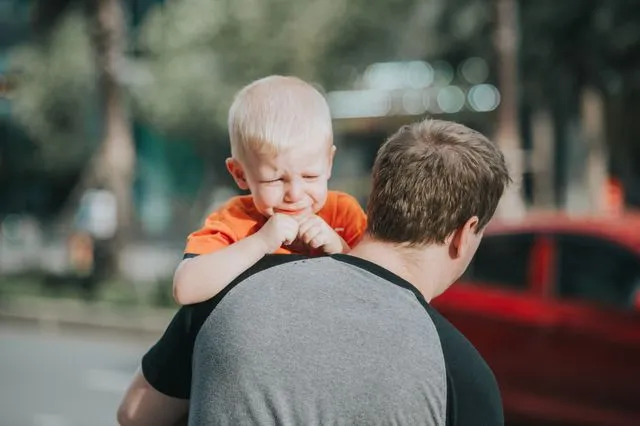
School readiness is also not temperamental. A child who is shy is not less ready than a confident one. A child who cries at drop-off is not less ready than a child who walks in without looking back. Separation distress at school entry is so common that it is statistically normal, and its presence or absence tells you almost nothing about how a child will do once they have settled.
What School Readiness Actually Is
The research on school readiness — which is substantial and reasonably consistent — points to a set of capacities that genuinely predict how children will fare in a school environment. Most of them have very little to do with academic content.
The first is self-regulation. The ability to manage impulses, to wait, to tolerate frustration, to persist at a task that is not immediately rewarding. A child who can sit with difficulty — who can stay in their seat when they would rather not, who can keep working at something hard rather than immediately giving up, who can wait for their turn without dissolving — has one of the most important school readiness capacities available. This is not about suppressing emotion or being unusually compliant. It is about the basic executive function that allows a child to function in a group environment with demands and expectations.
The second is the ability to communicate needs. Not eloquently. Not at length. Simply the ability to say “I need help,” “I do not understand,” “I need to use the bathroom,” “something is wrong.” A child who cannot communicate these things to an adult who is not their parent is at a significant disadvantage in a school environment, however academically prepared they may be.
The third is the ability to engage with other children. Not to have no social difficulties — social difficulties in early childhood are extremely common and very normal. But the basic orientation toward other children as interesting, as potential playmates, as people worth engaging with. A child who has had significant experience of play with other children before school will navigate the social landscape of the classroom more fluidly than one who has not.
The fourth — and this is the one that surprises parents most — is curiosity. A child who is curious, who asks questions, who wants to know how things work and why things are the way they are, who is interested in the world around them — that child is ready for school in the deepest possible sense. Curiosity is the engine of all learning. It cannot be directly taught. But it can be nurtured, or it can be inadvertently suppressed by an educational environment — including a home educational environment — that is too focused on right answers and not focused enough on genuine questions.
| Readiness Factor | Why It Matters | Evidence Strength | How It Is Built |
|---|---|---|---|
| Self-regulation and impulse control | Allows engagement with instruction, waiting, group functioning | Very strong — among the strongest predictors of academic outcomes | Play, especially imaginative and rule-based play; co-regulation with caregivers |
| Language and communication | Foundation for literacy, for expressing needs, for social engagement | Very strong — vocabulary at school entry is a powerful predictor of later reading | Being talked to, read aloud to, having conversations; rich language environment |
| Ability to engage with peers | School is a social environment; peer relationships are central to the experience | Strong — social competence at entry predicts adjustment and engagement | Play with other children; group settings; supported social experiences |
| Curiosity and engagement with learning | Intrinsic motivation is the most durable driver of educational achievement | Strong — motivation and engagement predict long-term outcomes beyond initial knowledge | Following the child’s interests; open-ended play; answering questions genuinely |
| Secure attachment to caregivers | Provides the emotional base from which the child can explore and learn independently | Very strong — secure attachment consistently associated with better academic and social outcomes | Responsive caregiving; emotional attunement; consistent and available presence |
| Knowledge of letters and numbers | Provides a head start that typically disappears within 1-2 years | Weak to moderate — initial advantage; does not predict long-term outcomes | Reading together; natural exposure; not drilling |
| Ability to write name | Useful but not essential; quickly taught in school if not already known | Weak — not a significant independent predictor | Fine motor practice; drawing; normal development |
Look at what is at the top of that table and what is at the bottom. The things parents tend to worry about most are at the bottom. The things that actually predict how children will do are at the top — and they are built not through worksheets and readiness drills, but through secure attachment, rich language, play, and the accumulated ordinary experiences of an engaged early childhood.
The Language Gap — and What to Do About It
Of all the genuine readiness factors, language is the one where the gap between children at school entry is most significant and has the most documented long-term consequences.
Research on the “word gap” — the difference in vocabulary between children from language-rich and language-poor environments at school entry — has produced some of the most replicated and sobering findings in developmental science. Children who arrive at school with larger vocabularies learn to read faster, understand more of what they read, and perform better academically across subjects for years afterward. Vocabulary at school entry is one of the strongest predictors of academic outcomes at age ten that researchers have identified.
What builds vocabulary? Not vocabulary lists. Not flashcards. Not educational apps.
Conversation. Specifically, the kind of conversation that goes beyond directives and responses — not “put your shoes on” and “yes” — but genuine exchanges where a child is asked what they think, where their observations are taken seriously, where new words are used naturally in context, where stories are told and questions are answered and the adult talks to the child as though what the child thinks genuinely matters.
Reading aloud is the single most reliably documented intervention for vocabulary development available to parents. Not because of the words on the page specifically, but because of the quality of language — the complexity, the variety, the narrative structure — that books provide, and because of the conversations that good reading aloud generates. A parent who reads with a child — stopping to talk about what is happening, asking what will happen next, connecting the story to the child’s experience — is providing a language environment that ordinary conversation alone does not replicate.
The American Academy of Pediatrics recommends reading aloud from birth — not from when it seems like it makes sense, but from the beginning. The early months of reading aloud are not about the words. They are about the rhythm, the voice, the closeness, the pattern of shared attention. The vocabulary and narrative comprehension come later, built on that foundation.
Play Is the Work — and It Is Being Undervalued
There is a tension at the heart of contemporary early childhood preparation that I think is worth naming directly.
The impulse to prepare children for school by doing school-like things before school — worksheets, structured learning, academic drilling — is, in the light of the developmental evidence, working against itself. The activities that build the self-regulation, curiosity, language, and social competence that genuinely predict school success are not the school-like activities. They are play.
Specifically, imaginative play — the kind where children create scenarios, take on roles, negotiate with other children about what the story is and who plays what, sustain a shared fiction over time — is one of the most powerful builders of school-readiness capacity available. It develops self-regulation because children in play must manage their impulses to keep the game going. It develops language because play requires negotiation and communication. It develops perspective-taking because maintaining a shared imaginary world requires understanding that other people have different mental states. It develops the ability to represent one thing as another — a stick as a sword, a box as a spaceship — which is the cognitive foundation of symbolic thought that reading itself requires.
The child who spends their preschool years in rich, extended, self-directed imaginative play is building more school-readiness capacity than the child who spends those years in structured academic preparation. This is not an opinion. It is the consistent finding of decades of developmental research, and it runs directly counter to the market for readiness products and programmes.
This does not mean unstructured time should be entirely undirected. Adults play a real role — in providing the materials, the space, the time, and the companionship that make rich play possible. And there is value in reading aloud, in trips to museums and libraries, in conversations about the world. But the core of school preparation, developmentally speaking, is play. And the child who has had abundant time for it — who goes to school having spent thousands of hours in imaginative, social, physical play — is a child who is ready.
The Separation Question
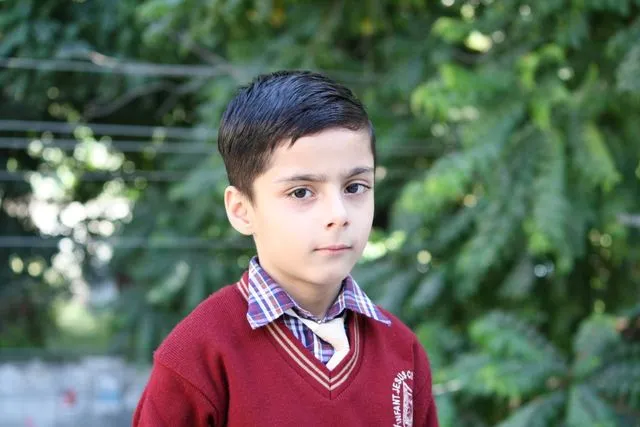
Let me spend some time on this because it is often what parents are most immediately anxious about — the practical question of what happens at the classroom door.
Separation anxiety at school entry is normal. Not in the sense of “don’t worry, it will probably be fine” — but in the technical developmental sense of being the statistically expected response to a genuinely significant transition. A child who cries when their parent leaves is not displaying a problem. They are displaying a secure attachment — the knowledge that the parent is important, that their presence matters, and that their absence is something to notice and respond to. Paradoxically, children with secure attachments sometimes show more initial separation distress than those with less secure attachments, because the parent’s presence and absence are more emotionally salient to them.
What helps with separation, when it is an issue, is almost never more information or more preparation. It is not telling the child more about what school will be like, or visiting the school more times. What helps is the accumulated experience of separation and reunion — small, manageable separations that end in reliable reunions — that teach the child, at a neurological level, that the parent goes away and the parent comes back. Every successful previous separation — at a nursery, with a grandparent, at a playdate — is evidence that this one will also be survived.
The goodbye ritual also matters more than parents typically realise. A clear, warm, brief goodbye — “I am going now, I will be back at three, I love you, bye” — is significantly more effective than a prolonged, apologetic, hesitant goodbye that communicates the parent’s own ambivalence about leaving. The child reads the parent’s emotional state. A parent who seems worried about leaving communicates that there is something to worry about. A parent who is warm and confident communicates that this is okay, that they will be back, that the child will manage.
And then — this is the hard part — you leave. You do not come back to check. You do not hover at the window. You trust the teacher to manage what happens next, which is almost always: a few more minutes of upset and then absorption into the activity of the classroom.
| Situation | What Helps | What Doesn’t Help |
|---|---|---|
| Child is anxious about starting school | Acknowledging the feeling; talking about what they are looking forward to alongside what worries them; focusing on specific, concrete aspects | Dismissing the anxiety; overwhelming with reassurance; repeated detailed descriptions of everything that will happen |
| Child cries at drop-off | Warm, brief, consistent goodbye; trusting the teacher; leaving promptly; checking in with teacher at pickup | Prolonged goodbyes; returning to check; communicating parental anxiety; promises that cannot be kept |
| Child says they hate school | Listening; asking specific questions about what is hard; speaking to the teacher; maintaining warmth and routine | Minimising; forcing enthusiasm; immediately problem-solving before understanding what is actually happening |
| Child seems behind peers academically | Speaking to the teacher for a realistic assessment; maintaining rich reading and conversation at home; monitoring without panic | Drilling at home; adding tutoring before there is an identified need; communicating anxiety to the child |
| Child is very reluctant to go | Consistent attendance; speaking to teacher about specific difficulties; addressing underlying social or emotional issues | Keeping home frequently; allowing avoidance to become a pattern; not involving the school |
What the Research Says About Preschool
For families who are deciding about preschool or early childhood education in the years before formal school, the evidence is worth understanding clearly.
High-quality early childhood education — programmes that emphasise play, social interaction, language richness, responsive adult-child relationships, and child-led exploration — is genuinely beneficial. The research on well-designed preschool programmes shows lasting positive effects on school readiness, language development, social competence, and even long-term outcomes well beyond the school years.
Low-quality early childhood education — programmes that are primarily custodial, with high child-to-adult ratios, minimal language interaction, and little genuine engagement — shows much weaker effects and can sometimes be counterproductive. The quality of the programme matters far more than whether a child attends preschool per se.
Academic preschool — programmes that prioritise early literacy and numeracy instruction over play — produces children who initially outperform their peers but converge or sometimes fall behind by the end of the first few years of school, with some research showing higher anxiety and lower creativity in later childhood in children who attended highly academic preschool programmes. The play-based preschool, counterintuitively, tends to produce better long-term outcomes than the academically focused one.
For families making decisions about early education, the question to ask is not “how much academic content is covered?” but “are the children genuinely engaged? Is there rich language? Are the adult-child relationships warm and responsive? Is there significant time for play?” Those are the markers of quality that actually predict outcomes.
The Scene at the Door
I want to come back to where I started, because I think about that scene at the classroom door in September every year, and I think about what the parents standing there are carrying.
Most of them have done their best. They have read to their children, they have played with them, they have worried about them and worked for them and loved them in the specific, exhausting, ordinary way that parents love small children. They are standing at the door wondering if it was enough.
The research says that what matters most going into that door is not academic preparation. It is the quality of the relationship between the parent and the child, and the quality of the experiences of the years before. A child who has been talked to and listened to and read to and played with, who has had their emotions taken seriously and their curiosity encouraged, who has had abundant time for unstructured play and has spent significant time in the company of other children — that child is ready. Not for everything school will ask of them. Nobody is ready for everything. But ready enough. Ready in the ways that will allow them to grow into the rest.
The child who knows their letters but has never had a real conversation. The child who can write their name but who has never been read to. The child who can count to twenty but who does not yet know how to wait, or how to play with another child, or how to ask for help — that child may look ready at the classroom door and struggle once inside.
You cannot make your child ready for school by teaching them school. You make them ready by giving them a childhood — a real one, full of language and play and relationship and time. That is not what the readiness industry sells. It is what the developmental science consistently and clearly shows.
For a deeper look at the foundational experiences of the earliest years that underpin everything the school years require — including the neuroscience of how the brain builds its architecture through relationship and play — the article on why the first three years are not about teaching covers this ground in full.
Frequently Asked Questions
Should my child know the alphabet before starting school?
It helps, but it is far from essential. Schools teach the alphabet. A child who arrives without knowing it is not behind — they are exactly where many children are, and they will learn it quickly once they begin. What matters considerably more than letter knowledge is the child’s relationship to books and language: Do they enjoy being read to? Do they know that print carries meaning? Do they engage with stories? These dispositions, built through years of reading aloud, predict early reading success much more reliably than letter knowledge alone.
My child is very shy. Will this hold them back at school?
Not necessarily. Shyness is a temperamental trait, not a readiness deficit. Many shy children do very well at school — they are often excellent observers, good listeners, and thoughtful participants once they feel safe. What helps is ensuring that the child has some experience with group settings and other children before school entry, and working with the school to create a warm initial environment. Shyness that is extreme — that prevents any engagement with unfamiliar people or settings — may warrant a conversation with a professional, but garden-variety introversion is not a school readiness concern.
How much screen time is appropriate for a preschool-age child?
The WHO and AAP both recommend no more than one hour of screen time per day for children aged two to five, with an emphasis on high-quality content and co-viewing where possible. For school readiness specifically, the concern is less about the screen time itself and more about what it is replacing — if screen time is displacing conversation, reading aloud, outdoor play, and social interaction with other children, those are the losses that matter developmentally. Screens used in addition to those things, in moderate amounts, are much less of a concern than screens used instead of them.
What should I do if my child refuses to talk about school?
Try indirect approaches. Many children find direct questions about school — “how was school? what did you do today?” — hard to answer, partly because the school day is long and complex and partly because “school” is not how they organise their experience. Better questions are specific and concrete: “Did anything funny happen today?” “What did you have for lunch?” “Who did you sit next to?” Open-ended and low-pressure approaches, combined with side-by-side activities where talking happens naturally, tend to generate more information than direct questioning. If the silence is accompanied by visible distress or school refusal, speak to the teacher.
Is it too late to prepare my child if school starts next month?
No. In fact, the single most useful thing you can do in the month before school starts is the thing you can do most easily: read together every day, have real conversations, make sure your child is spending time with other children, and ensure they are getting enough sleep. None of this requires a programme or a workbook. The foundations of school readiness are built over years, not weeks — but the weeks before school are an excellent time to consolidate the relationship and the routines that will support the transition.
Should I choose a play-based or academic preschool for my child?
The research consistently favours play-based over academically focused early education for long-term outcomes. Children from play-based preschools tend to show stronger self-regulation, creativity, and social competence, and often perform as well or better academically by the middle primary years than children from academically focused programmes, who may show initial advantages that fade. What matters most is programme quality — the warmth of the adults, the richness of the language environment, the engagement of the children — rather than the specific curriculum approach.
Younes Kehal is an educational director, certified school coach, and certified life coach with 20 years of experience working with children, families, teachers, and schools. His guidance combines practical educational experience with carefully reviewed research.