The Truth About Screen Time: What the Research Actually Says (and What Parents Are Getting Wrong in Both Directions)
There is probably no topic in contemporary parenting that generates more anxiety than screens. And no topic where the anxiety is more poorly calibrated to the actual evidence.
On one side: parents who have read the alarming headlines, who worry that every hour their child spends with a device is doing measurable damage, who feel guilty about the screen time that happens in their household and who are probably going to find this article because they are looking for confirmation of what they already believe.
On the other side: parents who have concluded that the concern is overblown, that children have always adapted to new media, that their child seems fine, and who use this conclusion to justify screen use that is, in some cases, genuinely worth reconsidering.
Both positions are wrong, in different ways. The evidence on screens and child development is real, interesting, and considerably more nuanced than either extreme allows. This article is an attempt to give you an honest account of what it actually says — including the parts that are well-established, the parts that remain uncertain, and the specific factors that matter far more than the headline number of hours per day.
Table of Contents
What the Research Is — and Is Not — Saying
The most widely cited evidence on screens and children comes from a small number of large-scale studies that have received enormous media attention. The most prominent is the ABCD (Adolescent Brain Cognitive Development) study, which found that children who spent more than two hours of recreational screen time per day showed lower scores on cognitive tests measuring attention, language, and thinking skills, and that children spending more than seven hours showed cortical thinning — a measure of brain development that some researchers have associated with negative cognitive outcomes.
These findings are real. They are also far less definitive than the coverage of them has suggested.
The ABCD study is observational, not experimental. It tells us that screen time and certain cognitive measures are correlated. It does not tell us that screen time causes those outcomes. The children who spend more time on screens may differ from those who spend less in dozens of ways — family socioeconomic status, parental education, the presence of other enriching activities, the home environment — any of which could explain the observed differences. The cortical thinning finding, specifically, is now understood to be more ambiguous than initial reporting suggested, with some researchers arguing that the observed differences reflect normal variation rather than pathological change.
More recent meta-analyses — studies that synthesise findings across multiple studies — have produced more nuanced conclusions than individual high-profile studies. The picture that emerges is not “screens are harmful” or “screens are fine.” It is: the effects depend heavily on what is on the screen, how the screen is being used, what the screen is replacing, and the age of the child.
What Actually Matters: Content, Context, and Displacement
The most consistently supported finding in screen research is not about total hours. It is about what those hours contain.
Educational content — programmes and apps specifically designed to support learning, used in the way they were designed to be used — shows consistent positive associations with language and cognitive development in children from around eighteen months, particularly when co-viewed with a parent who extends and discusses what is seen on screen. Sesame Street and its equivalents have decades of positive outcome data. Well-designed educational apps show genuine learning benefits in studies conducted independently of their developers.
Fast-paced entertainment content — cartoons and shows with rapid scene changes, high stimulation, and no meaningful content — shows consistent negative associations with attention and sleep, particularly in children under five. The mechanism is plausible: the highly stimulating, rapidly-changing visual environment trains the attentional system to expect constant novelty and change, making the slower pace of real-world attention demands — sitting through a story, waiting for something to happen, sustaining focus on a less stimulating task — feel genuinely more difficult.
Social media use — particularly passive, scrolling social media use — shows the strongest and most consistent negative associations with mental health outcomes in older children and adolescents, particularly girls. The mechanism here is social comparison: the near-constant exposure to curated, idealised presentations of peers and strangers produces downward social comparison that is associated with lower self-esteem, higher anxiety, and higher rates of depression.
Video games show effects that vary significantly by game type. Fast-paced action games show some positive associations with spatial reasoning and visual attention. Open-world, creative games show effects closer to unstructured play. Social, competitive online games show associations with both social connection and, in excess, social comparison and compulsive use patterns.
The displacement effect may be the most important factor of all. What matters most about screen time is not what it does directly, but what it replaces. Screen time that replaces sleep is harmful, and the research on this is unusually consistent. Screen time that replaces physical activity has associated health costs. Screen time that replaces face-to-face social interaction has developmental costs. Screen time that replaces nothing that matters — that fills time that would otherwise be genuinely empty, or that supplements rather than substitutes — has far smaller effects. The moral of the research is not “less screen time” in the abstract. It is “protect sleep, protect physical activity, protect face-to-face social interaction and unstructured play — and manage screens in relation to those priorities.”
| Content Type | Age Group | Research Finding | Evidence Strength |
|---|---|---|---|
| High-quality educational content (co-viewed) | 18 months to 5 years | Positive associations with language and cognitive development | Moderate to strong |
| Fast-paced entertainment (cartoons, high stimulation) | Under 5 years | Associated with attention difficulties and reduced executive function | Moderate |
| Passive social media (scrolling, viewing) | 10 years and above | Consistently associated with lower wellbeing, particularly in girls | Strong |
| Active social media (messaging, creating) | 10 years and above | Mixed — social connection benefits alongside comparison costs | Moderate, mixed direction |
| Action / spatial video games | School age and above | Some positive effects on spatial reasoning and visual attention | Moderate |
| Any screen before bed | All ages | Consistently associated with delayed sleep onset and reduced sleep quality | Very strong |
| Video calling (e.g. grandparents) | All ages including infants | Positive; social interaction transfers even at very young ages | Moderate |
The Under-Two Question
For children under two, the evidence is more consistent and the guidance is clearer than for any other age group, and it points in one direction: screens produce no meaningful benefit and some measurable costs for children in this age group, with the exception of video calling.
The reason is not primarily about screen content. It is about the developmental priorities of the first two years. In the first two years, the most developmentally important things happening are the building of the parent-child relationship through serve-and-return interaction, the development of language through face-to-face conversation and joint attention, the building of motor skills through physical exploration of the environment, and the building of the neural architecture that underlies all future learning. All of these require physical, face-to-face, three-dimensional engagement with the real world and with the real people in it.
Screens do not support any of these things. The infant or toddler in front of a screen is receiving stimulation, but not the kind that builds the most important things happening in that brain. And if screen time is replacing the face-to-face interaction and physical exploration that do support those things, the developmental cost is real.
The exception for video calling is well-supported: babies and very young children can and do recognise and respond to familiar faces on screens, and the contingent, responsive nature of a video call with a known person provides some of the same relational benefits as in-person interaction. This is why grandparent video calls for infants are treated differently in the guidance than other screen use at this age.
The Sleep Finding Is Not Negotiable
I want to spend time on this because it is the clearest, most consistent, and most actionable finding in the screen research — and it is frequently treated as one consideration among many rather than as the most important one.
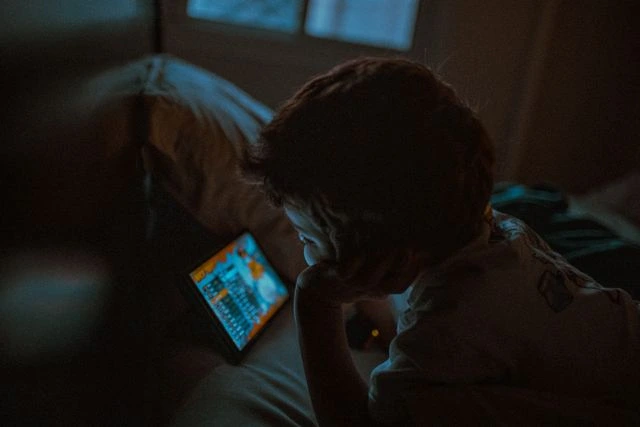
Screens before bed disrupt sleep. In children and adolescents, this happens through two distinct mechanisms. The first is the suppression of melatonin production by blue-spectrum light emitted by screens, which delays the onset of sleep by up to ninety minutes in children who use screens in the hour before bed. The second is cognitive and emotional arousal — the content of what is being watched, played, or scrolled through keeps the brain in an active state that is incompatible with the transition to sleep.
The consequences of disrupted sleep in children are severe and well-documented. Sleep is when the developing brain consolidates learning, processes emotional experience, and performs the regulatory maintenance that underlies cognitive and emotional function. A child who is chronically under-sleeping — because screens are delaying sleep onset or because phones in bedrooms are disrupting sleep throughout the night — is a child with compromised attention, compromised emotional regulation, compromised memory consolidation, and a compromised immune system.
If a family implements one screen-related change on the basis of this article, the one that will have the most impact is this: no screens in the hour before bed, and no screens in the bedroom overnight. Not as one option among many. As a non-negotiable baseline, because the evidence behind it is that consistent.
Social Media and Adolescent Mental Health: The Most Contested Finding
The relationship between social media use and adolescent mental health is the most intensely debated area of screen research, in part because the stakes are high and in part because the evidence is genuinely more complex than either the alarmist or the dismissive reading allows.
The correlation between adolescent social media use and declining mental health indicators — particularly in girls, particularly from the early 2010s when smartphone adoption became widespread — is real and documented. Rates of depression, anxiety, self-harm, and loneliness among adolescents in most developed countries showed a measurable shift upward coinciding with widespread social media adoption. This correlation does not prove causation, and the debate about causal mechanisms continues actively in the research community.
What the research does consistently show is that passive social media use — scrolling, viewing, comparing — is associated with worse mental health outcomes than active use — messaging friends, creating content, connecting. The difference is theoretically coherent: passive use is the mode that most intensively involves upward social comparison, which is the mechanism most strongly linked to the observed mental health effects.
The research of Jonathan Haidt — particularly his book “The Anxious Generation,” published in 2024 — has made the strongest case for a causal relationship between smartphone and social media adoption and the observed decline in adolescent mental health. It has also been significantly contested by other researchers who argue that the effect sizes are smaller than presented, that other factors explain the trends equally well, and that the proposed interventions (smartphone-free schools, delaying social media access) are not as clearly supported by evidence as the book implies.
The honest position, given the current state of the evidence, is: the concern is real and the effect for some adolescents — particularly girls, particularly heavy passive users — is significant. The magnitude and generalisability of the effect remains contested. The precautionary approach of delaying social media access and limiting passive use is reasonable given what is known. Treating this as settled science in either direction overstates the confidence the evidence actually supports.
What Current Guidance Emphasizes in 2026
The American Academy of Pediatrics updated its approach in 2026 to reflect how varied digital media has become. For school-age children and teenagers, there is not one evidence-based daily hour limit that fits every child or every type of media use. The stronger approach is to look at the child, the content, the context, and what screen use is replacing.
A practical way to do this is the AAP’s 5 Cs: consider the Child, the Content, whether media is being used mainly to Calm, what it is Crowding out, and how the family is Communicating about it. This does not mean limits no longer matter. It means limits work best when they protect sleep, physical activity, learning, relationships, and time away from devices rather than being treated as a magic number.
For younger children, age-specific guidance remains more structured, and high-quality content, adult involvement, and avoiding displacement of sleep, movement, and face-to-face interaction remain especially important. Across ages, the AAP also recommends a family media plan that includes consistent routines, device-free times or places, age-appropriate content rules, and attention to parents’ own media habits.
| Question to Ask | Why It Matters | Practical Example |
|---|---|---|
| Who is the child? | Age, temperament, sleep needs, mental health, and developmental stage change what is appropriate | A preschooler, a ten-year-old, and a sixteen-year-old should not have identical rules |
| What is the content? | Interactive, creative, educational, social, and passive media are not equivalent | Prefer age-appropriate content and discuss what children are seeing |
| Is media the main calming tool? | Children also need chances to practise tolerating boredom, frustration, and transitions | Use screens intentionally rather than automatically for every difficult moment |
| What is it crowding out? | Sleep, movement, homework, hobbies, and family interaction are key reference points | Protect bedtime, meals, active play, and important routines first |
| How are you communicating? | Rules work better when children understand them and can discuss online experiences safely | Create and revisit a family media plan together |
What to Actually Do
Given everything above, here is what I would actually recommend to a family who asks — not as a list of rules to follow perfectly, but as a set of priorities ordered by their evidence base and practical impact.
Protect sleep above everything else. No screens in the bedroom overnight. Screen-free for at least an hour before bed. This is the single highest-impact intervention, with the strongest evidence base, and it is completely within parental control.
Infants and very young toddlers: protect face-to-face interaction, movement, sleep, and language-rich play. Video calls can support relationships, and if other media is introduced, keep it brief, high-quality, and ideally shared with a caregiver rather than used as prolonged background or solo viewing.
Toddlers and preschoolers: choose age-appropriate, high-quality content and stay involved when possible. Ask what the media is teaching, whether it is becoming the default calming tool, and whether it is crowding out conversation, imaginative play, movement, meals, or sleep.
School age: move beyond hour counting alone. Look at content, purpose, safety, and what media is crowding out. Protect sleep, school responsibilities, physical activity, friendships, hobbies, and family time, then set limits that fit the individual child and revisit them as needs change.
Adolescents: nighttime access, social media design, safety, and sleep deserve particular attention. The bedroom phone can become a practical problem when notifications, scrolling, or late-night conversations displace sleep. A phone in a teenager’s bedroom overnight disrupts sleep, enables the passive scrolling that is most associated with mental health costs, and removes the natural endpoint that a phone outside the bedroom provides. The research on this specific question is unusually consistent. Making the phone charge outside the bedroom at night is a change that is worth having a direct, honest conversation about with a teenager — explaining the evidence, not issuing an edict. Teenagers who understand the reasoning engage with it differently than those who receive it as an arbitrary rule.
The American Academy of Pediatrics family media plan tool allows families to build a personalised media plan based on their specific situation — an alternative to generic hour-count rules that the research increasingly suggests are too blunt to be useful.
A Note on Parental Guilt
I want to end with something that I think deserves to be said plainly.
The screen time conversation has produced an enormous amount of parental guilt that is not proportionate to the actual evidence. Most children in most households are not being harmed by their screen exposure in the dramatic ways the alarming headlines suggest. The research effects, where they exist, are real but typically modest — they explain a small proportion of the variance in child outcomes, alongside many other factors that matter more.
The parent who uses screens to manage a difficult moment, who puts on a programme to get through the morning, who allows screen time in the car, who does not perfectly curate every minute of screen exposure — that parent is not failing their child. They are navigating the reality of contemporary parenting with the tools available.
The question worth asking is not “are we doing this perfectly?” It is “are we protecting the things that matter most — sleep, physical activity, face-to-face time, unstructured play — and managing screens in relation to those priorities, rather than letting screens progressively displace them?” That question is less morally charged and more practically useful. And it is, in the end, what the research is actually asking.
For the connection between sleep specifically and the wide range of child health outcomes it affects — including the immune function, mood, and cognitive performance that screen-disrupted sleep compromises — the article on why children who are always tired may have more than a sleep problem covers the relevant mechanisms in depth. And for the emotional dimension of children’s relationship with screens — particularly the anxiety and comparison dynamics of social media use — the article on when your teenager shuts you out addresses the relational context in which much adolescent screen use happens.
Frequently Asked Questions
Is two hours of screen time per day really the limit?
The two-hour guideline for school-age children comes from the WHO and AAP and is based on the research available at the time of publication. It is a reasonable population-level recommendation, but it treats all screen time as equivalent — which the evidence increasingly suggests is not accurate. Two hours of high-quality, active, co-viewed content is meaningfully different from two hours of passive scrolling. The more useful question is not whether you are below the two-hour threshold but whether what is happening in those hours is worth the time it takes, and whether it is coming at the cost of sleep, physical activity, or genuine social connection.
Are screens actually causing the rise in teenage anxiety and depression?
This is genuinely contested. The correlation between smartphone adoption and declining adolescent mental health in many countries is real and documented. Whether it is causal — whether smartphones and social media are a primary driver rather than one factor among many — remains debated. The current evidence is strongest for heavy passive social media use in adolescent girls, where the association with depression and anxiety is most consistent. The precautionary approach of limiting passive social media and delaying social media access is reasonable given the uncertainty. Treating it as definitively causal or definitively not causal both overstate the confidence the current evidence supports.
My toddler is obsessed with a particular educational programme. Is this okay?
In moderation and with co-viewing, educational content from eighteen months onward has genuine developmental value, particularly for language. An intense interest in a specific programme is common and is not a warning sign on its own. The research supports brief, high-quality, co-viewed sessions rather than extended solo viewing. If the programme is genuinely good — slow-paced, language-rich, interactive in format — and is being watched in reasonable amounts with an adult who extends the content in conversation, it can be a positive part of the toddler’s diet. If it is replacing time that would otherwise be spent in physical play, reading, or face-to-face interaction, that is worth reconsidering.
Should I take my teenager’s phone away at night?
Yes, with conversation rather than edict. The research on phones in bedrooms overnight is unusually consistent in its direction: phones in bedrooms disrupt sleep, and sleep disruption in adolescents has significant costs for mood, cognitive performance, and physical health. Having a direct conversation with your teenager about the evidence — not issuing a rule, but explaining what the research shows and why you are making this decision — produces more durable compliance than unilateral removal. The phone charging outside the bedroom at night, as a household norm that applies to everyone including parents, is the most defensible and most effective implementation.
My child watches a lot of screens and seems absolutely fine. Should I still be worried?
The research describes population-level associations, not individual determinations. Some children who watch significant amounts of screens show no measurable negative outcomes. Others who watch less show more effects. Individual variation is real, and the absence of visible problems in a particular child does not mean the research findings are wrong — it means your child may be one of those for whom the effects are smaller, or that the effects are present but not yet visible in the ways you are looking. The most prudent approach is to manage the factors with the strongest evidence — protect sleep, protect physical activity, limit pre-bed screens, choose content deliberately — rather than concluding that visible wellbeing means anything goes.
Is co-viewing really that important?
Yes, significantly. The research consistently shows that the same content, watched with a parent who talks about it, asks questions about it, and extends it into conversation and real-world connection, produces meaningfully different outcomes from the same content watched alone. Co-viewing is not merely about supervision. It is about providing the conversational scaffolding that allows educational content to have educational impact — without which the child may watch and enjoy but not retain or transfer what was shown. For children under five especially, the adult presence during screen time is a significant modifier of its effects.
Younes Kehal is an educational director, certified school coach, and certified life coach with 20 years of experience working with children, families, teachers, and schools. His guidance combines practical educational experience with carefully reviewed research.