The Family Car Is Your Biggest Carbon Footprint. Here’s What You Can Actually Do About It.
I want to start with something that most eco parenting conversations skip entirely.
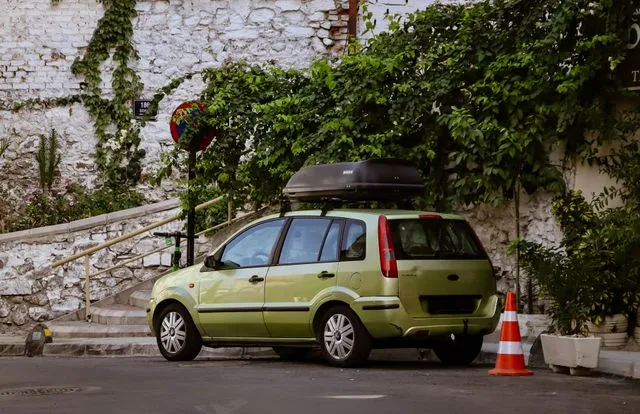
Families spend a lot of time thinking about reusable bags, organic produce, and biodegradable washing-up liquid. These things matter. They are worth doing. But if you are a typical family with a car that you drive daily — to school, to work, to activities, to the supermarket — the environmental impact of every one of those choices combined is almost certainly smaller than the impact of the car sitting in your driveway.
This is not a comfortable thing to say. The car is usually not optional in any simple sense. It is woven into the infrastructure of family life in ways that bags and detergent are not. And I am not about to tell you that the solution is to simply stop using it, because for most families, that is not a realistic option.
What I want to do is something more useful: help you understand exactly what the car costs environmentally, what your actual options are for reducing that cost in ways that are compatible with real family life, and how to use all of this as an opportunity to teach your children something genuinely important about how their choices connect to the world around them.
Because this is, ultimately, an eco parenting article. And the best eco parenting is not about performing sustainability for its own sake. It is about building the kind of understanding in children that lasts — the kind that changes how they live when they are grown and you are not watching.
Table of Contents
The Numbers First: What a Family Car Actually Produces
Most people have a vague sense that driving contributes to carbon emissions. Very few people have a concrete sense of how much.
The average petrol-powered family car emits approximately 170 to 200 grams of CO₂ per kilometre driven. If a family drives 15,000 kilometres per year — a fairly conservative estimate for a family with children, school runs, activities, and weekend travel — that produces roughly 2.5 to 3 tonnes of CO₂ annually from the car alone.
For context: the average global per-capita carbon footprint that scientists estimate is compatible with limiting warming to 1.5°C is approximately 2.5 tonnes per year total. The family car, on its own, already accounts for the entire sustainable per-person annual budget — and that is before flights, home heating, food, or anything else.
Diesel vehicles produce slightly less CO₂ per kilometre but more nitrogen oxides and particulate matter, which have their own health and environmental impacts. Electric vehicles produce no direct tailpipe emissions but are not zero-emission — the emissions are displaced upstream, to electricity generation, and to the manufacturing of the battery. An electric vehicle in a country with a high proportion of renewable electricity in its grid produces dramatically less lifetime emissions than a petrol equivalent. In a country where electricity is predominantly coal-generated, the advantage is smaller, though still present over the vehicle’s lifetime.
| Transport Mode | Average CO₂ per Passenger-Kilometre | Annual Emissions (15,000km, family of 4) |
|---|---|---|
| Petrol car (single occupant) | 170–200g CO₂/km | ~2,550–3,000 kg CO₂ |
| Petrol car (4 occupants) | ~45–50g CO₂/passenger-km | ~675–750 kg CO₂ per person |
| Electric vehicle (European grid mix) | ~70g CO₂/km (including manufacturing) | ~1,050 kg CO₂ total |
| Train (European average) | ~14g CO₂/passenger-km | ~210 kg CO₂ per person |
| Bus / coach | ~27g CO₂/passenger-km | ~405 kg CO₂ per person |
| Cycling | ~16g CO₂/km (manufacturing + food calories) | Minimal — among the lowest available |
| Walking | ~0g CO₂/km (direct) | Zero direct emissions |
The table above is worth sitting with for a moment. The difference between a solo car trip and a train journey is not marginal — it is approximately tenfold in terms of emissions per passenger-kilometre. And a full car is meaningfully better than an empty one, which is why carpooling matters more than most people assume.
The School Run: Where the Biggest Gains Are
For families with children, the school run is typically the most frequent car journey of the week. Five days a week, twice a day, for most of the year. It is also, statistically, one of the shortest journeys most families make — and therefore one of the most inefficient ones, because short cold-engine trips produce disproportionately high emissions per kilometre compared to longer motorway driving.
Research by the UK Department for Transport found that nearly a quarter of car trips in the morning peak hour are for the school run. In urban areas, the concentration of school-run traffic contributes meaningfully to local air pollution during the hours when children themselves are outside, walking from the car to the school gate — which is a particular irony worth noting.
This is also the area where the most accessible alternatives exist for many families.
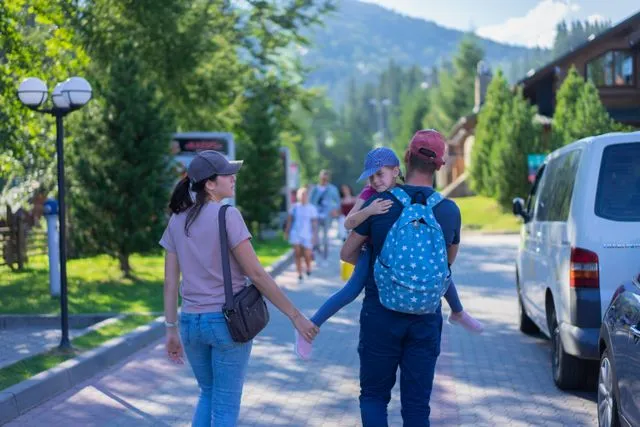
Walking, where the distance makes it feasible, is the obvious one. A twenty-minute walk to school is not nothing — it requires earlier rising, appropriate weather preparation, and a different morning routine. But it is also twenty minutes of daily physical activity for both parent and child, a window for genuine unstructured conversation, and a habitual demonstration of not defaulting to the car for every journey. The Living Streets Walk to School campaign has produced extensive research on the developmental and environmental benefits of active school travel — worth reading if you are considering making the switch.
Walking buses — organised groups of children who walk together on a set route, accompanied by rotating parent volunteers — have been successfully implemented in schools across many countries. They make active travel feel safer for parents who worry about their children walking alone, create social connection between children, and reduce the concentration of car traffic around the school gates. If your school does not have one, starting one is more straightforward than it sounds.
Cycling is an option for some families and some distances. The infrastructure requirements are real — safe bike storage, appropriate routes, the right equipment — but in areas where it is feasible, a child who cycles to school is getting daily physical activity, developing independence, and building a transport habit that costs nothing and emits essentially nothing.
For families where car use is unavoidable, carpooling with a neighbouring family can halve the emissions and the number of cars around the school. It requires coordination and trust, but families who establish it tend to keep it — the convenience of alternating responsibility usually outweighs the effort of arranging it.
What You Can Control About the Trips You Still Drive
There will be car journeys that are genuinely unavoidable. Medical appointments. Rural locations with no public transport. Situations where time, weather, or logistics make alternatives impossible. The goal is not the elimination of all car use. It is conscious management of what stays and what can change.
For the journeys you still drive, several things make a meaningful difference.
Trip chaining — combining multiple errands into a single journey rather than making separate trips for each — can reduce total kilometres driven significantly without changing what gets done. A family that drives separately to the supermarket, the pharmacy, and the sports club covers three times the distance of a family that combines all three into one circular route. The planning required is modest. The emissions reduction is real.
Speed has a significant effect on fuel consumption and emissions. Driving at 100 km/h instead of 120 km/h reduces fuel consumption by approximately 20%. Smooth acceleration and braking — avoiding the rapid acceleration and hard braking pattern that characterises urban driving — reduces consumption further. These are not trivial savings on a long-term basis.
Regular maintenance keeps engines running efficiently. Under-inflated tyres increase rolling resistance and fuel consumption measurably. A well-maintained car running on correctly inflated tyres uses noticeably less fuel than a neglected one — the difference accumulates over a year of driving.
The question of whether to go electric is a significant one for many families. The upfront cost remains a barrier, though it is decreasing. The lifetime emissions advantage of an EV over a petrol vehicle, over a ten-year ownership period, is significant in most countries and increasing as electricity grids become greener. If a family is considering a new car purchase and has access to home charging, the environmental case for an EV is now strong in most European, North American, and many Asian markets. The International Energy Agency’s Global EV Outlook publishes annual data on the lifecycle emissions of electric vehicles by country, which is the most reliable source for comparing the actual environmental performance of EVs in your specific electricity grid context.
How to Make This an Eco Parenting Lesson, Not Just an Eco Parenting Habit
Here is where I want to go further than most eco parenting articles do, because I think there is something important being missed when we focus exclusively on the behaviour without attending to the understanding behind it.
A child who walks to school because their parent decided to walk to school has had a habit formed for them. That matters — habits are valuable and early habits are particularly durable. But a child who walks to school understanding why — who has been shown, in a way that is concrete and real and connected to something they care about, why the choice they are making has meaning — has something more than a habit. They have a value.
The difference shows up when you are not there. The teenager who walks or cycles because they understand and have internalised why it matters is different from the teenager who drives the moment they can because walking was something their parents made them do.
So how do you build the understanding alongside the habit?
Start concrete and visible. Abstract numbers about global emissions mean very little to a child. But a child who watches their parent choose to walk rather than drive, and who is given a simple explanation in terms they can grasp — “the car makes something invisible that goes into the air, and when too much of that invisible thing builds up, it makes the weather behave differently, so we walk when we can” — is receiving something they can hold.
Make the comparison visible. On a day when you drive a route you sometimes walk, notice the difference together. The time it takes. What you see. What you smell. What you pass. A walk and a car journey through the same neighbourhood produce completely different experiences, and children are much more capable of noticing and articulating that difference than adults typically give them credit for.
Include them in the decision. “Should we walk or drive today?” asked genuinely — when the answer is actually open — is a different kind of question than “we are walking today.” Including a child in the decision, and having an honest conversation about the factors involved (time, weather, distance, what we would save by walking), builds the reasoning capacity that eventually produces autonomous good choices.
Connect it to what they already care about. A child who loves animals can understand that the things cars produce affect the habitats of the animals they love. A child who has been thinking about climate change — and many children are, as we explored in the article on talking to children about whether the planet is dying — already has a context into which car choices fit naturally.
| Age | What They Can Understand | How to Frame It | What You Can Do Together |
|---|---|---|---|
| 3 to 5 years | Cars make smoke that goes in the air; walking is good for your body and the air | “When we walk instead of drive, we help keep the air clean for birds and animals” | Count steps on the walk; notice what you see that you do not see from a car |
| 5 to 8 years | Cars use fuel that makes CO₂; CO₂ in the air affects weather and animals | Simple cause-and-effect explanation; connect to animals or places they care about | Compare journey times; help plan a trip using public transport; track walk-to-school days |
| 8 to 12 years | Emissions, climate connection, comparison between transport modes | Share the numbers in a concrete way; involve them in family transport decisions | Calculate the family’s annual car emissions; research public transport routes together |
| 12 and above | Full complexity of transport emissions; systemic thinking; personal agency | Honest discussion of trade-offs; acknowledge difficulty; model genuine decision-making | Joint family decisions about car purchases; advocacy at school level; independent travel planning |
The Honest Conversation About What Is Hard
I want to be direct about something, because I think eco parenting benefits from honesty more than from enthusiasm.
For many families, reducing car use is genuinely difficult. Not because of a lack of values, and not because of a lack of motivation. Because of how the built environment is structured. Many schools are not within walking distance of the homes in their catchment area. Public transport in many cities and virtually all rural areas is inadequate for family logistics. Cycling infrastructure in many places is dangerous enough that parents are not wrong to worry. Childcare and activity schedules are often designed around the assumption of private car access.
These are structural problems. They are not solved by individual families making different choices, however much those choices matter at the margins. This is worth saying clearly to children as they get older — not to produce helplessness, but to produce accurate understanding. Individual action is necessary and valuable. It is not sufficient. The adults who eventually change the structures — through voting, through advocacy, through the choices they make as professionals and citizens — are the same children who are currently walking or cycling to school with their parents. Building the understanding alongside the habit means building both pieces: what I can do, and what needs to change at a level beyond what I can do alone.
That is a sophisticated message. It is also an honest one. And in my experience, children who receive honest messages about difficult topics — rather than simplified ones that eventually stop holding up — are better equipped to engage with those topics as they grow.
Small Things That Actually Add Up
For families who cannot make major changes to how and where they drive, the smaller things genuinely matter when they are done consistently.
Car sharing with one other family for the school run halves the per-child emissions of that journey. Doing it five days a week, forty weeks a year, produces a meaningful reduction over time.
Choosing to walk for any journey under two kilometres — rather than driving the first segment of what then becomes a longer trip — eliminates the most emissions-intensive part of driving, which is the cold start.
Combining the weekly food shop with other errands to make one trip instead of three is a logistical habit that costs almost nothing and saves both fuel and time once it is established.
Reducing one car trip per week — just one — over a year is fifty-two fewer trips. At average distances, that is a measurable reduction. Not transformative on its own. But part of a picture that includes other families making similar adjustments, in a direction that the planet needs movement toward.
For the broader framework of how to build these kinds of incremental habits into family life in a way that actually sticks, the article on building eco-friendly habits one change at a time has the most practical approach I know — the one-change-at-a-time model that avoids the overwhelm that makes most ambitious environmental resolutions collapse within a fortnight.

Frequently Asked Questions
Is an electric car actually better for the environment than a petrol car?
In most countries, yes — over the full lifecycle of the vehicle, including manufacturing. The manufacturing of an EV battery does produce higher upfront emissions than a conventional car. But over the vehicle’s operational life, the lower running emissions more than compensate, particularly as electricity grids become greener. In countries with high proportions of renewable electricity, the advantage is substantial. In countries with coal-heavy grids, it is smaller but still present. The IEA’s Global EV Outlook is the most reliable source for country-specific comparisons.
How far is it realistic to walk or cycle to school?
Most transport researchers consider two kilometres a reasonable walking distance for adults with children. For cycling, five kilometres is generally considered a comfortable commute for children aged eight and above on safe routes. These are guidelines, not rules — individual fitness, route safety, and time constraints all matter. The most useful question is not “is our distance theoretically walkable?” but “what would need to change to make walking or cycling feel like a real option for our family?”
My child’s school is not within walking distance and there is no public transport. What can we do?
In genuinely car-dependent situations, the most impactful options are carpooling (to halve per-child emissions), trip chaining (reducing total distance driven), and maintaining the car well (maximising efficiency). Longer term, the choice of home location relative to school and amenities is one of the highest-impact environmental decisions a family makes — though one that is constrained by housing costs, employment, and many other factors that are not primarily environmental. Within the constraints, doing what is actually possible matters more than feeling guilty about what is not.
At what age can children walk to school alone?
This varies significantly by child maturity, route safety, distance, and local norms. Most child development specialists suggest that children who are developmentally ready — typically around age nine or ten, though this varies — benefit significantly from the independence of walking independently. The risk calculus is different in every context. Walking buses and peer walking groups reduce the risks of independent travel while preserving most of the developmental benefits of non-car commuting.
How do I talk to my child about why we walk instead of drive without making them feel they are being deprived?
Frame it as a choice your family makes and values, not as an absence of something. A walk is not a failed car trip. It is a different experience — one with things to see, talk about, and notice that a car journey does not provide. Children absorb the framing their parents use. A parent who walks with evident enjoyment, who talks during the walk, who points things out and engages genuinely, is communicating that this is something positive. The deprivation framing almost always comes from the parent, not from the experience itself.
Is it hypocritical to talk to my children about environmental choices while still using the car regularly?
No — and I think this fear of hypocrisy does more harm than good when it produces silence rather than honest conversation. Most families live with genuine tensions between environmental values and practical constraints. Acknowledging that honestly — “we use the car more than I would like because of how our lives are arranged, and here is what we are trying to do about it” — models something more valuable than either perfection or silence. Children who see adults navigating real tensions thoughtfully and imperfectly are better prepared for their own version of that navigation than children who are shielded from the complexity.
Younes Kehal is an educational director, certified school coach, and certified life coach with 20 years of experience working with children, families, teachers, and schools. His guidance combines practical educational experience with carefully reviewed research.