Headaches in Children: When It’s Nothing, When It’s Something, and What Parents Keep Getting Wrong
Your child says their head hurts.
This happens more often than you might expect. Headaches are one of the most common complaints in childhood and adolescence — affecting up to 75% of children at some point before the age of fifteen, according to population studies. And yet they are also one of the complaints that parents find most difficult to calibrate. Too minor to be taken seriously? Too potentially serious to ignore? The worry about meningitis, about tumours, about something being very wrong sits alongside the equally strong suspicion that the child is avoiding school, or simply tired, or dramatising a mild ache.
Both instincts are sometimes right. That is the genuinely difficult thing about childhood headaches. Most of them are benign and self-limiting. A small number are signs of something that needs attention. And the challenge for parents is developing a reasonably accurate sense of which is which, without either dismissing every headache as nothing or rushing to emergency services with every one.
This article is an attempt to give you a practical framework for that calibration. Not a list of symptoms to memorise, but a genuine understanding of what causes headaches in children, what the warning signs that actually matter look like, and what the most common mistakes are that parents make in both directions.
Table of Contents
How Common Are Headaches in Children, Really?
More common than most parents realise. And the frequency increases with age.
In children under seven, episodic headaches are relatively uncommon — affecting roughly 10 to 20% of children in this age group. By early adolescence, the prevalence rises sharply. Studies consistently find that 50 to 75% of adolescents experience recurrent headaches, with a significant proportion meeting diagnostic criteria for migraine. Girls have higher rates than boys after puberty, a pattern that reflects the hormonal dimension of migraine biology.
The practical implication of these numbers is that a school-age child who complains of occasional headaches is experiencing something normal and common, not something unusual or alarming. The normality of the experience does not mean the experience is unimportant. It means that occasional headaches in a well child, without other concerning features, do not warrant medical urgency.
What changes the picture is frequency, severity, pattern, and — most importantly — the presence or absence of warning signs that indicate something other than a primary headache disorder.
The Main Types of Childhood Headache
Most childhood headaches fall into one of a small number of categories, and knowing which category your child’s headaches belong to is the most useful thing a parent can establish — because the category determines the management, and the management differs significantly.
Tension-type headache
This is the most common type. Tension headaches are typically described as a pressure or tightening sensation — like a band around the head — that is mild to moderate in intensity, bilateral (affecting both sides), and not worsened by physical activity. They rarely cause nausea or vomiting. They do not usually come with sensitivity to light or sound, though mild light sensitivity can occur.
In children, tension headaches are most commonly triggered by dehydration, irregular sleep, skipped meals, prolonged screen exposure, stress, or prolonged concentration without breaks. They are the headache that comes after a long school day, or a day without enough water, or a night that was too short. They respond well to paracetamol or ibuprofen, and they resolve completely with rest.
The child who gets these regularly is almost always a child whose lifestyle has some modifiable factor driving them. Finding and addressing that factor is more useful, in the long run, than treating individual headaches as they arrive.
Migraine
Migraine in children is genuinely underdiagnosed — partly because children describe their symptoms differently from adults, and partly because many clinicians expect migraine to present in the classic adult pattern, which it often does not.
Adult migraine is typically unilateral — affecting one side of the head — and lasts four to seventy-two hours. In children, migraine is more often bilateral, shorter in duration (often one to two hours), and accompanied by significant nausea, vomiting, and a strong desire to lie in a dark quiet room. Abdominal pain and pallor are more common in childhood migraine than in adult migraine. The headache itself may be less prominent than in the adult presentation, with stomach symptoms dominating the clinical picture — a presentation called “abdominal migraine” that can be entirely missed if no one asks about the head.
Migraine in children has a strong genetic component. If a parent has migraine, the child has approximately a 50% chance of developing it. If both parents have migraine, the risk rises to 70 to 75%. When a child presents with recurrent severe headaches, asking about family history is one of the most diagnostically useful things a parent or clinician can do.
Triggers in children are similar to adults: irregular sleep, stress, certain foods (aged cheeses, processed meats, chocolate, caffeine), hormonal changes in adolescent girls, bright or flickering lights, and significant physical exertion. Identifying and managing triggers does not eliminate migraines but can substantially reduce their frequency.
Dehydration headache
This deserves its own category because it is probably the single most common cause of headaches in school-age children and the one that is most easily fixed. Children are poorly attuned to thirst signals, particularly during school hours when they are focused on other things. A child who has drunk inadequate fluid through the morning will often report a headache by mid-afternoon — sometimes interpreted by parents and teachers as something more significant than it is.
The practical test is straightforward: give the child a large glass of water and wait thirty minutes. If the headache resolves or substantially improves, dehydration was the cause. If it does not, it was not. This costs nothing and identifies the most common cause before anything else is considered.
Tension from screens and near work
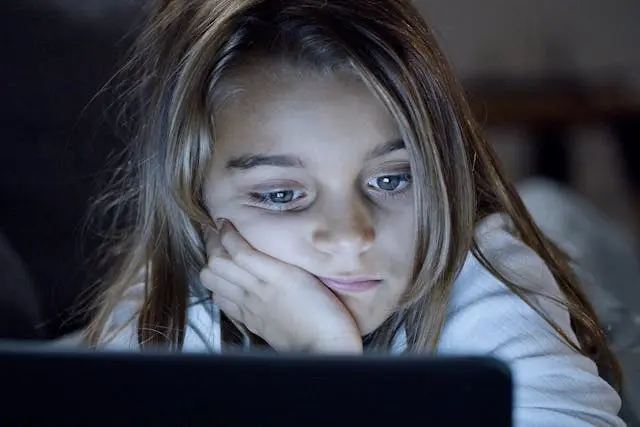
Prolonged screen use and extended near-focus work — reading, writing, tablet work — produce a specific pattern of eye strain and muscle tension in the head, neck, and shoulders that generates headaches in a significant proportion of children. These headaches are typically worse after school, located around the forehead or behind the eyes, and associated with reported eye discomfort, blurred vision, or difficulty focusing.
In some cases, the underlying issue is an undiagnosed refractive error — the child needs glasses and is not wearing them, so their eyes are working extra hard to maintain focus. If a child is getting regular headaches after reading or screen work, a basic optometric assessment is worth arranging before more complex investigations are pursued.
| Type | Location | Quality | Associated Features | Common Triggers |
|---|---|---|---|---|
| Tension-type | Both sides; forehead or band-like | Pressure or tightening; mild to moderate | None significant; mild light sensitivity possible | Dehydration, poor sleep, stress, skipped meals, screens |
| Migraine | Often both sides in children; can be one-sided | Throbbing or pulsating; moderate to severe | Nausea, vomiting, light and sound sensitivity, pallor, need to lie down | Sleep irregularity, stress, certain foods, hormones, bright light |
| Dehydration | Generalised; often frontal | Dull, aching | Mild fatigue; resolves with fluids | Inadequate fluid intake; heat; exercise |
| Screen / eye strain | Forehead; around or behind eyes | Aching; heaviness | Eye discomfort, blurred vision; worse after prolonged near work | Extended screen use; undiagnosed refractive error |
| Sinus / nasal | Face and forehead; around eyes and cheeks | Pressure; dull ache | Nasal congestion or discharge; worse bending forward | Upper respiratory infection; allergic rhinitis |
The Warning Signs That Actually Matter
Most childhood headaches are benign. But some are not, and the ability to recognise the ones that are not is the most important thing in this article.
The medical literature on secondary headaches — headaches caused by an underlying structural or systemic problem — identifies a set of features that are reliably associated with headaches that need urgent evaluation. These are sometimes called “red flag” features, and they are worth knowing because they do the work of distinguishing the vast majority of benign headaches from the small number that are not.
Sudden onset of severe headache. A headache that the child describes as the worst headache of their life, that reached maximum intensity within seconds to minutes. This pattern — sometimes called a thunderclap headache — is the classic presentation of subarachnoid haemorrhage and warrants emergency evaluation. This is the one that emergency physicians most want parents to know about and act on immediately.
Headache on waking. Most benign headaches improve with rest and sleep. A headache that is consistently present or worst upon waking — particularly if it is accompanied by vomiting in the morning — is concerning for raised intracranial pressure. This pattern does not necessarily mean a tumour; raised pressure can have multiple causes. But it warrants evaluation rather than watchful waiting.
Headache that wakes the child from sleep. Similar reasoning to the above. Benign headaches generally do not rouse a child from sleep. One that does warrants assessment.
Progressive worsening over days or weeks. A headache that is gradually increasing in frequency or severity over time, without a clear and explainable reason, is a different pattern from the episodic headaches of migraine or tension type. It warrants evaluation.
Headache with fever and neck stiffness. This combination should prompt urgent evaluation for meningitis. Neck stiffness in this context means difficulty or pain when attempting to bring the chin toward the chest. A headache with fever alone is very common and usually reflects a viral illness. The neck stiffness changes the picture entirely.
Headache with neurological symptoms. Weakness on one side of the body, difficulty speaking, visual disturbance beyond the typical aura of migraine, significant confusion, or loss of coordination alongside headache all warrant urgent assessment.
Headache following head trauma. A significant headache developing in the hours after a head injury — particularly if accompanied by vomiting, increasing drowsiness, or any of the neurological features above — requires evaluation. A single episode of vomiting after a head injury in an otherwise alert child is common and usually benign. Repeated vomiting, worsening headache, or any change in consciousness is not.
Headache in a child under five. Young children rarely complain of headaches, and a headache in a young child — particularly a recurrent or severe one — warrants more caution than the same complaint in an older child or adolescent.
| Red Flag Feature | Why It Matters | Action |
|---|---|---|
| Sudden thunderclap onset (worst headache ever, rapid maximum) | Associated with subarachnoid haemorrhage and other vascular events | Emergency evaluation immediately |
| Headache worst on waking; morning vomiting | Pattern of raised intracranial pressure | Urgent paediatric assessment — same day or next day |
| Headache that wakes child from sleep | Not typical of benign headache disorders | Urgent paediatric assessment |
| Progressive worsening over weeks | Suggests evolving pathology rather than episodic disorder | Paediatric assessment within days |
| Fever plus neck stiffness | Possible meningitis | Emergency evaluation immediately |
| Neurological symptoms (weakness, speech, vision, coordination) | Suggests intracranial pathology or complex migraine | Emergency evaluation |
| After significant head trauma | Risk of intracranial injury | Emergency evaluation if any associated symptoms |
| Child under 5 with recurrent headaches | Headache is uncommon at this age; warrants explanation | Paediatric assessment |
What Parents Get Wrong
I want to spend some time here because the errors go in both directions, and both cause problems.
Dismissing headaches that need attention
The thunderclap headache is the most dangerous example. A child who comes to a parent saying “my head really hurts, it came on really quickly and it’s really bad” needs to be taken seriously, not given paracetamol and told to lie down. The worst-headache-ever combined with sudden onset is an emergency pattern, and the instinct to wait and see is the wrong one here.
Morning headaches with vomiting are the other pattern that gets missed. Parents interpret the vomiting as a stomach bug and the headache as secondary to feeling unwell. When this pattern is recurrent — waking with a headache, vomiting, then feeling better through the day — it needs to be mentioned to a doctor explicitly, not managed at home.
Catastrophising headaches that are benign
The equally common and arguably more damaging error is treating every headache as a potential catastrophe. Parents who google “childhood headache” encounter brain tumour information within moments, and the fear this generates can produce weeks of emergency department visits, CT scans, and neurological referrals for a child who has migraines or tension headaches that could be managed with lifestyle modification and, where appropriate, standard migraine treatment.
There is a real cost to this. The child who is exposed repeatedly to the anxiety of parents who treat every headache as a medical emergency begins to experience the headaches differently — to catastrophise them themselves, to develop anxiety about headache that amplifies the pain experience, and sometimes to develop headache as a psychosomatic response to the secondary attention it generates. The headache disorder becomes embedded in a cycle of anxiety and medical seeking that is much harder to treat than the original headache.
The calibration that helps most is the red flag list. If none of the red flags are present, the most likely explanation is a benign primary headache — tension, migraine, or lifestyle-related. Treating that appropriately and consistently, without emergency responses, is the right approach.
Medication overuse
This is something parents are rarely told about and that paediatricians and neurologists see with significant frequency. If a child takes pain medication for headache more than ten to fifteen days per month, they are at risk of developing medication overuse headache — a paradoxical condition in which the medication that is supposed to treat the headache becomes the cause of a chronic daily headache pattern.
Medication overuse headache is more common than most parents realise, particularly in children and adolescents who have been given free access to paracetamol or ibuprofen for recurrent headaches. The solution is a supervised withdrawal from the overused medication — which temporarily worsens the headache before improving it — under medical guidance.
The practical implication for parents is to treat individual headaches with appropriate medication, but to seek a proper assessment and management plan if a child is taking pain medication for headache more than a couple of times a week. Repeated treatment without investigation of the underlying pattern is not good headache management.
Managing Recurrent Headaches at Home
For the majority of children with recurrent headaches that have been assessed and found to be primary headache disorders — migraine or tension type — the management at home is both straightforward and genuinely effective when followed consistently.
Sleep regularity is probably the single most important lifestyle factor. Both migraine and tension headaches are strongly associated with irregular sleep — late nights, weekend sleep-ins that shift the circadian rhythm, insufficient total sleep. Maintaining a consistent sleep schedule, including on weekends, reduces headache frequency significantly in most children who have this trigger. The resistance to this is understandable — weekends are supposed to be different — but the evidence for sleep regularity as a headache intervention is strong.
Hydration. The same principle applies as in the acute management: a child who consistently drinks adequate fluid throughout the day has fewer headaches. Building the habit of drinking water at regular intervals — particularly during the school day, when children are often not drinking enough — is cheap and effective headache prevention.
Regular meals. Missed meals and long gaps between eating are consistent headache triggers, particularly in migraineurs. A child who skips breakfast or does not eat lunch until late is a child setting up conditions for a headache. Regular meal timing, including a substantial breakfast, is part of effective headache management.
Screen breaks. The 20-20-20 rule — every twenty minutes of screen time, look at something twenty feet away for twenty seconds — reduces eye strain and associated headaches. Building regular breaks into screen and reading time is practical for most school-age children.
Stress management. In adolescents particularly, stress is a significant headache trigger, and the relationship between exam periods, social difficulties, and headache frequency is one that most families recognise without necessarily connecting it explicitly. Supporting a teenager’s stress levels — not by eliminating all stress, which is neither possible nor desirable, but by ensuring adequate recovery time and maintaining the emotional connection that makes stress more manageable — is indirectly headache management.
For the connection between children’s emotional lives and their physical health more broadly — including the way chronic stress produces physical symptoms that are real and not imaginary — the article on why children who are always tired may have something other than sleep problems covers the relevant mechanisms in detail.
When to See a Doctor and What to Tell Them
A child with recurrent headaches deserves a medical assessment — not a scan, not necessarily a specialist, but a proper clinical assessment by a doctor who takes a full history. The most useful information to bring to that appointment is a headache diary kept over four to six weeks: date, time, duration, location, quality, severity on a scale of one to ten, associated symptoms, what the child was doing before it started, what seemed to help, and what medication was taken.
This information transforms the clinical picture. A doctor who hears “she gets headaches a lot” is working with very little. A doctor who is shown a diary showing that the headaches consistently occur on school days in the afternoon, resolve within two hours of drinking water and lying down, and are associated with days when lunch was late or skipped, has enough to make a confident clinical assessment without any investigations.
The American Headache Society provides patient resources including headache diary templates and guidance on preparing for a headache appointment, which are worth consulting before an assessment.
What investigations are warranted depends entirely on the clinical picture. In a child with classic migraine features, a positive family history, no red flags, and a normal neurological examination, no investigation is needed. In a child with red flag features, atypical presentation, or neurological signs, brain imaging is appropriate. The decision is a clinical one and depends on the specific child — which is why a proper assessment is more useful than a scan arranged without one.
Frequently Asked Questions
How common are headaches in children?
Very common. Studies suggest that up to 75% of children experience at least one significant headache before the age of fifteen. Recurrent headaches — meeting criteria for tension-type headache or migraine — affect between 10 and 25% of school-age children, with higher rates in adolescents. Headaches are among the most common complaints in paediatric practice. Their frequency does not make them trivial, but it does mean that headache in a child is usually a common condition, not an unusual one.
Can children have migraines?
Yes, and they are significantly underdiagnosed. Migraine affects approximately 10% of school-age children and up to 28% of adolescents. It presents differently in children than in adults — often with shorter duration, bilateral location, and prominent abdominal symptoms — and is frequently missed because the presentation does not match the classic adult template. A child who gets recurrent severe headaches with nausea, light and sound sensitivity, and a need to lie in a dark room very likely has migraine, regardless of age.
Should I give my child painkillers every time they have a headache?
Not without some thought about the frequency. Paracetamol and ibuprofen are appropriate for managing individual headaches, and there is no reason to withhold them for a child who is genuinely in pain. But using them more than ten to fifteen times per month creates risk of medication overuse headache — a chronic daily headache pattern caused by the medication itself. If a child is needing pain medication for headache more than a couple of times a week, a medical assessment and proper management plan is a better response than continued symptomatic treatment.
My child’s headaches always seem to happen on school mornings. Is this psychosomatic?
Possibly, and if so, that is still real and still deserves attention. School-related anxiety is a genuine and common cause of physical symptoms including headache, stomach ache, and nausea. A headache that reliably appears on school mornings and resolves at weekends and holidays is a strong signal that something about school is producing stress that is manifesting physically. That deserves to be investigated — not to dismiss the headache as fake, but to understand what is driving the anxiety and address it. Psychosomatic does not mean imaginary. It means the mechanism is psychological rather than structural.
Do I need a brain scan if my child has recurrent headaches?
In most cases, no. The vast majority of children with recurrent headaches have primary headache disorders — migraine or tension type — that do not require imaging. A scan is warranted when there are red flag features suggesting secondary headache, when the neurological examination is abnormal, or when the headache pattern is atypical and does not fit any recognisable primary disorder. A proper clinical assessment by a doctor who takes a full history is a better first step than a scan, and will determine whether imaging is needed in your child’s specific case.
What can I do to prevent my child’s headaches?
The most effective preventive strategies are lifestyle-based: consistent sleep timing including on weekends, adequate hydration throughout the day, regular meals without long gaps, regular breaks from screen and near work, and stress management particularly in adolescents. Identifying and avoiding personal triggers — through a headache diary — is also effective. For children with frequent migraines that significantly affect daily life and do not respond to lifestyle modification, a doctor may recommend preventive medication. This is a clinical decision based on headache frequency and impact, made with a paediatrician or paediatric neurologist.
Younes Kehal is an educational director, certified school coach, and certified life coach with 20 years of experience working with children, families, teachers, and schools. His guidance combines practical educational experience with carefully reviewed research.