The Secondhand Habit: How Buying Used Changed Our Family — And What It Teaches Children That New Things Never Can
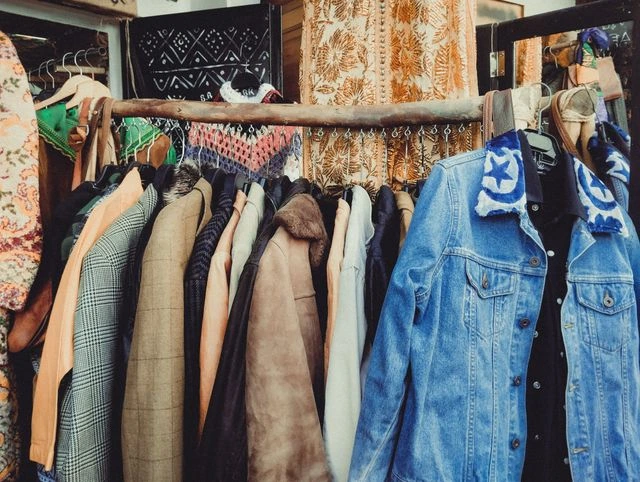
There was a jacket. Dark blue, a little worn at the elbows, bought for three euros at a secondhand market on a Saturday morning when my daughter was seven. She spotted it herself, pulled it from the rack, tried it on, and declared it perfect. It became her favourite jacket for two years. She wore it until she had clearly grown out of it, and then we passed it on.
I have thought about that jacket more than seems reasonable. Because something happened in the process of finding it, choosing it, and wearing it that would not have happened if we had bought a new jacket from a shop. The child who finds something in a secondhand pile and says “this is mine” has done something different from the child who selects from a rack of identical new items. She has exercised a kind of imagination — looking past the worn elbows to see what the jacket could be — that the new item, presented perfectly and chosen primarily on the basis of newness, does not require.
That is a small observation. But it points toward something larger about what secondhand buying teaches children, and why the habit is worth building in families for reasons that go well beyond the environmental ones — though those are significant and worth making clearly as well.
Table of Contents
The Environmental Case, Stated Directly
Before getting to the developmental and educational dimensions, I want to state the environmental case plainly, because it is often made vaguely and deserves more precision.
The production of new goods — particularly clothing, electronics, and toys — carries a substantial environmental cost. The United Nations Environment Programme estimates that the textile sector produces about 2–8% of global greenhouse-gas emissions and uses roughly 215 trillion litres of water each year. Those figures vary by material and production method, but the direction is clear: extending the useful life of clothing reduces demand for new production and keeps existing garments in use longer.
When a family buys a secondhand item rather than a new one, they are not simply saving money. They are declining to generate the emissions, water use, and waste associated with the production of a new item. The item already exists. Its production cost has already been paid. Extending its useful life by another owner — and another, and another — is one of the most effective individual actions available in terms of reducing the environmental footprint of consumption.
Children’s items are a particularly significant area for this, because children outgrow things at a rate that makes new purchases especially wasteful. A child’s coat, bought new for winter, may fit for one season before it is too small. A toy, bought new in October, may be rarely used by February. A set of books, bought new, is read and then sits on a shelf. The throughput of new items in a household with children is enormous. Directing even a significant proportion of that throughput toward secondhand sources reduces the environmental impact substantially — and does so with essentially no sacrifice in quality for most categories of children’s goods.
| Item Category | Typical Lifespan with One Owner | Environmental Cost of Production (New) | Secondhand Benefit |
|---|---|---|---|
| Children’s clothing | Often 1 season (outgrown) | High: cotton production is water and pesticide intensive | Extends life of existing item; avoids new production entirely |
| Children’s books | Read 1–3 times typically | Moderate: paper production and printing emissions | Multiple readers from single production; often identical quality |
| Toys and games | Weeks to months of active use | High: plastic production, international shipping, packaging | Good condition secondhand toys are functionally identical to new |
| Children’s furniture | 2–5 years before outgrown | High for flat-pack: particleboard, formaldehyde, transport | Solid secondhand furniture often superior quality to new flat-pack |
| Sports equipment | 1–2 seasons before size change | Moderate to high: synthetic materials, manufacturing | Frequent size changes make secondhand especially logical |
What Secondhand Buying Teaches Children That New Things Cannot
This is the part I am most interested in, and the part that most eco parenting discussions miss entirely.
When a child participates in secondhand shopping — not as an observer while a parent makes purchases, but as a genuine participant in the looking, selecting, and choosing — they are having an experience that new retail does not provide.
The first thing is looking with different eyes. New retail presents items in their best possible state: unworn, unstained, packaged attractively, selected for maximum appeal. Secondhand retail requires the buyer to look past the surface — to imagine what something was, what it could be, whether the story it has already lived makes it more or less appealing. This is a form of imagination that children are naturally good at when given permission to exercise it. The child who looks at a worn-looking board game and asks “does it have all the pieces?” is thinking differently about value than the child who looks at a shiny new box.
The second thing is understanding objects as things with histories. A new toy arrived from a factory, unmarked, anonymous. A secondhand toy was someone else’s. Maybe someone the same age as your child. Maybe someone who grew up and moved on. Children often find this compelling rather than off-putting — the secondhand toy comes with a narrative, even if it is entirely imagined. And the act of adopting something that has a history, of becoming part of that object’s continuing story, produces a different relationship with it than the act of acquiring something that belongs entirely to the present.
The third thing — and this one surprises parents — is that children often care more for secondhand items than for new ones. Not universally. But frequently. The jacket that was found and chosen, that had to be looked for, that was not just pulled from a rack of identical options, is a jacket that the child has more investment in. The toy that was examined and selected and brought home from a market is a toy with more story. Ownership earned through discernment is different from ownership granted through purchase, and children respond to that difference in ways that are visible and lasting.
The Language We Use Around Secondhand Matters
I want to spend some time here because it is where eco-conscious families most often inadvertently undermine themselves.
If secondhand buying is framed, in the family’s language, as something you do because you cannot afford new things, the child absorbs a message about social status and scarcity that is genuinely damaging to their relationship with the practice. Secondhand becomes associated with lack. And children who experience it as lack will reject it at the earliest opportunity — usually adolescence, when peer perception becomes the primary lens.
If secondhand buying is framed as something you do because you have made a deliberate choice — because you believe in extending the life of objects, because you find the hunt more interesting than buying new, because you prefer quality and secondhand often delivers better quality for less money, because you do not want to generate unnecessary demand for new production — the child absorbs something entirely different. They absorb an identity and a set of values rather than a constraint.
“We choose this because we care about not wasting” is a very different message from “we have to do this because we cannot afford new.” Both may involve buying the same jacket from the same charity shop. The child’s relationship with the practice — and the likelihood that they will continue it as adults — depends almost entirely on which framing they grew up inside.
The research on how children develop values around consumption is consistent on this point: children who experience sustainable practices as expressions of family identity, rather than as deprivations or restrictions, are significantly more likely to carry those practices forward. The framing is not cosmetic. It is the mechanism by which values transfer.
Where to Start and What Actually Works
Not all secondhand sources are equally good for all categories of items, and some guidance on where to look saves time and the frustration of finding nothing useful.
For children’s clothing, charity shops and secondhand apps (Vinted, ThredUp, Depop, local equivalents) are the most reliable sources. Children’s clothing is donated in large quantities because children outgrow things so quickly. The quality of charity shop children’s sections is generally very high — items that have only been worn for a season before being outgrown are often essentially new. For the youngest children, where size changes are most frequent, secondhand makes particularly strong economic and environmental sense.
For toys and games, charity shops again, but also car boot sales, local buy-and-sell groups on social media, and dedicated toy libraries (where these exist) are worth knowing about. Board games deserve special mention: a charity shop board game in good condition, with all pieces, is functionally identical to a new one. There is genuinely no reason to buy board games new if secondhand sources are accessible.
For books, secondhand is often actually superior to new — older editions of beloved children’s books are sometimes better illustrated, better printed, and more durably bound than modern reprints. Charity shops typically have extensive children’s book sections. Online secondhand book sellers are another excellent source. A child who grows up surrounded by secondhand books is not disadvantaged in any way compared to one surrounded by new ones.
For larger items — furniture, outdoor equipment, bicycles — online marketplaces (Facebook Marketplace, Gumtree, Craigslist) tend to be more productive than physical charity shops. The quality variation is wider, and inspection before purchase is important. But the financial and environmental savings on larger items can be significant.
Safety considerations apply most significantly to car seats and certain nursery items (cots, some prams), where safety standards change over time and the history of the item matters for its integrity. These are the categories where new is genuinely advisable, or where the secondhand source and history needs to be known and trusted.
| Category | Best Sources | What to Check | Worth Buying New Instead? |
|---|---|---|---|
| Children’s clothing | Charity shops, Vinted, local buy/sell groups | Stains, seam integrity, working zips/buttons | Rarely — condition is usually excellent |
| Books | Charity shops, online secondhand booksellers, libraries | All pages present; no heavy marking | Only if specific new edition required |
| Toys and games | Charity shops, car boot sales, social media buy/sell | All pieces present; safety for age group | Rarely — almost always equivalent quality |
| Bicycles and sports equipment | Online marketplaces, bike reconditioners | Structural integrity; brakes; age-appropriate sizing | If safety-critical components are worn |
| Children’s furniture | Online marketplaces, charity furniture shops | Stability; no sharp edges; lead paint (older items) | Cots: check safety compliance; otherwise rarely |
| Car seats | Only from known, trusted source with full history | No cracks, full history, current safety standards | Yes — safety justifies new in most cases |
Making Children Active Participants
The developmental value of secondhand shopping is significantly higher when children are active participants in the process rather than passengers.
This means taking them along — to the charity shop, the market, the car boot sale — and giving them genuine agency in what gets chosen. Not just a veto, but the actual looking and finding. A child who has walked through rows of secondhand clothes looking for something they actually want has had a different experience from one whose parent selects from an online platform while they play in another room.
It also means having the conversations that make the experience more than a shopping trip. Why are we here rather than the shopping centre? What happens to things when people buy them new and then get rid of them? What do we think about where this toy came from, and why its previous owner might have let it go? These are not lectures. They are the kind of natural conversation that happens when adults engage genuinely with what they are doing rather than presenting a curated experience.
Older children can be given a budget and set free in a charity shop to find what they like. This is one of the more enjoyable experiences available in secondhand shopping, and many children become remarkably good at it — developing an eye for quality, a pleasure in the hunt, and a pride in what they find that is quite different from the experience of picking something from a website. The skill they are building — looking past the surface to assess value — is genuinely transferable.
The Gifting Question
This is where secondhand shopping becomes socially complicated for many families, and I want to address it directly because it is often the thing that holds people back from extending the practice.
Many families are entirely comfortable buying secondhand for themselves but feel that giving secondhand gifts — to children for birthdays and holidays — requires more explanation. The fear is that a secondhand gift will be received as a lesser gift, or as an indication that less care or investment has gone into it.
The experience of families who have thought about this carefully is more nuanced. A secondhand gift that has been chosen thoughtfully — that is exactly what the child wanted, that is in excellent condition, that comes with a genuine story about where it was found — is often received as enthusiastically as any new gift. The child’s response to a gift is almost never about whether it was bought new. It is about whether it matches their interests, whether it works, and whether the giver paid attention to what they would love.
Within the family, establishing secondhand as a normal and celebrated option for gifts removes the social awkwardness entirely. A child who grows up in a family where finding a perfect secondhand thing is presented as a greater success than buying something new from a shop has a different relationship with the practice — one that makes them more likely to extend it into their own gift-giving as they grow.
For gifts to children outside the family — friends’ birthday parties, for example — the calculus is different and depends on the social context. There is no obligation to universalise the practice. Choosing secondhand when it is appropriate and new when the social context warrants it is a sensible position, particularly while the culture is still adjusting to secondhand as a genuine first choice rather than a compromise.
What This Habit Builds Over Time
I want to end with what I think is the most important thing about the secondhand habit, and the reason it is worth building consciously in families with children rather than treating it as an occasional practical choice.
A child who grows up in a family that buys secondhand regularly — not occasionally, not as a last resort, but as a genuine first preference for most categories of goods — grows up with a different relationship with objects and consumption than one who does not. They learn to see objects as things with histories rather than as anonymous products. They develop the habit of asking whether something needs to be new before buying it new. They build the skill of looking past surface presentation to assess actual quality and value. And they absorb, through years of lived practice, a set of values about consumption and resources that no amount of instruction produces as effectively.
These are not small things. The adults who are going to navigate the resource constraints of the coming decades most effectively are the ones who grew up with a different relationship with consumption — who do not experience buying used as a sacrifice, who find the secondhand market as natural and interesting as the new one, who have already made peace with the idea that newness is not the primary measure of value.
Those adults are currently children. And they are being shaped, right now, by the habits their families practice — not by what is said about those habits, but by what is done, consistently, as an unremarkable part of ordinary family life.
The jacket at three euros. The board game with all the pieces. The bicycle that went through three previous children before it arrived in your family. These are not compromises. They are choices. And the child who grows up inside a family that makes them as genuine choices — not reluctantly, not apologetically, but with pleasure and with values — is a child who has been given something that no new thing can provide.
For the broader framework of how daily family habits transmit environmental values to children more effectively than any instruction or curriculum — including the specific role of habit formation versus environmental education — the article on raising zero-waste kids without turning home into a guilt trip covers the underlying principles in depth. And for the connection between children’s relationship with objects and their development as consumers and thinkers, the article on why children abandon toys and what it tells you approaches the same territory from a different angle.
Frequently Asked Questions
Is it safe to buy secondhand toys for children?
For most toys, yes — with some common-sense checks. Look for toys that are structurally intact, have no sharp edges or broken parts, and are appropriate for the child’s age group. Board games should have all pieces. Soft toys should be washable and washed before use. The main categories where extra caution applies are items with small parts for young children, and older toys that may predate modern safety standards. For very young children, it is worth checking that secondhand items meet current safety requirements.
How do I get my child interested in secondhand shopping if they prefer new things?
Start with something they genuinely want and are unlikely to find at a price that feels good new — a specific book series, a board game they love, a sport they want to try. When a secondhand find delivers exactly what they wanted in good condition for a fraction of the new price, the experience itself is often persuasive. Making the process an adventure — the hunt, the discovery, the surprise of what you find — also helps considerably. Children who are active participants in the looking, rather than passengers while a parent shops, develop a much more positive relationship with it.
How do I handle secondhand gifts for other children’s parties?
With judgement rather than a rule. For close friends whose families share similar values, secondhand gifts in excellent condition are genuinely well-received. For children you know less well, or in social contexts where the gift may be compared with others, choosing new may be more appropriate. The goal is not to universalise the practice immediately but to extend it thoughtfully into more contexts as the cultural conversation around secondhand continues to shift. What matters is the quality and appropriateness of the gift, which can be fully achieved secondhand in most cases.
What are the best apps and platforms for secondhand children’s items?
This varies by country, but the most widely available include Vinted (clothing and some toys), Facebook Marketplace and local buy-sell groups (larger items and general), eBay (broad range, good for specific searches), and dedicated local charity shop chains. For books specifically, AbeBooks, ThriftBooks, and WorldofBooks offer extensive secondhand selections online. Local charity shops remain among the best sources for browsing — the serendipity of finding something unexpected is part of what makes the experience valuable for children.
How do I explain to my child why we buy secondhand without making them feel different from their peers?
By framing it as a positive choice rather than a necessity or restriction. “We buy secondhand because we like finding interesting things and we care about not wasting” is a confident, values-based explanation that a child can repeat to peers without embarrassment. The framing the child absorbs at home is the one they will use with their friends. A child who experiences secondhand buying as something their family chooses with pride is in a very different position from one who experiences it as something their family is forced into. The practice is the same; the identity built around it is completely different.
Does buying secondhand actually make a significant environmental difference?
Yes, meaningfully so. Extending the life of existing items avoids the resource costs of new production — which, for clothing and toys especially, are substantial. The environmental benefit of buying secondhand is not merely symbolic. A family that directs 50% of its children’s clothing and toy purchases toward secondhand sources is making a genuinely material reduction in its consumption footprint. The aggregate effect across many families making similar choices is a reduced demand signal to manufacturers, which over time affects production volumes. Individual action and systemic change are not alternatives; they reinforce each other.
Younes Kehal is an educational director, certified school coach, and certified life coach with 20 years of experience working with children, families, teachers, and schools. His guidance combines practical educational experience with carefully reviewed research.