Your Child Has a Fever. Here’s What Nobody Tells You About When to Worry and When to Wait.
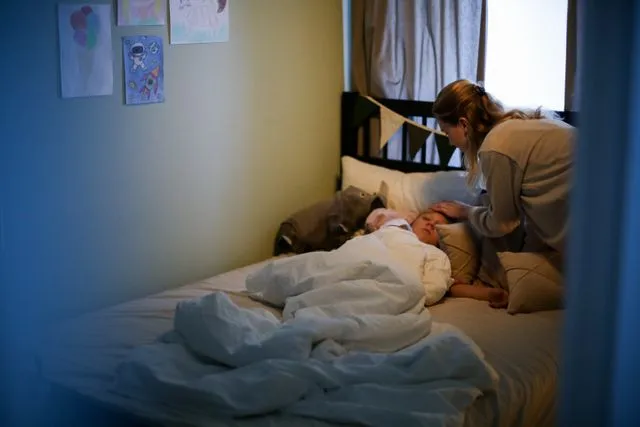
It is two in the morning.
You put your hand on your child’s forehead and something feels wrong. You get the thermometer. The number comes up and you stare at it for a moment — 39.4 — and the part of your brain that handles logic and the part that handles parental fear begin a very familiar argument.
Is this serious? Do we go in? Can we wait until morning? What if we wait and it gets worse? What if we go and it turns out to be nothing and we spent four hours in an emergency waiting room for no reason?
Every parent knows this exact moment. The fever in the night, the thermometer, the mental calculation. And most parents, if they are honest, will admit that they are not entirely sure what the number on the thermometer actually means — when it is serious, when it is not, and what they are supposed to be doing about it.
This article is an attempt to give you a clear, honest answer to those questions. Not a list of symptoms to memorise. Not a chart that tells you to call your doctor if temperature exceeds X degrees — you already have one of those on some website somewhere and it has not helped. Something more useful: a genuine understanding of what fever actually is, why children get it, what your job is while it is happening, and how to know — with reasonable confidence — when it is telling you something you need to act on.
What Fever Actually Is (And Why Your Instinct About It Is Probably Wrong)
Most parents think of fever as a symptom of illness. Something the illness produces. Something to be reduced.
That is not quite right. Fever is not a symptom of illness. It is a response to illness. There is a significant difference.
When the immune system detects an invader — a virus, a bacteria, a pathogen of some kind — it releases proteins called pyrogens. Those pyrogens signal the hypothalamus, the brain’s thermostat, to raise the body’s temperature. The hypothalamus complies. The body temperature rises.
Why? Because most of the viruses and bacteria that infect human beings function less effectively at elevated temperatures. The immune system is creating a deliberately hostile environment for the pathogen while simultaneously activating immune cells that work more efficiently in the heat. Fever is not the illness. Fever is the immune system fighting the illness.
This matters enormously for how you think about it. The instinct to reduce fever as quickly as possible — to treat it as an enemy to be suppressed — is, in most cases, working against your child’s immune system rather than supporting it. A fever that is not causing significant discomfort, and that is not in a range that poses its own risks, is the immune system doing exactly what it should be doing. Reducing it prematurely may make your child more comfortable in the short term but extends the duration of illness.
I am not saying never treat fever. I am saying understand what you are doing when you treat it — and why, in many cases, watching and waiting is the more scientifically defensible choice.
The Numbers: What They Mean and What They Don’t
Parents are understandably fixated on the number. 38. 39. 40. 40.5. The number feels like objective information. It feels like it should tell you something definitive.
It tells you less than you think.
The height of the fever is one indicator. It is not the most important one. A child with a temperature of 40 degrees who is alert, interactive, drinking fluids, and not in obvious distress is a very different clinical picture from a child with a temperature of 38.5 who is limp, unresponsive, has a rash, or is breathing with difficulty. The second child may need urgent evaluation. The first may simply need monitoring and fluids. The number alone does not tell you which situation you are in.
What the research consistently shows is that the child’s overall clinical appearance — what paediatricians call “looking well” — is a more reliable guide to illness severity than the height of the fever. A child who is sick but looks well is almost always going to be okay. A child who looks unwell — regardless of what the thermometer says — needs to be seen.
| Temperature (Rectal / Ear) | Classification | General Significance |
|---|---|---|
| Below 38.0°C (100.4°F) | Not a fever | Normal variation; no action required for temperature alone |
| 38.0°C – 38.9°C (100.4°F – 102°F) | Low-grade fever | Immune response active; monitor, ensure hydration, watch child’s appearance |
| 39.0°C – 39.9°C (102°F – 103.8°F) | Moderate fever | Common with viral illness; treat if child is uncomfortable; watch for warning signs |
| 40.0°C – 40.5°C (104°F – 104.9°F) | High fever | More likely to cause discomfort; treat for comfort; consult doctor if persisting beyond 48–72 hours or if warning signs present |
| Above 40.5°C (105°F) | Very high fever | Contact doctor; this range warrants evaluation regardless of child’s appearance |
One more thing about the numbers. The method of measurement matters significantly. Rectal thermometers are the most accurate for young children, particularly infants. Ear thermometers are convenient but can give false readings if not positioned correctly. Forehead strip thermometers are largely unreliable for clinical purposes. Oral thermometers are reasonable for children old enough to hold them correctly. If you are getting a number that surprises you — much higher or lower than expected — check the method before the number.
Age Changes Everything
This is probably the single most important thing in this article, so I want to say it clearly.
The same temperature means different things in different children depending on their age. The younger the child, the more seriously any fever needs to be taken. Not because young children are weaker or more vulnerable in some general sense, but because the clinical picture in very young babies is genuinely less predictable — and because certain serious infections can present in infants with fewer obvious warning signs than they would in an older child.
The thresholds that most paediatricians use are roughly as follows:
A baby under three months with any temperature of 38.0°C or above needs to be seen by a doctor. Not tomorrow morning. Today. The same day. Very young infants can deteriorate quickly with bacterial infections, and the clinical appearance that reassures parents of older children — “but she looks okay” — is less reliable in this age group. This is not about causing alarm. It is about the genuine difference in how illness presents in a baby whose immune system and clinical presentation are both immature.
Between three and six months, any fever of 38.0°C should still be assessed relatively promptly — within the day if possible — though the picture is somewhat less urgent than in the under-threes. Between six months and two years, you have more time but still want to be seen within a day or two for fevers that persist or for any fever in this group that comes with other concerning signs. After age two, fever becomes somewhat more predictable in what it indicates, and the watching-and-waiting approach becomes more clearly appropriate for well-appearing children.
| Child’s Age | Fever Threshold for Action | Recommended Response |
|---|---|---|
| Under 3 months | 38.0°C (100.4°F) or above | Seek medical evaluation same day — do not wait |
| 3 to 6 months | 38.0°C or above | Contact doctor within hours; evaluation same day if no other reassuring signs |
| 6 months to 2 years | 38.5°C or above lasting more than 48 hours | Monitor closely; see doctor if fever persists, child appears unwell, or warning signs present |
| 2 years and above | 39.5°C or above, or any fever lasting more than 72 hours | Watch child’s appearance; treat discomfort; see doctor if fever persists or warning signs appear |
The Warning Signs That Actually Matter
I said earlier that the child’s appearance matters more than the number. Here is what “appears unwell” specifically means — the signs that should prompt you to seek evaluation regardless of what the thermometer says.
A stiff neck. This is important. Neck stiffness — difficulty or pain when bending the chin toward the chest — is a warning sign for meningitis. If your child has a fever and neck stiffness, do not wait.
A rash that does not fade when pressed. Press a glass or your finger firmly against a rash on your child’s skin. If it fades and returns, it is likely a blanching rash — common with many viral illnesses, generally not an emergency. If it does not fade under pressure and remains visible through the glass, that is a non-blanching rash and it can indicate a serious bacterial infection. Seek emergency care immediately.
Persistent or unusual crying in an infant. The kind of crying that does not respond to anything you do, that is different in quality from your baby’s normal cry — high-pitched, continuous, or conversely a baby who is unusually quiet and difficult to rouse. Either extreme warrants a call to your doctor.
Difficulty breathing. Rapid breathing, noisy breathing, breathing that looks like the child is working hard — ribs visible with each breath, nasal flaring, skin at the throat pulling in. Any of these with a fever means evaluation today.
Extreme lethargy. There is tired-because-sick and there is worryingly difficult to wake. A child who cannot be roused or who, when roused, is unable to focus or respond normally, needs to be seen.
Convulsion. Febrile seizures — seizures triggered by fever — occur in roughly 2 to 5% of children between six months and five years. They are frightening to witness and they look serious. Most of them are not dangerous. A simple febrile seizure lasts under five minutes, involves the whole body, and the child recovers fully afterward. Any seizure that lasts longer than five minutes, involves only part of the body, or is followed by prolonged confusion or weakness is an emergency. If your child has a first seizure of any kind, they should be evaluated even if it stopped quickly. The American Academy of Pediatrics guidance on febrile seizures is worth reading before you need it.
A child who has been vaccinated in the past 48 hours and develops a fever most likely has a normal vaccine reaction — common, expected, not a sign of anything serious. But any of the warning signs above still warrant evaluation, vaccine or not.
What To Do While You Wait
Assuming your child is in a category where watching and waiting is the right approach — they are over two, the fever is moderate, and they are appearing reasonably well — here is what actually helps.
Fluids. This is the single most practically important thing you can do. Fever increases fluid loss, and dehydration both makes children feel much worse and makes it harder for the immune system to do its work. Water, diluted fruit juice, oral rehydration solutions for babies and toddlers — whatever your child will drink. Watch for signs of dehydration: no wet nappy in six hours, no tears when crying, dry mouth, sunken eyes. These are signs that the situation has shifted and evaluation is warranted.
Appropriate clothing. Layering a feverish child in blankets because they feel cold to you is counterproductive. Light clothing, comfortable room temperature. The sensation of cold during fever is the body working to raise temperature — adding layers intensifies the discomfort without helping and makes the fever higher, not lower. If the child is shivering and clearly miserable, a light blanket is fine. But the instinct to pile on warmth when a child has a fever is one of the things that reliably makes it worse.
Fever-reducing medication when appropriate. Paracetamol (acetaminophen) and ibuprofen are both effective and safe when given at the correct dose for your child’s weight. The right dose is by weight, not age — the age guides on packaging are conservative averages and frequently underdose children who are large for their age. Check with your pharmacist or paediatrician for the correct weight-based dose for your child.
Do not alternate paracetamol and ibuprofen automatically. Some parents do this routinely, believing it is more effective. The evidence for this practice is mixed, and the risk of dosing errors when alternating two medications is real. Use whichever one works for your child’s fever and discomfort. If one stops being effective, consider the other. But alternating them on a schedule as a standard approach is not recommended by most paediatric guidelines.
Do not use aspirin. Ever, in children. The association between aspirin and Reye’s syndrome — a rare but potentially fatal condition — means aspirin is contraindicated in children under sixteen. This should not need to be said in 2026, but it still does.
For more on what supports a child’s immune response during and between illnesses — the daily habits that matter more than any single intervention — the article on why some children get sick more often than others covers the fundamentals in practical detail.
The School and Childcare Question
When can a feverish child go back to school or childcare? This question causes an enormous amount of parental confusion, and the confusion is understandable because the rules communicated by different schools and settings vary considerably.
The broadly agreed-upon guidance from paediatric and public health bodies is this: a child should be fever-free — without the assistance of fever-reducing medication — for at least twenty-four hours before returning to a group setting.
That last part is critical and often missed. Fever-free on paracetamol is not the same as fever-free. If you give your child a dose of paracetamol in the morning, the fever comes down, and you send them to school, the fever will be back when the medication wears off. This is not fair on your child, not fair on the school staff who will be dealing with a sick and uncomfortable child, and not fair on the other children in the setting.
Twenty-four hours without fever, without medication. That is the threshold. It feels inconvenient. It is the right call.
Fever Phobia Is a Real Thing
I want to name something directly because I think it is contributing to a significant amount of parental suffering around this subject.
Fever phobia — a term used in the medical literature to describe disproportionate anxiety about fever in children — is genuinely common. Studies consistently find that large proportions of parents believe that fever itself causes brain damage, that temperatures above certain thresholds are inherently dangerous, and that fever-reducing medication should be given as soon as any temperature registers above normal.
None of these beliefs are supported by evidence. Fever does not cause brain damage. The body has mechanisms that prevent temperatures from rising to the levels at which neurological damage could occur in an otherwise healthy child. Febrile seizures — frightening as they are — do not cause brain damage in the overwhelming majority of cases. And the height of the fever, as I have emphasised throughout this article, is not a reliable indicator of illness severity.
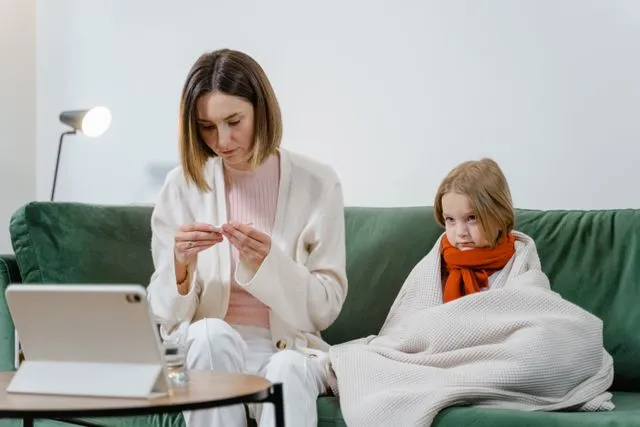
The concern about fever that sends parents to emergency departments at midnight with a child who has a temperature of 38.5 and appears completely well is a concern shaped more by fear than by clinical evidence. Understanding that — really internalising it — does not mean dismissing fever. It means responding to it proportionately and accurately rather than with a level of alarm that the situation, in most cases, does not warrant.
| Common Belief | What the Evidence Shows |
|---|---|
| Fever causes brain damage | False. The body prevents temperature from reaching dangerous levels in healthy children. Brain damage from fever alone is extremely rare and associated only with extreme hyperthermia, not ordinary febrile illness. |
| Higher fever means more serious illness | Not reliable. A child’s appearance and behaviour is a better indicator of illness severity than the height of the fever. |
| Fever should always be reduced immediately | Not supported. Fever is a useful immune response. Treating it for comfort is appropriate when the child is distressed. Treating it reflexively to suppress the number is not necessary. |
| Febrile seizures cause lasting harm | In the overwhelming majority of cases, no. Simple febrile seizures do not cause brain damage, epilepsy, or developmental problems. |
| You should always alternate paracetamol and ibuprofen | Not recommended as standard practice. Mixed evidence and increased risk of dosing errors. Use one at a time unless specifically advised otherwise by a doctor. |
A Word on Antibiotics
Parents often come to a medical visit with a feverish child expecting — and sometimes explicitly requesting — antibiotics. This is worth addressing because it reflects a misunderstanding that has real consequences.
The overwhelming majority of childhood fevers are caused by viruses. Antibiotics do not work against viruses. Not at all. Not even a little. Using antibiotics for a viral illness does not shorten the illness, does not prevent complications, and does expose the child to side effects and to the disruption of their gut microbiome. It also contributes — individually and collectively — to antibiotic resistance, which is one of the most serious public health challenges of the coming decades.
A doctor who examines your child with a fever and does not prescribe antibiotics is not failing to treat your child. They are making the correct clinical decision based on the most likely cause of the illness. Pushing for antibiotics in this situation — or visiting successive doctors until you find one who prescribes them — is not in your child’s interest, however much it might feel like it is.
Antibiotics are appropriate and important when a bacterial infection has been identified or is clinically suspected. Ear infections that do not resolve, strep throat confirmed by test, urinary tract infections, bacterial pneumonia — in these situations, antibiotics are the right tool. In the ordinary childhood fever from a respiratory virus, they are not. Trusting your doctor’s clinical judgment on this distinction is, in most cases, the right call.
For a broader look at when childhood illness patterns warrant medical attention versus watchful waiting, the article on children who seem to get sick every month addresses this question from a different angle with specific guidance on when the pattern itself warrants investigation.
Frequently Asked Questions
At what temperature should I go to the emergency room?
Temperature alone is not the right guide. A child under three months with any fever of 38.0°C needs same-day evaluation. Any child with warning signs — neck stiffness, non-blanching rash, extreme lethargy, difficulty breathing, prolonged seizure — needs emergency evaluation regardless of the temperature. In a child over two who appears reasonably well, even temperatures of 39 to 40 degrees can often be managed at home with monitoring and fluids, consulting your doctor if the fever persists beyond 72 hours or the child’s appearance changes.
What is the correct way to take a child’s temperature?
For children under three years, rectal temperature is the most accurate. For older children, oral or ear thermometry is acceptable, though ear thermometers can give inaccurate readings if not positioned correctly. Forehead strip thermometers are not reliable for clinical purposes. Axillary (armpit) temperature runs approximately 0.5°C lower than core temperature and should be interpreted accordingly.
Should I wake my child to give fever medication at night?
If your child is sleeping comfortably, there is generally no need to wake them specifically to give fever medication. Sleep is restorative and the body’s temperature regulation during sleep is somewhat different. If your child wakes uncomfortable, distressed, or has a very high temperature, treating at that point is appropriate. But disrupting a child’s sleep specifically to administer fever medication they do not need in that moment is usually not necessary.
Can I use ibuprofen and paracetamol together?
They can be given together or alternated, but routine alternating is not recommended by most paediatric guidelines without specific clinical reason. Dosing errors are more likely when managing two medications. If one medication is not adequately controlling fever or discomfort, your doctor may recommend using both or alternating — but this should be a clinical decision, not a default practice.
My child has a fever but no other symptoms. Is that more serious?
Fever without an obvious source — no runny nose, no cough, no ear complaints, no diarrhoea — is more common in very young children and does warrant closer attention, particularly in infants under one year. A source for the fever is usually found on examination (ear infection, throat infection, urinary tract infection, or early-stage viral illness before other symptoms appear). If your child under one has a fever without any obvious cause, a medical assessment within twenty-four hours is reasonable.
How long is too long for a fever to last?
Most viral fevers resolve within three to five days. A fever lasting more than five days in a child of any age warrants medical evaluation, even if the child appears well. Some viral illnesses — roseola, for example — are known for producing several days of high fever before resolving completely, but a doctor who knows your child can help you distinguish these known patterns from something that warrants investigation.
Younes Kehal is a Professional Educational Director and School Coach with over 20 years of experience working directly with children, families, and educational institutions. The guidance published on Parenting Assist is rooted in real field experience and evidence-based developmental science.