Your Child Has a Fever: The Real Guide to When to Worry, When to Wait, and What the Temperature Actually Means
It is two in the morning. Your child is hot. You have taken their temperature three times in twenty minutes, getting slightly different readings each time. You are on the internet reading things that are making you feel considerably worse. The child is asleep but flushed. And you are trying to decide whether this is the kind of thing you manage at home or the kind of thing you take to the emergency department at two in the morning.
This is one of the most common scenarios in parenting. And the anxiety it produces is entirely understandable — fever is visible evidence that something is happening in the child’s body that is not usually happening, and the instinct to respond with urgency is natural.
But most of the anxiety around childhood fever is not well-calibrated to the actual risk. Fever is one of the most misunderstood phenomena in paediatric health. The assumptions that drive parental panic are often incorrect, and correcting them does not require medical training. It requires accurate information about what fever actually is, what it does, and what the temperature number actually tells you.
Table of Contents
What Fever Actually Is — and Why It Exists
Fever is not an illness. It is a physiological response of the immune system to infection or other challenge. Specifically, it is the result of the hypothalamus — the brain’s thermostat — resetting the body’s target temperature upward in response to pyrogens released by the immune system when it detects a threat.
The reason the body does this is important. Higher body temperature impairs the replication of many viruses and bacteria, speeds up the production of immune cells, increases the efficiency of certain immune responses, and may directly kill some pathogens sensitive to temperature. The fever is the immune system working — not a side effect of illness to be suppressed, but part of the response to illness.
This does not mean fever should never be treated. It means the goal of treatment is the child’s comfort, not the elimination of fever as an end in itself. A fever brought down with paracetamol or ibuprofen has not been cured. The underlying cause is still present. The number on the thermometer has changed. The illness has not.
The goal of fever treatment is the child’s comfort, not simply making the thermometer read normal. Paracetamol or ibuprofen may be appropriate when a child is distressed or uncomfortable, but fever medicine does not treat the underlying infection. Monitor the child’s overall condition, hydration, breathing, and behaviour rather than repeatedly chasing the temperature number.
What the Number Actually Tells You
The specific temperature reading is less informative than most parents assume.
A body temperature of 38°C (100.4°F) or above is the clinical definition of fever. Below this is normal variation — the human body’s temperature varies throughout the day by as much as 0.5 to 1°C.
The relationship between fever height and illness severity is much weaker than most parents believe. A child with a temperature of 40°C who is playing, eating, and alert may be having a more benign illness than one with a temperature of 38.5°C who is pale, lethargic, and not responding normally. The fever height is one data point. How the child appears and behaves is significantly more informative.
This is the most important point in this article: the child’s clinical appearance — how they look, how they behave, whether they are consolable, whether they are interacting normally — is more informative than the temperature reading. Experienced paediatricians use temperature as context, not as the primary decision-making tool. They look at the child.
Febrile seizures can occur in some young children during a fever and are frightening to witness. Most are brief and do not cause brain damage or long-term neurological problems. Fever-reducing medicines may improve comfort, but they do not reliably prevent febrile seizures. A first seizure should be medically assessed, and a seizure lasting more than five minutes is an emergency.
How to Take Temperature Accurately
Much fever anxiety is compounded by inconsistent measurement producing confusing numbers.
Rectal temperature is the most accurate method in all ages and the gold standard for infants under three months, for whom accurate measurement is most critical.
Oral temperature (under the tongue) is accurate for children old enough to hold the thermometer in place — typically from around five years. Take it at least thirty minutes after eating or drinking anything hot or cold.
Axillary (armpit) readings are convenient but less precise than some other methods. Do not add a fixed number to an armpit reading to estimate a core temperature. Use the thermometer according to its instructions, and if an accurate reading is especially important — such as in a young infant — follow age-appropriate guidance from a healthcare professional.
Tympanic (ear) thermometers are fast but notoriously variable in accuracy, particularly in young children with narrow ear canals. Acceptable as a screening tool for older children but not reliable for young children when an accurate reading matters.
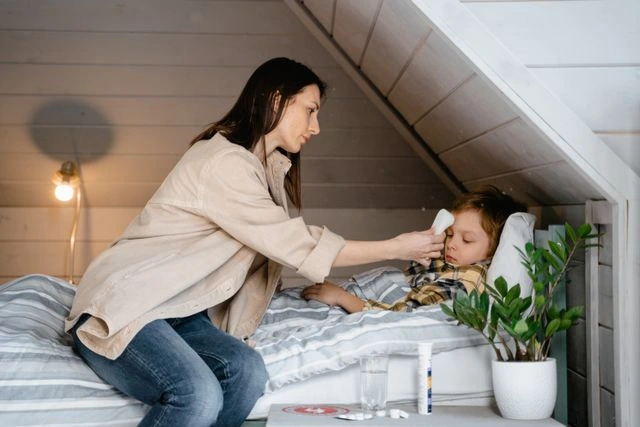
Temporal artery thermometers — swiped across the forehead — are increasingly accurate and a reasonable choice for most home use. Not reliable for infants under three months.
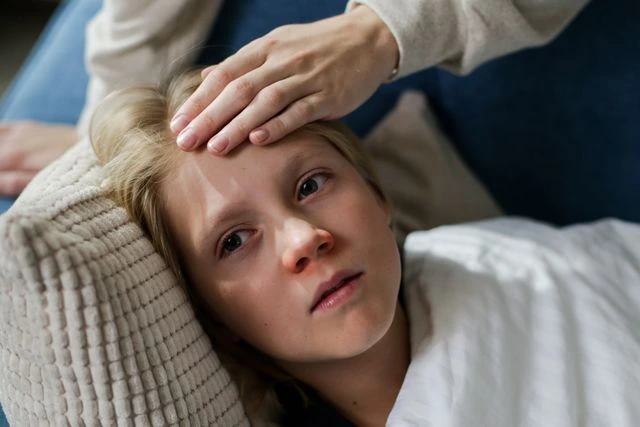
Touch alone is not a reliable way to measure fever. If your child feels unusually warm or seems unwell, use a digital thermometer rather than relying on how the forehead feels.
The Age Matters More Than the Number
The clinical significance of fever is dramatically different at different ages. This is the framework that matters most in the two-in-the-morning scenario.
Under three months: any fever — any temperature of 38°C or above — requires urgent medical assessment. Young infants cannot mount the visible clinical response that helps distinguish serious from benign illness in older children, and serious bacterial infection in this age group can progress rapidly. Do not wait and see. Seek medical attention urgently.
Three to six months: a temperature of 39°C (102.2°F) or higher warrants prompt medical advice. Seek medical help sooner at any temperature if the baby seems unusually sleepy, difficult to wake, is feeding poorly, has breathing difficulty, a concerning rash, signs of dehydration, or if you are worried.
Six months to two years: fever can often be managed at home when the child is drinking, responsive, breathing comfortably, and has no red-flag features. Seek medical advice if the fever lasts more than about 24 hours, or sooner if the child is worsening or you are concerned.
Over two years: fever can often be managed at home as long as the child is drinking, responsive, breathing comfortably, and has no red-flag features. Seek medical advice if the fever lasts more than three days, or sooner if the child’s condition is worsening or you are worried.
| Age | What to Do | Seek Medical Advice Promptly If |
|---|---|---|
| Under 3 months | 38°C (100.4°F) or higher needs urgent medical assessment | Any fever at or above 38°C |
| 3 to 6 months | Monitor closely; 39°C (102.2°F) or higher needs prompt medical advice | 39°C+ or the baby seems unwell, feeds poorly, is hard to wake, has breathing difficulty, dehydration, or a concerning rash |
| 6 months to 2 years | Home care may be appropriate if the child is otherwise well and has no red flags | Fever lasts more than about 24 hours, symptoms worsen, or you are concerned |
| Over 2 years | Home care may be appropriate if the child is otherwise well and has no red flags | Fever lasts more than 3 days, symptoms worsen, or you are concerned |
The Red Flags That Actually Matter
These features indicate a fever requires urgent assessment regardless of age or temperature height. These are the real decision-making tools, not the thermometer reading.
A non-blanching rash. Press a glass against the rash. If it does not fade under pressure — if it remains visible through the glass — this is a medical emergency. A non-blanching rash with fever can indicate meningococcal disease. Go to emergency services immediately.
Extreme lethargy or difficulty rousing. A child who is much harder to wake than usual, who is unresponsive, who does not seem “with it” in a way that goes beyond normal illness drowsiness — this requires urgent assessment. Lethargy is one of the most reliable indicators of serious illness.
Difficulty breathing. Laboured, rapid, or noisy breathing beyond nasal congestion. Signs: flaring nostrils, skin between ribs pulling inward with each breath, breathing noticeably faster than normal, grunting with each breath.
A bulging fontanelle in a baby — the soft spot on top of the head should be flat or slightly sunken. A bulging, tense fontanelle is a sign of raised intracranial pressure and requires immediate assessment.
A child who is inconsolable — who cannot be comforted, who does not settle even briefly regardless of what is done, who cries for three hours without any period of settling.
Signs of dehydration: no wet nappies or very infrequent urination, dry mouth, no tears when crying, sunken eyes — particularly in young children and infants who dehydrate more rapidly.
Parental instinct. This sounds unscientific, but parents who know their child well and believe something is wrong — even when they cannot identify exactly what — are worth taking seriously. Experienced paediatric professionals have found parental instinct to be one of the more reliable indicators that a child is more unwell than they appear. If you are worried in a way that goes beyond normal illness anxiety, trust that and seek assessment.
What to Do at Home
For a child with fever who has no red flag features and whose age makes home management appropriate, the guidance is simpler than most parents expect.
Antipyretics — paracetamol and ibuprofen — are appropriate when the child is clearly uncomfortable, distressed, or not sleeping. They are not necessary simply because a fever is present. A child who has a temperature of 39°C and is sleeping peacefully does not need to be woken for paracetamol. A child who has a temperature of 38.5°C and is miserable does benefit from treatment.
Ibuprofen should not be given to children under three months, to children who are dehydrated, or to children with certain conditions. If uncertain, paracetamol is the safer default.
Fluid is genuinely important. A child with fever loses more water than usual through sweating and increased respiration. Offer small amounts frequently — water, diluted juice, ice lollies, or breast milk for infants. Do not force large amounts at once.
Tepid sponging — wiping a feverish child with lukewarm water — is not recommended by current clinical guidelines. It does not reduce fever significantly, it is uncomfortable for the child, and it does not change the underlying illness.
Cold baths or cold water are actively counterproductive. The sudden cold triggers shivering — the body’s mechanism for generating heat — so a cold bath can paradoxically increase core temperature while making the child deeply uncomfortable.
Light clothing and a well-ventilated room support comfort. The instinct to wrap a feverish child in extra blankets is counterproductive.
| Action | Evidence | Recommendation |
|---|---|---|
| Paracetamol or ibuprofen | Effective for symptom relief and comfort | Use when clearly uncomfortable — not just because fever is present |
| Increased fluids | Prevents dehydration; supports immune function | Offer frequently in small amounts; do not force |
| Light clothing; well-ventilated room | Supports comfort; prevents overheating | Recommended — do not overbundle |
| Tepid sponging | Minimal effect; uncomfortable | Not recommended |
| Cold bath or cold water | Triggers shivering; increases core temperature | Not recommended — counterproductive |
| Alternating paracetamol and ibuprofen | Can increase the risk of dosing confusion | Do not routinely alternate them. Use one medicine at a time and only alternate if a healthcare professional advises you to do so. |
| Antibiotics without prescription | No effect on viral illness; risks antibiotic resistance | Not appropriate without clinical assessment and prescription |
The Fever Phobia Problem
There is a term in the paediatric literature for the specific anxiety that childhood fever produces: fever phobia. First described by Barton Schmitt in 1980, it refers to a set of misconceptions about fever that produce excessive anxiety, excessive intervention, and a tendency to seek emergency assessment for fevers that are clinically straightforward.
Common misconceptions include believing that the height of an ordinary infection-related fever by itself tells you how dangerous the illness is, or that every fever must be brought back to a normal temperature. Fever is usually part of the body’s response to infection. Age, breathing, hydration, alertness, rash, pain, and other symptoms are often more useful warning signs. Dangerous overheating from causes such as heatstroke is different from fever caused by infection and requires emergency care.
Fear around fever can lead to repeated temperature checking, unnecessary medication, dosing mistakes, and urgent-care visits that may not be needed. Clear guidance helps parents focus on the child’s overall condition and on genuine warning signs rather than on the thermometer number alone.
Accurate information about fever helps parents respond more calmly. In an older child, drinking, interacting, breathing comfortably, and being consolable are reassuring signs, but they do not replace medical assessment if red flags appear, the child worsens, or the fever persists longer than expected.
For the broader context of how children’s immune systems develop through repeated illness — and why the frequent colds and infections of early childhood are a normal part of immune development rather than evidence of a problem — the article on why children get sick so often and when to worry provides the background that helps calibrate fever anxiety alongside illness frequency anxiety. And for the specific situation where fever is accompanied by headache, the article on headaches in children and what they actually indicate addresses that presentation in depth.
Frequently Asked Questions
What temperature is considered dangerous?
Infectious fever does not reach temperatures that cause direct brain damage — that threshold is above 42°C, which fever from infection essentially never achieves. The danger from fever comes not from the temperature itself but from the underlying cause. Any fever in a child under three months is clinically urgent regardless of height. Any fever in an older child with red flag features requires assessment. The temperature number is much less important than the child’s overall clinical state and the presence or absence of concerning features.
Should I always give medication to bring a fever down?
No. Antipyretics are appropriate when the child is clearly uncomfortable, distressed, or unable to sleep. They are not necessary simply because a fever is present. A child with a temperature of 39°C who is sleeping comfortably does not need to be woken for medication. The goal of treatment is the child’s comfort, not normalising the temperature reading.
My child has had a fever for three days. When should I take them to the doctor?
A fever lasting more than three to four days in a child over two years warrants medical assessment to identify whether there is a bacterial cause that may benefit from antibiotic treatment, and to ensure the child is not deteriorating. In a child under two years, fever persisting beyond two to three days warrants assessment. In any child who is worsening, developing new symptoms, or about whom you are significantly concerned, assessment is appropriate regardless of how long the fever has been present.
My child’s temperature comes back up quickly after medication. Does this mean the illness is serious?
Not in itself. Antipyretics work for four to six hours and then wear off. The fever returning after this period simply means the medication has worn off. What is more informative is whether the child is better or worse than they were at the same point yesterday — is the trend improving, stable, or worsening? And whether the child’s overall state is reassuring when the medication is working.
Is it safe to give both paracetamol and ibuprofen?
Do not routinely alternate paracetamol and ibuprofen, and do not give them at the same time unless a healthcare professional has specifically advised you to do so. If one medicine is not helping enough, ask a pharmacist, doctor, or nurse what to do next. Always follow the age- and weight-appropriate dosing instructions and record the time and dose to avoid accidental double-dosing.
My baby is under three months and has a temperature of 38°C but seems fine. Can I wait and see?
No. Any temperature of 38°C or above in a child under three months requires urgent medical assessment — on the same day, or out of hours if that is when it occurs. Young infants cannot reliably signal the severity of illness through clinical appearance, and serious bacterial infection in this age group can deteriorate rapidly. The fact that the baby seems fine is reassuring but not sufficient to justify watchful waiting at this age.
Younes Kehal is an educational director, certified school coach, and certified life coach with 20 years of experience working with children, families, teachers, and schools. His guidance combines practical educational experience with carefully reviewed research.