My Child Won’t Sleep — The Real Reasons and What Actually Works
It is ten o’clock at night. You have done the bath, the story, the glass of water, the second glass of water, the explanation of why monsters are not real, the rearrangement of stuffed animals, and the third trip back to say goodnight. And they are still awake. You are not. You haven’t been for some time.
Sleep problems in children are among the most common reasons parents arrive at my office — or at their pediatrician’s — looking exhausted and slightly desperate. And they are one of the areas where the gap between what parents try and what actually works is widest. Because most of what parents instinctively do when a child won’t sleep — staying until they fall asleep, bringing them into the parental bed, shortening the battle by giving in — solves the immediate problem while making the underlying one worse.
This guide is about understanding what is actually happening when your child won’t sleep, why it matters more than most parents realize, and what the research genuinely shows about what works — not just for tonight, but sustainably, over time.
Table of Contents
The Scale of the Problem — and Why It Matters
Sleep problems in children are far more common than most parents realize — which is both reassuring and concerning. About 44% of children do not consistently get the recommended amount of sleep for their age, according to results from the 2026 Sleep in America Poll. And the consequences extend far beyond tired parents and grumpy mornings.
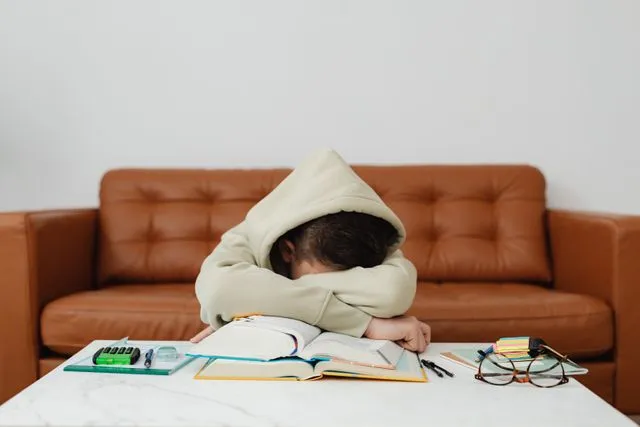
The American Academy of Sleep Medicine is unambiguous on this point: children who get the recommended amount of sleep on a regular basis show measurable improvements in attention, behavior, learning, memory, emotional regulation, physical health, and mental health. The inverse is equally well-documented. Poor sleep in childhood is linked to impaired learning, emotional dysregulation and long-term health consequences.
Sleep is not passive downtime. During sleep, the brain consolidates the learning of the day — transferring information from short-term to long-term memory, processing emotional experiences, and doing the neurological maintenance that makes the following day’s learning and regulation possible. A child who is chronically under-slept is not just tired. They are operating with a brain that is genuinely impaired in its capacity to learn, regulate, and function.
And yet — 57% of parents underestimate how much sleep their child needs at their age. This gap between what children need and what parents believe they need is itself one of the most significant contributors to childhood sleep problems.
How Much Sleep Does Your Child Actually Need?
The starting point for addressing any sleep problem is knowing what adequate sleep actually looks like at your child’s age. Most parents are surprised by how much sleep children need — particularly in the early years.
| Age | Recommended Sleep (24 hours) | Includes Naps? |
|---|---|---|
| Newborn (0–3 months) | 14–17 hours | Yes |
| Infant (4–12 months) | 12–16 hours | Yes |
| Toddler (1–2 years) | 11–14 hours | Yes |
| Preschool (3–5 years) | 10–13 hours | May include nap |
| School-age (6–12 years) | 9–12 hours | No |
| Teenager (13–18 years) | 8–10 hours | No |
Look at those numbers carefully. A 4-year-old who goes to bed at 9pm and wakes at 7am is getting 10 hours — technically within range, but at the lower end. A 7-year-old who goes to bed at 10pm is likely getting 8 to 9 hours — below the recommended 9 to 12. When you map actual family bedtimes against these recommendations, the scale of routine sleep insufficiency in children becomes immediately clear.
The 5 Most Common Reasons Children Won’t Sleep
Before you can fix a sleep problem, you need to understand what is causing it. Not all sleep difficulties have the same root — and a strategy that works brilliantly for one cause can be entirely ineffective for another.
1. The Bedtime Is Too Late — and the Child Is Overtired
This is the most counterintuitive finding in pediatric sleep research, and the one that surprises parents most consistently: an overtired child is harder to settle, not easier.
When a child misses their optimal sleep window — the period in the evening when sleep pressure is highest and the body is primed to fall asleep — cortisol and adrenaline kick in as a compensatory mechanism, producing the second wind that every parent of a toddler recognizes: the sudden burst of energy, the silliness, the inability to settle, right at the moment when the child should be falling asleep.
Many families whose children struggle to fall asleep at bedtime are inadvertently keeping children up past this optimal window. The paradoxical solution — moving bedtime earlier — often resolves the settling problem within days.
2. Inconsistent Bedtime Routines
The body’s sleep-wake cycle — the circadian rhythm — is powerfully regulated by consistency. A child whose bedtime varies significantly from night to night, or whose pre-sleep activities are unpredictable, has a circadian rhythm that cannot reliably prepare the body for sleep at a consistent time. The result is a child who genuinely does not feel sleepy at bedtime — not because they are being difficult, but because their biology has not been given the consistent cues it needs to prepare for sleep.
A consistent bedtime routine — the same sequence of activities at the same time each evening — is not merely a behavioral strategy. It is a physiological one. It trains the body to begin releasing melatonin and preparing for sleep in response to the routine’s cues, making the transition to sleep genuinely easier over time.
3. Screen Use Too Close to Bedtime
The research on screens and sleep is among the most consistent in sleep science. Blue light emitted by screens suppresses melatonin production — the hormone that signals to the body that it is time to sleep. A child who has been on a screen within an hour of bedtime has a body that is actively being told, at a hormonal level, that it is not yet time to sleep.
Beyond the blue light effect, screens provide stimulating content that activates rather than calms the nervous system. A child who has been watching fast-paced content or playing video games immediately before bed is neurologically aroused at precisely the moment when they need to be winding down.
The 2026 Sleep in America Poll recommendations are clear: set a wind-down ritual, including a device-free window for at least an hour prior to bedtime. This is not a casual suggestion — it is one of the highest-impact single changes a family can make for sleep quality.
4. Sleep Anxiety and Separation Fears
For many children — particularly between ages 3 and 8 — bedtime resistance is not a behavioral problem. It is an anxiety problem. The child who calls out repeatedly, who cannot stay in their room, who claims to be scared of the dark or of monsters, is often genuinely experiencing nighttime anxiety — the natural separation from caregivers that bedtime requires can feel threatening to a child whose attachment security is still being consolidated.
This is closely connected to the separation dynamics we discussed in our article on preschool readiness — the ability to separate from a caregiver for sleep is a developmental achievement that builds gradually and is influenced by temperament, attachment security, and the child’s overall sense of safety.
Anxious bedtime resistance requires a different approach than behavioral bedtime resistance — one that addresses the underlying anxiety rather than simply enforcing boundaries around it.
5. The Sleep Environment Is Not Optimized
Temperature, light, noise, and comfort all directly affect sleep quality and the ease of settling. Rooms that are too hot or too cold can cause poor sleep. Exposure to light — including light from hallways and nightlights that are too bright — delays melatonin release. Unpredictable noise disrupts sleep cycles. A child who is sleeping in a room that is too warm, too bright, or too unpredictably noisy is dealing with environmental factors that make quality sleep genuinely harder to achieve, regardless of how good their routine is.
What the Research Says Actually Works
1. Establish a Consistent, Wind-Down Bedtime Routine
The evidence base for consistent bedtime routines is remarkably strong. A routine of 20 to 45 minutes that consistently includes the same sequence of calming activities — bath, pajamas, teeth, story, lights out — in the same order at the same time each night trains both the biology and the psychology of the child to expect and prepare for sleep.
The specific activities matter less than their consistency and their calming quality. A bath is not essential. A story is not essential. What is essential is that the routine is predictable, calming, and ends at a consistent time that aligns with the child’s optimal sleep window.
The National Sleep Foundation is explicit: set a consistent sleep and wake schedule, including weekends. Weekend lie-ins and late nights disrupt the circadian rhythm in ways that make the following week’s sleep harder — a pattern sometimes called “social jetlag.”
2. Move Bedtime Earlier If Settling Is Difficult
If your child consistently struggles to settle — is hyperactive at bedtime, takes longer than 20 minutes to fall asleep, or seems wired rather than tired — the first experiment to try is moving bedtime 30 minutes earlier. For many families, this single change resolves the problem within a week, because it catches the child before the overtired second-wind kicks in.
Work backward from the required wake-up time using the sleep recommendations for your child’s age. If your 5-year-old needs to wake at 7am and requires 11 hours of sleep, the target bedtime is 8pm — earlier than most families currently use.
3. Create a Sleep-Conducive Environment
Optimize the sleep environment systematically:
- Temperature: The ideal sleep temperature for children is slightly cool — around 18 to 20 degrees Celsius. A room that is too warm is one of the most common and most overlooked causes of sleep disruption.
- Light: The room should be as dark as possible. If a nightlight is needed for anxiety reasons, use a red-spectrum light — red light has the least impact on melatonin production of any visible wavelength.
- Noise: Consistent background sound — a white noise machine or a fan — can mask unpredictable noises that would otherwise disrupt sleep cycles.
- Comfort: Ensure the mattress, bedding, and sleep clothing are appropriate for the temperature and genuinely comfortable for the child.
4. Remove Screens at Least One Hour Before Bed
This is non-negotiable if sleep is a problem in your household. The device-free hour before bed is not a punishment — it is a physiological requirement for the melatonin system to prepare the body for sleep. Replace screen time in that final hour with calming, low-stimulation activities: reading together, quiet play, drawing, or simply talking.
The connection between screen use and developmental outcomes is something we touch on in our article on supporting your child’s overall health — the immune system’s restoration during sleep is one of the most significant reasons that adequate sleep directly impacts how frequently children get ill.
5. Teach Children to Fall Asleep Independently
This is the area of greatest controversy in sleep parenting — and the area where the research is most consistent and most frequently ignored.
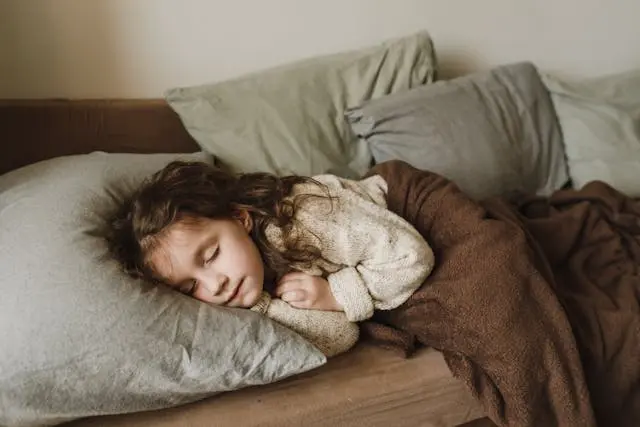
Children who learn to fall asleep independently — without a parent present, without feeding, without rocking — develop what sleep researchers call good sleep onset associations. When they wake briefly during the night, as all humans do multiple times between sleep cycles, they are able to return to sleep without requiring the same conditions that were present when they initially fell asleep.
Children whose sleep onset associations involve parental presence — a parent lying next to them, feeding them to sleep, rocking them — will naturally signal for those same conditions when they wake during the night. This is not the child being manipulative. It is the sleep system working exactly as it is designed to — seeking the conditions it associates with sleep onset.
Teaching independent sleep onset — gently, consistently, with appropriate age-calibration — is the most effective long-term solution to night wakings and settling difficulties. The specific method matters less than the consistency and the parental confidence with which it is implemented.
6. Address Sleep Anxiety Separately and Directly
For children whose bedtime resistance is driven by anxiety, behavioral strategies alone are insufficient. Address the anxiety directly:
- Acknowledge the fear without amplifying it: “I hear that you feel scared. Feeling scared at bedtime is something lots of children feel. You are safe here.”
- Create a consistent safety ritual — a special phrase said at goodnight, a comfort object that is always present, a nightlight — that provides a consistent reassurance without requiring ongoing parental presence.
- Gradually increase the distance between parental presence and the child falling asleep — starting with sitting on the bed, moving to sitting in the doorway, moving to checking in at intervals.
- During the day, talk about nighttime feelings in a normalizing way. Read picture books about bedtime fears. Build the language and the confidence around the topic before it becomes a bedtime battleground.
If sleep anxiety is severe — if the child is experiencing significant distress that interferes with family life or the child’s daytime functioning — a referral to a child psychologist may be appropriate.
The Signs That Sleep Problems Are Affecting Your Child
Parents often normalize the effects of insufficient sleep in their children because the connection is not always immediately obvious. A child who is tired does not always look tired — they often look hyperactive, emotional, and difficult. Here are the signs that sleep insufficiency may be affecting your child:
| In Young Children (Under 8) | In Older Children and Teens |
|---|---|
| Hyperactivity and difficulty settling during the day | Difficulty waking in the morning |
| Increased emotional reactivity — more frequent meltdowns | Mood problems — irritability, low motivation, low mood |
| Difficulty concentrating or sustaining attention | Declining academic performance |
| Falling asleep in the car or in front of screens | Excessive daytime sleepiness |
| Getting sick more frequently than usual | Increased risk-taking behavior |
If several of these descriptions match your child consistently, inadequate sleep is worth taking seriously as a potential contributing factor — even if the child does not appear obviously tired.
When to Seek Professional Help
Most childhood sleep problems respond to the strategies described in this article when applied consistently over two to four weeks. But there are situations that warrant professional evaluation:
- Your child snores loudly, breathes noisily during sleep, or appears to stop breathing momentarily — these may be signs of sleep apnea, which requires medical assessment.
- Your child has significant difficulty staying awake during the day despite apparently adequate night sleep.
- Your child experiences night terrors — episodes of apparent waking with distress that they have no memory of the following morning — that are frequent or intensifying.
- Sleep problems persist despite consistent implementation of evidence-based strategies over several weeks.
- Sleep anxiety is severe enough to significantly impact the child’s or family’s daily functioning.
A pediatric sleep specialist, or a referral from your child’s pediatrician, can assess what is happening and provide targeted support.
A Practical Bedtime Routine Template
For parents who want a concrete starting point, here is a simple routine framework that can be adapted to your family’s specific needs and your child’s age:
- 60 minutes before bed: Screens off. Shift to calm, low-stimulation activities — drawing, puzzles, quiet play.
- 45 minutes before bed: Bath or wash. The drop in body temperature after a warm bath promotes sleepiness.
- 30 minutes before bed: Pajamas, teeth, into the bedroom.
- 20 minutes before bed: Story time — one or two books, read together calmly. This is connection time as much as wind-down time.
- 10 minutes before bed: Lights dim. Final drink of water if needed. Comfort object in place. Goodnight said — warmly, briefly, consistently.
- Lights out: Child in bed, parent leaves. Same time every night.
The total time from screens off to lights out is approximately one hour. This is not extravagant — it is what the research supports as necessary for the biological and psychological preparation for sleep.
A Final Word for Exhausted Parents
I want to close with something that rarely appears in sleep guides: an acknowledgment of how genuinely depleting chronic sleep problems are — for the child and for the parent.
Parental sleep deprivation impairs judgment, patience, emotional regulation, and physical health in ways that are very well documented. A parent who is not sleeping is a parent who is less able to respond to their child with the calm and consistency that good parenting requires. This is not a character failing — it is physiology.
If your child’s sleep problems are significantly affecting your own sleep, that is a legitimate health concern that deserves attention alongside your child’s needs. Seek support — from a partner, family, or professional — to ensure that the work of improving your child’s sleep does not happen at the cost of your own to the point of crisis.
As pediatric sleep specialist Dr. Vaishal Shah puts it: “Sleep truly is the best medicine. Better yet, it’s free, has no detrimental side effects and requires no prior authorization from your insurance company.” For your child — and for you.
Summary: What To Remember
- 44% of children do not get the recommended sleep for their age — and most parents underestimate how much sleep children need by more than an hour.
- Insufficient sleep has serious consequences — impaired learning, emotional dysregulation, weakened immunity, and long-term health effects.
- The most common causes of children’s sleep problems are: bedtime too late, inconsistent routines, screen use before bed, sleep anxiety, and a non-optimized sleep environment.
- Move bedtime earlier if settling is difficult — an overtired child is harder to settle, not easier.
- Establish a consistent 45–60 minute wind-down routine ending at the same time every night, including weekends.
- Remove all screens at least one hour before bed — this is physiologically necessary, not optional.
- Optimize the sleep environment: cool temperature, darkness, consistent background sound.
- Teach independent sleep onset — it is the most effective long-term solution to night wakings.
- Address anxiety separately — behavioral strategies alone are insufficient for anxiety-driven bedtime resistance.
- Seek professional evaluation for snoring, sleep apnea symptoms, severe night terrors, or problems that persist despite consistent effort.
Younes Kehal is an educational director, certified school coach, and certified life coach with 20 years of experience working with children, families, teachers, and schools. His guidance combines practical educational experience with carefully reviewed research.