Your Child Asked You If the Planet Is Dying. Here’s What to Actually Say.
It comes out of nowhere, usually.
Dinner table. Car ride. Right before bed, when you were hoping for a smooth, uneventful night. Your child looks at you with that particular kind of seriousness that children produce when they have been sitting with something for a while, and they ask: “Is the planet going to die?”
Or: “Are all the animals going to disappear?”
Or, in the version that I find the hardest to hear: “Will there be anywhere left for me to live when I grow up?”
And you sit there, holding your fork or your steering wheel, trying to figure out what on earth you are supposed to say to that.
Most parents default to one of two responses. Some immediately reassure — “of course not, everything is going to be fine” — because they cannot bear the anxiety they see in their child’s face. Others go the other direction and deliver a fairly comprehensive account of climate change, carbon emissions, and the failures of international policy, because honesty feels like respect and they do not want to lie.
Neither of those responses is quite right. And understanding why — and what actually works instead — is what this article is about.
First: Where Is This Question Coming From?
Before you can answer your child well, it helps to understand what is actually happening when they ask that question.
Children today are growing up inside a media environment saturated with environmental messaging. Some of it comes from school. Some from news that leaks through, even in households where parents try to limit it. Some from peers, whose older siblings or parents have said things that get passed along in the imprecise, sometimes alarming way that information moves between children. Some from social media, for older children. Some simply from living in a world where extreme weather events, conversations about heat, wildfires, floods, and species loss are part of the background noise of ordinary life.
Children are not deaf to this. They absorb it. And what they absorb, without the cognitive framework to process it, often becomes diffuse, formless anxiety — a background feeling that the world is in danger without a clear understanding of what that means, how serious it is, or what if anything can be done about it.
This is what researchers have started calling eco-anxiety or climate anxiety — a chronic fear of environmental doom that is increasingly documented in children and adolescents worldwide. A 2021 survey published in The Lancet of 10,000 young people aged 16 to 25 across ten countries found that 59% were very or extremely worried about climate change, and 45% said their feelings about it affected their daily functioning. These are not small numbers.
Your child’s question is probably a version of this — the anxiety finding a way out, looking for acknowledgment and for some kind of ground to stand on.
Why False Reassurance Backfires
The impulse to immediately reassure is completely understandable. You love your child. You do not want them to be frightened. And “everything is going to be fine” is the most natural thing in the world to say to a frightened child.
The problem is that children — even young children — know when they are being brushed off. They have usually already encountered enough information to know that things are not entirely fine. And when a parent’s response contradicts what they are already sensing, it does not remove the anxiety. It just teaches them that this topic is not safe to bring to you.
That is the real cost of false reassurance. Not that it fails to comfort — it often does comfort, briefly. But it closes the door. The child files away the message: this subject upsets the adults, or they do not take it seriously, or they are not telling me the truth. And the next time the anxiety surfaces, they are less likely to bring it to you and more likely to sit with it alone, or look for answers in places that may not serve them well.
Truthful engagement — even on hard subjects — keeps the door open. It tells your child: this is something we can talk about. I will not pretend it is not real. And I am here with you in it.
Why the Full Briefing Also Backfires
The opposite error — giving a child a comprehensive and accurate account of the environmental challenges facing the planet — makes a different kind of mistake.
Children do not process information the way adults do. They have less capacity for abstraction, less ability to hold large-scale systemic problems in mind and evaluate them calmly, and much less emotional regulation. Information that an adult can receive and contextualize within a framework of agency (“yes, this is serious, and here is what is being done, and here is what I can do”) hits a child without that framework. What the child receives is the fear-inducing content without the stabilising container.
The result, frequently, is not a more informed child. It is a more frightened one. A child who now has more specific content for their anxiety but no more ability to manage it.
Age-appropriate honesty is not about how much information you give. It is about what the information leaves the child feeling. Does it leave them with a sense that the situation is real but manageable? That adults are working on it? That there are things they themselves can do? That caring about the planet is something their family shares and acts on together? If yes, the conversation served its purpose. If it leaves them feeling helpless and overwhelmed, it did not — regardless of how accurate the information was.
What Children Actually Need From This Conversation
This is where I want to slow down, because getting this right matters.
A child who asks whether the planet is dying is not primarily asking for information. They are asking for three things, in roughly this order:
First, they want to know that their feeling is valid. That it is okay to be worried about this. That the worry is not crazy or too big or embarrassing. That the adults around them take it seriously too.
Second, they want to know that they are safe. Not that everything is fine — they probably already know that is not quite true. But that the people who love them and take care of them are aware of what is happening, are part of the effort to address it, and will be there for them regardless.
Third — and this one is crucial — they want to know there is something they can do. Helplessness is the most anxiety-producing state a person can be in. It is more distressing than knowing about a problem. It is more distressing even than facing a genuinely difficult situation, as long as some agency is possible. A child who believes they can do something — however small — about a problem that worries them is a child who can live alongside that worry without being overwhelmed by it.
Your job in this conversation is to provide all three of those things. Not a full briefing on climate science. Not a false promise that nothing bad is happening. Validation, safety, and agency.
What to Actually Say, By Age
The specifics of what you say depend significantly on your child’s age. Here is a framework that I have found useful in my work with families.
| Age Group | What They Can Understand | What to Emphasise | What to Avoid |
|---|---|---|---|
| Under 6 | Simple cause and effect; that some things need care | We take care of nature like we take care of each other. Trees, animals, and water are important. We help by… | Statistics, timelines, abstract global threats, anything frightening |
| 6 to 9 | Basic environmental concepts; that actions have consequences | Some things are changing in nature and people are working hard to fix them. Our family helps by… | Worst-case scenarios, expressions of adult hopelessness, uncontextualised news content |
| 9 to 12 | More complex cause and effect; concepts of systemic problems | Climate change is real and serious. Scientists, governments, and millions of people are working on it. Here is what we do as a family, and here is what you can do… | Dismissiveness, but also catastrophising — balance is possible |
| 12 and above | Abstract reasoning; systemic thinking; longer time horizons | Honest engagement with the complexity, including uncertainty and difficulty, alongside the substantial evidence of human capacity to address large-scale problems when motivated | Pretending certainty about outcomes in either direction; dismissing their concern as exaggerated |
Notice that at every age, the response includes something the child or family can do. That is not accidental. Agency is the antidote to helplessness, and helplessness is what turns normal concern into debilitating anxiety.
The Difference Between Concern and Anxiety
I want to make a distinction that I think is genuinely important for parents navigating this.
Concern about the environment is healthy. It is appropriate. It is, in fact, exactly the disposition that we want to cultivate in the next generation — people who understand what is at stake, care about it, and are motivated to act. A child who is appropriately concerned about the state of the planet is a child who has been raised well.
Climate anxiety is something different. It is concern that has become so large and so pervasive that it interferes with daily functioning — with sleep, with concentration, with enjoyment of ordinary life, with the child’s sense that their future is worth planning for.
The goal is not to eliminate concern. The goal is to prevent it from becoming anxiety. And the two most powerful factors in that distinction are the ones I have already mentioned: the quality of the conversations a child has with their parents about environmental topics, and the degree to which the child feels they have some form of meaningful agency.
A child who has never been able to talk about this with their parents, who has absorbed environmental messaging without any adult help in processing it, and who has no sense that anything they do makes any difference, is a child at risk of the anxiety end of that spectrum. A child who talks about it openly, who understands their family’s values and practices around sustainability, and who has concrete ways of participating in the solution — even very small ones — is a child who can hold the concern without being crushed by it.
For practical ways to build those eco habits as a family, the piece on building eco-friendly habits one step at a time is worth reading alongside this one — it gives the actionable framework that makes the conversations here feel grounded rather than abstract.

Love Before Facts
There is a principle I come back to often in this area, and I want to say it plainly because I think it is the most important thing in this article.
A child who loves the natural world will protect it. A child who has been frightened of environmental collapse, but who has no personal, felt relationship with the natural world, may feel guilty about environmental damage but will struggle to sustain the motivation for environmental action across a lifetime.
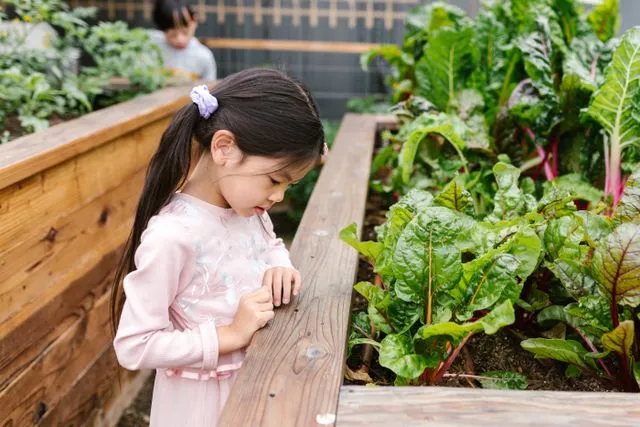
Love comes before facts. Connection comes before information. The most important environmental education you can give a young child is not teaching them about carbon emissions or biodiversity loss. It is taking them outside. Letting them get muddy. Sitting with them while they watch an insect. Pointing out the moon. Growing something in a pot on the windowsill and watching it together.
A child who has spent hundreds of hours in genuine, unstructured contact with the natural world develops an emotional relationship with it that no classroom curriculum can replicate. And that relationship — that personal love — is what motivates environmental action more reliably than any amount of information about what is going wrong.
As the research on outdoor play and child development consistently shows, time in nature does not just support environmental values — it supports children’s mental health, attention, and emotional regulation in ways that are documented, significant, and free. The investment is time, not money. And it pays dividends that go far beyond environmental awareness.
What To Do When the Anxiety Is Already Significant
Some children have moved past manageable concern and are experiencing genuine climate anxiety — persistent worry that affects their sleep, their daily mood, their sense of the future. If your child is in that category, the conversations in this article are still useful, but they may not be sufficient on their own.
Signs that a child’s environmental worry may need more support include: recurring nightmares about environmental catastrophe, refusal to engage with future planning (for school, for friendships, for activities) because “there is no point,” persistent sadness or anger about environmental topics that does not respond to reassurance, and physical symptoms — stomachaches, headaches, sleep problems — that coincide with environmental news or discussions.
If you are seeing these patterns, a therapist or counsellor who works with children and is familiar with eco-anxiety can be genuinely helpful. This is not an obscure or unusual presentation anymore — it is increasingly common enough that many child therapists have developed specific approaches to it. The American Psychological Association’s resources on climate change and mental health offer a starting point if you are looking for professional context on this area.
The Yale Program on Climate Change Communication also publishes research and guidance specifically on how to talk about environmental issues with different audiences, including children, in ways that inform without overwhelming.
A Practical Script for the Hardest Version of This Conversation
Because sometimes what parents need is not a framework but actual words. Here is one version of how this conversation might go, for a child in the seven-to-ten age range who has asked the hardest version of the question.
Child: “Is the planet going to die?”
Parent: “That is a really important question, and I am glad you asked me. You know what — I think about this too sometimes. The planet is going through some hard things right now. Some things in nature are changing because of how people have been living, and that is real. But I want to tell you something else that is also real: millions of people all over the world — scientists, engineers, young people, families like ours — are working really hard to fix it. And our family is part of that too, in the ways we live. What made you think about this?”
Notice what that does. It validates. It does not lie. It gives them a picture of agency — of humans working on the problem, including their own family. And then it opens the floor back to the child, because the most important thing is usually not the answer you give but the conversation that follows.
| Finding | Source |
|---|---|
| 59% of young people aged 16–25 are very or extremely worried about climate change | Hickman et al., 2021 — The Lancet Planetary Health |
| 45% report that climate feelings negatively affect daily functioning | Hickman et al., 2021 — The Lancet Planetary Health |
| 68% of young people feel governments are not doing enough | Hickman et al., 2021 — The Lancet Planetary Health |
| Children who have regular nature contact show lower anxiety and better emotional regulation | Tillmann et al., 2018 — JAMA Pediatrics |
| Parental discussion of environmental topics reduces child eco-anxiety when conversations emphasise agency | Ojala, 2012 — Environment and Behavior |
The Long View
Raising a child who can hold environmental concern without being crushed by it is one of the genuinely new challenges of contemporary parenting. It is not something our own parents had to navigate in the same way. The scale of the information environment, the explicitness of the environmental messaging children encounter, and the genuine seriousness of the challenges involved make this harder than it might sound.
But the core of what is required is not so different from what good parenting has always required: honest conversation, emotional attunement, and the willingness to sit with your child in difficult feelings rather than rushing to make those feelings disappear.
Your child does not need you to have all the answers about what is going to happen to the planet. They need you to be present, honest, and not panicked. They need to know that the adults in their world are paying attention and doing something — even something small. And they need to feel that their own concern is not just acceptable but respected.
That is within reach for every parent. It does not require expertise in climate science or environmental policy. It requires the same thing most important conversations with children require: your presence, your honesty, and your willingness to take their inner life seriously.
Start there. The rest follows.
Frequently Asked Questions
At what age do children start worrying about the environment?
Environmental awareness and associated worry can appear surprisingly early — from around age five or six, when children develop enough cognitive capacity to understand cause and effect and begin absorbing messaging about nature and the planet. Climate anxiety, in its more significant forms, tends to peak in middle childhood and adolescence, though younger children can certainly experience diffuse anxiety about environmental themes without being able to articulate it clearly.
Should I limit my child’s exposure to environmental news?
For younger children, yes — not because the topic is off-limits, but because context-free, alarming environmental content without parental mediation is more likely to produce anxiety than understanding. For older children and adolescents, limiting exposure is less feasible and less necessary, but engaging with what they encounter — watching or reading things together and discussing them — is far more valuable than restriction.
Is it okay to tell my child that I am also worried about the environment?
Yes — with important caveats. Sharing that you take environmental challenges seriously, that you think about them, and that they matter to you is honest and appropriate. Sharing adult levels of worry, hopelessness, or helplessness with a child is not — it amplifies rather than contains their anxiety. The message you want to convey is: “I care about this and I am doing something about it,” not “I am frightened and I do not know what to do.”
What are the best small actions I can involve my child in for eco-anxiety?
The most effective ones are visible, immediate, and connected to something the child can understand. Composting food scraps and watching the result over weeks. Planting something and tending to it. Participating in a local clean-up. Choosing secondhand over new for a specific item and understanding why. Water conservation habits at home — the article on raising children who understand water’s value has specific exercises for making this concrete. These small actions provide the sense of agency that is the most powerful buffer against helpless anxiety.
How is eco-anxiety different from normal environmental awareness?
Normal environmental awareness is concern that is proportionate and manageable — the child thinks about it, cares about it, and may be motivated by it, but it does not dominate their inner life or interfere with daily functioning. Eco-anxiety involves chronic, intrusive worry about environmental collapse that affects sleep, mood, and the child’s sense of the future. The distinction matters because the response to each is different — supportive conversation and family action for the former; professional support in addition to those things for the latter.
My child refuses to talk about this. Should I push?
No. Forced conversations about difficult emotional topics tend to produce withdrawal rather than openness. A better approach is to make your own engagement with environmental topics visible and normalised — talking about what your family is doing, commenting briefly and calmly on environmental news without dramatising it, modeling a relationship with the natural world that is active rather than anxious. Children who see a parent navigating this with equanimity and purpose are more likely, eventually, to bring their own feelings into the open. The door needs to be open; they will walk through it when they are ready.
Younes Kehal is an educational director, certified school coach, and certified life coach with 20 years of experience working with children, families, teachers, and schools. His guidance combines practical educational experience with carefully reviewed research.