What LEGO Is Actually Teaching Your Child (It’s Not What You Think)
There is a particular kind of Saturday morning that many parents of young children know well.
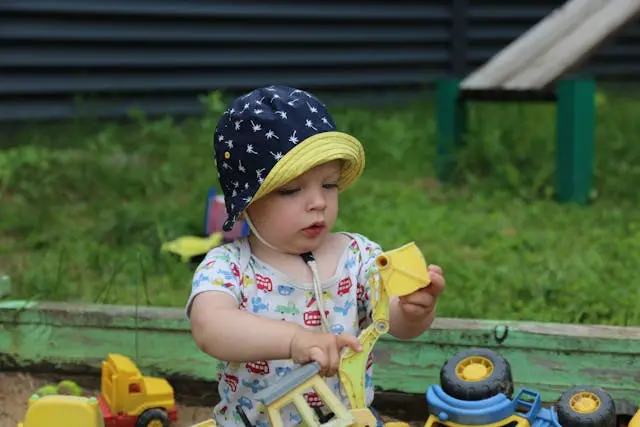
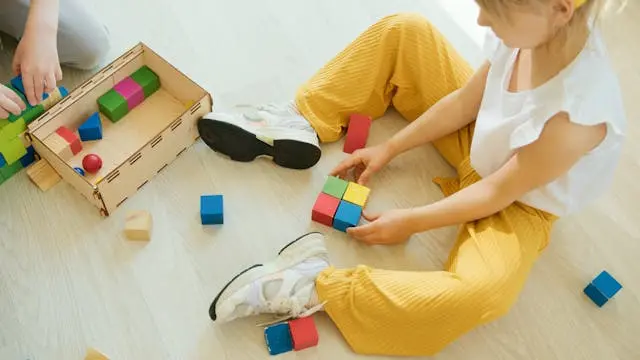
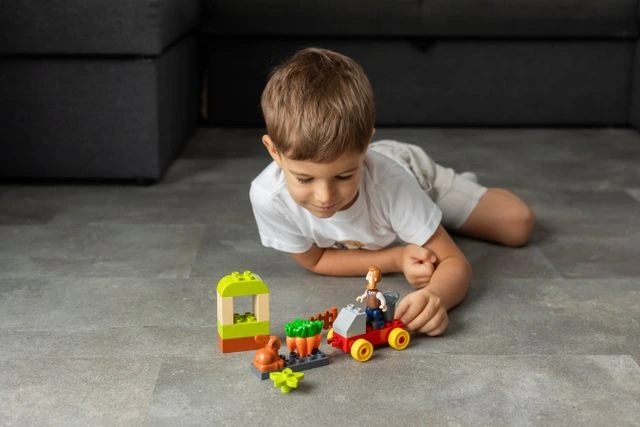
The child has been on the floor for two hours. Not asking for anything. Not needing anything. Completely absorbed in a pile of coloured bricks, building something that has no name yet and may never have one. The house is quiet. The child is, by any visible measure, doing nothing of consequence. And yet something about the quality of their concentration — the way they frown slightly at a problem, try something, take it apart, try something else — suggests that something is happening that is worth not interrupting.
LEGO is one of the most researched toys in developmental psychology, and the findings are consistently more interesting than most parents expect. Not because LEGO teaches engineering principles, though it does. Not because it develops spatial reasoning, though it demonstrably does that too. But because what happens when a child builds with LEGO — the specific cognitive processes engaged, the specific frustrations encountered and managed, the specific relationship between intention and outcome that the bricks force — is a remarkably complete developmental curriculum in a small plastic format.
This article is about what that curriculum actually contains. Not the marketing version, which is accurate as far as it goes. The fuller version, which is considerably more interesting.
Table of Contents
First: What LEGO Actually Is
LEGO bricks are, at their most basic, a system of interlocking plastic components in standardised sizes that can be combined in an essentially unlimited number of configurations. That standardisation — the fact that any LEGO brick made since 1958 fits any other LEGO brick made since 1958 — is not an incidental manufacturing detail. It is the feature that makes LEGO developmentally significant.
Because the system is consistent, a child can develop genuine expertise in it. They learn, through accumulated experience, what works and what does not — which configurations are stable, which are fragile, how to create cantilevers and corners and arches, how to distribute weight. This knowledge is not taught. It is discovered, by the child, through the process of building things that fall apart and building them again differently.
The combination of a consistent system with unlimited combinatorial possibility puts LEGO in a specific category of developmental materials that researchers sometimes call “constrained open-ended.” Not entirely open-ended — the bricks have specific properties that constrain what is possible. Not entirely structured — there is no single correct outcome. It is precisely this combination that produces the distinctive cognitive engagement that distinguishes LEGO from most other toys in both categories.
The Spatial Reasoning Evidence
The research on LEGO and spatial reasoning is probably the most cited body of evidence on this toy, and it is worth understanding in some detail because the findings are specific enough to be genuinely illuminating.
Spatial reasoning — the ability to mentally manipulate objects in three dimensions, to understand how shapes fit together, to rotate and translate objects in the mind’s eye — is one of the strongest predictors of performance in mathematics, science, and engineering. It is also a capacity that is significantly trainable, which distinguishes it from some other cognitive capacities that are more fixed.
Research by psychologist Nora Newcombe and colleagues at Temple University — part of a broader body of work on spatial cognition in children — found that experience with construction toys, including LEGO specifically, was associated with significantly better spatial reasoning performance than comparable time spent with non-construction toys. The effect was particularly pronounced for the mental rotation component of spatial reasoning — the ability to imagine what a three-dimensional object would look like from a different angle or in a different orientation. This is exactly the cognitive operation that building with LEGO requires repeatedly: looking at what you want to build, looking at the available pieces, and mentally fitting them together before physically placing them.
A separate line of research by Susan Casey and colleagues found that the way adults interact with children during LEGO play significantly affects the spatial reasoning gains. Children whose parents use spatial language during construction play — words like “on top of,” “beside,” “rotate,” “flip,” “turn around” — show significantly larger gains in spatial reasoning than those who play without this verbal scaffolding. The implication is not that parents need to supervise LEGO sessions, but that the moments of natural conversation during building are not wasted. Noticing and naming what the child is doing spatially, casually and without making it a lesson, adds something to what the activity already provides.
| Developmental Domain | Specific Capacity | Evidence Strength |
|---|---|---|
| Spatial reasoning | Mental rotation, spatial visualisation, understanding of 3D relationships | Very strong — multiple replicated studies |
| Executive function | Planning, working memory, cognitive flexibility, sustained attention | Strong — consistent with broader construction play research |
| Mathematical thinking | Proportionality, symmetry, pattern recognition, counting and measurement | Strong — particularly for numeracy in early childhood |
| Problem-solving | Trial and error reasoning, hypothesis testing, adaptive strategy use | Strong — intrinsic to the activity structure |
| Frustration tolerance | Persistence through failure, emotional regulation around error | Moderate — depends significantly on build complexity and adult response |
| Fine motor skills | Precision grip, bimanual coordination, finger strength and dexterity | Moderate — particularly in younger children |
| Narrative and creativity | Story construction, world-building, imaginative elaboration | Moderate — particularly in free-play rather than set-building contexts |
The Executive Function Laboratory
Spatial reasoning gets most of the attention in discussions of LEGO’s developmental value. But I want to spend more time on what I think is equally significant, and considerably less discussed: what LEGO does for executive function.
Executive function is the set of cognitive processes that allow a person to plan, initiate, organise, regulate, and complete goal-directed behaviour. It encompasses working memory — holding information in mind while using it — cognitive flexibility — the ability to adjust strategy when something is not working — and inhibitory control — the capacity to suppress an impulse in favour of a more considered response. Executive function predicts academic achievement, social competence, and long-term life outcomes more reliably than IQ, and it is significantly trainable during childhood.
Building with LEGO is, structurally, an executive function workout. To build something specific, a child must hold an image of the intended outcome in working memory while selecting and placing pieces. When something does not work as intended, they must resist the impulse to abandon the project (inhibitory control) and instead generate alternative approaches (cognitive flexibility). When a complex build requires multiple stages, they must plan the sequence and execute it in order (planning and organisation). And they must sustain attention to the task across an extended period during which progress is not always visible or immediately rewarding.
None of this is explicitly required by the toy. The child is not being told to exercise their working memory or practice inhibitory control. They are trying to build something they have imagined, and these cognitive capacities are engaged as necessary tools for the project. This is why the learning is durable — it is generated by genuine motivation rather than external demand.
The Failure Problem — and Why It Is the Most Important Thing
Let me say something about failure, because it is central to what makes LEGO developmentally significant and it is also what makes building with LEGO sometimes miserable in the short term.
Things fall apart. Intended structures do not work. A wall collapses. A roof does not fit. A model that looked correct in the child’s imagination does not translate into brick form in the expected way. These are not exceptional experiences in LEGO building. They are the ordinary experience. Every builder, at every level, encounters problems that require revision. The gap between intention and execution is the fundamental experience of building with LEGO.
That gap is where the learning happens. Not in the successful completion of a build — though there is genuine value in the satisfaction of that outcome — but in the repeated encounters with problems that have to be solved, in the decisions about whether to persist or adapt or abandon and start differently, in the slow accumulation of knowledge about what works that comes specifically from discovering what does not.
The child who builds with LEGO regularly is a child who has had hundreds of small experiences of encountering a problem, feeling the frustration of it, and making a decision about how to proceed. Over time, this produces something that matters well beyond LEGO: a tolerance for difficulty, an expectation that problems are solvable rather than evidence of personal inadequacy, and a disposition toward trying differently rather than giving up. These are not things that can be directly taught. They have to be built through experience.
The parental role in this is significant. Adults who rush to help when a child is frustrated with a LEGO problem — who immediately solve the structural challenge the child was working through — remove the very experience that was most valuable. The appropriate response to a child’s frustration with a build is not to solve it for them. It is to stay present, perhaps to ask “what do you think is making it fall over?” and then to wait and see what the child generates. The answer matters less than the process of generating it.
Kits vs. Free Building: A Question Worth Thinking About
This is the question that comes up most consistently in conversations about LEGO, and the research on it is more nuanced than the passionate debate on each side suggests.
Instruction-following — building from the kit instructions to produce the pictured model — and free building — using available bricks without a prescribed outcome — engage different cognitive processes, and both have genuine developmental value.
Instruction-following builds the capacity to read and interpret visual spatial instructions, to follow a multi-step sequence, to plan ahead in the knowledge that later steps depend on earlier ones, and to match a physical outcome to a represented model. These are genuinely useful capacities. Children who regularly build from LEGO instructions develop a kind of blueprint literacy — the ability to read a two-dimensional representation of a three-dimensional structure and translate it into physical reality — that transfers to other contexts including reading plans, following assembly instructions, and understanding technical diagrams.
Free building builds imagination, self-direction, intrinsic motivation, and the capacity for open-ended exploration. It produces the kind of deep, sustained engagement that follows no external script. It requires the child to generate their own objective, which is a fundamentally different cognitive demand from following one that has been provided.
The research broadly suggests that free building is associated with larger gains in creativity and intrinsic motivation, while instruction-following produces more reliable spatial reasoning and sequential processing gains. The most developmentally rich LEGO experience is probably one that includes both — kit building that produces the satisfaction of a completed model and the specific skills of instruction-following, and free building that allows the creative and imaginative dimensions of the child’s engagement to develop.
The concern that many developmental psychologists raise about the increasing complexity and specificity of commercial LEGO sets — the sets that produce a very specific model and whose pieces are often not easily repurposed — is that they weight the experience heavily toward instruction-following and away from free building. A child whose LEGO collection consists primarily of specific-model sets may be building more, but building with less developmental diversity, than one whose collection consists primarily of loose bricks in a variety of sizes and shapes.
| Feature | Kit / Instruction Building | Free Building |
|---|---|---|
| Primary cognitive demand | Sequential processing, spatial translation, instruction-following | Imagination, self-direction, problem-framing, creativity |
| Motivation structure | External goal (the pictured model) | Internal goal (whatever the child wants to build) |
| Frustration type | Finding the right piece; matching the instruction | Making intention and execution meet |
| Satisfaction type | Completion; achieving the intended model | Creation; making something that did not exist |
| Primary developmental benefit | Spatial reasoning; blueprint literacy; sequential planning | Intrinsic motivation; creative thinking; autonomous problem-solving |
| Best for | Children who benefit from structure; building confidence; specific spatial skills | Open-ended exploration; creativity; deep sustained engagement |
What Age and What Kind
LEGO produces products across a wide developmental range, and choosing appropriate complexity for a child’s age and current capacity matters more than most parents realise — because a set that is too complex produces frustration without the productive learning that appropriate challenge generates, and one that is too simple produces boredom.
DUPLO — the larger-brick format — is appropriate from approximately eighteen months to four years. The larger pieces are manageable for small hands, safe for children who still mouth objects, and provide the basic construction experience — stacking, connecting, building up and knocking down — that young children need. Do not underestimate DUPLO as a precursor. The child who has spent a year building with DUPLO has more spatial and construction experience to bring to standard LEGO bricks when the transition happens.
Standard LEGO bricks, with appropriate supervision for small-piece safety, typically become accessible around age four. The classic brick sets — boxes of loose bricks in a variety of sizes without a prescribed model — are the best starting point for free building and produce more developmental diversity than specific-model sets at this age.
From around age six, the more complex themed sets become accessible and engaging. The instruction-following demanded by these sets is genuinely challenging at this age and produces the specific benefits described earlier. The key is ensuring that kit building does not entirely replace free building, by maintaining a supply of loose bricks available alongside completed models.
LEGO Technic — the gear and axle based system that builds mechanical models — typically becomes accessible around ages eight to ten and adds an additional dimension of mechanical reasoning to the spatial and sequential capacities that standard LEGO develops. The feedback is different from standard LEGO because Technic models actually move — gears turn, pistons pump, wheels roll — and the experience of a mechanism working (or not working) is more immediate and consequential than a static build.
LEGO Mindstorms and LEGO Education sets, which incorporate programming and robotics, extend the developmental territory further and are typically appropriate from around age ten or eleven. These products move LEGO explicitly into STEM education territory, introducing concepts of programming logic and engineering design alongside the construction experience that all LEGO provides.
The Social Dimension
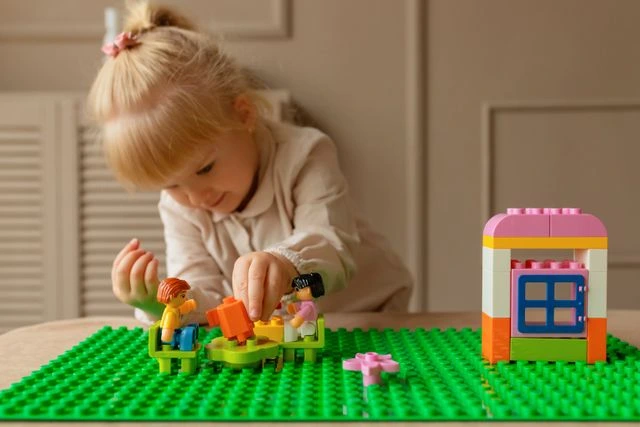
Most of what I have described so far is about individual LEGO building. But collaborative LEGO building — two children or a parent and child building together — is worth addressing separately, because it introduces a different set of developmental demands.
Building with another person requires negotiation about what to build and how to build it. It requires coordinating actions — whose piece goes where, who handles which part of the model. It requires managing disagreement about creative decisions without the build falling apart emotionally or physically. And it requires the give and take of shared attention to a common object, which is one of the fundamental social cognitive skills that underlies cooperative play more broadly.
Parent-child LEGO play, specifically, offers something that peer play does not: the interaction between a more experienced builder — the parent — and a less experienced one, in a context where the parent is not in a position of authority. The parent who sits on the floor and builds alongside their child, who asks what the child is trying to make and follows their direction, who contributes a brick here and there without taking over, is providing a particular kind of scaffolding that is specific to this kind of play. It models how to think about a build without prescribing what to build. It shows problem-solving approaches without removing the problem from the child. And it communicates genuine interest in the child’s project — which is, in itself, one of the most developmentally supportive things a parent can do.
A Note on Gender and Access
I want to say something directly about this, because it is relevant and because it has been a documented concern in research on LEGO and child development.
Boys have historically played with construction toys, including LEGO, significantly more than girls — not because of inherent difference in interest or aptitude, but because of differential access and differential encouragement. Construction toys have been marketed, packaged, and socially directed toward boys in ways that have meaningfully constrained girls’ access to the spatial reasoning benefits that these toys provide. Research has found that the gender gap in spatial reasoning that is observable in older children and adults is significantly smaller or absent when early construction toy experience is held equal between girls and boys.
The practical implication for parents is simple: ensure that girls have equal access to construction play, including LEGO, and that the social messaging around it — from toys marketed in different colours, from the way the family talks about who builds things — does not implicitly communicate that building is for boys. The spatial reasoning benefits of LEGO are equally available to girls and boys. Whether girls actually access those benefits depends significantly on whether they are equally encouraged to play with the toy.
For a broader look at how toy choices shape children’s development — and why the specific properties of a toy matter far more than its price or its marketing claims — the article on why children abandon toys and what it tells you covers the underlying principles that explain why LEGO consistently outlasts most other toys in terms of how long children actually engage with it. And for the specific case of art materials as a complement to construction play — the two activities address different developmental territories and work well together — the article on why drawing and making things matters more than parents think is worth reading alongside this one.
The Saturday Morning That Is Not Nothing
I want to come back to where we started, because I think it contains something important that I have been building toward throughout this article.
The child on the floor for two hours, absorbed in bricks, building something with no name — that child is not doing nothing. They are doing something that is, in developmental terms, remarkably complete. They are exercising spatial reasoning, executive function, frustration tolerance, creative thinking, and the specific kind of intrinsic motivation that comes from working on something because you want to, not because you have been asked to.
They are also, which is easy to forget, having a good time. Play is supposed to be enjoyable. The fact that LEGO is developmentally significant does not make it less playful. It makes it an example of what good play tends to be: something that feels like fun to the child while doing something important underneath.
The parent who resists interrupting that Saturday morning — who sees the concentration and decides it is worth protecting — is making a good call. Not because they have read the research on spatial reasoning. Because something in the quality of that absorption, the frown at the problem, the trying and the taking apart and the trying again, is visibly worth something.
It is. More than most parents know, and more than the toy’s simple plastic surface suggests.
Frequently Asked Questions
At what age should children start with LEGO?
DUPLO — the large-brick format — is appropriate from around eighteen months, with adult supervision. Standard LEGO bricks typically become accessible around age four, with ongoing supervision for small-piece safety. The transition from DUPLO to standard LEGO varies by child and does not need to be rushed — a child who is still enjoying DUPLO at four is still benefiting from construction play in ways that will transfer to the smaller format when they are ready.
Is it better to buy kits or loose bricks?
Both serve different developmental purposes, and the most valuable LEGO experience includes both. Kits develop instruction-following, sequential planning, and specific spatial skills. Loose bricks enable free building, which develops creativity, intrinsic motivation, and open-ended problem-solving. If you can only choose one, a large quantity of loose classic bricks in a variety of sizes is the more developmentally versatile starting point, particularly for younger children.
My child only wants to build the kit model and then never plays with it again. Is this a problem?
Partially. The instruction-following experience has genuine developmental value, and the satisfaction of completing a model is real. But a child who only builds kits and never free builds is missing the creative and intrinsic motivation dimensions of construction play. Providing loose bricks alongside completed models, and occasionally building something together that has no instructions, can shift the balance without removing the kit experience entirely.
Should I help when my child gets frustrated with a LEGO problem?
The most developmentally useful response to frustration is presence and a question rather than a solution. “What do you think is making it fall?” or “What have you already tried?” keeps the problem with the child while communicating that you are interested and available. Direct problem-solving — taking the build and showing them how to fix it — removes the very experience that was producing the most learning. The frustration is not pleasant, but surviving it and finding a solution independently is significantly more valuable than being given the solution.
Does LEGO help with mathematics?
Yes, in multiple ways. Sorting and categorising bricks introduces early classification skills. Counting and using specific quantities of bricks introduces early number sense. The proportional relationships between brick sizes provide an intuitive experience of ratio and fraction. Symmetry in building introduces geometric concepts. And the spatial reasoning that LEGO develops is one of the strongest predictors of later mathematical performance, particularly in geometry and measurement. The mathematical learning is not explicit — it happens through the building — which is why it is often more durable than equivalent classroom instruction.
Is LEGO appropriate for children with special needs?
For many children with special needs, yes — and in some cases it is particularly valuable. LEGO has a well-documented therapeutic application for children with autism and social communication differences: LEGO therapy, developed by clinical psychologist Daniel LeGoff, uses collaborative LEGO building as a framework for developing social communication skills, with documented evidence of effectiveness. For children with fine motor difficulties, the grip and manipulation required by standard bricks can be challenging and may need to be adapted. An occupational therapist can advise on whether and how to modify the LEGO experience for a specific child.
Younes Kehal is an educational director, certified school coach, and certified life coach with 20 years of experience working with children, families, teachers, and schools. His guidance combines practical educational experience with carefully reviewed research.