The Water We Waste: How to Talk to Children About Water Conservation and Why It Matters More Than They Think
My son was eight years old when he found a bee on the kitchen windowsill. It was not moving. He watched it for a long time, and then he went to get a small amount of water — a bottle cap’s worth — and placed it near the bee, very carefully. The bee drank. It moved. It eventually flew away.
He came to tell me about it with the particular expression children have when something small has felt important. And what struck me was not the kindness of the act — though it was kind — but that he already knew, at eight, that the bee needed water. That water was the thing. That providing it was something within his power and worth doing.
He had learned this not from a school lesson and not from a documentary. He had learned it from years of small household conversations about where water comes from, what it costs, who does not have enough of it, and why leaving the tap running while you brush your teeth is genuinely worth caring about. The bee was the application of something already internalized. He did not think about it. He just did it.
This is what environmental education looks like when it works — not lectures, not guilt, not statistics delivered to children who have no context for them. It looks like a child who has absorbed, through daily life and daily conversation, a sense of what matters and why. Water is one of the clearest possible starting points for this kind of education, because the need for it is universal, immediate, and comprehensible to a child of almost any age.
Table of Contents
Why Water, Specifically
Of all the environmental issues available for family conversation, water conservation is one of the most immediately accessible — and one of the most underused.
Climate change is abstract. Carbon footprints are invisible. Biodiversity loss is real but distant. Water is none of these things. It is in the tap, in the glass, in the bath. It is something the child uses every day. It is something they can see running, can feel, can measure in a cup. The connection between the child’s daily behaviour and the environmental reality is direct in a way that it is not for most other environmental topics.
The facts about water are also genuinely surprising in ways that children find interesting rather than overwhelming. The statistic that makes the most impact, in my experience, is this: only about 3% of the world’s water is fresh water. Of that, most is locked in ice caps and glaciers. Less than 1% of all the water on Earth is accessible fresh water that can be used by humans, animals, and plants. That 1% — that vanishingly small fraction — is what feeds every crop, fills every river, sustains every living thing on land.
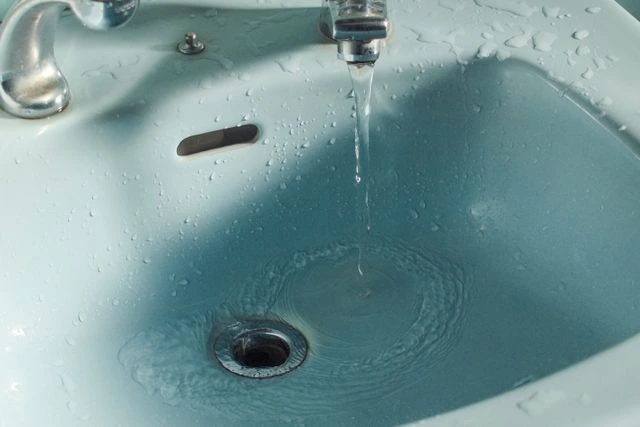
And then the statistic that makes that concrete: a ten-minute shower uses approximately 100 litres of water. A running tap wastes approximately 6 litres per minute. A dripping tap wastes approximately 20 litres per day. These numbers, placed alongside the 1% figure, produce something in most children — a moment of genuinely recalibrating their mental model of water as an infinite, freely available resource.
What Children Do Not Know About Water
Most children — and, to be fair, most adults — have a mental model of water as essentially infinite and essentially free. It comes from the tap when you want it. It goes down the drain when you are finished. Where it comes from before the tap and where it goes after the drain are mysteries that receive very little attention in most families.
This invisibility of the water system is the primary reason that water conservation feels abstract rather than motivating to most children. They cannot conserve something that they do not experience as having any scarcity or cost. Making the water system visible — where water comes from, how it is treated, how much energy is used in getting it to the tap, where it goes after the drain, and how it is treated again before returning to rivers — transforms water from a background utility into something with a genuine story that connects to the child’s daily experience.
The simplest version of this story, for a young child: water falls as rain, collects in rivers and reservoirs, is cleaned at a treatment plant, is pumped to your house through pipes, comes out of your tap, goes down the drain, is cleaned again at another treatment plant, and eventually returns to rivers and the water cycle. The cleaning and pumping requires energy. The cleaning requires chemicals. The water that goes down the drain is not lost, but it takes significant resources to clean and return it to usability.
For older children: the additional layer of where water stress is real — the 2.1 billion people who currently live without safely managed drinking water, the countries where women and children walk hours each day to collect water of uncertain quality, the regions where rivers are running dry because of overuse upstream, the agricultural systems that account for about 72% of global freshwater withdrawals to grow the food that appears in supermarkets. These are not overwhelming facts if they are accompanied by honest conversation about why they exist and what is being done. They are the kind of facts that shift a child’s relationship with the tap from taking it for granted to understanding it as something genuinely remarkable.
The Household as Water Curriculum
The most effective water education happens not in lessons but in the daily life of the household. Every room in the home is a location where water is used, where conservation habits matter, and where brief, natural conversations can build genuine understanding over time.
The bathroom
The bathroom is where the largest proportion of household water use occurs. The shower is the single biggest water-using activity for most families — a ten-minute shower uses approximately 100 litres, while a four-minute shower uses around 40. The difference, over a year, for a family of four, is several hundred thousand litres. This is not a statistic to deliver as a guilt-inducing speech. It is the starting point for a family experiment: what does four minutes actually feel like? Can we get the shower done in that time? How does the water use feel different when we are conscious of it?
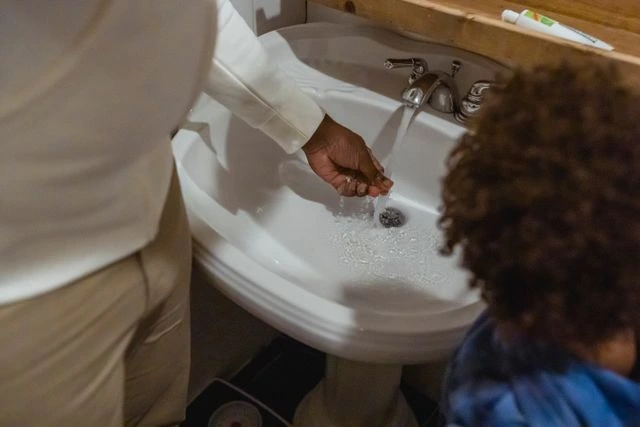
The running tap during teeth brushing is a smaller but symbolically significant habit. Two litres per minute, twice a day, for a family of four — approximately 5,800 litres per year. The habit of turning the tap off while brushing is one of the easiest to establish and one that children, once it is established, often become quite vigilant about. The motivation needs to come from understanding, not from instruction. A child who knows what 5,800 litres looks like — the visual of how many bathtubs that is — turns the tap off with a different quality of intention than one who is simply following a rule.
The kitchen
The kitchen is where the most interesting water conversations happen, because this is where the indirect water costs of food become visible. The concept of “virtual water” — the water embedded in the production of food — is one of the most striking and least widely known aspects of water use. A kilogram of beef requires approximately 15,000 litres of water to produce, accounting for the water to grow the feed, drink the animal, and process the meat. A kilogram of vegetables requires, depending on the crop, between 100 and 500 litres. The food choices a family makes are, invisibly, water choices on a much larger scale than any tap.
The kitchen is also where practical conservation habits are most easily established: running the dishwasher only when full, not rinsing dishes under a running tap before the dishwasher (modern dishwashers do not need this), using a bowl of water to wash vegetables rather than running the tap, defrosting food in the refrigerator overnight rather than under running water. None of these require significant lifestyle change. All of them, combined, reduce household water use meaningfully.
The garden
For families with outdoor space, the garden is where some of the largest water conservation opportunities exist, and also where some of the most compelling nature connection happens. A water butt — a barrel that collects rainwater from the roof — is probably the single most impactful and most child-engaging water conservation intervention available to a family with a garden. The child who has participated in installing a water butt, who understands that it is collecting water that falls freely from the sky to water the garden rather than using treated tap water, has had a practical lesson in closing the water cycle at the household level that no classroom can replicate.
Watering plants in the evening rather than the morning reduces evaporation and means less water is needed for the same effect. Choosing drought-tolerant plants reduces garden water use over the long term. These are small decisions with cumulative impact, and the child who understands why they matter makes them with a different quality of intention than one who is simply told to do it.
Making the Numbers Real
Water conservation conversations with children are most effective when the numbers are translated into something the child can visualise. The raw numbers — litres, gallons, cubic metres — mean very little to most people, let alone children. The translations that work are those that connect to something the child already knows.
A litre of water is a bottle of water. Two litres of water is enough to fill a large pot for pasta. A bathtub holds approximately 150 to 200 litres. An Olympic swimming pool holds 2.5 million litres. Once a child has these reference points, the numbers in a water conservation conversation become meaningful rather than abstract.
“If we leave the tap running while we brush our teeth, we waste about two bottles of water each time. For our family, over a year, that’s about a bathtub full of water every three weeks.” This is a calculation a child of nine or ten can follow and that produces a genuine recalibration of the mental model. The waste is now visible. It has a shape and a size.
The virtual water calculation is the most striking for older children. “The burger we had last night took about the same amount of water to produce as five bathtubs.” This is the moment that most children remember — the moment when the invisible water cost of food becomes suddenly enormous and concrete.
| Activity | Water Used | In Bathtub Terms | Conservation Alternative |
|---|---|---|---|
| 10-minute shower | ~100 litres | About half a bathtub | 4-minute shower: ~40 litres |
| Full bath | ~150 to 200 litres | One bathtub | Shallow bath or shower instead |
| Tap running during teeth brushing (2 min) | ~12 litres | 12 water bottles | Turn off tap: ~0.5 litres |
| Running dishwasher half-full vs. full | ~15 litres wasted per cycle | 15 water bottles | Wait for full load |
| 1 kg beef (virtual water) | ~15,000 litres | About 90 bathtubs | 1 kg lentils: ~250 litres (1.5 bathtubs) |
| Dripping tap (per day) | ~20 litres | 20 water bottles | Fix the drip |
The Global Story — When Children Are Ready for It
At some point — usually around age eight or nine, depending on the child — the household water conversation is ready to expand to the global one. Not because guilt is a useful motivational tool, but because accurate understanding of the world is valuable in itself, and because children who understand global water inequality have a relationship with their own water use that is more thoughtful and more durable than those who do not.
The global water story has two parts that are worth communicating honestly and at an appropriate level.
The first is access. About 2.1 billion people currently live without safely managed drinking water. In many countries, water collection is primarily the responsibility of women and children — girls who walk hours each day to collect water that may itself be contaminated are not in school. The correlation between water access and education outcomes, particularly for girls, is one of the most well-documented in development economics. A child who has absorbed this reality has a different relationship with the tap — not guilt, but a kind of informed gratitude that is different from taking something for granted.
The second is scarcity. Many of the world’s major river systems — the Colorado in the United States, the Yellow River in China, the Indus in South Asia — are under severe stress from overuse. Agricultural water use, which accounts for approximately 70% of global fresh water consumption, has in many cases exceeded what river systems and aquifers can sustainably provide. The groundwater reserves that underlie large agricultural regions — the Ogallala Aquifer beneath the American Great Plains, for example — are being depleted at rates that significantly exceed their natural recharge. These are not distant future problems. They are current realities that are already affecting food prices, food availability, and regional conflicts.
The World Health Organization’s data on global water access — available at who.int — provides the most authoritative and accessible overview of global drinking water access for parents who want accurate figures to ground these conversations.
These are not facts to deliver in a single overwhelming session. They are facts to introduce gradually, one at a time, in the context of a family that has already established a general orientation of caring about water — so that each new piece of information lands on prepared ground rather than empty space.
The Garden Classroom: Water Edition
Some of the most effective water education available to families with any outdoor space is not conversation at all. It is growing things. A child who has grown vegetables, who has watched plants wilt when not watered and recover when they are, who has felt the difference between dry soil and moist soil with their own hands, has learned something about water and living things that no amount of information conveys.
The specific experience of watering a plant — of understanding that this water is going into the soil, to the roots, through the stem, to the leaves, where some of it will evaporate into the air — is a felt, embodied version of the water cycle that a classroom diagram cannot replicate. The child who grows a tomato from seed and waters it weekly until it produces fruit has had a months-long lesson in what water does and why it matters, without any of it being framed as a lesson.
Setting up a simple rain gauge — available inexpensively from garden centres — and recording rainfall with a child over weeks and months builds quantitative understanding of precipitation patterns in a way that connects the abstract concept of rainfall to actual observable numbers. In a dry summer, the gauge shows clearly what happens when rain stops coming. The plants show it too. The connection is visceral and memorable.
Habits That Stick vs. Habits That Are Performed
The goal of water conservation education in the family is not a child who turns off the tap when parents are watching. It is a child who turns it off when no one is watching, because they have internalized the reason for doing so and it has become part of how they move through the world.
The difference between performed habits and genuine habits is the difference between external motivation (someone is watching, or someone will be pleased, or I will be told off) and internal motivation (this is who I am and this is what I do). Genuine habits in children are produced by genuine understanding — by having the reason for the habit explained honestly and in terms the child can comprehend — and by seeing the habit modelled by the adults in their life.
A parent who turns off the tap themselves, who comments on it naturally without making it into a lecture (“I always feel better turning that off — it just seems wasteful”), who notices and appreciates when the child does it, and who makes the reasons for it clear through ordinary conversation rather than instruction — that parent is building genuine habits. A parent who tells the child to turn off the tap without ever explaining why, without doing it themselves, and without making the action part of a broader understanding of why water matters — that parent is building performed compliance that will last only as long as the external pressure is maintained.
| Age | Habits Within Their Capability | Understanding to Build Alongside |
|---|---|---|
| 3 to 5 years | Turning off tap during teeth brushing; not playing with running water; watering a plant | Water comes from somewhere; plants need water to live; not everyone has as much as we do |
| 5 to 8 years | Shorter showers; reporting dripping taps; helping collect rainwater; full loads for dishwasher | Where household water comes from; how much we use; basic water cycle; water treatment |
| 8 to 12 years | Monitoring household water use; growing food that needs watering; researching water-saving ideas | Global water access; virtual water in food; water stress in different regions; agriculture and water |
| 12 years and above | Leading household conservation initiatives; researching water-related issues; making food choices with water cost in mind | Full complexity of global water issues; policy and systemic factors; personal choices in systemic context |
The Language That Works
Environmental education in the home works best when it is framed as care rather than restriction, and as something we do rather than something we must not do. The language of water conservation conversations matters more than most parents realise, because it shapes whether the child absorbs an identity (we are people who care about water) or a rule (we are not allowed to waste water).
“We turn off the tap when we brush because we love clean water and we want there to be enough” is a different kind of communication from “don’t leave the tap running.” Both produce the same behaviour in the moment. Only the first produces the internal orientation that lasts.
Framing conservation as a family value — “in our family, we notice how much water we use” — embeds the habit in identity rather than in compliance. Children are remarkably identity-responsive: once a habit is part of who they understand themselves to be, it is significantly more durable than a habit that is simply a rule they are following.
The conversations that produce the most lasting environmental habits are those that are genuinely curious rather than instructional — that ask questions as often as they provide answers, that treat the child as a thinking partner rather than a subject of education. “Where do you think all the water goes when it goes down the drain?” is a more productive opening than “let me tell you what happens to water.” The child who works out the answer, with guidance, owns it in a way the child who is told the answer does not.
For the broader framework of how daily household habits transmit environmental values more effectively than formal instruction — including the specific principle of environmental design versus environmental education — the article on building eco-friendly family habits one change at a time provides the habit-formation science that makes everything in this article more effective when applied consistently. And for the connection between water, nature, and the kind of direct outdoor experience that builds the deepest environmental values — the kind that made my son instinctively bring water to a struggling bee — the article on why the garden is the best classroom covers the outdoor dimension of environmental education in depth.
Frequently Asked Questions
At what age should I start talking to my child about water conservation?
The simplest habits — turning off the tap during teeth brushing, not playing with running water unnecessarily — can be introduced from age three or four, alongside a very simple explanation: “water is precious and we try not to waste it.” The conceptual understanding that makes those habits genuinely motivated rather than just rule-following develops gradually from around age six or seven. The global story — water access inequality, water stress, virtual water in food — is appropriate from around age eight or nine for most children, introduced gradually and with emotional scaffolding rather than as a single overwhelming briefing.
How do I make water conservation feel positive rather than restrictive?
By framing it as care and by making it visible and tangible rather than abstract. A child who is helping monitor the family’s water use — who sees the meter, who measures the rainwater collected, who watches their watered plant grow — is engaged in something positive and concrete. A child who is simply told not to do things with water has been given a restriction without meaning. The difference is between inviting the child into the understanding and simply imposing the behaviour. The former produces positive engagement. The latter produces resistance or compliance without genuine motivation.
My child takes very long showers and is not interested in shortening them. How do I handle this?
With a combination of explanation, invitation, and structure — not with moralising. Share the water use figures honestly. Invite the child to try a shorter shower as an experiment, with a timer if that helps. Acknowledge that showers are enjoyable and that there is a genuine tension between that enjoyment and the conservation value. Don’t make every shower a lecture. The occasional, honest, low-drama conversation about water use — “I was thinking about how much water our showers use this week” — is more productive than repeated attempts to control the behaviour in the moment. And look at your own shower habits, because a parent who takes fifteen-minute showers while asking a teenager to take four-minute ones is not in a credible position.
Can we actually make a difference at the household level on water?
Yes, though the scope of impact depends on where you live. In countries with genuine water stress, household conservation has direct local impact — the water saved stays in the local system. In countries where water is currently abundant, household conservation has more value as a habit and values formation than as an immediate environmental necessity. The virtual water dimension of food choices has global impact regardless of where you live, because the food system is global. Reducing beef consumption in a household in a water-rich country reduces water use in the water-stressed regions where that beef was produced. The impact of individual choices is modest but real, and it is part of the collective response that scales when many households make similar choices.
How do I explain global water inequality to a child without making them feel guilty or overwhelmed?
By pairing the information with understanding of why it exists and what is being done about it. The child who learns that two billion people lack safe water, and is given no further context, may feel overwhelmed. The child who learns this alongside the understanding that it is a solvable problem — that significant progress has been made over the past few decades, that organisations and governments are working on it, that specific actions (including family water conservation and food choices) are part of the response — has received the same information in a frame that produces engagement rather than paralysis. The goal is informed, motivated understanding. Not guilt. Not despair. Genuine understanding of something real, with a sense of where the child’s choices and actions connect to it.
What is the single most impactful water conservation change a family can make?
Reducing beef consumption, because of the extraordinarily high virtual water cost of beef production relative to any alternative protein. This is a bigger impact than any household tap or shower habit, though it is also a more significant lifestyle change for many families. Among direct household water uses, shower duration and frequency is typically the largest single variable. Combining modest reductions in shower time, consistent tap-off habits during teeth brushing, and full loads for dishwasher and washing machine produces a meaningful reduction in household water use that is also, importantly, financially measurable on the water bill — which gives the conservation an immediate, tangible feedback loop that reinforces the habit.
Younes Kehal is an educational director, certified school coach, and certified life coach with 20 years of experience working with children, families, teachers, and schools. His guidance combines practical educational experience with carefully reviewed research.