Raising Children Without Plastic: What Is Realistic, What Is Not, and Where the Impact Actually Is
The photograph made the rounds on social media for months. A family’s weekly shop, laid out on the kitchen table, every item of plastic packaging identified and photographed. It was a staggering quantity. The visual was compelling. The accompanying text was somewhere between confession and manifesto.
I understood the impulse. I also found myself thinking about a specific question the photograph raised but did not answer: of all the plastic in that photograph, how much of it actually matters environmentally? And how much of it is the kind of plastic that looks bad in a photograph but has a relatively negligible environmental impact compared to what the family does not see — the plastic in the supply chains of the food itself, in the disposable cups from the coffee shop, in the products that arrive in cardboard boxes with a foam interior, in the microplastics that shed from the car tyres every time the car is driven?
The plastic conversation in contemporary eco-parenting is one of the most well-intentioned and least well-calibrated of the environmental conversations families are having. The visibility of plastic — the bottle, the bag, the wrapper — makes it feel like the most addressable environmental issue. The invisibility of what actually has the largest plastic impact makes the more significant interventions less obvious and therefore less commonly pursued.
This article is about the actual plastic picture — where the impact is, where it is not, what is genuinely worth changing, and what is more about feeling good than doing good. The goal is not to dismiss plastic concern, which is legitimate. The goal is to direct the energy behind that concern toward the places where it actually produces environmental benefit. If your child is anxious or asking questions about plastic pollution, see our guide on how to talk about plastic without creating hopelessness. For a wider family sustainability plan, see our eco-friendly parenting guide.
Table of Contents
The Scale of the Problem — What You Need to Know
Plastic production and use have risen enormously since the mid-twentieth century. UNEP reports that humanity was expected to consume more than 500 million tonnes of plastics in 2024, with roughly 400 million tonnes becoming plastic waste. Historical estimates also show that a large share of cumulative plastic waste has been discarded rather than recycled. The precise percentages vary by dataset and period, but the overall conclusion is clear: plastic waste is a major global environmental challenge.
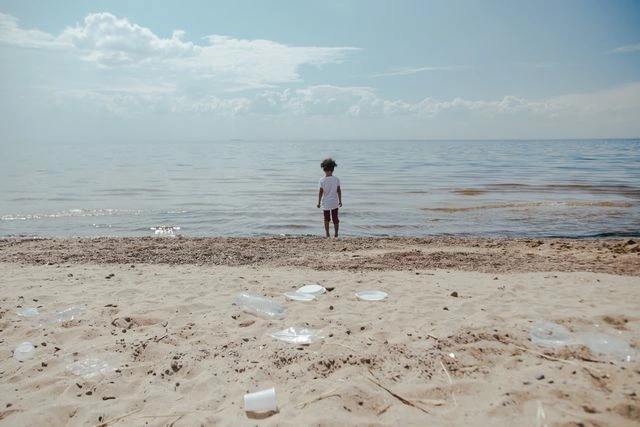
The environmental harm from plastic operates through several pathways. In oceans and freshwater systems, plastic waste can harm wildlife through ingestion and entanglement. Larger items also fragment into microplastics, which have been detected widely in the environment and in human samples. What those findings mean for long-term human health is still being studied, so it is more accurate to distinguish confirmed environmental harm from health effects that remain uncertain.
The production of plastic also has significant environmental costs in terms of the fossil fuel raw materials it uses and the emissions associated with its manufacture. Single-use plastics — the ones most visible in the family context — are a significant but not the largest component of global plastic pollution.
The sources of plastic pollution differ by region and by type of pollution. Globally, a large share of macroplastic leakage is linked to mismanaged waste, while microplastic pollution also comes from sources such as tyre wear, synthetic textiles, paints, and other forms of abrasion. Fishing gear can be an important source in some marine environments, but it is not accurate to describe one source as the largest everywhere. For families, reducing avoidable single-use items, reusing durable products, sorting waste correctly, and choosing lower-impact transport when practical can all contribute without pretending that household packaging choices alone can solve the global problem.
The Recycling Reality
One of the most significant misconceptions in family environmental conversations is the degree to which consumer plastic recycling actually works. The short, uncomfortable version is: significantly less than most people assume.
Of the plastic collected for recycling in most Western countries, a significant proportion is not actually recycled. The economics of plastic recycling are challenging — virgin plastic is often cheaper to produce than recycled plastic, the contamination rate of consumer recycling streams is high, and many plastic types are technically recyclable but not economically recyclable at scale. The number on the recycling symbol at the bottom of a plastic container indicates the type of resin, not whether the item will actually be recycled by any given recycling system.
This does not mean recycling is pointless. It means recycling is necessary but not sufficient, and that its role in solving the plastic problem has been significantly overstated — partly because emphasising recycling shifts the responsibility for plastic pollution from producers to consumers, which is convenient for producers.
The hierarchy of environmental action — reduce, reuse, recycle — exists for a reason. Reducing consumption of plastic items in the first place has greater environmental impact than recycling those items after use. Reusing items — refillable containers, durable alternatives to single-use items — has greater impact than both. Recycling is the last resort in the hierarchy, not the primary solution.
Teaching children about recycling — which most eco-parenting resources prioritise heavily — is less important than teaching children about reduction and reuse. A child who has been carefully sorting recycling for years but who has no concept of not buying things that come in plastic, or of buying fewer things overall, has learned the least impactful component of the hierarchy while missing the more impactful ones.
Where the Plastic Impact Actually Is
For a family wanting to reduce its plastic footprint, the interventions with the largest actual environmental impact are not the most visible ones. They are the ones that address the largest plastic sources in the family’s specific context.
Single-use plastic bottles are one of the highest-impact consumer plastic items — not only because the bottles themselves are a significant source of plastic waste and potential microplastic leaching, but because the water they contain is a product that is available free from the tap in most developed countries. A family that switches from purchasing bottled water to using a reusable bottle and filtered tap water makes one of the most impactful and most economically straightforward plastic reductions available. The environmental cost of a quality reusable bottle is paid back in environmental terms within weeks of use.
Plastic food packaging is one of the most complex areas, and the one where the apparent and the actual environmental impact diverge most significantly. The plastic packaging on a cucumber extends the cucumber’s shelf life by several days, significantly reducing the food waste that would otherwise occur. Food waste has a larger carbon footprint than the packaging that prevents it, in most cases. This does not mean plastic food packaging is without environmental cost. It means that simply eliminating plastic packaging from food without addressing how the food is stored and how much food is wasted can produce a net negative environmental outcome.
Clothing is one of the most significant and least discussed sources of microplastic pollution. Synthetic fibres — polyester, nylon, acrylic — shed microplastic particles with every wash. A single synthetic garment can release hundreds of thousands of fibres per wash cycle. These fibres pass through wastewater treatment systems and enter waterways. For a family that washes significant quantities of synthetic fabric clothing — which is most families, because most fast fashion is synthetic — the microplastic contribution from laundry is often larger than the contribution from food packaging.
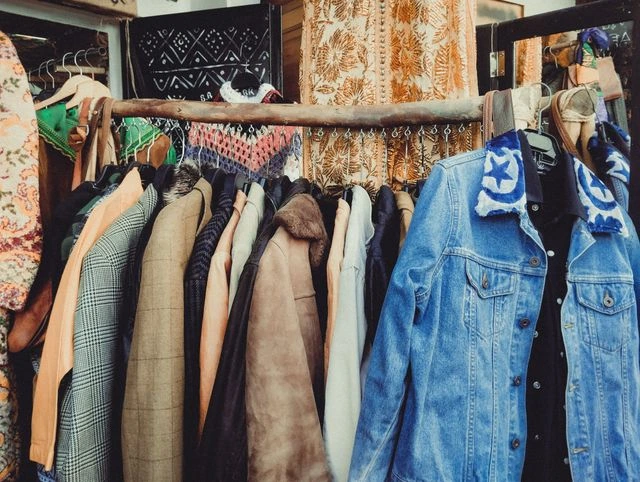
The practical responses: wash synthetic clothes less frequently where possible; use a washing bag designed to capture synthetic fibres (the Guppyfriend bag and similar products reduce fibre release significantly); choose natural fibres (cotton, wool, linen) when replacing clothing; and buy secondhand, because items that already exist do not produce additional plastic production.
Tyres, as described earlier, are a significant microplastic source that is directly within most families’ control through driving behaviour. Reduced driving, driving at lower speeds (which reduces tyre wear), maintaining proper tyre inflation, and choosing public transport, cycling, or walking where practical are interventions that address a larger source of microplastic pollution than most visible plastic reduction activities.
| Action | Visible Impact? | Actual Environmental Impact | Difficulty |
|---|---|---|---|
| Switch to reusable water bottle | High | High — eliminates significant single-use plastic stream | Low — one-time purchase |
| Reduce driving / choose alternatives | Low | High — tyres are major microplastic source; also reduces emissions | Medium to high — lifestyle change |
| Use Guppyfriend bag for synthetic laundry | Low | Moderate to high — captures significant fibre microplastic | Low — one-time purchase |
| Buy secondhand clothing | Medium | High — no new production; reduces synthetic fibre in circulation | Low to medium — habit change |
| Carefully sort household recycling | High | Low to moderate — recycling rates lower than assumed; less impactful than reduction | Low |
| Switch to plastic-free produce packaging | High | Moderate, but complex — packaging often extends shelf life and reduces food waste | Medium — requires finding alternatives |
| Eliminate plastic bags | High | Low to moderate — plastic bags are a small fraction of total plastic use | Low — reusable bag habit |
What to Tell Children — and How
The plastic conversation with children is one of the more tractable environmental conversations available to families, because plastic is visible, tangible, and comprehensible to children of most ages. The challenge is ensuring that what children learn is accurate — that they develop an understanding of plastic’s actual environmental impact rather than a simplified narrative that directs their concern toward less impactful actions.
For young children, the most useful foundation is simple and concrete: plastic is made from oil, which comes from under the ground; most plastic does not disappear after we throw it away; sea animals sometimes eat it by mistake and this hurts them; we try to use as little as we can and to make sure what we do use goes where it can be used again or kept safely. This is accurate, appropriately simplified, and connected to natural empathy for wildlife that most young children have.
For older children and teenagers, the more complex picture is worth introducing: the fact that recycling is less effective than most people assume; the significance of sources like tyres and synthetic clothing that are less visible; the economics of plastic production and why producers have been slow to change; and the policy dimension — the legislation and international agreements that will ultimately determine whether plastic pollution is addressed at scale. A teenager who understands that individual action is part but not all of the response, and who has a realistic picture of where the leverage actually is, is better prepared to engage with this as an ongoing issue in their adult life than one who has been given a simplified narrative.
The Psychological Dimension — Why Visible Action Feels Right
I want to say something about the psychology of environmental action, because it matters for understanding why families often focus on the most visible environmental actions rather than the most impactful ones.
Research on environmental behaviour consistently finds that people feel more agency and more satisfaction from actions that are visible and concrete than from actions that are invisible and systemic. Carrying a reusable bag is visible. Reducing driving by 20% is invisible — it is a pattern rather than an object, a choice that accumulates rather than a single decision that can be photographed. But the invisible action typically has a larger environmental impact.
This psychological preference for visible action is understandable and not entirely irrational — visible actions function as identity signals, as social information about what a person values, as tangible evidence of commitment in a context where commitment can otherwise feel meaningless. The reusable bag is doing social work as well as environmental work. This is a legitimate function. The problem arises when the social function displaces the environmental one — when the satisfaction of doing the visible thing reduces the motivation to do the impactful thing.
In eco-parenting specifically, the visibility bias means that children who grow up in households focused on visible plastic reduction — the sorting, the packaging-free products, the reusable cups — may develop an environmental self-image that is more positive than the actual environmental impact of their household’s behaviour justifies. And the more significant and less visible environmental questions — how much the family drives, what the family eats, how frequently the family flies — may receive less attention.
This is not an argument against visible environmental action. It is an argument for pairing visible action with honest conversation about where the leverage actually is. A child who sorts the recycling carefully and also understands why reducing driving matters more is better informed than one who has received only the recycling narrative.
What a Realistic Family Plastic Reduction Plan Looks Like
Given everything above, what is a realistic, impact-prioritised plastic reduction plan for a family? Not perfect zero-plastic living, which is neither achievable nor the highest-impact pursuit. But a coherent set of priorities ordered by actual environmental significance.
Start with the reusable water bottle. Highest impact-to-effort ratio of any single plastic reduction action. One purchase, used daily, eliminates hundreds of single-use bottles per year per family member.
Address synthetic clothing next. Use a fibre-capture washing bag for synthetic items. Buy secondhand rather than new where possible, particularly for children’s clothing, which is outgrown so quickly that new purchases are particularly wasteful. When replacing items, favour natural fibres.
Review driving patterns. Not as an immediate radical change, but as an ongoing consideration: where could a journey be replaced by walking, cycling, or public transport? Where could trips be combined rather than done separately? The environmental benefit is not only the reduced tyre microplastic but the significantly larger climate benefit of reduced fuel combustion.
Reduce food waste, which reduces the environmental justification for food packaging — because the packaging that keeps food fresh so it is not wasted is doing genuine environmental work. A family that wastes less food creates less net environmental harm than one that has eliminated plastic food packaging but throws away more food.
Reduce overall consumption, particularly of items that are rapidly discarded. The environmental cost of any plastic item is most effectively reduced by not purchasing it in the first place, or by purchasing a more durable version that will be used for years rather than months.
For the broader framework of how environmental values develop in children — and how daily habits in the household transmit those values more effectively than instruction — the article on building eco-friendly family habits provides the habit formation principles that make everything in this article more sustainable when applied consistently. And for the specific connection between children’s clothing choices and environmental impact — including the fast fashion system that produces much of the synthetic fibre discussed in this article — the article on fast fashion and your child covers the clothing dimension in depth.
| Priority | Action | Why This Order |
|---|---|---|
| 1 | Reusable water bottles for everyone | Highest impact-to-effort ratio; immediate and complete elimination of single-use bottle stream |
| 2 | Fibre-capture bag for synthetic laundry | Addresses a large and underappreciated microplastic source with minimal lifestyle change |
| 3 | Secondhand clothing priority, especially for children | Eliminates new production; reduces synthetic fibre in circulation; financially beneficial |
| 4 | Reduce unnecessary driving | Addresses tyre microplastic and climate emissions; dual benefit |
| 5 | Reduce food waste | Reduces the environmental justification for food packaging; food waste has its own significant impact |
| 6 | Reduce overall consumption | Addresses plastic at source rather than at waste stage; most durable reduction strategy |
| 7 | Improve recycling accuracy | Modest benefit; less impactful than the above; worth doing but not the priority |
Frequently Asked Questions
Is it better to buy organic produce in plastic packaging or conventional produce without packaging?
This is a genuinely complex comparison without a universal answer. Organic farming has environmental benefits in terms of pesticide use and soil health, but often has higher land use and transport footprints. Plastic packaging, despite its environmental cost, extends shelf life and reduces food waste, which has its own significant environmental impact. The honest answer is that avoiding food waste is generally the higher-impact priority — food that is thrown away represents both the environmental cost of its production and the waste of the resources used to grow it. Choosing the option that you will actually eat, without waste, is typically more environmentally important than the packaging-versus-organic distinction.
What is a microplastic, and should I be worried about my child’s exposure?
A microplastic is a plastic particle smaller than 5mm — either manufactured at that size (as in cosmetic microbeads, now banned in many countries) or the result of larger plastics breaking down. Nanoplastics are even smaller. Microplastics have been found in human blood, breast milk, lung tissue, and placental tissue. The long-term health effects of microplastic exposure are not yet fully understood, but the precautionary concern is legitimate and research in this area is active. The most significant reductions in microplastic exposure for children come from reducing synthetic clothing fibre shedding (using a fibre-capture bag for laundry) and reducing plastic bottled water consumption (switching to filtered tap water in reusable bottles).
My child’s school does a lot of plastic-focused environmental education. Is that useful?
It is useful in building environmental awareness and in establishing basic habits like reducing single-use plastic. The limitation is that school environmental education often focuses on the most visible environmental actions — recycling, reducing plastic bags, avoiding straws — rather than the highest-impact ones. A child who receives good school environmental education and also receives honest, broader environmental conversation at home — including the less visible but higher-impact dimensions — has a more accurate and more motivating environmental understanding than one who receives only the school version.
Is glass or metal really better than plastic for food storage?
For reusable containers that will be used hundreds of times, yes — the higher environmental cost of producing glass or metal is easily amortised over the years of use, and neither material leaches chemicals into food or degrades into microplastics. For single-use packaging, the comparison is more complex. Glass is heavier than plastic, which increases transport emissions. The environmental benefit of glass over plastic single-use packaging depends heavily on whether the glass is recycled (glass recycling is significantly more efficient than plastic recycling) and on the transport distance involved. For most consumer decisions, durable reusable containers of any material are better than single-use containers of any material.
How do I talk to my child about plastic without making them feel hopeless?
By pairing the honest account of the problem with specific, accessible actions that connect to their daily life. The child who learns that plastic pollution is a serious problem and is also shown what the family is doing about it — and specifically what role they can play — has been given the information with a sense of agency attached. The child who only receives the problem without the agency is more likely to feel overwhelmed. And being honest about the limits of individual action — acknowledging that systemic change through policy and industry behaviour is also necessary — is more truthful and more motivating than a narrative that places the entire burden on individual household choices.
Younes Kehal is an educational director, certified school coach, and certified life coach with 20 years of experience working with children, families, teachers, and schools. His guidance combines practical educational experience with carefully reviewed research.