My Toddler Isn’t Talking Yet — When to Worry and What to Do
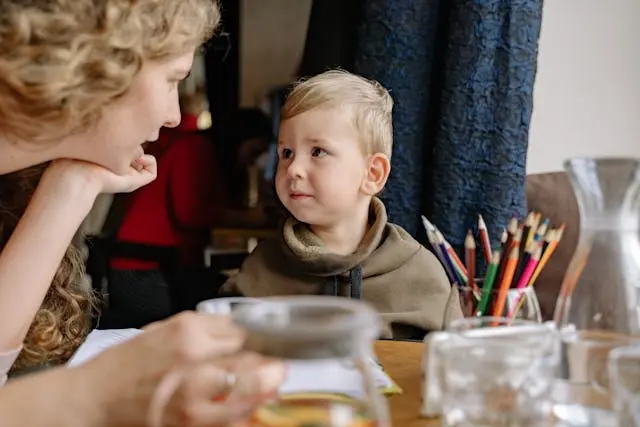
The other children at the playgroup are chatting away. Your neighbor’s 2-year-old is already asking questions, telling stories, demanding things with impressive precision. And your child — your wonderful, bright-eyed, curious child — is still mostly pointing, gesturing, and making sounds that you understand but nobody else quite does.
The worry starts quietly. A comment from a grandparent. A question at the health visitor’s appointment. A moment at the playground that leaves you standing there wondering: Should my child be further along than this? Is something wrong? Did I do something wrong?
In over twenty years of working in educational settings, I have watched this particular worry arrive in the faces of more parents than I can count. It is one of the most common anxieties of the toddler years — and also one of the most frequently misunderstood. Because the range of what is normal in early language development is wider than most parents realize, and because the difference between a late talker who will catch up naturally and a child who genuinely needs support is something that deserves a clear, honest answer rather than either false reassurance or unnecessary alarm.
This guide will give you that answer.
Table of Contents
First: How Common Is Speech Delay?
Late language emergence is fairly common, but estimates vary by age and by how delay is defined. The American Speech-Language-Hearing Association (ASHA) cites estimates of about 13.5% among children aged 18–23 months and roughly 16%–17.5% among children aged 30–36 months. The important point for parents is not the exact percentage, but whether a child’s communication skills are progressing over time and whether there are concerns about understanding, hearing, gestures, social communication, or loss of previously acquired skills.
What varies enormously is the reason behind the delay and what it means for the child’s long-term development. Some children are simply late talkers — children whose language development is running a little behind schedule but who will catch up naturally, with or without targeted support. Others have delays that reflect underlying conditions — hearing difficulties, developmental differences, or language processing challenges — that benefit significantly from early professional intervention.
The key is knowing which situation you are in. And that starts with understanding what typical language development actually looks like.
What Typical Speech Development Looks Like — Month by Month
Every child develops at their own pace, and there is genuine variation within what is considered normal. But there are clear milestones that give parents and professionals a framework for understanding where a child’s language development stands relative to typical patterns.
| Age | What Most Children Can Do | Signs Worth Noting |
|---|---|---|
| 12 months | Saying first words like “mama” or “dada,” pointing to objects, responding to their name, using gestures like waving | Not using any gestures, not responding to name, no babbling |
| 18 months | Trying to say three or more words besides “mama” or “dada,” and following a one-step direction without a gesture | Not trying to say at least a few words besides “mama” or “dada,” or not following simple one-step directions without gestures |
| 24 months | Combining at least two words together, such as “more milk,” pointing to body parts when asked, and using a growing range of gestures and words | Not combining at least two words, limited use of gestures, or concerns about understanding simple language; discuss persistent concerns with the child’s clinician |
| 36 months | Having short back-and-forth conversations, asking simple who/what/where/why questions, saying a first name when asked, and being understood by others most of the time | Sentences not yet forming, speech largely unintelligible to unfamiliar adults |
| 48 months | Speaking clearly in full sentences, strangers understand almost all speech, telling simple stories, following 2–3 step instructions | Significant difficulty being understood, very limited sentence construction |
These milestones are guides, not rigid rules. A child who is a month or two behind in one area is not automatically cause for concern. A child who is consistently missing multiple milestones across several checkpoints is telling you something worth paying attention to.
Why Speech Delays Happen: The Real Causes
One of the most important things I tell parents is this: your child’s speech delay is almost certainly not your fault. When a child is having language problems, parents can jump to the conclusion that it’s their fault or that they could have done something different to prevent it from occurring. In reality, speech delays have multiple causes — most of them entirely outside a parent’s control.
1. Hearing Difficulties
Frequent ear infections or fluid in the ear can limit how children hear words. A child who cannot hear clearly cannot accurately imitate and reproduce the sounds they need to form words. This is one of the most common and most treatable causes of speech delay — and it is one of the first things a pediatrician will check when a speech delay is identified. Hearing loss is often overlooked, but the good thing is it’s also easily identified.
One subtle sign worth knowing: a child who doesn’t look at an object when you say its name, but does if you use a gesture like pointing, may be experiencing hearing difficulties. If you notice this pattern, mention it to your pediatrician promptly.
2. Developmental Differences
Autism spectrum disorder, global developmental delay, or other conditions may affect communication. Speech delay is often one of the earliest visible signs of these conditions — which is precisely why early identification matters so much. A child who receives appropriate support early has significantly better outcomes than one whose needs are identified later.
If your child’s speech delay is accompanied by limited eye contact, reduced interest in social interaction, or repetitive behaviors, it is worth discussing this specifically with your pediatrician. Our article on how to tell your child they have autism addresses what comes after a diagnosis — but the first step is always getting the right evaluation.
3. Oral-Motor Challenges
Some toddlers struggle to coordinate lips, tongue, and jaw for speech. This is a physical rather than a cognitive challenge — the child may understand language perfectly well but struggle to produce the sounds they intend. A speech-language pathologist can assess and address this directly.
4. Limited Language Exposure
Children need rich interaction and conversation to build vocabulary. Research has consistently shown that the quantity and quality of language a child is exposed to in their early years directly shapes their language development. A child who hears many words, in varied and responsive conversation, develops language more rapidly than one whose environment is language-poor.
A study published in the NIH found that psychosocial factors including lack of speech stimuli, inadequate social communication in the family, and long-term use of television and computers are among the leading causes of speech delay. This is not about blame — it is useful information, because it points directly toward what parents can do at home.
5. Being a Late Talker
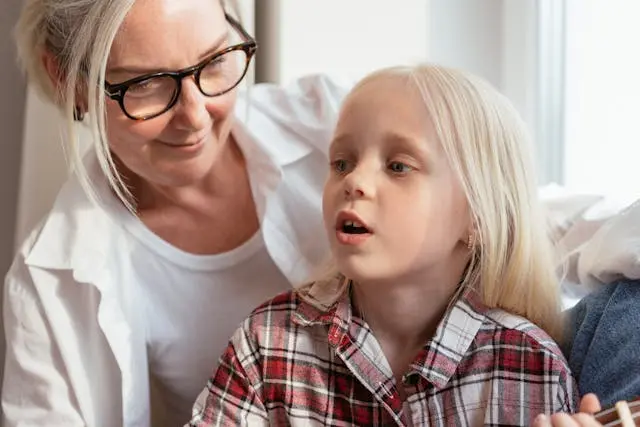
Some children are simply late talkers — children who are developing typically in every other way but whose expressive language is running behind schedule. Simple speech delays are sometimes temporary. They may resolve on their own or with a little extra help from family. Late talkers often catch up completely by age 3 or 4, particularly when they have strong comprehension — they understand what is said to them even when they are not yet saying much themselves.
The distinction between a late talker and a child with a genuine language disorder is something a speech-language pathologist is best placed to assess. But a useful home indicator is comprehension: does your child seem to understand what you say to them, even if they are not saying much back? Good comprehension in a child with limited expressive speech is generally a more reassuring picture than delayed comprehension alongside delayed expression.
When to Act: The Signs That Warrant Professional Evaluation
This is the question every parent really wants answered. The honest guidance from the American Academy of Pediatrics and speech-language professionals is consistent: when in doubt, get an evaluation. Early assessment never hurts, and early support — when it is needed — makes an enormous difference.
Seek professional evaluation promptly if:
- Your child is not using any words by 16 months
- Your child is not combining two words by 24 months
- Your child loses language skills they previously had at any age — this is a particularly important red flag
- At any age, your child shows limited interest in communication, maintains limited eye contact, or is difficult for family members to understand
- Your child’s speech delay is accompanied by other developmental concerns — social, motor, or cognitive
- Your child cannot follow simple directions appropriate for their age
- You have a persistent gut feeling that something is not right
That last point matters. Parents know their children better than any professional does. If you feel something is worth investigating, pursue it. The worst outcome of an unnecessary evaluation is reassurance. The worst outcome of a necessary evaluation delayed is a child who misses the window when intervention is most effective.
You may contact an early intervention program for an evaluation if your child is younger than 3 years, or your local school district if they are 3 or older. In many countries, these evaluations are free and do not require a referral from a physician.
What You Can Do at Home Right Now
Whether or not you are pursuing a professional evaluation, there is a great deal you can do at home to support your child’s language development. The research on parent-implemented language strategies is robust — parental involvement in language development produces measurably better outcomes than professional support alone.
1. Talk More — And Differently
The most powerful language intervention available to any parent is also the most accessible: talk to your child more, and more richly. Not just instructions and corrections — narrate your day. “I’m washing the dishes now. The water is warm. Look, here’s the soap. Now the plate is clean.” This running commentary, sometimes called “sportscasting,” exposes your child to a continuous stream of language connected to real objects and real actions in their immediate environment — which is exactly the kind of language input that research shows builds vocabulary most effectively.
Vary your vocabulary deliberately. Instead of always saying “big,” try “huge,” “enormous,” “giant.” Instead of always saying “nice,” try “beautiful,” “wonderful,” “lovely.” The richness of the vocabulary your child hears directly predicts the richness of the vocabulary they develop.
2. Get Down to Their Level and Make Eye Contact
Language is learned in the context of relationship and attention. When you talk to your child at their physical level — crouching down, making eye contact, showing genuine interest in what they are looking at — you are creating the conditions in which language learning happens most effectively. A child who is talked at from above, while the adult is doing something else, is in a very different learning environment from a child who is in face-to-face conversation with an engaged adult.
3. Follow Their Lead
One of the most evidence-based strategies in early language intervention is child-directed interaction: following the child’s attention rather than redirecting it. When your child picks up a toy car and examines it, talk about the car — not about something else you want them to focus on. Language that connects to what the child is already attending to is processed and retained far more effectively than language that competes with their attention.
This connects to the broader principle of responsive play that we discuss in our article on the role of play in child development — the adult who follows the child’s lead in play creates richer developmental conditions than one who directs it.
4. Read Together Every Day
Daily shared book reading is one of the most consistently supported interventions for early language development. It exposes children to vocabulary they would not encounter in everyday conversation, builds comprehension, and provides a natural context for conversation — about the pictures, the story, what happens next, how the characters feel.
For young children with limited language, interactive reading — asking questions, pointing at pictures, pausing to let the child respond — is more beneficial than simply reading the text aloud. “What’s that? Yes, that’s a dog. What sound does the dog make?” This back-and-forth builds the conversational turn-taking that is the foundation of all communication development.
The connection between reading together and broader child development — including the emotional vocabulary that supports regulation and social skills — is something we touch on in our article on understanding toddler emotional development.
5. Reduce Screen Time and Increase Conversation Time
The research on screen time and language development is consistent: passive screen exposure — even educational content — does not produce the same language development outcomes as live, responsive human interaction. Long-term use of television and computers has been identified as a contributing factor in speech delays, particularly when it replaces the kind of back-and-forth conversational interaction that language development depends on.
The American Academy of Pediatrics recommends avoiding screen use for children under 18 months except for video calls, and limiting use to one hour per day of high-quality programming for children aged 2 to 5, always with parental involvement. This is not about eliminating screens entirely — it is about ensuring that screen time does not crowd out the conversational time that language development requires.
6. Expand What They Say — Gently
When your child says a word or phrase, reflect it back to them in a slightly expanded form. If they say “ball,” you say “Yes, red ball!” If they say “want juice,” you say “You want some juice. Here is your juice.” This technique — called expansion — models slightly more complex language than the child is currently producing, in a way that is connected to what they have just said, which makes it maximally useful for language learning.
What you do not do is correct or pressure. A child who is corrected when they speak will speak less, not more. The goal is always to make communication feel successful and rewarding — so that your child wants to keep trying.
Bilingual Children: Two Languages Do Not Cause Language Delay
Growing up with two or more languages does not cause or worsen a speech or language disorder. Multilingual children may distribute their vocabulary across languages, and the language they use most strongly can change with context and exposure. What matters is the child’s communication development across all of the languages they use.
If a true language difficulty is present, signs generally appear across the child’s languages rather than in only the less-practised one. Families should not be advised to abandon a home language simply because a child is late to talk. If you are concerned, an assessment that takes the child’s full multilingual background into account is more useful than comparing one language in isolation.
What Professional Support Looks Like
If your child’s evaluation identifies a genuine speech or language delay, the recommended intervention will typically involve a speech-language pathologist (SLP) — a specialist trained specifically in communication development and disorders.
Speech therapy for toddlers does not look like the kind of therapy most adults picture. It is play-based, child-directed, and designed to feel natural and enjoyable. A good speech therapist will work with your child in the context of play, use the child’s interests as the vehicle for language learning, and — crucially — involve you as a parent in understanding and implementing the strategies at home.
Research proves that empowering caregivers to participate in their loved one’s therapy leads to better outcomes. The most effective speech therapy is not something that happens for an hour a week in a clinical setting — it is something that happens throughout the child’s daily life, in the interactions they have with the adults who love them. The therapist provides the framework; the parent implements it consistently.
Early intervention is almost universally associated with better outcomes. Early support often makes a big difference. A child who receives targeted support at 18 months has a significantly different developmental trajectory than one who receives the same support at 36 months — because the early years are when the brain’s language learning capacity is at its most plastic and most responsive.
A Word About Guilt
If your child has a speech delay, and you are reading this with a quiet internal voice asking whether you caused it — I want to address that directly.
The vast majority of speech delays have causes that are entirely outside a parent’s control: genetics, hearing, neurological development, the particular way this particular brain is wired. Even the environmental factors that contribute to speech delay — limited language exposure, excessive screen time — are rarely the result of neglect. They are the result of busy lives, inadequate support systems, and the overwhelming demands of early parenting.
What matters now is not the cause. What matters is what you do next. And the fact that you are here, reading this carefully, looking for ways to understand and support your child — that already tells me something important about the kind of parent they have.
Get the evaluation if you need it. Implement the home strategies. Stay curious and stay engaged. And give yourself the same compassion you would give any parent doing their best with the information and resources they have.
Summary: What To Remember
- Speech delay affects approximately 1 in 5 children — it is common, it is not your fault, and in many cases it is very treatable.
- The range of normal in early language development is wide — but clear milestones exist, and consistent gaps across multiple checkpoints warrant attention.
- Common causes include hearing difficulties, developmental differences, oral-motor challenges, limited language exposure, and simply being a late talker.
- Seek evaluation promptly if your child has no words at 16 months, no two-word combinations at 24 months, loses previously acquired language, or shows other developmental concerns alongside the speech delay.
- Early intervention makes a significant difference — do not wait and hope it resolves if the signs are there.
- At home: talk more and more richly, follow your child’s lead, read together daily, reduce passive screen time, and gently expand what your child says.
- Professional speech therapy is play-based and parent-inclusive — the goal is strategies that carry into daily life, not just a weekly appointment.
- Trust your instincts. You know your child. If something feels worth investigating, pursue it.
Younes Kehal is an educational director, certified school coach, and certified life coach with 20 years of experience working with children, families, teachers, and schools. His guidance combines practical educational experience with carefully reviewed research.