
My Child Is Gifted — And That Is Harder Than It Sounds
People do not understand why you are struggling. You mention your child is gifted and you see the flicker of something behind their eyes — envy, perhaps, or a quiet dismissal. You must be so proud. How lucky. What a wonderful problem to have. And you nod and smile because you do not know how to explain that the child who reads two years above their grade level also cannot get through a family dinner without an existential crisis, that the child who has memorized the taxonomy of every dinosaur that ever lived screams for forty-five minutes when you tell them it is time to stop and eat, that the boundless curiosity that everyone finds so charming at a distance is, in practice, absolutely exhausting to live with.
Giftedness is real, and it is genuinely wonderful in many ways. It is also a different kind of brain — one with its own particular intensities, vulnerabilities, and needs — and parenting it well is more complex than most people on the outside imagine.
In over twenty years of working in educational settings, I have worked with gifted children and their families throughout that entire period — and one of the most consistent things I have observed is how consistently their needs are underserved. Not because no one cares, but because of a persistent and damaging assumption: that cognitive ability takes care of everything else. That a bright child is a fine child. That giftedness is simply advantage, with no complications attached.
This guide is for the parents who know from daily experience how inaccurate that assumption is.
Table of Contents
What Giftedness Actually Is — and Is Not
Giftedness is not simply high achievement or high test scores. In the psychological field, gifted children score two standard deviations above average on Intelligence Quotient tests — representing approximately 2.14% of the population, with an IQ of 130 or above. But the cognitive dimension is only one piece of the picture, and in some ways not the most important one for parents navigating daily life.
Gifted children typically share a cluster of characteristics that go well beyond intellectual capacity: an excellent memory, heightened alertness and surplus of energy, rapid learning abilities, intensity, curiosity, impulsiveness, and — a detail that every parent of a gifted child recognizes immediately — a decreased need for sleep. They ask questions that do not have easy answers. They notice inconsistencies in what adults tell them. They feel things intensely and are often acutely aware of the feelings of others around them. They have a sense of justice that is fierce and sometimes inflexible. They can be simultaneously years ahead of their peers academically and significantly behind them emotionally.
This last point — the asynchronous development that is one of the most consistent features of giftedness — is perhaps the most important thing for parents to understand. A gifted child is not uniformly advanced. Their intellectual development may be running years ahead of their age, while their emotional regulation, social development, and tolerance for frustration may be entirely typical for their chronological age — or sometimes even behind it. The result is a child who can discuss philosophical complexity but cannot manage losing a board game without falling apart, who reads adult-level books but cannot sit still for a school assembly, who understands how the world works in remarkable depth but cannot understand why they have to go to bed.
The Challenges That No One Warns You About
1. The Intensity That Runs Through Everything
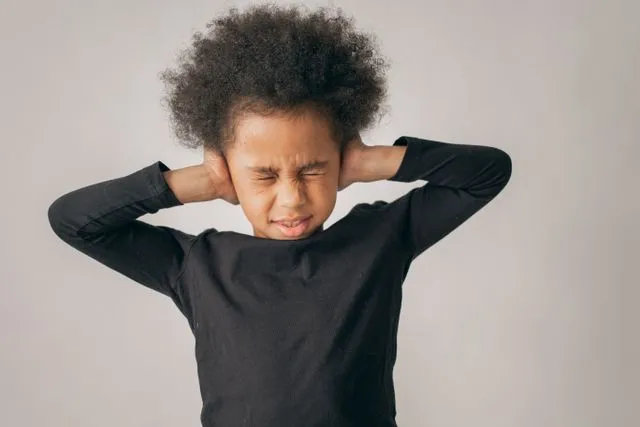
Polish psychologist Kazimierz Dąbrowski identified what he called “overexcitabilities” in gifted individuals — heightened sensitivity and responsiveness across multiple domains. Psychomotor overexcitability: surplus physical energy, the need for constant movement, difficulty sitting still. Sensory overexcitability: heightened sensitivity to sensory input — texture, sound, smell, the tag in a shirt. Intellectual overexcitability: the compulsive need to know, to question, to explore, that does not switch off. Imaginational overexcitability: a rich inner world, vivid imagination, sometimes difficulty distinguishing imaginative intensity from reality. Emotional overexcitability: feeling things more deeply than others, greater empathy, more intense reactions to both positive and negative experiences.
Not every gifted child displays all of these — but many display several. And for parents, the overexcitabilities often present as what looks like behavioral difficulty: the child who is “too sensitive,” who has meltdowns over things that seem trivial, who cannot let go of an injustice that others have moved past, who is overwhelmed by environments that others find perfectly manageable.
Understanding these as features of giftedness rather than character flaws or discipline failures changes the entire approach to managing them.
2. The School Problem — Boredom and Its Consequences
A child who learns more rapidly than their peers and is placed in an environment calibrated to the pace of average development faces a specific and underappreciated challenge: chronic under-stimulation. And chronic under-stimulation in a child with intellectual overexcitability does not produce docility. It produces behavior.
The gifted child who is disruptive in class, who finishes work quickly and then disturbs others, who argues with the teacher, who appears to be not trying, who develops school refusal — is often simply bored. Not bored in the way adults mean when they describe an afternoon as dull. Bored at a neurological level — their brain is not receiving the input it needs to stay regulated, and the result is dysregulation that looks behavioral but is actually environmental.
A recurring theme in the research is the sense of isolation parents describe when attempting to explain their child’s needs to others. Without a shared understanding of gifted development, parents often feel dismissed or judged — and schools frequently assume that gifted students will thrive on their own, leaving parents with the burden of ensuring their children’s needs are met.
3. The Perfectionism Trap
Perfectionism in gifted children is remarkably common and remarkably damaging. A child who has always found learning easy — who has received consistent messages that they are smart, capable, exceptional — often develops a fragile relationship with difficulty and failure. If being smart is their identity, then struggling at something threatens that identity at its core. The response is frequently avoidance: not attempting things they might not succeed at, giving up when something proves harder than expected, or producing work so far below their capacity that failure feels like a choice rather than a genuine defeat.
The pressure to help gifted children reach their “full potential” can unintentionally lead to anxiety and perfectionism. This is the accommodation trap in a different form — parents and teachers, wanting to support the child’s potential, inadvertently communicate that potential is the expectation, and that anything less is disappointing. The child internalizes this and becomes increasingly unwilling to take the risks that genuine learning requires.
As we explored in our article on helping teenagers manage academic stress, the relationship between high expectations and anxiety is well-documented — and gifted children are particularly vulnerable to it, precisely because so much of their identity has often been built around effortless achievement.
4. The Social Isolation Problem
Finding peers who share both your intellectual interests and your chronological age is genuinely difficult when you think differently from most of the children around you. The gifted child who wants to discuss black holes at recess, who is baffled by the social dynamics of playground politics, who finds the conversation of age-mates unstimulating, or whose humor is too dry for their peers to follow — that child often feels profoundly alone, even in a room full of people.
This social isolation is one of the most underappreciated aspects of giftedness. It is not shyness, though it sometimes looks like shyness. It is the experience of being genuinely different in ways that make ordinary peer connection difficult — and it carries real emotional costs, particularly in adolescence when peer belonging is developmentally central.
5. Twice-Exceptional Children: When Giftedness Meets Learning Difference
Some gifted children are what the research calls “twice-exceptional” — they have both a gift and a learning difference, disability, or developmental difference that creates a complex profile that is consistently underserved. The child who is intellectually gifted and also has ADHD, dyslexia, autism spectrum disorder, or anxiety is a child whose gifts may mask their challenges and whose challenges may mask their gifts.
As we discussed in our article on parenting a child with ADHD, the co-occurrence of giftedness and ADHD is not rare — and the twice-exceptional child presents a profile that is particularly difficult for standard educational systems to accommodate, because they fit no standard category cleanly. They are not the stereotypical gifted child. They are not the stereotypical child with ADHD. They are something more complex, and they need support that takes both dimensions of their profile seriously.

What Gifted Children Actually Need: 8 Evidence-Based Strategies
1. Accept That Your Child Is Genuinely Different — Without Making It Their Identity
The first challenge when raising a gifted child is to accept that your child is genuinely gifted — not as a matter of pride, but as a matter of accurate perception that shapes how you respond to their needs. This awareness and acceptance make all the difference when it comes to making good decisions about parenting.
At the same time, “gifted” should never become the defining label through which your child understands themselves. A child whose entire identity is constructed around being smart is a child who is one genuinely difficult experience away from an identity crisis. Giftedness is part of who they are. It is not all of who they are. And the qualities that will serve them best throughout their life — resilience, empathy, integrity, the ability to be genuinely wrong about something and recover — are qualities that have nothing to do with intellectual ability.
2. Feed the Intellectual Need — Without Over-Scheduling
A gifted child whose intellectual need is chronically unmet will find ways to meet it — usually in ways that are disruptive to everyone around them. Providing access to enrichment that genuinely challenges them — books well above their grade level, documentaries, museum visits, maker spaces, science kits, coding, musical instruments, creative projects of genuine complexity — is not indulgence. It is meeting a genuine neurological need.
The balance to strike is enrichment without over-scheduling. Parents of gifted children often fall into the trap of filling every hour with structured enrichment — tutoring, classes, programs, competitions. A gifted child needs unstructured time as much as any other child — time to pursue their own interests without direction, to be bored and find their own solution to the boredom, to simply be. The imaginational and intellectual overexcitabilities that characterize giftedness thrive in open time as much as in structured challenge.
3. Teach — and Model — That Effort Matters More Than Ability
Carol Dweck’s research on growth mindset is particularly relevant for gifted children — and particularly urgent. A gifted child who has been consistently praised for being smart has been inadvertently taught a fixed mindset: ability is a stable trait, intelligence is something you have, and the goal is to demonstrate it rather than to develop it. When difficulty arrives — as it inevitably does — the fixed-mindset gifted child has no framework for it. Struggling is evidence of not being smart. And not being smart is not something they know how to be.
Deliberately shifting the praise from ability to effort and process is one of the most important things a parent of a gifted child can do. Not “you are so smart” — which is true but unhelpful — but “you worked really hard on that,” “I love watching you figure something out,” “what did you learn from that mistake?” Building the belief that the process of learning — including the struggle, the failure, the revision — is valuable regardless of outcome is the foundation of the intellectual resilience that giftedness without effort cannot provide.
4. Validate the Emotional Intensity Without Being Swept Away By It
The emotional overexcitability of gifted children is real, and it deserves genuine acknowledgment. A child who feels things more intensely than average is not being dramatic. Their experience is genuinely more intense. Dismissing it — “You are too sensitive,” “It is not that big a deal,” “Other children do not react like this” — adds shame to an already overwhelming experience without reducing its intensity.
At the same time, validating the feeling without being consumed by it requires the parent to stay regulated when the child is not — to be the calm, steady presence that demonstrates that the intensity is survivable, that emotions are manageable, and that the storm will pass. As we explored in our article on understanding childhood anxiety, the parent’s own regulatory capacity is the most important tool available for supporting a child whose emotional responses are intense and overwhelming.
5. Work With the School — Strategically and Specifically
Gifted children’s educational needs are frequently unmet in standard classroom settings — not because teachers do not care, but because the system is designed around the average, and gifted children exist at the far end of the distribution. Working with the school to ensure appropriate challenge is not pushy parenting. It is necessary advocacy.
The most effective approach is specific and collaborative rather than demanding. Come to meetings with concrete observations: “When he finishes his work early, he tends to disrupt others because he has nothing to do — what options do we have for extension work?” “She is reading at a significantly higher level than the current class materials — is there a way to give her access to more challenging texts?” Specific, solvable problems elicit more productive responses from educators than general complaints about the pace of the class.
Options to explore include curriculum compacting — allowing the gifted child to test out of material they already know and spend that time on extension work — subject acceleration, pull-out enrichment programs, and access to specialist teachers in areas of particular strength. If the school is opposed to meeting your child’s needs, be prepared to take your own initiative in meeting these needs — through extracurricular programs, online resources, community mentors, and specialist organizations for gifted children.
6. Protect Social Development — Even When It Is Hard
It is tempting to allow a gifted child to retreat into their intellectual interests and avoid the social complexity they find baffling or unstimulating. This is understandable. It is also, in the long run, a disservice.
Social skills are not automatically acquired by any child, and they are not acquired more easily by gifted children — in some cases, they are acquired with more difficulty, because the social world does not operate according to the logical, rule-based framework that many gifted children find most comfortable. Protecting opportunities for genuine social interaction — in environments where your child can find genuine peers, whether that is a gifted program, a specialized club, or an online community of children who share their specific interests — is as important as feeding the intellectual need.
Finding intellectual peers — other children who share the gifted child’s interests and pace of thinking — is often more important than age-peer matching for the social wellbeing of gifted children. A gifted eight-year-old who connects genuinely with a ten-year-old who shares their passion for astronomy is experiencing something more developmentally nourishing than the strained attempts at connection with age-mates who do not share their interests.
7. Address Perfectionism Directly and Early
Perfectionism in gifted children does not resolve without deliberate attention. In fact, left unaddressed, it typically worsens — as the academic environment becomes more challenging and the effortless achievement that protected the child’s identity in earlier years becomes less reliable.
Strategies that help include: explicitly celebrating mistakes as evidence of genuine challenge (“If you’re not making mistakes, you’re not trying anything hard enough”); sharing your own mistakes and your own process of recovering from them; giving your child opportunities to attempt things they will not immediately succeed at — an instrument, a sport, an art form — so that the experience of persisting through difficulty becomes familiar and non-catastrophic; and resisting the urge to rescue them from struggle, which communicates that struggle is not something they can handle.
8. Take Care of Yourself — This Is a Marathon, Not a Sprint
Parenting a gifted child is genuinely demanding in ways that are poorly understood by people outside the experience. The intellectual energy required to keep up with them. The emotional energy of managing their intensity. The advocacy work at school. The social isolation — of the child and sometimes of the parent, who finds it difficult to discuss these challenges without encountering incomprehension or dismissal.
Seeking support from expert professionals in the field and other parents of gifted children is highlighted consistently in the research as one of the most valuable resources available. The combination of practical knowledge-sharing and the simple recognition that you are not alone — that your child is not unusual, that your struggles are real and shared — is sustaining in ways that are genuinely hard to access from any other source. Find your community. Your child needs you to.
Signs You May Be Parenting a Gifted Child
| Domain | Common Characteristics |
|---|---|
| Cognitive | Learns rapidly with minimal repetition, excellent long-term memory, advanced vocabulary for their age, complex problem-solving, asks questions well beyond their grade level |
| Emotional | Intense emotional reactions, heightened empathy, strong sense of justice, deep concern about fairness and honesty, feels “different” from peers |
| Social | Prefers company of older children or adults, difficulty relating to age-mates, may have one or two deep friendships rather than many casual ones, intense interests that peers do not share |
| Behavioral | Questions rules and expectations rather than simply following them, heightened sensitivity to sensory input, difficulty transitioning away from absorbing interests, decreased need for sleep |
| At school | Boredom with pace of standard curriculum, finishes work quickly and becomes disruptive, may underachieve through lack of challenge, teachers report the child is “not working to their potential” |
The Hardest Part — What Nobody Talks About
I want to address something that parents of gifted children rarely feel comfortable saying publicly, because the cultural narrative around giftedness makes it seem ungrateful or self-indulgent: parenting a gifted child can be genuinely lonely.
The loneliness comes from several directions simultaneously. From the outside, people do not understand why you are struggling — the assumption is that giftedness is pure advantage and your challenges are problems other parents would love to have. From the inside, you are often the primary advocate for a child whose needs the educational system does not automatically meet, navigating bureaucracies and managing professionals who may not take your concerns seriously. And sometimes the loneliness comes from the relationship with the child itself — the child who argues with everything, who exhausts you with their intensity, who you love profoundly and find extraordinarily difficult to live with.
These are real experiences. They deserve acknowledgment. And they remind us that parenting any child with significantly different needs — whether those differences are challenges or gifts or both — asks something specific and substantial of the parent. You are allowed to find it hard. You are also, almost certainly, doing better than you think.
A Final Thought on What Actually Matters
The research on gifted children is clear that parents were concerned not only with developing children’s talents but also with promoting their well-being. This is the right priority order. Talent development matters. It is not, however, the most important thing.
The most important thing is raising a person — a person who is kind, who is resilient, who knows how to be wrong and recover, who can be in genuine relationship with other people, who has a moral life that is not reducible to their intellectual capacity. A gifted child who grows into a brilliant adult without these qualities has been failed by their upbringing, however impressive their achievements look from the outside.
A gifted child who grows into an adult who is deeply curious, genuinely compassionate, capable of failure and renewal, connected to the people around them — that child has been raised well. And the parenting that produces that outcome is not primarily about maximizing intellectual potential. It is about everything else: the love, the consistency, the honest conversations, the modeled resilience, the firm boundaries, the unconditional presence.
You already know how to do most of that. Trust yourself a little more than you do.
Summary: What To Remember
- Giftedness is more than high test scores — it involves intellectual, emotional, sensory, and imaginational intensity that creates real challenges alongside real gifts.
- Asynchronous development is a core feature — a gifted child may be years ahead cognitively while being entirely age-typical or behind in emotional regulation and social development.
- The most common challenges include emotional intensity and overexcitabilities, school boredom and its behavioral consequences, perfectionism, social isolation, and — for twice-exceptional children — the masking of gifts by challenges and vice versa.
- Accept giftedness without making it the child’s entire identity — “gifted” is part of who they are, not all of who they are.
- Feed the intellectual need through enrichment and unstructured time — both are necessary; neither alone is sufficient.
- Deliberately build growth mindset — shift praise from ability to effort, celebrate mistakes, and protect the child’s relationship with difficulty.
- Validate emotional intensity without being consumed by it — the parent’s own regulation is the most important tool.
- Advocate at school specifically and collaboratively — concrete, solvable problems produce more useful responses than general complaints.
- Address perfectionism early — it worsens without deliberate attention and can severely limit what the child is willing to attempt.
- Find community — other parents of gifted children, specialist organizations, and professionals who understand giftedness are invaluable resources.
Younes Kehal is an educational director, certified school coach, and certified life coach with 20 years of experience working directly with children with diverse cognitive profiles, their families, and educational institutions. The guidance published on Parenting Assist is rooted in real field experience and evidence-based developmental science.