The Problem With Plastic: How to Talk to Children About It Without Making Them Feel Hopeless
My nephew came home from school one afternoon and announced that the ocean was full of plastic and all the turtles were dying.
He was seven. He was not wrong. And he was genuinely distressed in a way that was clearly going to require more than a reassuring pat on the shoulder. He had learned something true and significant and had absolutely no framework for what to do with it.
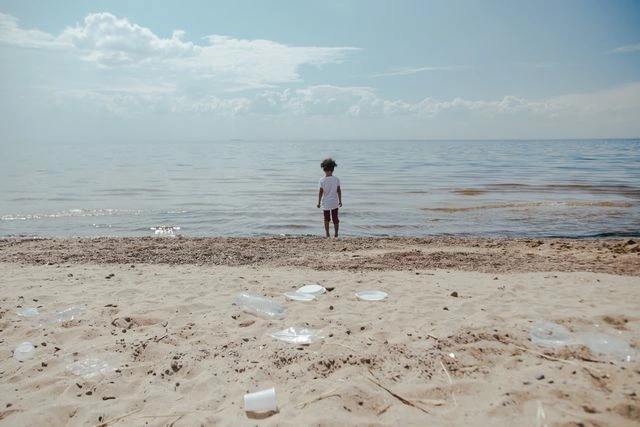
This is increasingly the situation that families face. Children are encountering environmental information — in school, online, in conversations with peers — that is accurate, serious, and potentially overwhelming. Plastic pollution specifically has become one of the most visible and most discussed environmental issues of the past decade, partly because its effects are so visible (the beach photograph with the straw through the turtle’s nose has embedded itself in collective consciousness in a way that carbon emissions, being invisible, have not) and partly because it has been heavily integrated into school curricula across many countries.
The result is children who know about plastic. Who know it is a problem. Who may have strong feelings about it. And who, without the right conversations at home, may move between helpless distress and performative environmentalism — both of which are understandable responses to the situation, and neither of which is particularly useful.
This article is about how to have the conversations that produce something more useful than either of those responses.
Table of Contents
The Facts Worth Having
Before getting to how to talk to children about plastic, it is worth being clear about what is actually true — because parents who want to have honest conversations need accurate information, and the plastic pollution narrative, while grounded in real science, has also accumulated some exaggeration and some simplification that is worth sorting through.
What is definitely true: plastic production has increased dramatically over the past seventy years. According to data from Our World in Data, global plastic production has grown from approximately 2 million tonnes in 1950 to over 400 million tonnes per year currently. A significant proportion of that plastic is single-use — designed to be discarded after one use. And a significant proportion of discarded plastic, through inadequate waste management and leakage from waste systems, ends up in the environment, particularly the ocean.
The ocean plastic problem is real and significant. Research published in the journal Science estimated that 8 million metric tonnes of plastic entered the ocean in a single year. This plastic affects marine ecosystems through entanglement, ingestion, and the accumulation of microplastics in food chains. The turtle and straw photograph represents a genuine phenomenon, not an invented one.
What is more complicated: the sources of ocean plastic pollution are significantly concentrated geographically. A 2021 study found that a small number of rivers — primarily in South and Southeast Asia — account for a disproportionate share of ocean plastic input. This has implications for both the scale of the problem and the most effective interventions, and it is worth knowing when having conversations with older children who are ready for more complexity.
What is encouraging: plastic production and use are beginning to decline in some contexts, partly through policy interventions (plastic bag charges, single-use plastic bans), partly through changing consumer behaviour, and partly through increasing corporate pressure. The trajectory is not fixed, and human action has already demonstrably changed it in some areas.
Why the “All the Turtles Are Dying” Framing Is a Problem
The environmental messaging that children encounter most often about plastic is the catastrophic version. The images of beaches covered in plastic, the footage of marine animals entangled in waste, the statistics about plastic in every ocean. These images are real and they are important. They are also, as primary communicative tools for children, somewhat counterproductive.
The psychology of environmental communication has established fairly consistently that catastrophic framing — “everything is terrible and getting worse” — produces in most people not action but withdrawal. The response to overwhelming environmental bad news tends to be either anxiety and distress, or defensive denial, or a kind of numb acceptance that is the precursor to resignation. None of these responses are what environmental education is trying to produce.
What produces pro-environmental behaviour — in children and in adults — is a combination of sufficient concern to motivate action, genuine understanding of the issues, and a sense of personal agency: the belief that what you do makes some difference. Catastrophic framing provides the first element (concern), often damages the second (by oversimplifying), and actively undermines the third (by making the problem seem so enormous that individual action is obviously futile).
The child who learns that the ocean is full of plastic and all the turtles are dying has received sufficient concern. What they need next is accurate understanding and genuine agency. The parent’s role is to provide both.
What Children Need From the Plastic Conversation
The same framework that applies to climate conversations applies here: children need validation of their feeling, accurate information calibrated to their age, and something they can actually do. Not in that order necessarily, and not as a structured agenda — but as the elements that a good conversation about environmental issues provides.
Validation first. A child who has come home upset about turtles and plastic needs the upset acknowledged before anything else. “I can see you’re really bothered by that. What did you learn?” is a better opening than “don’t worry, it’s not as bad as all that.” The second might be true and still be the wrong first response.
Accuracy second. When the child is ready — which may be immediately or may be after the initial feeling has had some space — they deserve accurate information. Not all information, and not the most catastrophic version, but the truth. Yes, there is a lot of plastic in the ocean. Yes, it hurts animals. Yes, people are working on it. Some of those people are scientists. Some are policy makers. Some are the people who invented the plastic bag tax. Some are the people who made your school’s no-plastic-bottles rule. The problem is real and people are addressing it — not quickly enough for some of us, but genuinely.
Agency third. What can we do? This is the question that transforms the conversation from distressing to empowering. Not what can the child do to solve the entire ocean plastic crisis — that question produces the helplessness the catastrophic framing already created. What can we do, as a family, in the small but real ways that are genuinely available? The answers to this question exist and they are worth naming specifically.
What Actually Helps — Practically
The plastic conversation works best when it is connected to visible, tangible actions that the child can observe and participate in. Not as a guilt mechanism — “we must do this because of the turtles” — but as a matter-of-fact expression of the family’s values.
Reducing single-use plastic in the household is the most directly available action for most families. This is not about achieving perfection — plastic is embedded in the contemporary consumer economy in ways that make total avoidance impossible for most people — but about the visible, consistent reduction of the most avoidable plastic use. Reusable bags, water bottles, and coffee cups eliminate a meaningful volume of single-use plastic with essentially no reduction in convenience once the habit is established. The child who grows up in a family where these things are normal never has to think about carrying a bag; they just carry one.
Food packaging is the area where most household plastic use is concentrated. Choosing loose vegetables over pre-packaged ones where available, choosing products in glass or cardboard over plastic where the choice exists and the price difference is manageable, buying from bulk sections where available — these reduce plastic use meaningfully over the course of a year without requiring significant inconvenience or expense.
Participating in a local beach or park clean-up, if one is available in your area, is one of the most powerful actions available for connecting a child’s abstract understanding of plastic pollution to concrete, visible experience. The child who has picked up fifty pieces of plastic from a beach in an afternoon has a different relationship with that issue than one who has only seen it in photographs. The plastic becomes real, specific, and something they have done something about.
For older children, understanding the policy dimension — that individual behaviour is important but that the most significant changes in plastic production and disposal require regulation and corporate behaviour change — is worth introducing as part of the conversation. The child who understands that a government policy banning single-use plastics has more impact than a million individual reusable bags is a child who is developing a sophisticated understanding of how change actually happens. This is not an argument for not carrying a reusable bag. It is context for understanding where their individual action sits within a much larger system.
| Age | What They Can Understand | Key Messages | Concrete Actions |
|---|---|---|---|
| 3 to 5 years | Plastic is a material; it takes a long time to go away; animals can get hurt by it | “We use bags we can use again and again because plastic bags can hurt animals if they get into the sea.” | Carry the reusable bag; pick up litter on walks; choose a reusable water bottle |
| 5 to 8 years | Plastic doesn’t disappear; it breaks into tiny pieces; ocean animals are affected; people are working on it | “Plastic doesn’t go away — it just gets smaller. That’s why we try to use less of it.” | Participate in a litter pick; help choose less-packaged products; learn to sort recycling |
| 8 to 12 years | The scale of the problem; where ocean plastic comes from; what different types of plastic can and cannot be recycled | Honest about the scale; honest about complexity; emphasis on what is happening to address it | Research local clean-up initiatives; advocate at school for plastic reduction; understand labels |
| 12 and above | Policy vs. individual action; corporate responsibility; the economics of plastic; what effective campaigns have achieved | Full complexity; the role of systemic change; evidence of what works | Advocacy; understanding political engagement; career interest in environmental fields |
The Recycling Conversation
Recycling is often the first and sometimes the only environmental action that children are taught. It is taught in schools, reinforced at home through the routine of the recycling bin, and presented as the primary personal contribution to the plastic problem. It deserves a more honest assessment than it usually receives.
Recycling is genuinely useful, but it is significantly less effective than most people assume. In most countries, only a small proportion of plastic that is placed in recycling bins is actually recycled. The rest is either contaminated (too dirty or the wrong type of plastic for the local facility), sorted out and sent to landfill, or — until recently — exported to countries with less stringent waste management requirements. The global average plastic recycling rate is approximately 9%, according to UN Environment Programme data. This is not a reason to stop recycling. It is a reason to understand that recycling is the end of the line in a system, not the solution to that system’s problems.
The environmental hierarchy that is worth teaching children — in age-appropriate form — is: Refuse (don’t use it if you don’t need to), Reduce (use less), Reuse (use it again), and only then Recycle. Recycling is a better option than landfill. It is a significantly worse option than not generating the waste in the first place. The culture that positions recycling as the primary environmental action available to individuals has, arguably, reduced the pressure on producers to change how they design and package products — because consumers feel they have done their part by sorting the bin.
The child who understands this hierarchy — who has been taught that refusing a plastic straw is more effective than recycling it — has a more sophisticated and more accurate understanding of the system than one who has been taught only to sort the recycling.
Microplastics: The Part That Is Harder to Explain
Microplastics — the tiny particles that result from the breakdown of larger plastic items, the deliberate addition of microbeads to personal care products, and the release of fibres from synthetic clothing during washing — are the most pervasive and least visible dimension of the plastic problem. They are found in ocean sediments at every depth, in the bodies of marine animals at every level of the food chain, in drinking water in most countries, and increasingly in human blood and tissue.
This is the part of the plastic story that is most difficult to discuss with children because the implications are hardest to act on. There is very little an individual family can do about microplastics in their drinking water or the synthetic fibres released by their polyester fleece. The actions that reduce microplastic exposure — using a wash bag designed to capture synthetic fibres, choosing natural fibre clothing where possible, installing a water filter — are either expensive or only marginally effective.
For younger children, microplastics are a concept to defer. The visible plastic pollution — the bottles on the beach, the bags in the water — is enough to work with without introducing a problem that is invisible, ubiquitous, and largely outside individual control.
For older children and adolescents, the microplastics conversation is worth having honestly: this is a dimension of the problem that requires systemic solutions — regulation of synthetic fibre standards, filtration requirements in washing machine design, changes in how plastics are produced — more than it requires individual behaviour change. Understanding this is not demoralising. It is accurate, and it points toward the kinds of systemic change that young people are often more motivated to engage with than parents assume.
What Hope Actually Looks Like in This Conversation
The instinct to protect children from environmental distress by offering them hope is understandable. But hope that is ungrounded — “I’m sure it will all work out” — is not hope. It is dismissal. And children are often not fooled by it.
Grounded hope is different. It is specific. It points to things that are actually happening, that are measurable, that demonstrate that human action on this problem produces real results. And in the case of plastic, these things exist.
The plastic bag charge introduced in the United Kingdom in 2015 resulted in a reduction in plastic bag use by major supermarkets of over 95% within a few years. In Ireland, a similar charge introduced earlier produced comparable results. These are not trivial changes. They demonstrate that policy intervention, consumer behaviour, and corporate response can shift the plastic system significantly and quickly when aligned. A child who knows this — who understands that a simple policy change eliminated most of the plastic bag use in an entire country — has evidence that things can change.
The European Union’s single-use plastics directive banned ten of the most commonly found plastic items on beaches — straws, cotton bud sticks, cutlery, plates, stirrers, balloons, food containers, cups, cigarette butts with plastic filters, and fishing gear — across all member states. The effects on beach litter composition are beginning to be measurable. This is change at scale, produced by policy, in response to advocacy. A child who understands this understands how change actually happens.
The United Nations Environment Programme’s ongoing negotiations on a global plastics treaty represent an attempt to address plastic production and design at the international level — the most upstream point in the system. These negotiations are difficult and contested. They are also happening, which is a form of hope.
| Action | Where | Result |
|---|---|---|
| Plastic bag charge (5p/10p per bag) | United Kingdom (2015) | Over 95% reduction in plastic bag use by major retailers within 3 years |
| Plastic bag tax (€0.15 per bag) | Ireland (2002) | 90% reduction in plastic bag use within weeks; sustained long-term |
| EU Single-Use Plastics Directive | European Union (2021) | Ban on ten most littered plastic items; measurable reductions in beach litter composition |
| Microbead bans | US, UK, Canada, EU and others | Elimination of microbeads from personal care products in participating markets |
| Deposit return schemes | Germany, Norway, and expanding globally | Recovery rates of 95%+ for plastic bottles in countries with established schemes |
The Conversation That Doesn’t End
The best conversations about environmental issues are not single events. They are ongoing. The child who hears about plastic one afternoon and then never discusses it again retains the distress without any of the understanding or agency that would transform it into something useful. The child who grows up in a family where these topics are a normal and recurring part of conversation — where something seen at a beach prompts a brief discussion, where a policy change in the news is noted and considered, where the family’s choices are occasionally explained in terms of the values behind them — that child develops an environmental understanding that is genuinely integrated into how they see the world.
This does not require setting aside time for environmental education or turning every meal into a sustainability seminar. It requires noticing things and commenting on them. The straw that arrives with the drink you did not ask for. The bulk bins at the supermarket that mean you can refill your container. The beach that is cleaner than the one you visited a few years ago. The news story about the plastics treaty that you mention at dinner because you find it interesting.
Children learn what their parents find interesting. If the adults in their life are genuinely interested in the world and in what is happening to it, the children grow up finding the same things interesting. That interest — curious and engaged rather than anxious and overwhelmed — is the foundation of everything else.
For the broader framework of how these conversations fit into the larger project of raising environmentally aware children — and the specific mechanisms by which consistent family habits and parental modelling transmit environmental values — the article on building eco-friendly habits one change at a time provides the practical context. And for the specific conversation about climate change — which the plastic conversation often leads to, because they are connected — the article on what to say when your child asks if the planet is dying covers the same territory with the same framework.
Frequently Asked Questions
How do I explain plastic pollution to a young child without scaring them?
By leading with what we do rather than what is wrong. For young children, the explanation “we carry a bag we can use again and again because plastic bags can hurt animals if they get into the sea” provides the necessary context (plastic can hurt animals) without dwelling on the full scale of the problem. The emphasis is on the family’s action — which is positive, concrete, and within the child’s experience — rather than on the catastrophe. The full picture can be built gradually as the child gets older and is able to hold more complexity.
My child wants to know who is responsible for plastic pollution. What do I say?
Honestly, and with appropriate complexity. Plastic pollution results from a combination of how plastic is produced (by corporations), how it is regulated (by governments), and how it is used and disposed of (by individuals and by waste management systems). Blaming any single actor is inaccurate and tends to produce either helpless finger-pointing or defensive denial. A more useful framing is that solving the problem requires change at all three levels, and that individuals, governments, and corporations are all part of both the problem and the solution. For older children, this is a genuinely interesting discussion about how systems work.
Is recycling actually worth doing?
Yes, as part of a broader approach — but not as the primary or only response. Recycling some plastic genuinely keeps material out of landfill and produces some environmental benefit. But global recycling rates for plastic are very low (approximately 9%), and much of what is placed in recycling bins is not ultimately recycled. The more impactful actions are avoiding single-use plastic where alternatives exist, and supporting policy changes that reduce plastic production and improve disposal systems. Recycling is worth doing; it is not sufficient on its own, and it should not create the impression that the plastic problem is being managed by sorting the bin.
Should I let my child watch documentaries about plastic pollution?
Depends on the child’s age and temperament. For children who are already environmentally engaged and who are unlikely to be overwhelmed by difficult imagery, well-made documentaries can deepen understanding and provide the “evidence of problems being real” that motivates action. For younger children or those with significant eco-anxiety, strong imagery of marine animals harmed by plastic is more likely to produce distress than understanding. Watching together and discussing what you see — rather than the child watching alone and processing it without adult mediation — is advisable regardless of age.
My child feels overwhelmed and says there’s no point doing anything. What do I say?
Point to specific evidence of change. The plastic bag charge. The EU directive. The microbead ban. The deposit return schemes. These are real examples of the plastic system changing in response to human action. The argument that “nothing makes a difference” is not supported by the evidence — significant reductions in specific plastic uses have been achieved, measurably, in response to specific actions. The helplessness is understandable given the scale of the problem. The evidence says it is also inaccurate. Both things can be said honestly and together.
How much of the ocean plastic problem is the responsibility of individuals in wealthy countries?
Less than the messaging around individual responsibility sometimes implies. The vast majority of ocean plastic input comes from countries with less developed waste management infrastructure, primarily in South and Southeast Asia. This does not mean that consumption patterns in wealthy countries are irrelevant — global demand for plastic drives production, and the waste from wealthy countries is often exported rather than managed domestically. But it does mean that the most effective solutions to ocean plastic pollution involve improving waste management infrastructure globally, which is a political and economic project that goes well beyond individual consumer behaviour. Both individual behaviour and systemic change matter; the relative importance of each is worth understanding accurately.
Younes Kehal is an educational director, certified school coach, and certified life coach with 20 years of experience working with children, families, teachers, and schools. His guidance combines practical educational experience with carefully reviewed research.